Search
44 results and 6 products for organic.
Best match
Best matchGuideOrganic and non-toxic stuffed animals: what to checkThe at-a-glance version for a baby's first plush: flame retardants and what the law does and does not require, polyester fill against organic cotton or wool, what GOTS and OEKO-TEX each certify, and the small-parts and safe-sleep rules that matter more than any fabric.Read the guideProducts we recommend
Picks from our guides that match “organic”

Manufacturer statement checked · source


Manufacturer statement checked · source
$9.99View on Amazon
Categories (3)
Only categories- BPA and canned foodWhen BPA was in the news, the conversation was almost entirely about bottles and sippy cups. Meanwhile the larger dietary route was sitting in the pantry — and unlike baby products, general groceries were never covered by the rules that followed.Category hub
- Mattresses and beddingPick the kind of bed first, then read what each certification covers, then buy. A third of a life is spent at close range with a mattress, a protector and sheets, and the free steps (airing it out, a bare crib) matter as much as any purchase.Category hub
- The nurseryCribs, mattresses and the room itself. A nursery is the one space where a small person spends twelve hours a day breathing the same air, which makes it the place where material choices compound more than anywhere else in the house.Category hub
Brands (8)
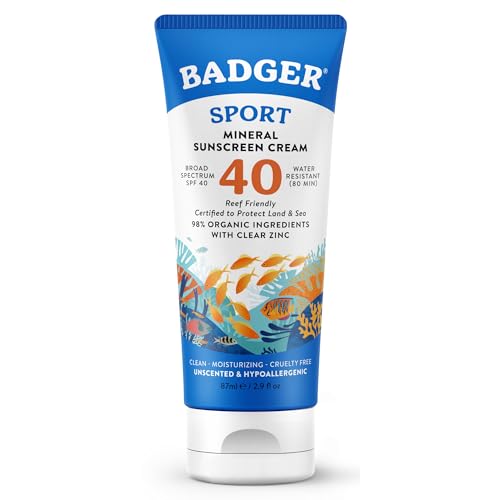
Only brands- BadgerBadger is about as straightforward as sunscreen companies get. It is a family-run New Hampshire business that has used mineral (zinc oxide) actives across its sun care line for decades, holds B Corp certification, and certifies its organic claims under the USDA program. Its sunscreens consistently rate low-hazard in EWG's Sunscreen Guide. We found no recall in CPSC records; FDA's enforcement database lists two recalls the company initiated, both now closed — selected lots of its Baby and Kids SPF 30 lotions in September 2013 over microbial contamination, and Adventure Sport SPF 50 in January 2025 because units could ship without the drug facts panel (Class III, FDA's lowest tier) — as of September 2026. The honest trade-off is cosmetic, not safety: mineral formulas go on thicker than chemical sunscreens and can leave a white cast, especially on deeper skin tones.Brand
- BareBare's apple chips are about as simple as a packaged snack gets, and that part can be checked: PepsiCo's own SmartLabel page for the 3.4 oz bag lists a single ingredient, apple, with no color, sweetener, oil or preservative, which is why they are on our list of snacks without Red 40. The grade is acceptable rather than recommended because nothing on that label is a certification of what is in the bag. The two it carries, Non-GMO Project Verified and OU Kosher, each cover a single attribute, and we read neither on its certifier's register; the manufacturer's label carries no organic certification for this bag. The record is short and it is not about the apple chips. We found no FDA recall record naming a Bare product under any firm, and no CPSC record under Bare Snacks or Bare Foods, as of 2026-10-12. Two California Proposition 65 notices, in 2020 and 2021, alleged that Bare's beet chips and carrot chips were sold without the state's lead or cadmium warning. Both were settled out of court, and both settlements ended with the product being discontinued. Those are warning-label claims about root-vegetable chips Bare no longer lists, not findings about the fruit chips it sells today, and both are older than the three-year window this directory applies. Brand
- Dr. Bronner'sDr. Bronner's castile soap is on our cleaning pages because it genuinely does several jobs with one short, readable ingredient list, and the unscented baby formula drops the essential oils that make the other varieties unsuitable for infants. The company has been family-owned since 1948, certifies its organic claims under the USDA program and its sourcing through Fair Trade, and helped create the Regenerative Organic Certification. Its 2025 exit from B Corp deserves to be read correctly: it was not stripped of the certification, it walked away publicly because it thought the standard had gone soft. We found no recall in CPSC or FDA enforcement records as of August 2026. Brand
- GoodPopThe company behind GoodPop holds an organic certificate that we read on the USDA's own register: the Organic Integrity Database lists Austin's Natural Frozen Pops, Inc., doing business as GoodPop, of Austin, Texas, as a certified organic handler under the certifier Oregon Tilth. That certificate is in the company's own name, and it is what the recommended grade rests on. Know what it covers. An organic certificate is a farming-and-processing standard: it does not allow synthetic dyes, it is not a contaminant test. The certificate also names products: its list includes GoodPop's Freezer Pops — among them the assorted Cherry Limeade, Concord Grape and Fruit Punch pack — alongside about twenty popsicles. The claim our dye-free pages rest on checks out on the label as well. GoodPop's own product page for the Organic Freezer Pops prints the panel for all three flavors, and in each one the only colorant is "fruit and vegetable juice (color)", with no FD&C dye and no lake. We found no FDA recall under GoodPop, Good Pop or the legal name Austin's Natural Frozen Pops, no CPSC record and no California Proposition 65 notice as of 2026-10-12. We know of three federal cases that name the company, and we read all three dockets. Two, filed in 2020 and 2021 and each closed within months, were Americans with Disabilities Act cases. The third is pending: in June 2024 GoodPop sued a competing frozen-pop maker, JonnyPops, for false advertising, and JonnyPops answered with counterclaims. The version we read argues that if its own fruit-and-sugar marketing is found misleading, so are GoodPop's claims of "no refined sugars" and "real, whole fruits"; it names several of GoodPop's stick pops and ice-cream sandwiches, not the freezer pops, and it does not allege a safety problem. No court has ruled on either side's claims, and trial was set for 30 November 2026.Brand
- Miss Jones BakingMiss Jones is the white frosting on our dye-free snacks page, and its organic claim checks out on the register: the USDA Organic Integrity Database lists "The Purple Mixer, LLC DBA Miss Jones Baking Co." as certified under Oregon Tilth since 6 July 2015, and the certificate names Vanilla Frosting, Chocolate Frosting, Cream Cheese Flavored Frosting and Confetti Pop Frosting alongside the brownie, cake, cookie and pumpkin mixes. We found no FDA recall under any Miss Jones or Purple Mixer name as of 2026-10-12. What keeps this at acceptable rather than recommended is a single California Proposition 65 notice. In August 2025 a private enforcer alleged that the Banana Bread & Muffin Mix was sold without the state's lead warning, and the company settled out of court in August 2026 for $44,000 with a commitment to reformulate or add warnings. That is a labeling claim about a mix we do not list and that is not on the organic certificate; it never reached a court, and Proposition 65's lead trigger sits far below FDA action levels. But it is a notice on the record, and this directory has kept recommended for brands with none. Brand
- Suncore FoodsSuncore Foods sells plant-based color powders used to tint food without synthetic dyes. Part of the range is certified organic, and you can see exactly which part: the USDA Organic Integrity Database lists Suncore Foods, Inc of Irvine, California as certified under Organic Certifiers, Inc. since 30 June 2020 for ten named products, among them Red Beet Powder, Aqua Blue Spirulina Powder, Indigo Blueberry Powder and Midori Jade Matcha Powder. A powder that is not on that list is not covered by it. We found no FDA recall and no court case under the company's name as of 2026-10-12. The one item on its record is a January 2021 California Proposition 65 notice alleging that its orange carrot powder and dried goji berries were sold without the state's lead warning — a labeling allegation with no complaint, settlement or judgment recorded in the five years since. That notice is more than three years old; it is disclosed here and does not hold the grade down. Suncore is graded recommended on that certificate, for the ten products it names: USDA organic certification is a farming-and-handling standard, not a contaminant test, and a Suncore powder that is not on the certificate is not covered by the grade. Everything else we know about who runs the company is its own description of itself.Brand
- SupernaturalSupernatural sells sprinkles and food colors made without synthetic dyes, and the panel on its own site for the Rainbow Starfetti we list supports that: the color comes from spirulina extract, paprika, turmeric, beets, purple sweet potato and red radish, with no FD&C dye and no lake. It is acceptable rather than recommended because every claim here is the company's own. It says its products are vegan, kosher and free of the top nine allergens by ingredient, and it tells customers plainly that most of its line cannot be certified organic or non-GMO because the natural colors themselves are not. We found no certification to check on a certifier's register. We found no recall under Supernatural, Supernatural Kitchen or Starfetti in openFDA or CPSC, no California Proposition 65 notice naming the company and no federal docket naming it in a case-name search as of 2026-10-12. Two things to know about the item we list. The company says Starfetti is one of two products still made by a partner overseas, and it does not say where. And on 2026-10-12 the company's own shop showed this item as out of stock. Brand
- Torie & HowardTorie & Howard's organic claim is one you can check yourself. The USDA Organic Integrity Database lists American Licorice Co. of La Porte, Indiana as a certified operation under Oregon Tilth, and the certificate names the candy flavor by flavor: Hard Candy (Blood Orange & Honey), Hard Candy (Meyer Lemon & Raspberry), Hard Candy (Pomegranate & Nectarine), Hard Candy (Grapefruit & Tupelo Honey), an assorted-flavor hard candy and the lollipops. That is the certification our Red 40 candy page relies on for this pick, and it holds up on the register rather than only on the label. The panel agrees with it: the brand's own back-of-pack image for the Meyer Lemon & Raspberry tin lists organic sugar, organic rice syrup, citric acid and natural flavors, "Colored with: Red Cabbage, Purple Carrots, Organic Carrot, Organic Apple, Organic Blackcurrant" — no synthetic color. We found no FDA recall, no California Proposition 65 notice and no federal case that names Torie & Howard or any of its products as of 2026-10-12. The parent's record is a separate question and it is not blank: American Licorice recalled Red Vines and Natural Vines black licorice in 2012 after elevated lead was found, and settled a California Proposition 65 licorice case in 2014. Those were licorice products, both recalls are closed, and all of it happened years before American Licorice owned this brand. Brand
Concerns & ingredients (8)
Only concerns & ingredients- Adult and kids' mattresses compared by what is insideLatex, organic hybrids, latex-free organic, kids' twins and conventional foam. What each is built from, what the certificates cover, and who should skip each.Concern
- Pesticide Residues on Produce: What the USDA Data Actually ShowsPesticide residue shows up on most produce tested in the US — that's expected, not a red flag on its own. Here's what USDA's own testing program actually finds, and where it matters if you're deciding whether organic is worth the extra cost.Concern
- VOCs and Off-Gassing: What New Furniture, Paint, and Candles Actually ReleaseNew furniture, a fresh coat of paint, flooring, air fresheners, and scented candles all share something: they release volatile organic compounds, or VOCs. Here's what that actually means, where it comes from, and why — unlike radon or lead — there's no single number that says whether your home's air is 'safe.'Concern
- VOCs at home: where they actually come fromVolatile organic compounds are the reason a new mattress, a fresh coat of paint and a scented candle all smell like something. Most of what you can do about them is free, and none of the effective steps involve buying a purifier.Concern
- 5 Places a Non-Toxic Nursery Actually MattersA nursery is one room where a baby spends most of a day, every day, for months. Rather than a shopping list, here are the five categories — air, mattress, furniture, skin care, and diapering — where the evidence actually supports paying attention, and what to do about each one.Concern
- Are Crocs safe for kids?Crocs get asked about constantly, and the honest answer has two halves that usually get mixed together. The material question has no published safety finding behind it — but it also has less public disclosure than most people assume. The escalator question does have a real number behind it, from a federal agency, and that number is worth knowing.Concern
- At-Home Toxic Exposure Panels: Which Ones Answer the Question You're Actually AskingAt-home heavy metals and toxin panels are easy to buy and hard to interpret. The useful question isn't whether they're accurate — it's whether they measure the thing you're worried about, in the place that thing actually shows up.Concern
- Bedding Certifications Explained: What GOTS, GREENGUARD Gold, OEKO-TEX, CertiPUR-US and MADE SAFE CoverSeven labels turn up on mattresses, pillows, sheets and toppers, and each answers a different question about a different part of the product. Here is who runs each one, what it checks, what it leaves out, and how to look a specific product up in the certifier's own register.Concern
Cheat sheets (8)
Only cheat sheets- The organic bedding cheat sheetThe at-a-glance version for sheets, duvet covers, comforters and blankets: what GOTS and OEKO-TEX each promise, what "made with organic cotton" does and does not mean, and the organic bedding we could match to a maker's page and a certifier's own register, sorted by how people actually buy.Cheat sheet
- Cheat Sheet: BPA-free canned foodReaders keep asking for a list of canned foods that contain BPA. Until the mid-2010s that list was almost every can on the shelf, which is why this one runs the other way: the brands that moved off BPA linings early, when the rest of the industry followed, and where BPA is still likely to be.Cheat sheet
- Safer baby wipes cheat sheetBabies go through a lot of wipes, and every one of them puts its ingredient list on the thinnest skin your child has. That volume is the whole argument — a short ingredient list matters more here than almost anywhere else.Cheat sheet
- Safer deodorant cheat sheetDeodorant is usually the last thing people switch, and for a good reason: the early natural ones did not work. That has genuinely changed. Here is what to look for, what the aluminum question does and does not show, and the transition nobody warns you about.Cheat sheet
- Safer lunch gear cheat sheetLunch gear is one of the few things a child uses every single school day for years, and it holds their food. Three shelves here — the box or bag itself, the containers that go inside it, and what replaces a plastic sandwich bag — with what each brand actually says about lead, quoted rather than summarized.Cheat sheet
- The crib mattress cheat sheetThe at-a-glance version for the one nursery purchase a baby is pressed against for most of its sleeping hours: which certifications measure what, the label words that certify nothing, and the crib mattresses we have read the manufacturer's own page for, sorted by how people actually buy.Cheat sheet
- The mattress topper and protector cheat sheetThe at-a-glance version for the layers you add to a bed you already own: which waterproof layers are vinyl and which are not, what GOTS, GOLS, GREENGUARD Gold, OEKO-TEX and MADE SAFE actually cover, and the toppers, pads and protectors we have read the maker's own page for.Cheat sheet
- The non-toxic mattress cheat sheetThe at-a-glance version for the biggest purchase in the bedroom: what each certification on a mattress measures, how a mattress meets the fire rule, and the adult and kids' twin mattresses sold on Amazon that we could read about, sorted by how people actually buy and ranked on documentation and price.Cheat sheet
Lists (8)
Only lists- Organic infant formula cheat sheetEvery infant formula sold in the US has to clear the same FDA nutritional and safety bar. Organic formula is a different choice about ingredient sourcing, not a different safety tier — here is what that distinction actually means when you are standing in the aisle.Guide
- Non-toxic play mats for babies: foam, cotton and what to checkThe at-a-glance version for a floor-time surface: EVA, XPE, PVC and PU foam compared, the foam-mat chemical the EU limits and the US does not, and where an organic cotton mat or a gym with named materials is the simpler answer.Guide
- BPA-Free Canned Beans: Brands, Linings and What We'd BuyIn the 2016 Buyer Beware survey, 27 of 38 bean cans (71%) had a BPA epoxy lining. In the can makers' own 2020 survey, we counted no BPA epoxy in any bean can. The change is real, but what replaced BPA is mostly not named, and only a few bean makers say anything about their cans on their own sites.Guide
- BPA-Free Canned Coconut Milk? What Each Brand Says About Its CanIn 2016, 9 of the 10 coconut milk and cream cans one survey tested had a BPA epoxy lining on the body; in 2020, the can makers' own survey found BPA epoxy on one end of one of 13 coconut cans. Neither tells you about the can on your shelf today. This page sets out what each maker says about its lining, what the two surveys found, and which cans have the most to go on.Guide
- BPA-Free Canned Tomatoes? What Each Brand Says About Its LiningTomatoes are acidic, which rules out some can linings, and the 2016 Buyer Beware report says tomatoes react with oleoresin. Even so, tomato cans in that 2016 sample were less likely than the average can to have a BPA epoxy lining (44% against 67%), and a 2020 industry survey found none. So the question now is what replaced BPA, and whether you want a can lining at all.Guide
- BPA-Free Sardines: What Each Brand Says About Its CansAlmost no sardine brand writes "BPA-free" about its own cans. The ones that put anything in writing mostly say "no intentional addition", and more than half of the brands we checked say nothing at all. Here is the exact wording, brand by brand, and what we would buy.Guide
- Cheat Sheet: Calendula cream for dry, irritated skinCalendula — pot marigold — is one of the more genuinely studied botanicals in baby skincare, with real (if mixed) clinical evidence behind it rather than just marketing language. This page is about general dry, chapped, or wind-burned skin — chapped cheeks, dry patches, cradle-cap-adjacent scalp skin. For diaper rash specifically, see our separate cheat sheet, linked below.Guide
- Cheat Sheet: Non-toxic laundry detergentLaundry detergent sits directly against skin, all day, for the most sensitive people in the house. The fastest filter that actually matters is fragrance — everything else on this page follows from that.Guide
Stores (8)
Only stores- Amara Organic FoodsA California-based direct-to-consumer organic baby food brand selling purees, cereal, and stage-specific "Introduction to Solids/Textures" variety packs from its own site, with a self-service subscription. Suits parents specifically wanting milestone-staged variety packs rather than a single-format catalog. meal-baby-food
- CerebellyNeurosurgeon-founded organic baby food and toddler snack brand selling purees, bone-broth protein purees, bars, and dairy-free smoothies direct from its own site, formulated around a stated set of brain-supporting nutrients. Suits parents specifically prioritizing a documented nutrient-formulation angle over general "clean" marketing. meal-baby-food
- Little SpoonA direct-to-consumer subscription service shipping fresh, refrigerated organic baby and kids' food across seven product lines — purees, finger foods, toddler plates, smoothies, infant formula, cereal, and puffs. Suits parents who want a single source covering newborn through early-elementary feeding stages rather than piecing together separate brands. meal-baby-food
- Misfits MarketA nationwide online grocer that sells "cosmetically imperfect," overstock and surplus produce — most of it certified organic — plus a broader pantry/grocery catalog, at a discount to retail. Since 2022 it also owns and, as of June 2026, has folded in Imperfect Foods (imperfectfoods.com remains live but is now the same company). Suits budget-conscious households comfortable with a rotating, less-predictable produce selection in exchange for lower prices. organic-grocery
- Monica + AndyA direct-to-consumer baby and toddler clothing brand/retailer specializing in organic-cotton apparel, blankets, and sleepwear. Sells only its own label rather than a multi-brand catalog, so it's a narrower "what to buy" store than a general baby marketplace. baby-kids
- Once Upon a FarmA B Corp-certified organic baby and kids' food company selling refrigerated purees, frozen meal starters (absorbed from its 2021 acquisition of Raised Real), oat bars, and pantry snacks direct-to-consumer with a flexible subscription. Suits parents wanting the widest format range — purees through toddler frozen meals — from one storefront. meal-baby-food
- Sprouts Farmers MarketA publicly traded (NASDAQ: SFM) natural-and-organic grocery chain with 500+ physical stores across 25 states, ordered online through its own app or Instacart/DoorDash for same-day delivery or pickup. Suits shoppers who want a full organic produce and grocery run rather than a shelf-stable subscription box, and who live near a store. organic-grocery
- Thrive MarketA membership-based online grocer modeled on a "healthy Costco" — pay an annual or monthly fee for wholesale-style pricing on organic, non-GMO and allergen-friendly packaged groceries, supplements and household goods, shipped to your door. Suits households that buy the same pantry staples repeatedly and will use enough volume to offset the membership fee. organic-grocery