Sourcing safer products for families since 2007
SafeMama
Check home
Category hub · 45 products reviewedUpdated November 11, 2026Agent researchedEditor reviewed

Mattresses and bedding

Pick the kind of bed first, then read what each certification covers, then buy. A third of a life is spent at close range with a mattress, a protector and sheets, and the free steps (airing it out, a bare crib) matter as much as any purchase.

Reviewed by SafeMama editorial · November 10, 2026

Our picks

Our top picks

The winners from our cheat sheets, each chosen for one job.

Eight hours a night, face close to the surface, in a room with the door shut — one of the longest stretches of daily contact with any manufactured object. Two different questions decide it: what the mattress is made of, and what comes out of it into the air. Different certifications answer each, and neither means "no chemicals".

45products reviewed

Start with the choice, not the label

Eight hours a night, face close to the surface, in a room with the door shut. Two questions decide a bed: what it is made of and what comes out of it into the air. Different certifications answer each, and none means "no chemicals". They mean an independent party measured a defined list.

So pick the build first. Each guide below compares the real types, the tradeoffs and who should skip each, and links to the cheat sheet that ranks the same products.

Do these first, they are free

The new mattress or crib setup checklist puts these in order, and you can print it or add it to your plan.

  1. Unbox early and ventilate. Emissions from a new mattress are highest when it is new and fall off over the following weeks. Airing it out is free and cuts exposure when emissions are highest; no label replaces it. See VOC off-gassing and our air quality guide.
  2. Keep the crib bare. CPSC's safe-sleep guidance for a baby's sleep space is nothing but a fitted sheet, with no pillows or blankets. A softer surface is not a comfort upgrade for a baby.
  3. Ask how the mattress meets the fire rule. Every mattress sold in the US must meet a federal open-flame standard, and a maker can use added chemicals or a barrier such as wool. Labels rarely say which. See can mattresses be toxic? and flame retardants.
  4. Ask which part a claim covers. "Organic" can describe the cotton cover and say nothing of the foam core, adhesives or fire barrier.

What the labels cover

GREENGUARD Gold is an emissions standard for the finished product. CertiPUR-US is a content standard for polyurethane foam only. GOTS covers organic fiber and processing, GOLS the organic latex, OEKO-TEX tests listed substances, and MADE SAFE screens disclosed ingredients. Bedding certifications explained shows who runs each one and how to look a product up in the certifier's own register.

The rest of the bed

The sheets and pillow sit closer to the face than the mattress does, and each has its own labels and traps:

  • Sheets and bedding. GOTS certifies organic fiber and restricts the chemicals used to process it. OEKO-TEX Standard 100 tests the finished item against a list of substances. They are different promises. See the organic bedding cheat sheet.
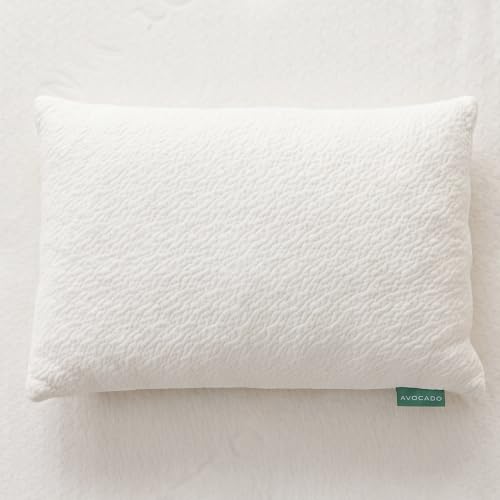
  • Pillows. CertiPUR-US covers a foam fill, not the pillow, and CPSC's safe-sleep guidance is to keep pillows out of a baby's sleep space. See the pillow cheat sheet.
  • Protectors. "Waterproof" means a laminated layer, and vinyl is the one that generally needs plasticizers. See the protector guide and phthalates and PVC.

If the room matters as much as the mattress, the nursery guide covers setting one up from scratch.

How we choose

We prefer third-party certification to manufacturer claims, and we say what each certification actually covers — most of them certify a narrower thing than the marketing implies, and are still worth having. Where a certification does not cover something people assume it does, we name the gap.

  • Third-party certified for emissions (GREENGUARD Gold), foam content (CertiPUR-US), or organic fiber and latex (GOTS; GOLS is the organic-latex scheme)
  • Where the certifier's register is searchable, the certificate looked up and its scope read; otherwise, and where the register lists only the company, the claim labeled as the maker's
  • Materials and fire-barrier method disclosed
  • Certification scope stated, not just the logo
  • Available and in current production
  • No active recall on the pick

Save & share

Non-toxic mattress cheat sheet

Skip these

  • "Organic" read as covering the whole mattress — it may describe only the cotton cover
  • "Non-toxic" on a tag, which certifies nothing
  • Assuming either certification means no chemicals — both mean a defined list was measured

Look for these

  • GREENGUARD Gold, for emissions tested against limits set with children in mind
  • CertiPUR-US, for what is in the polyurethane foam
  • A stated scope — which part of the mattress a claim actually covers
  • GOTS or GOLS, for organic cotton, wool or latex, with a certificate number you can look up and a scope that names this kind of product

GREENGUARD Gold is an emissions standard — what comes out into the air, which is the sleep question. CertiPUR-US is a content standard for the polyurethane foam only.

Common mistakes

What parents get wrong

01

"Organic mattress means the whole thing is organic"

It can describe the cotton cover while saying nothing about the foam core, the adhesives or the fire barrier. The useful question is which part a claim covers.

02

"A certification means no chemicals"

It means somebody independent measured a defined list. That is more useful than "non-toxic" on a tag and considerably narrower than most marketing implies.

03

"GREENGUARD and CertiPUR-US are interchangeable"

They answer different questions. One is about emissions from the finished product, the other about the contents of the polyurethane foam.

Start here

Shop by need

What we'd buy

Featured products

Every product we've reviewed →

Go deeper

Best lists in this category

Mattresses and bedding FAQ

What the research says

  • The 2022 AAP policy statement, first-authored by Rachel Y. Moon, directs caregivers to place infants on a firm, flat, non-inclined sleep surface such as a tightly fitting crib mattress in a safety-approved crib, covered by a fitted sheet with no other bedding or soft objects, and states that sleep surfaces with inclines of more than 10 degrees are unsafe for infant sleep.

    — According to Pediatrics 150(1), American Academy of Pediatrics guidance co-authored by Rachel Y. Moon, MD, ...

    Sleep-Related Infant Deaths: Updated 2022 Recommendations for Reducing Infant Deaths in the Sleep Environment — Pediatrics 150(1), American Academy of Pediatrics

  • The 2022 AAP policy statement (Moon et al.) states that sitting devices - car seats, strollers, swings, infant carriers, and infant slings - are not recommended for routine sleep at home or in the hospital, particularly for infants under 4 months of age.

    — According to Pediatrics 150(1), American Academy of Pediatrics guidance co-authored by Rachel Y. Moon, MD, ...

    Sleep-Related Infant Deaths: Updated 2022 Recommendations for Reducing Infant Deaths in the Sleep Environment — Pediatrics 150(1), American Academy of Pediatrics

  • The AAP 2022 technical report, first-authored by Moon, states that room sharing decreases the risk of SIDS by as much as 50%, and the companion policy statement recommends infants sleep in the parents' room, close to the parents' bed but on a separate surface designed for infants, ideally for at least the first 6 months.

    — According to Pediatrics 150(1), American Academy of Pediatrics guidance co-authored by Rachel Y. Moon, MD, ...

    Evidence Base for 2022 Updated Recommendations for a Safe Infant Sleeping Environment (Technical Report) — Pediatrics 150(1), American Academy of Pediatrics

Sources

  1. Safe Sleep – Cribs and Infant Products: CPSC dos and don'ts for baby sleep spaces ("Bare is Best"; do not add pillows or blankets to a baby's sleep space) — U.S. Consumer Product Safety Commission (how we check this source)