
Bedding Certifications Explained: What GOTS, GREENGUARD Gold, OEKO-TEX, CertiPUR-US and MADE SAFE Cover
Seven labels turn up on mattresses, pillows, sheets and toppers, and each answers a different question about a different part of the product. Here is who runs each one, what it checks, what it leaves out, and how to look a specific product up in the certifier's own register.
Short answer · It depends
Depends on the label, and on which part of the product it covers
Every label here is a real, narrow check by an outside party. None of them means 'non-toxic', and none covers a whole bed on its own.
- GOTS and GOLS
- Organic fiber, and organic latex, in the materials
- OEKO-TEX, GREENGUARD Gold, eco-INSTITUT
- Substance limits and emissions testing
- CertiPUR-US
- Polyurethane foam only
- MADE SAFE
- Screening of disclosed ingredients
At a glance
- SafeMama view
- Seven certifications turn up on mattresses, pillows, sheets and toppers, and none of them means 'non-toxic'. GOTS certifies organic fiber and processing chemistry for textiles. GOLS certifies organic natural latex; other components are checked separately or not at all. OEKO-TEX STANDARD 100 tests every component of a textile for a list of harmful substances and says nothing about how the cotton was grown. GREENGUARD Gold and the eco-INSTITUT label set emission and content limits. CertiPUR-US covers flexible polyurethane foam only. MADE SAFE screens the substances a company discloses against a banned and restricted list. Each certifier runs its own public register, and most of them list companies rather than individual models, so a label is only as useful as the certificate number behind it and the scope that number covers.
The short answer
None of these labels means "non-toxic", and no single one covers a whole bed. Each is a real check by an outside party, and each answers one narrow question about one part of the product: the organic fiber, the latex, the foam, the textile's substance limits, the finished product's emissions, or the ingredients a company disclosed.
If you only check one thing: for organic fiber, look for GOTS; for what a finished product gives off into the air, look for GREENGUARD Gold or eco-INSTITUT; for what is in the foam, look for CertiPUR-US. Then look the certificate up.
That is why a mattress can carry three logos and still leave questions. A GOTS badge describes the cotton and wool, a CertiPUR-US badge describes the foam, and a GREENGUARD Gold badge describes what the finished mattress gives off. They do not overlap much. The skill is knowing which question you care about, then checking the one label that answers it.
We read each certifier's own pages on 2026-10-23. Where our five sleep sheets already described a label, we reused that wording and tightened it against the source. Where we could not check something, we say so.
The seven labels at a glance
| Label | Run by | What it checks | Which part |
|---|---|---|---|
| GOTS | Global Standard gGmbH; independent certification bodies audit | Organic fiber and processing chemistry, fiber to finished product | Textile fibers, such as organic cotton and wool |
| GOLS | Control Union | Organic natural rubber latex, plantation to product | The latex only |
| OEKO-TEX STANDARD 100 | OEKO-TEX | Textile components tested for over 1,000 listed substances | Each component of the item, in four product classes |
| GREENGUARD Gold | UL Solutions | Chemical emissions into indoor air | The finished product |
| CertiPUR-US | Alliance for Flexible Polyurethane Foam, Inc. | Foam content, emissions and durability | The polyurethane foam only |
| MADE SAFE | MADE SAFE (Nontoxic Certified) | Screening of disclosed ingredients against a banned and restricted list | A listed product |
| eco-INSTITUT | eco-INSTITUT Germany GmbH; scheme owned by LCPO GmbH | Emissions and content limits | A mattress or its parts |
GOTS: organic fiber and processing
Who runs it. Global Standard gGmbH operates the standard and licenses the logo. Independent certification bodies sign a contract with it to audit companies.
What it certifies. Textiles made with organic fibers, with every step from fiber processing and spinning through wet processing, manufacturing and trading certified, and annual on-site audits. It also sets requirements for chemical inputs, wastewater and environmental management, and social criteria. Home textiles, mattresses and bedding are in its scope. The implementation manual (version 8.1, June 2026) sets two label grades, measured against the fiber content and excluding accessories: "organic" means at least 95 percent organic fiber, and "made with (x%) organic materials" means at least 70 percent, with the percentage shown.
What it does not cover. The pages we read do not describe a chamber test of what the finished product emits, so GOTS is not the label to read for that. A claim that a product is "made from GOTS fabric" is a seller's claim: GOTS says the whole chain and the final product must be certified before the label can be used. On a mattress, GOTS speaks to the textile fibers; the manual points to GOLS as adequate proof of organic latex in a GOTS mattress, so ask what the foam layer is.
How to check. A correct label shows the GOTS logo, a reference to the certification body, and the certificate number of the certified company. Enter that number or the company name in the free search field of the GOTS Certified Suppliers Database. The database lists companies, not products, and GOTS says its entries are not definitive proof: open the Scope Certificate linked from the entry and read which products it covers and the date it is valid until.
GOLS: organic latex
Who runs it. Control Union, the certification company that developed the standard, and the one that publishes its certified clients.
What it certifies. Products made from organically grown natural rubber latex. The latex must come from certified organic plantations (USDA National Organic Program or EU organic rules), and processing must happen at GOLS-certified units, with transaction certificates tracing the product to the retailer. In the version 3.0 manual (January 2017) that we read, a certified product's polymer must be at least 95 percent certified natural latex by weight, with no synthetic or non-organic natural latex, and a textile cover must be certified to GOTS and labeled separately. A GOLS label carries the certifier's client number, a traceability code, and the wording "Made with ≥95% Certified Organic". The manual also accepts the eco-INSTITUT label for mattresses and bedding as meeting its chemical and finished-product test criteria. GOLS also sets its own limits for harmful substances and emissions. Our mattress sheet notes that some latex makers show eco-INSTITUT marks.
What it does not cover. The 95 percent rule counts only the latex. A textile cover in a GOLS product has to be GOTS-certified and labeled separately, and the label says nothing about the coils, any wool, or any layer that is not part of the certified product, so ask which components the certificate lists. A blend of natural and synthetic latex cannot be GOLS-certified. Organic latex is still latex: our sheets tell any household with a latex allergy to skip it.
How to check. Use Control Union's certified companies and products search. On 2026-10-23 our sheets found it lists the company, not the model, so match the client number on the label to the company and treat the model as the maker's claim. Control Union also publishes a GOLS project summary listing certified clients. We read the version 3.0 manual; Control Union's publications page lists later amendments we did not read.
OEKO-TEX STANDARD 100: textiles tested for listed substances
Who runs it. OEKO-TEX. Its page describes the process as laboratory tests of the materials, an on-site visit to the company, a test report, and a certificate that is issued for one year.
What it certifies. An item bearing the label has passed tests for harmful substances, and OEKO-TEX says every thread, button and accessory is tested against a list of over 1,000 substances. There are four product classes and the limits are stricter with more skin contact: class I is for babies and children up to 3, class II is for direct skin contact such as bed linen, class III is for items without direct skin contact, and class IV is for home furnishings such as curtains. OEKO-TEX says the testing costs for the finished product are waived if all its components have already passed STANDARD 100, which is how a finished item can be certified from its parts.
What it does not cover. It tests for substances. It is not an organic label (OEKO-TEX lists ORGANIC COTTON as a separate standard), so conventional cotton can carry it. It sets limit values and does not promise a textile has no chemicals in it. Our mattress sheet notes that where mattress makers show it, it often covers the cover or the latex, not the whole mattress.
How to check. Enter the label number in OEKO-TEX's Label Check or scan the QR code on the label. The number is case sensitive, and the page links to a list of withdrawn certificates. Read what the result shows, such as the holder, the product class and the validity, and check the record lists the kind of article you are buying.
GREENGUARD Gold: emissions from the finished product
Who runs it. UL Solutions, which says it is the only owner, operator and issuer of the GREENGUARD certification and marks.
What it certifies. Chemical emissions into indoor air. UL's program covers mattresses, furniture, flooring, building materials and children's and baby products, among others. Gold is the elevated tier: it limits emissions of more than 360 volatile organic compounds and total chemical emissions, and the product must also meet California's Section 01350 chamber-test method. UL describes it as aimed at sensitive groups, naming nurseries, schools and healthcare facilities. UL also says certified products go through a review of the manufacturing process and routine testing.
What it does not cover. UL frames it as an emissions certification. Nothing on its page makes it a statement about organic content, an ingredient list, or the fiber origin, and none of the seven certifiers' pages we read presents its label as a fire-safety check. Every mattress set made for sale in the US has to meet the federal open-flame rule, 16 CFR Part 1633, whatever labels it carries.
How to check. UL's page names Product iQ and its SPOT database as places to search UL-certified products. We could not use either on 2026-10-23: SPOT served a human-verification challenge and Product iQ blocked our request. That is why every GREENGUARD Gold mention on our sleep sheets is labeled as the maker's claim. If you can get into the database, search the exact model. If you cannot, ask the maker for the certificate number and the model it names.
CertiPUR-US: the foam, and only the foam
Who runs it. The Alliance for Flexible Polyurethane Foam, Inc., a nonprofit that holds the registered certification marks.
What it certifies. The flexible polyurethane foam inside a product, for content, emissions and durability, analyzed by independent, accredited labs. The criteria on its page: formaldehyde under 0.1 parts per million in a small chamber test, total VOC emissions under 0.5 parts per million in an ISO small chamber test, no ozone depleters, none of the phthalates the CPSC regulates, testing for heavy metals including mercury and lead, and screening for relevant chemicals, including flame retardants, classified as carcinogens, mutagens or reproductive toxins. Certified foams are tested twice in the first year, recertified annually, and subject to random verification testing.
What it does not cover. Anything that is not that foam: the cover, a latex or fiber layer, springs, adhesives, a fire barrier. Our mattress and pillow sheets say the same. A CertiPUR-US mattress means the foam met the list above. The page we read describes a set of limits, and does not use the word non-toxic.
How to check. Search the Directory of Participating Companies on CertiPUR-US's site (certipur.us/directory) by company or brand name. The site states that if a company is not listed, it cannot vouch for that company's use of certified foam. The directory lists companies, so it will not tell you which layer of a given model the certified foam is. Ask the brand which foam, and from which foam producer.
MADE SAFE: screening of disclosed ingredients
Who runs it. MADE SAFE, whose materials are owned by Nontoxic Certified. Its register is the MADEWORKS Index.
What it certifies. A product, not a company. A company must disclose all known added substances, and MADE SAFE screens them so that over 15,000 substances on its banned and restricted list are avoided or constrained. Each substance is considered in the context in which it is used, and it must pass for the seal to be granted for a given product. The standard is reviewed annually; the version on its site is dated March 2025.
What it does not cover. The pages we read describe a review of the substances a company discloses. They do not describe a laboratory test of the finished product's emissions, or an audit of where fibers were grown, and the seal is not an organic label.
How to check. Search the exact model in the MADEWORKS Index (index.madeworks.com), whose certified products catalog is organized by product, category and company. An index can lag a maker's page: our pillow sheet found a maker displaying the seal on a model the index did not list on 2026-10-23, and we counted that as the maker's claim.
eco-INSTITUT: emissions and content limits, from a German lab
Who runs it. eco-INSTITUT Germany GmbH is the certification body. A June 2026 notice on the label's site says ownership of the program has moved to LCPO GmbH.
What it certifies. The label calls itself the certification for indoor air quality, and mattresses and bedding goods are one of its product groups. The mattress criteria we read (marked "Status: September 2018") require a full declaration of materials, bar materials with certain hazard classifications, and set, in that 2018 version, chamber-test limits for a complete mattress, for example total VOCs of 400 micrograms per cubic meter two days after loading and 200 after seven, along with content limits for the covering and padding materials. A notice on the label's site from September 2026 mentions an update to the testing criteria that we did not read.
What it does not cover. The criteria we read have no organic-fiber requirement; natural latex content is "no rating". They are organized by part (a complete mattress, covering materials, padding), so read which part a certificate names.
How to check. Search the label's "Certified products" database by certification number, product name or manufacturer.
How to read a label
Company or model. Most registers list the company and its scope, not the model. The GOTS database lists companies, not products, and our check of GOLS found company-level entries. OEKO-TEX records name the company and the kinds of article covered. MADE SAFE's index and eco-INSTITUT's database list products. A match at the company level tells you the maker is certified; whether this exact item falls inside the scope is something the maker's product page and the certificate's scope have to show. Our sheets say which kind of match each pick has.
"Made with organic" or "certified organic". Inside GOTS these are defined grades: "organic" is 95 percent or more organic fiber, and "made with organic" is 70 to under 95 percent, with the exact percentage on the label. Outside any certificate, neither phrase has a fixed meaning. Be careful with GOLS, which words its own label "Made with ≥95% Certified Organic": a different standard, a different material, and the same 95 percent figure as GOTS's "organic" grade, but measured on latex polymer weight, not fiber content.
An expired certificate number. Certificates run out. GOTS says a Scope Certificate is valid until the date printed on it, OEKO-TEX certificates are issued for a year, CertiPUR-US recertifies annually, and GOLS says a shipment made after a certificate expires cannot be considered organic. An expired entry means the claim cannot be confirmed today. It does not show the product was never certified, so ask the maker for the current certificate. Our pillow sheet is one example: a number printed on a maker's page, entered into OEKO-TEX's Label Check on 2026-10-23, came back expired and held by a foam supplier, so we did not count the claim. It may be a component certificate, and nothing says the maker misrepresented it.
A supplier's certificate on a brand's page. GOTS lets a retailer selling directly to consumers show its supplier's certificate number instead of its own, so a real number can belong to the factory, not the seller. The same can be true of an OEKO-TEX certificate for a component, or a foam producer's CertiPUR-US certificate. None of that is a problem, provided you read the company name the register returns and the scope it lists. It becomes a problem when the page implies the brand holds a certificate that belongs to a supplier, or when the supplier's scope is one component, such as the foam or the fabric, and the page reads as if it covered the whole product.
Five labels, read on real listings
Here is what the lookup looks like on products we have listed. The registers named in each note are the ones to use, and the callouts say what each result did and did not confirm. GREENGUARD Gold does not appear because UL's database was behind a human-verification challenge when we tried it, so every GREENGUARD Gold mention on our pages is the maker's claim.
Where each label shows up, and which guide uses it: the crib mattress guide, the adult and kids' mattress guide and the protector and topper guide.
What we read, and when
Every scope statement above comes from the certifier's own pages, read on 2026-10-23: the GOTS standard page, its frequently asked questions and its implementation manual version 8.1 (June 2026); Control Union's GOLS page and the GOLS interpretation manual version 3.0 (January 2017); OEKO-TEX's STANDARD 100 page and Label Check; UL Solutions' GREENGUARD certification page (ul.com); CertiPUR-US's About Certified Foam page and directory (certipur.us); MADE SAFE's certification standards page; and the eco-INSTITUT label's site and its mattress test criteria (status September 2018). The linked sources are listed at the foot of the page. None of these pages carries a publication date, so the date is when we read them.
Where to go next
Each of our sleep sheets applies these labels to specific products, and says which certificates we could confirm in a register and which are the maker's claim.
- Non-toxic mattress cheat sheet: adult mattresses and kids' twins, including the fire-rule question.
- Crib mattress cheat sheet: crib and toddler mattresses, and the safe-sleep rule that matters more than any label.
- Organic bedding cheat sheet: sheets, duvet covers, comforters and blankets, and GOTS against OEKO-TEX in practice.
- Non-toxic pillow cheat sheet: latex, wool, buckwheat, down and foam pillows.
- Mattress toppers and protectors cheat sheet: the waterproof layer, and what GOLS covers on a topper.
For the reasoning behind why a bed deserves more scrutiny than most furniture, start with the sleep hub, and for off-gassing and the federal fire rule, can mattresses be toxic.
Common questions
Sources
How we check sources- Global Organic Textile Standard (GOTS), read 2026-10-23 — Global Standard gGmbH
- GOTS frequently asked questions: how to identify a correctly certified and labeled product, read 2026-10-23 — Global Standard gGmbH
- Manual for the Implementation of GOTS Version 8.1 (June 2026), read 2026-10-23 — Global Standard gGmbH
- GOTS Certified Suppliers Database, read 2026-10-23 — Global Standard gGmbH
- GOLS (Global Organic Latex Standard), read 2026-10-23 — Control Union
- GOLS Standard and Interpretation Manual, Version 3.0 (January 2017), read 2026-10-23 — Control Union Certifications (copy hosted by PR Newswire)
- Certified companies and products search (GOLS and other Control Union programs), read 2026-10-23 — Control Union Certifications
- OEKO-TEX STANDARD 100, read 2026-10-23 — OEKO-TEXIn our registry
- OEKO-TEX Label Check, read 2026-10-23 — OEKO-TEXIn our registry
- MADE SAFE Certification Standards, read 2026-10-23 — MADE SAFE (Nontoxic Certified)
- eco-INSTITUT-Label, read 2026-10-23 — eco-INSTITUT Germany GmbH / LCPO GmbH
- eco-INSTITUT-Label test criteria: Mattresses (status September 2018), read 2026-10-23 — eco-INSTITUT Germany GmbH
- 16 CFR Part 1633, Standard for the Flammability (Open Flame) of Mattress Sets — Electronic Code of Federal Regulations
Vetted picks

Coyuchi Organic Crinkled Percale Cooling Sheet Set | Breathable 100% Organic Cotton, Queen, Ginger
Certifier record checked · source
GOTS, looked up
The maker says 100% GOTS-certified organic cotton. Coyuchi's GOTS certificate (GOTS-27150, expiry 2027-05-02) is in the register and its scope lists bed linen. The maker's page does not mention OEKO-TEX.

GOTS and OEKO-TEX, both looked up
Boll & Branch's GOTS certificate (GOTS-17617) and a valid OEKO-TEX STANDARD 100 certificate (18.HUS.40240, class II) are both in the certifiers' own registers.
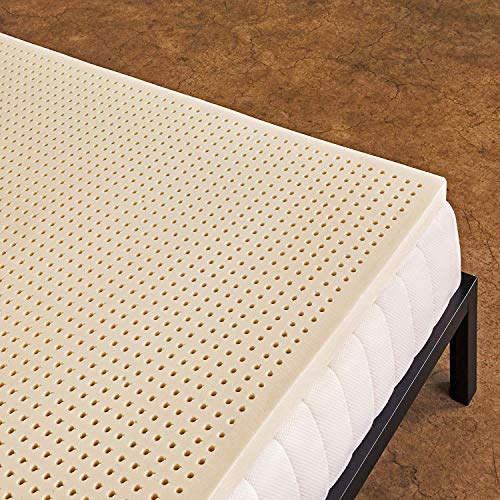
Pure Green Natural Latex Mattress Topper - Soft - 2 Inch - Queen Size (GOLS Certified Organic)
Ingredient panel checked · source
GOLS, company level
Control Union's public search lists the company's GOLS certificate as certified, for the company and not by model. Match the client number, then treat the model as the maker's claim.

MADE SAFE, this product
MADE SAFE lists this exact product in its index, and GOTS is confirmed for the company. The film is a TPU barrier the maker says is made without vinyl, PVC or phthalates.
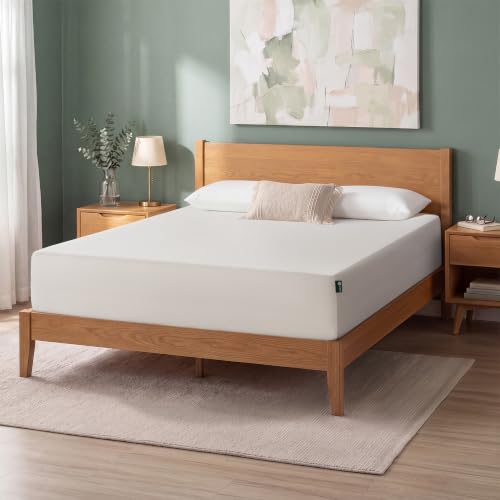
CertiPUR-US, foam only
The Amazon listing says the foams are CertiPUR-US certified and the cover is OEKO-TEX Standard 100. We did not search CertiPUR-US's directory for this model, so both are the listing's claims. The example shows the scope gap: a foam-only label on a whole mattress, with no whole-mattress emissions certification listed.
Cheat sheets for this
Part of the Mattresses & Bedding hub— the rest of our coverage in this category.
Every mattresses & beddingproduct we've reviewed— what we'd buy, what we'd skip, and where each one stands.