
The crib mattress cheat sheet
One winner for each way people buy crib mattress.
The at-a-glance version for the one nursery purchase a baby is pressed against for most of its sleeping hours: which certifications measure what, the label words that certify nothing, and the crib mattresses we have read the manufacturer's own page for, sorted by how people actually buy.
How we scoreHow we earnChecked October 23, 2026
Our winner for each way people buy
How we scoreHow we earnChecked October 23, 2026
Our top pick (the one we have reviewed)

Naturepedic
Organic Baby Crib MattressOrganic cotton, a food-grade polyethylene waterproof surface, no PVC and no polyurethane foam core; expensive, and the review says so. See the latex note in the tips.
Meets our published criteria, as of Oct 23, 2026
$279ViewBest for the toddler years (2-stage)

Naturepedic
Organic Baby Crib MattressThe lightweight two-stage Naturepedic build, with a polyethylene foam core per the maker's line description; the maker states it meets flammability standards without added flame-retardant chemicals. See the latex note in the tips.
Meets our published criteria, as of Oct 23, 2026
$299ViewOrganic hybrid, if latex and wool are fine

Avocado Green Mattress
Avocado Organic Crib MattressOrganic cotton, wool, natural latex and coconut fiber over innerspring coils, with no polyurethane foam or vinyl per the maker. It contains latex and wool, so skip it if either allergy runs in the family. The most expensive mattress here.
Meets our published criteria, as of Oct 23, 2026
$599ViewLowest price with no polyurethane foam

DaVinci
Complete Slumber Crib & Toddler MattressA high-density polyester-fiber core the maker says is free of polyurethane foam, vinyl and chemical flame retardants, with GREENGUARD Gold displayed by the maker. Conventional materials, not organic.
Meets our published criteria, as of Oct 23, 2026
$119ViewBest waterproof protector
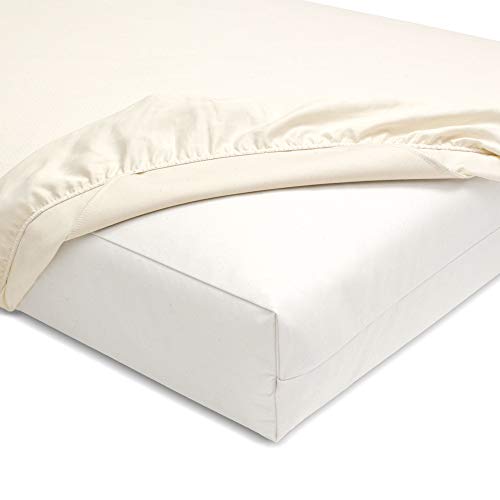
Naturepedic
Organic Waterproof Crib Mattress PadOrganic cotton the maker lists as GOTS-certified, with a thin TPU waterproof layer; made without vinyl, PVC or phthalates, per the maker. Buy the fitted style, never a loose pad.
Meets our published criteria, as of Oct 23, 2026
$79ViewBest washable (air-core build)

Newton Baby
Essential Crib MattressA polymer-fiber core the maker calls 90% air, with the maker's "ultra breathable" claim, and a machine-washable cover; GREENGUARD Gold is displayed by the maker.
Meets our published criteria, as of Oct 23, 2026
$199.99ViewA foam option

Graco
Premium Foam Baby Crib & Toddler Bed MattressA polyurethane foam core. Stork Craft, which makes it under the Graco name, displays CertiPUR-US and GREENGUARD Gold; certifications we could not check ourselves. In 2015 Stork Craft recalled two other models, 06710-100 and 06710-200 (made August 2014 to January 2015), for failing the federal open-flame standard; CPSC reported no injuries and the fix was a free barrier cover.
Meets our published criteria, as of Oct 23, 2026
$99.97ViewSame maker, same standard: changing pad

Naturepedic
Organic Contoured Changing PadOrganic cotton the maker lists as GOTS-certified, with a sugarcane-derived waterproof coating instead of vinyl over a food-grade polyethylene foam core, per the maker. The last thing on this sheet to spend on: a baby is on a pad for minutes, not sleeping hours.
Meets our published criteria, as of Oct 23, 2026
$139View
What to avoid
- A vinyl (PVC) surface — the standard waterproof covering, and it generally needs phthalate plasticizers (see the Naturepedic review)
- Polyurethane foam with no certification — a source of volatile organic compounds, heaviest when new (see the sleep hub)
- Added flame-retardant chemistry — the federal open-flame rule can be met with a barrier fabric instead, and labels rarely say which
- "Organic" read as the whole mattress — it can describe the cotton cover alone and say nothing of the core or fire barrier
- Using it straight out of the wrapper — emissions are highest when a mattress is new and fall off over the following weeks
What to look for
- GREENGUARD Gold — tests the finished product's emissions against limits set with children in mind
- CertiPUR-US — a content standard for the polyurethane foam only (see our explainer)
- A stated scope — which component a claim covers, and how the fire standard was met
- 1Skip: A vinyl surface over a polyurethane foam coreBuy instead: Naturepedic, Avocado Green Mattress Why
- 2Skip: A waterproof layer that is a vinyl sheetBuy instead: Naturepedic Why
- 3Skip: Polyurethane foam, when a no-foam build costs lessBuy instead: DaVinci, babyletto, Lullaby Earth Why
- 4Skip: Treating organic as the only way inBuy instead: Newton Baby, Graco Why
- 5Skip: A vinyl changing-table padBuy instead: Naturepedic Why
What the label card means
What to skip, and why
A vinyl (PVC) surface
The standard waterproof covering, and it generally needs phthalate plasticizers (see the Naturepedic review).
Know the risks: PVC / soft vinylPolyurethane foam with no certification
A source of volatile organic compounds, heaviest when new (see the sleep hub).
Added flame-retardant chemistry
The federal open-flame rule can be met with a barrier fabric instead, and labels rarely say which.
"Organic" read as the whole mattress
It can describe the cotton cover alone and say nothing of the core or fire barrier.
Using it straight out of the wrapper
Emissions are highest when a mattress is new and fall off over the following weeks.
Where to buy
The full guide: how we chose
A crib mattress is judged on two questions: what it is made of, and what comes out of it into the air. Different certifications answer each, and none of them means "no chemicals" — they mean an independent party measured a defined list. The free step that beats the gap between two well-certified mattresses is airing a new one for several days before the first night, and whatever you buy, firm and flat with nothing soft in the crib outranks every chemical question.
What this sheet covers
This is the quick version of how to choose a crib mattress, for a parent who is registering for a nursery or replacing one. It does not repeat our longer pages; it points at them. The reasoning for why a mattress deserves more scrutiny than most furniture is in the sleep hub, and the detail on off-gassing and the federal fire rule is in can mattresses be toxic.
The sheet sorts twelve picks by how people actually buy: our top pick and its organic alternatives, the toddler years, the protector you add on top, a no-foam build at a lower price, a washable air-core build, a conventional foam option, and the changing pad from the same maker. Four of the mattresses are organic. The others are here because a certified conventional mattress is a defensible choice, and because the pad and the washable build answer questions people ask.
The swaps in prose
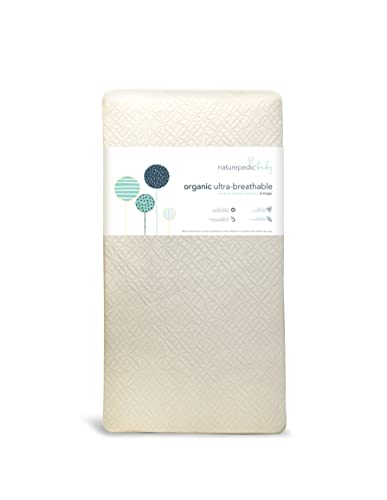
Our top pick is the Naturepedic organic crib mattress, which leaves out the vinyl surface and polyurethane foam core that drive the concern in this category. It is expensive. Naturepedic's brand profile has the rest of the record. For the years after the crib, the same maker's lightweight two-stage mattress is the version that carries into a toddler bed. Its Ultra build adds a removable quilted breathable cover; we matched that Amazon listing to the maker's page by title and price rather than by model number, so check the listing against the line you want. Naturepedic's Classic, Breathable and Ultra pages each say in one place that the line is made without latex and in another that its comfort layers use organic latex foam, and none reconciles the two, so ask the maker in writing before you buy if latex matters to you.
The other organic pick is Avocado's hybrid, which uses organic wool as its fire barrier and natural latex in its comfort layers, with innerspring coils. That makes it the right pick for a family that wants an all-natural build and the wrong one if latex or wool allergy runs in the family. It is also the most expensive mattress here, and it has no waterproof layer of its own: the maker says to add a waterproof pad, which adds to the cost. Avocado recalled a different product, its mattress pads, in 2024 for failing the federal mattress-pad flammability rule (CPSC notice); we found no recall of the crib mattress.
A waterproof pad is the layer a baby's face actually touches, so the protector is worth choosing on its own. Our pick is a GOTS organic cotton pad with a thin TPU waterproof layer, which the maker states is made without vinyl, PVC or phthalates. The same vinyl question applies to a changing-table pad, and Naturepedic's states a sugarcane polyethylene coating instead.
If an organic mattress is not in the budget, three conventional mattresses leave out polyurethane foam: DaVinci's polyester-fiber Complete Slumber is the least expensive, babyletto's Pure Core has a recyclable polyester core, and Lullaby Earth's Gentle Start adds a breathable cover. Their makers display GREENGUARD Gold, and Lullaby Earth also displays EWG Verified. We read each maker's own page. The babyletto page says no chemical flame retardants and lists modacrylic batting, a flame-resistant fiber, without saying which layer is the fire barrier, so ask. The washable pick uses a different core entirely, which the maker describes as 90% air.
The foam option is a polyurethane foam build, made by Stork Craft under the Graco name, with CertiPUR-US and GREENGUARD Gold displayed by the maker. In 2015 Stork Craft recalled two other models, 06710-100 and 06710-200 (made August 2014 to January 2015, sold in Graco-logo boxes), for failing the federal open-flame standard, according to the CPSC notice. CPSC reported no incidents or injuries and the fix was a free barrier cover. A mattress bought new today is not from that window, and the notice lists the model numbers if you are given a used one. We could not confirm any maker's GREENGUARD Gold listing in UL's database, which serves a human-verification challenge, so treat those as the maker's claims.
How to read the label
Four certifications turn up on crib mattresses, and each measures a different thing.
- GREENGUARD Gold is an emissions standard. It tests the finished product against limits set with children in mind.
- CertiPUR-US is a content standard for the polyurethane foam only. It says nothing about the rest of the mattress; our explainer cites CertiPUR-US's own description.
- GOTS is an organic textile certification. On these pages it describes the cotton fabric and fill, and its public database can be searched by company.
- OEKO-TEX STANDARD 100 is a textile label that tests textiles for listed substances. Where it appears here, the maker claims it for the cover alone.
"Organic" is the word to read slowly. A mattress called organic may have an organic cotton cover and a conventional core, so ask which component a claim covers. Every mattress sold in the US must meet the federal open-flame rule, 16 CFR Part 1633, and it can be met with a barrier fabric instead of treated foam; the label rarely says which, so ask. Terms such as "non-toxic", "eco-friendly" and "natural" are marketing, not standards.
Where to go next
For the full reasoning, start with the sleep hub and the Naturepedic review, which includes the free off-gassing routine for when an organic mattress is not in reach. The frame matters as much as what goes on it: what to check before you buy a crib covers materials and why registering the crib is the highest-value step, and five places a non-toxic nursery actually matters puts the mattress in context. The nursery guide covers setting up the room, and the air quality guide covers ventilating it.
The swaps, in full
A vinyl surface over a polyurethane foam core
The standard waterproof covering is vinyl, which generally needs phthalate plasticizers to stay flexible, and polyurethane foam is a source of volatile organic compounds, particularly when new. A mattress made without both closes the question rather than leaving it to be managed. Our Naturepedic review covers the model it reviewed in full, including the cost.
Hides in: The materials list on the maker's own page, not the front of the box
Organic cotton, a food-grade polyethylene waterproof surface, no PVC and no polyurethane foam core. Expensive, and the review says so. See the latex note in the tips.
Certifier record checked · source
The same maker's lightweight two-stage build, with a polyethylene foam core per the maker's line description; the maker states it meets flammability standards without added flame-retardant chemicals. See the latex note in the tips.
Naturepedic's most premium build: a removable quilted breathable cover over seamless waterproofing the maker says is made without vinyl or PVC, and no polyurethane foam. The most expensive Naturepedic here. See the latex note in the tips.
Ingredient panel checked · source
Organic cotton, wool, natural latex and coconut fiber over innerspring coils, with no polyurethane foam or vinyl per the maker. It contains latex and wool, which matter if either allergy runs in the family, and it is the most expensive mattress on this sheet.
Avocado Organic Crib Mattress — 2-Stage Infant & Toddler Mattress, GOTS-Certified Organic Cotton & Wool, GOLS-Certified Latex, GREENGUARD Gold Certified, Standard Crib Size 52 x 28 x 6 Inches
Ingredient panel checked · source
A waterproof layer that is a vinyl sheet
The protector is the layer between the mattress and the sheet, so it is worth choosing on its own. The maker of our pick states a thin TPU barrier over organic cotton, made without vinyl, PVC or phthalates.
Hides in: The protector or pad you add on top of any mattress
Organic cotton the maker lists as GOTS-certified, with a thin TPU waterproof layer, machine washable per the maker. Buy the fitted style, never a loose pad.
Polyurethane foam, when a no-foam build costs less
Polyurethane foam is a source of volatile organic compounds, heaviest when new. These three conventional-materials mattresses use a polyester-fiber core instead, per their makers' own pages, and each displays GREENGUARD Gold. None is organic, and we could not check UL's database, so read them as the makers' claims.
Hides in: The core described on the maker's page, not the cover
A high-density polyester-fiber core the maker says is free of polyurethane foam, vinyl and chemical flame retardants, with GREENGUARD Gold displayed. The least expensive build on this sheet that leaves out foam.
Ingredient panel checked · source
A polyester core with a quilted cotton face and a PVC-free polyethylene-backed cover, GREENGUARD Gold displayed by the maker. The maker says no chemical flame retardants and lists modacrylic batting, a flame-resistant fiber; it does not say which layer is the fire barrier, so ask.

Ingredient panel checked · source
A three-dimensional breathable cover over polyethylene waterproofing, with EWG Verified and GREENGUARD Gold displayed by the maker. The maker's breathability claim cites a test by Intertek but publishes no standard or results, so we record none.

Ingredient panel checked · source
Treating organic as the only way in
Our explainer on mattress toxicity is plain that a certified conventional mattress is a defensible choice: GREENGUARD Gold and CertiPUR-US each measure something real. These are two conventional routes when an organic mattress is not in the budget; read the certification scope below before assuming more.
Hides in: Both certifications are manufacturer-displayed here; we could not check UL's database
A polymer-fiber core the maker calls 90% air, with the maker's "ultra breathable" claim, a machine-washable cover, and a core you rinse by hand. GREENGUARD Gold is displayed by the maker.
A polyurethane foam core. Stork Craft, which makes it under the Graco name, displays CertiPUR-US and GREENGUARD Gold, and an OEKO-TEX label for the cover. A conventional foam build, not an organic one. In 2015 Stork Craft recalled two other models, 06710-100 and 06710-200 (made August 2014 to January 2015, sold in Graco-logo boxes), for failing the federal open-flame standard. CPSC reported no incidents or injuries and the fix was a free barrier cover. This model's page lists 06710-400-series numbers (CPSC notice below).
A vinyl changing-table pad
A changing pad is a second waterproof surface a baby lies on, and it raises the same vinyl question as the mattress cover. Naturepedic, whose mattress we reviewed, states its pad's waterproofing is made from sugarcane polyethylene instead of vinyl or PVC.
Hides in: The waterproof surface described on the maker's page
An organic cotton surface the maker lists as GOTS-certified, a sugarcane-derived polyethylene waterproof coating over a food-grade polyethylene foam core per the maker, and a safety buckle. A baby is on a changing pad for minutes, not the hours spent asleep, so this is the last thing on the sheet to spend on. Certifications are manufacturer-displayed here.
Do the free things first
Air it out before the first night
Emissions from a new mattress are highest when it is new and fall off over the following weeks. Unwrapping it in a ventilated room for several days does more than the gap between two well-certified mattresses.
Ventilate the room
The room matters as much as the mattress, and opening a window is free. Our air quality guide covers it properly.
Keep it firm, flat and bare
Every infant mattress must be firm, and nothing soft belongs in the crib. It is a safe-sleep requirement rather than a chemical one, and it comes first.
Label traps that are not ingredients
- "Non-toxic" on a tag — It certifies nothing. A certification means somebody independent measured a defined list, which is more useful and considerably narrower.
- An "organic" badge read as the whole mattress — It can describe the cotton cover while saying nothing about the foam core, the adhesives or the fire barrier. Ask which component the claim applies to.
- A certification logo with no scope — GREENGUARD Gold and CertiPUR-US answer different questions. A logo that does not say which part of the mattress it covers has told you very little.
How we choose
We read the materials and certification statement on the manufacturer's own page, record what it said and on what date, and say which certifications we could confirm and which we could only read as the maker's claim. We searched CPSC's recall database for each pick's maker on 2026-10-23. We favor third-party certification over manufacturer language, and we say what each certification covers. Where a pick is a conventional polyurethane foam build, the page says so rather than letting a certification logo imply more.
- Third-party certified for emissions (GREENGUARD Gold) or foam content (CertiPUR-US), or an organic textile certification, stated with its scope
- Materials disclosed on the maker's own page, and the fire-barrier method where the maker states it; where it does not, we say so
- Certifications we could not confirm are labeled as manufacturer-displayed
Every source we cite is checked against our criteria first — see how we check our sources.
What the research says
The 2022 AAP policy statement, first-authored by Rachel Y. Moon, directs caregivers to place infants on a firm, flat, non-inclined sleep surface such as a tightly fitting crib mattress in a safety-approved crib, covered by a fitted sheet with no other bedding or soft objects, and states that sleep surfaces with inclines of more than 10 degrees are unsafe for infant sleep.
— According to Pediatrics 150(1), American Academy of Pediatrics guidance co-authored by Rachel Y. Moon, MD, ...
Sleep-Related Infant Deaths: Updated 2022 Recommendations for Reducing Infant Deaths in the Sleep Environment — Pediatrics 150(1), American Academy of Pediatrics
The 2022 AAP policy statement (Moon et al.) states that sitting devices - car seats, strollers, swings, infant carriers, and infant slings - are not recommended for routine sleep at home or in the hospital, particularly for infants under 4 months of age.
— According to Pediatrics 150(1), American Academy of Pediatrics guidance co-authored by Rachel Y. Moon, MD, ...
Sleep-Related Infant Deaths: Updated 2022 Recommendations for Reducing Infant Deaths in the Sleep Environment — Pediatrics 150(1), American Academy of Pediatrics
The AAP 2022 technical report, first-authored by Moon, states that room sharing decreases the risk of SIDS by as much as 50%, and the companion policy statement recommends infants sleep in the parents' room, close to the parents' bed but on a separate surface designed for infants, ideally for at least the first 6 months.
— According to Pediatrics 150(1), American Academy of Pediatrics guidance co-authored by Rachel Y. Moon, MD, ...
Evidence Base for 2022 Updated Recommendations for a Safe Infant Sleeping Environment (Technical Report) — Pediatrics 150(1), American Academy of Pediatrics
Sources
- 16 CFR Part 1633 — Standard for the Flammability (Open Flame) of Mattress Sets — Electronic Code of Federal Regulations
- Mattress Flammability Standard: Questions and Answers — U.S. Consumer Product Safety Commission (how we check this source)
- Flame Retardants Used in Flexible Polyurethane Foam — U.S. Environmental Protection Agency (how we check this source)
- Stork Craft Recalls Crib Mattresses Due to Violation of Federal Mattress Flammability Standard (2015) — U.S. Consumer Product Safety Commission (how we check this source)
- Mattress Pads Recalled Due to Fire Hazard; Violation of Federal Mattress Pad Flammability Regulation; Manufactured by Avocado Mattress (2024) — U.S. Consumer Product Safety Commission (how we check this source)
- Crib safety requirements and recall registration for children's products — U.S. Consumer Product Safety Commission (how we check this source)
Common questions
Every mattresses & beddingproduct we've reviewed— what we'd buy, what we'd skip, and where each one stands.