
The water filter cheat sheet
One winner for each way people buy water filter.
The at-a-glance version: the four numbers that matter most for lead, what to look for on a certificate, and the filters we have already checked against our criteria, by how you would buy one. Bookmark it before you shop.
How we scoreHow we earnChecked October 23, 2026
Our winner for each way people buy
How we scoreHow we earnChecked October 23, 2026
A pitcher from a maker with a 53 lead listing
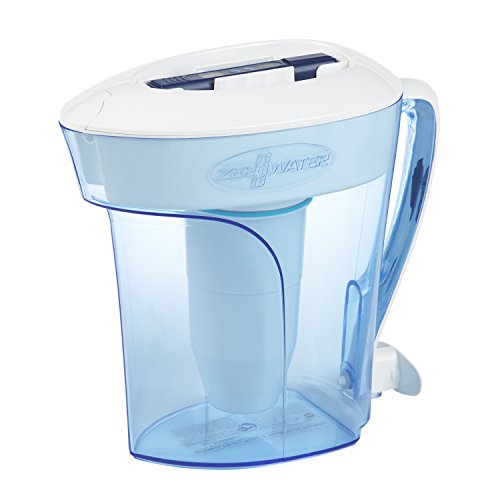
ZeroWater
10-Cup Pitcher Water Filter Removes PFOA/PFASWe could not match this 10-cup model number in IAPMO's file W-17155, so confirm the model in the register. ZeroWater states its filter system is certified by IAPMO R&T to NSF/ANSI 53 for lead (15-gallon rating), and IAPMO's register lists the company's 53 file (checked August 24, 2026).
Meets our published criteria, as of Oct 23, 2026
$34.99ViewA pitcher for chlorine taste and odor

Clearly Filtered
Water Filter PitcherListed on NSF's register for chlorine, taste and odor reduction (42) and lead-free materials (372); neither is a lead-removal claim.
Meets our published criteria, as of Oct 23, 2026
$109.99ViewBudget under-sink

Waterdrop
10UA Under Sink Water Filter SystemThe low-cost way into under-sink filtration. IAPMO R&T lists the 10UA to NSF/ANSI 42 (chlorine, taste and odor) and 372 (lead-free materials). Neither is a lead-reduction claim.
Meets our published criteria, as of Oct 23, 2026
$43.99ViewFaucet mount with a lead listing

Pur
Plus Vertical Faucet Mount Water Filtration SystemIAPMO R&T lists model FM-3700B (PUR's SKU for this Chrome vertical system) to NSF/ANSI 53 for lead, mercury, total PFAS and VOCs, with the PUR PLUS filter RF-9999 (checked October 23, 2026). Matched to the Amazon listing by title; confirm FM-3700B on the box. It will not fit a pull-out or hand-held faucet.
Meets our published criteria, as of Oct 23, 2026
$31.85ViewUnder-sink with a lead listing

Aquasana
Under Sink Water FilterWQA lists the Claryum 3-Stage Max Flow (AQ-6300M and AQ-5300+) to NSF/ANSI 42 and 53 (lead, cyst, mercury, PFOA/PFOS, VOCs tested as chloroform) (checked October 23, 2026); it needs plumbing.
Meets our published criteria, as of Oct 23, 2026
$224.99ViewReverse osmosis

Waterdrop
Tankless Reverse Osmosis Water Filter System Silver…IAPMO R&T lists the G3P600 to NSF/ANSI 58 for TDS, fluoride, cadmium, barium, radium 226/228 and lead (WC-13976), and to NSF/ANSI 53 for PFOA/PFOS only (WC-14805), checked October 23, 2026; the Performance Data Sheet on Waterdrop's product page does not list lead, so we could not confirm a lead figure.
Meets our published criteria, as of Oct 23, 2026
$429ViewFor the bath

Santevia
Organic Cotton Bath Faucet Filter by SanteviaHangs off the tub tap with no plumbing; the brand cites lab testing to the NSF 42 chlorine protocol, not a formal certification.
Meets our published criteria, as of Oct 23, 2026
$24.99ViewFor the shower

Aquabliss
Daily Revitalize Shower FilterThe shower version, for children who shower; the brand lists its filter media and cites no third-party certification.
Meets our published criteria, as of Oct 23, 2026
$36.99ViewA first step if you want to test at home

Safe Home
DIY Lead in Drinking Water Combo Test Kit-A home lead screen with optional mail-in lab confirmation; a screen, not a measurement.
Meets our published criteria, as of Oct 23, 2026
$36.99View
What to avoid
- "NSF certified" with no number — the word carries no information until you know which standard, and the standards cover very different things
- NSF/ANSI 42 offered as a safety claim — it covers chlorine taste, odor and particulates, not lead
- "Tested to" or "in accordance with" NSF/ANSI protocols — a lab ran the method; that is not a listing you can look up
- A certification you cannot find in any of the three registers (NSF, IAPMO R&T, WQA) — NSF, IAPMO R&T and WQA all publish listings, so a claim can be checked
- "Removes 99% of contaminants" with no list — ask which contaminants and to which standard
What to look for
- NSF/ANSI 53 for the model — the health-effects standard that covers lead, VOCs and cysts
- NSF/ANSI 58 for reverse osmosis — it is the standard for RO systems, a different job from a pitcher; lead counts only where the model's listing names it
- A listing number you can look up — a file or listing number in the certifier's register ties the claim to a named product
- 1Skip: Reading NSF/ANSI 42 as a lead claimBuy instead: ZeroWater, Clearly Filtered Why
- 2Skip: Buying a filter before testing the waterBuy instead: Safe Home Why
- 3Skip: Expecting a bath or shower filter to make water safe to drinkBuy instead: Santevia, Aquabliss Why
- 4Skip: Trusting a certification claim in a product titleBuy instead: Waterdrop, CuZn Why
- 5Skip: A lead claim you cannot find on a register for the exact modelBuy instead: Pur, Aquasana, Brita Why
- 6Skip: Reading a reverse osmosis certification as a lead claimBuy instead: Waterdrop, Apec Water Why
What the label card means
What to skip, and why
"NSF certified" with no number
The word carries no information until you know which standard, and the standards cover very different things.
NSF/ANSI 42 offered as a safety claim
It covers chlorine taste, odor and particulates, not lead.
"Tested to" or "in accordance with" NSF/ANSI protocols
A lab ran the method; that is not a listing you can look up.
A certification you cannot find in any of the three registers (NSF, IAPMO R&T, WQA)
NSF, IAPMO R&T and WQA all publish listings, so a claim can be checked.
"Removes 99% of contaminants" with no list
Ask which contaminants and to which standard.
The full guide: how we chose
A water filter is only as useful as the standard it is certified to, and the number printed most often on the box, NSF/ANSI 42, covers chlorine taste and odor, not lead. For lead you want NSF/ANSI 53, listed for the specific model in a certifier's public register (or NSF/ANSI 58 for reverse osmosis, only where the model's listing names lead). Test your water first, then buy the filter certified for what you found.
What this sheet covers
This is the quick version of our water section, for the moment you are standing at a shelf or a checkout page. It covers drinking-water pitchers, faucet mounts, under-sink units, reverse osmosis and bath and shower filters, and it is for anyone who has already read a claim on a box and wants to know what it means. The reasoning lives in the pages linked at the bottom; this sheet points at them rather than repeating them.
We do not list a whole-house filter, because no published page on this site has a pick in that group. The PUR faucet mount, the Aquasana under-sink unit, the Brita Elite filter and both reverse osmosis picks each have a listing in a public register that we read on October 23, 2026. The Waterdrop 10UA listing was read on October 18. For ZeroWater and CuZn, the card says what we could not confirm.
The swaps in plain words
Start with the test, not the filter. Your utility's report describes the water in the mains, and a first-draw home sample covers what your own pipes add. The test guide walks through both.
Then match the number to the problem. If lead is the reason, a pitcher to start from is ZeroWater, a maker with a 53 lead listing: ZeroWater states its lead claim is a certification, which IAPMO's register backs at company level, not a lab result. We could not find this exact model in the file, so confirm the model first. A faucet mount is the no-plumbing alternative: the PUR PLUS vertical faucet system (FM-3700B) with the RF-9999 filter is listed to NSF/ANSI 53 for lead. Under the sink, the Aquasana Claryum is listed to 53 for lead too. A Brita pitcher counts only with the Elite filter, and only in the pitcher models on Brita's listing. If the problem is chlorine taste, the Clearly Filtered pitcher is a reasonable buy and publishes detailed performance data, but it is not a lead pick. Under the sink, the Waterdrop unit is the low-cost way in and the CuZn unit claims a long cartridge life (five years is the brand's figure; check the gallon rating too). Neither has a lead-reduction listing that we found, and for CuZn we could not confirm any listing. Our filter guide records what we could and could not confirm for each.
Reverse osmosis is a bigger step, with plumbing and wastewater. Its certification is NSF/ANSI 58, and the claims differ by model: IAPMO's register lists lead for the Waterdrop G3P600, though the data sheet we found for it does not, while the APEC ROES-50 is listed for TDS only. Read the model's own listing and data sheet before you assume either.
Bath and shower filters are a separate job. They target chlorine and do not make water safe to drink. Our best shower filter page ranks the certified ones, and the bath filter review covers the faucet-hanging kind.
How to read the label
- NSF/ANSI 42: aesthetic effects, meaning chlorine taste, odor and particulates. Not a health claim and not a lead claim.
- NSF/ANSI 53: health effects, the standard that covers lead, VOCs and cysts.
- NSF/ANSI 58: reverse osmosis systems.
- NSF/ANSI 372: the device's own materials are lead-free, which is about the filter and not your water.
NSF/ANSI is a standard, not a single certifier: NSF, IAPMO R&T and WQA all list products against it, so a model missing from one register may appear in another. Look for a listing or file number tied to a named product. A phrase like "tested to" means a laboratory ran the method, which is useful data and not a listing.
Where to go next
The swaps, in full
Reading NSF/ANSI 42 as a lead claim
NSF/ANSI 42 covers aesthetic effects: chlorine taste, odor and particulates. Lead sits under NSF/ANSI 53, or under 58 for a reverse osmosis model whose listing names it. A filter can be well made, honestly marketed, certified to 42, and do nothing measurable about lead.
Hides in: The certification line on the box or listing, which usually names a number and not what the number covers
We could not find this exact model in IAPMO's file W-17155, so confirm the model in the register before you rely on it. ZeroWater states its lead claim is a certification to NSF/ANSI 53, which IAPMO's register backs at company level. The rating is 15 gallons, which is short, and the bundled TDS meter makes exhaustion visible.
Listed on NSF's register for chlorine, taste and odor (42) and for lead-free materials (372). Neither is a certified claim that it removes lead, so it is a taste pick, not a lead pick.
Buying a filter before testing the water
A filter is only useful against a contaminant it is certified to reduce. Your utility report covers the mains; a first-draw home sample covers what your own pipes add.
Hides in: Step one, before any cart: the utility report, then a first-draw sample
A home lead screen with optional mail-in lab confirmation. The brand describes its lab as EPA-certified but publishes no number to check. It is a screen, not a measurement.
Expecting a bath or shower filter to make water safe to drink
A bath or shower filter targets chlorine on skin. It does not make water safe to drink, will not address lead, and is not a response to a boil notice.
Hides in: Faucet-hanging bath filters and shower cartridges, whatever the Amazon title says
Hangs off the tub tap with no plumbing. The brand cites independent lab testing to the NSF 42 chlorine protocol, which is lab testing and not a formal certification.
The version for children who shower. The brand lists its filter media and cites no third-party certification.
Manufacturer statement checked · source
Trusting a certification claim in a product title
The certifying bodies publish public registers, so a claim can be checked against the model. Our filter guide records what we could and could not confirm for each under-sink pick.
Hides in: The Amazon title and bullet points, and the certifier named behind the claim
The low-cost entry to under-sink filtration. IAPMO R&T lists the 10UA to NSF/ANSI 42 (chlorine, taste and odor) and 372 (lead-free materials). Neither is a lead-reduction claim.
A five-year cartridge, for people who dislike maintenance. Five years is the brand's figure; check the gallon rating too. Its Amazon listing claims NSF standards we could not confirm on NSF's register (IAPMO and WQA not checked).

CuZn UC-200 Under Sink Water Filter, NSF/ANSI 42 & 372, 5-Year Filter Life | Reduces PFAs, PFOS, Lead, Chlorine, Improves Tap Water Taste, Inline Faucet Connection for Simple Installation
A lead claim you cannot find on a register for the exact model
Lead reduction is an NSF/ANSI 53 claim, and each register lists it model by model. We checked these three against IAPMO R&T or WQA on October 23, 2026, so each has a listing you can look up. For all three the listing covers named models only, so check yours.
Hides in: The model number on the box or filter, then IAPMO R&T (pld.iapmo.org) or WQA (find.wqa.org)
IAPMO R&T lists model FM-3700B (PUR's SKU for this Chrome vertical system) to NSF/ANSI 53 for lead, mercury, total PFAS and VOCs, with the PUR PLUS filter RF-9999. Matched to the Amazon listing by title; confirm FM-3700B on the box. It does not fit pull-out or hand-held faucets, and the filter is rated for 100 gallons or about three months.
WQA lists the Claryum 3-Stage Max Flow (AQ-6300M and AQ-5300+) to NSF/ANSI 42 and 53 (lead, cyst, mercury, PFOA/PFOS, VOCs tested as chloroform). It needs plumbing and generally costs more than a faucet filter.
IAPMO R&T lists the Elite filter to NSF/ANSI 53 for lead, but only inside the Brita pitchers and the Ultramax dispenser named on that file; Brita's own page says it applies "when used with Brita Pacifica Pitcher with Elite Filter". It is not a lead claim for the filter alone, or in a pitcher that is not on the listing.

Reading a reverse osmosis certification as a lead claim
NSF/ANSI 58 certifies a reverse osmosis system only for the claims listed for that exact model, and the list differs from model to model. The two below are listed differently.
Hides in: WQA or IAPMO R&T, for the model number, not the brand
IAPMO R&T lists the G3P600 to NSF/ANSI 58 for TDS, fluoride, cadmium, barium, radium 226/228 and lead (file WC-13976), and to NSF/ANSI 53 for PFOA/PFOS only (file WC-14805). The Performance Data Sheet linked from Waterdrop's product page (version V005) lists TDS, cadmium, hexavalent chromium, selenium and fluoride for NSF/ANSI 58 and does not list lead, so we could not confirm a lead reduction figure. It needs plumbing and wastes water as it filters.
WQA lists the ROES-50 to NSF/ANSI 58 for TDS and no other claim. That is not a lead claim, so do not buy it for lead.

Certifier record checked · source
Do the free things first
Read your utility's annual report
Every community water system publishes a Consumer Confidence Report. It is free, and it shows what your utility detected and the limits it is held to.
Ask the utility to test for lead
Some utilities test for lead free on request. Ask what your service line is made of at the same time.
Take a proper first-draw sample
Collect water the moment the tap opens after it has stood at least six hours. A first-draw sample catches lead from your own fixtures and pipes. Ask your utility how to test for a lead service line as well.
Label traps that are not certifications
- "NSF certified" with no standard named — Certified to which standard? 42 is taste and odor; lead is 53. The word on its own tells you nothing about what is removed.
- "Tested to" NSF/ANSI protocols — A laboratory ran the method. That can be good data and is still not a listing, not audited, and not something you can look up.
- A lead figure with no standard behind it — A percentage reduction from separate lab testing is a different claim from a 53 listing. Both can appear on one product page.
- A spent cartridge — Past its rating a filter stops doing what it was certified to do, and some media can shed part of what they have captured. Change on gallons, not on feel.
- A shower filter as a lead fix — Bath and shower filters target chlorine on skin and do not treat drinking water.
How we choose
We pick from filters our published guides already vet, matched to the job rather than ranked against each other, and we read the NSF/ANSI standard on a certifier's listing where one exists rather than the phrase on the box. Where a pick is certified for something other than what buyers assume, or we could not confirm a claim, this sheet says so.
- Certification, where one is claimed, checked in a public register (NSF, IAPMO R&T or WQA); where we could not confirm it, we say so.
- Honest about capacity and what the filter does not remove
- Cartridges available and realistically priced
Every source we cite is checked against our criteria first — see how we check our sources.
What the research says
more than 98 percent of U.S. residents tested are carrying PFAS in their blood or tissue
— In 2019-05-15 testimony, Erik D. Olson, JD cited ...
Testimony of Erik D. Olson - PFAS — U.S. House Committee on Energy and Commerce (2019-05-15)
112.3 million people got their water from systems that detected lead at or above the 5 ppb lead level
— In 2026-02-24 testimony, Erik D. Olson, JD cited ...
Testimony of Erik D. Olson, Senior Strategic Director for Health, NRDC — U.S. House Committee on Energy and Commerce, Subcommittee on Environment (2026-02-24)
prevent up to 200,000 IQ points lost in children
— In 2026-02-24 testimony, Erik D. Olson, JD cited ...
Testimony of Erik D. Olson, Senior Strategic Director for Health, NRDC — U.S. House Committee on Energy and Commerce, Subcommittee on Environment (2026-02-24)
Sources
- IAPMO Product Listing Directory: Culligan International (ZeroWater) files W-17155 (NSF/ANSI 53) and W-17157 (NSF/ANSI/CAN 372) — IAPMO R&T
- NSF certified drinking water treatment units: Clearly Filtered — NSF
- IAPMO R&T file W-11590: Waterdrop WD-10UA, NSF/ANSI 42 — IAPMO R&T
- IAPMO R&T file W-13936: Waterdrop WD-10UA, NSF/ANSI/CAN 372 — IAPMO R&T
- Culligan ZeroWater FAQ: IAPMO R&T certification against NSF/ANSI 42 and 53, 15-gallon capacity — Culligan ZeroWater
- Clearly Filtered pitcher performance data — Clearly Filtered
- IAPMO R&T file W-29904: Kaz USA (PUR) faucet models, NSF/ANSI 53-2024 — IAPMO R&T
- WQA Gold Seal listing: Aquasana Claryum 3-Stage Max Flow (AQ-5300+, AQ-6300M), NSF/ANSI 42, 53 — WQA
- IAPMO R&T file W-13905: Brita LP, NSF/ANSI 53-2021 (Elite filter in listed pitchers) — IAPMO R&T
- IAPMO R&T file WC-13976: Waterdrop WD-G3P600, NSF/ANSI 58-2024 — IAPMO R&T
- IAPMO R&T file WC-14805: Waterdrop WD-G3P600, NSF/ANSI 53-2022 (PFOA/PFOS) — IAPMO R&T
- Waterdrop WD-G3P600 Performance Data Sheet (V005), linked from the G3P600 product page — Waterdrop
- WQA Gold Seal listing: APEC ROES-50, NSF/ANSI 58 (TDS) — WQA
Common questions
Every water filters & testsproduct we've reviewed— what we'd buy, what we'd skip, and where each one stands.