
Safer baby wipes cheat sheet
One winner for each way people buy baby wipes.
Babies go through a lot of wipes, and every one of them puts its ingredient list on the thinnest skin your child has. That volume is the whole argument — a short ingredient list matters more here than almost anywhere else.
How we scoreHow we earnChecked September 10, 2026
Our winner for each way people buy
How we scoreHow we earnChecked September 10, 2026
Best overall

WaterWipes
Sensitive+ Newborn & Baby WipesWater plus 0.1% grapefruit seed extract, whose own label footnote discloses a trace of benzalkonium chloride. Still the shortest ingredient list on the shelf, at two ingredients, and it is not close.
Meets our published criteria, as of Sep 10, 2026
$11.98ViewFragrance-free
The Honest Company
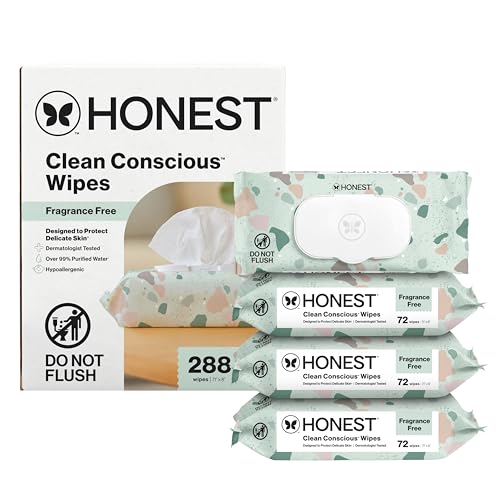
Multi-Use Baby WipesSeven ingredients and no fragrance ingredient of any kind, which the page treats as the single highest-value filter on this shelf.
Meets our published criteria, as of Sep 10, 2026
Biggest pack (288-count)
The Honest Company
Multi-Use Baby WipesHonest Clean Conscious, unscented: seven ingredients, and the 288-count pack is the size that matters once you are changing a newborn ten times a day.
Meets our published criteria, as of Sep 10, 2026
$19.97ViewPhenoxyethanol-free

Jackson Reece
Kinder by Nature Water-Based Baby WipesThe brand's own page states 0% alcohol, parabens, SLS, SLES, lanolin, phthalates, phenoxyethanol or benzoates, a narrower promise than most of this shelf makes.
Meets our published criteria, as of Sep 10, 2026
Reusable

GroVia
Reusable Cloth Diapering WipesCloth wipes that wash with the diapers. Read the fiber content first: GroVia's own page gives these as 88% polyester and 12% cotton.
Meets our published criteria, as of Sep 10, 2026
$15.99View
What to avoid
- Fragrance / parfum — the one term that can legally cover an undisclosed mixture
- Parabens — FDA has no information showing they affect human health, but every pick here is paraben-free anyway
- Propylene glycol and PEG compounds — the class FDA names as the source of 1,4-dioxane as a manufacturing byproduct
- Phenoxyethanol — a widespread preservative; a preference call, not a settled safety verdict
- An unpronounceable list, generally — a rough heuristic, but useful on a product used dozens of times a week
What to look for
- A brand that publishes its full ingredient list on its own site — the criterion that did the most work in this pass — several brands people ask about simply don't
- Shortest workable ingredient list — fewer things to react to on skin this delicate
- Fragrance-free, with no fragrance ingredient on the panel — the highest-value filter, and the easiest to check
- No parabens, PEGs, or propylene glycol on the panel — avoidable in this category without giving anything up
- A panel read on the manufacturer's own page, and dated — formulations change without notice
What the label card means
What to skip, and why
Fragrance / parfum
The one term that can legally cover an undisclosed mixture.
Know the risks: Fragrance not fully itemizedParabens
FDA has no information showing they affect human health, but every pick here is paraben-free anyway.
Propylene glycol and PEG compounds
The class FDA names as the source of 1,4-dioxane as a manufacturing byproduct.
Phenoxyethanol
A widespread preservative; a preference call, not a settled safety verdict.
An unpronounceable list, generally
A rough heuristic, but useful on a product used dozens of times a week.
Where to buy
The full guide: how we chose
This is a volume argument rather than an alarm. A single wipe is not the issue; several thousand of them, on the thinnest and most frequently broken-in skin a person will ever have, is. Read the back of the pack once — parabens turn up on brands people have used for months without looking.
Why wipes specifically
In the middle of changing everything else over, wipes are easy to overlook. Ours stayed overlooked until a refill pack got turned over and read properly — and there were parabens on the label of the brand we had been using without thinking about it for months.
That is the case for paying attention here, and it is a volume argument rather than an alarm. A single wipe is not the issue. Several thousand of them, on the thinnest and most frequently broken-in skin on a small person, is a different proposition.
A caveat we would rather state up front
A lot of the ingredients in this category simply do not have enough research behind them to say confidently whether they are a problem in this specific use. We are not going to pretend otherwise.
Our position is straightforward and it is a preference, not a warning: where a safer-looking option exists at a comparable price, we take it. Given how many wipes a baby gets through, we would rather not find out later that it added up.
We also have not researched every brand. There are a great many, and there are two of us. This is as complete as we could make it, not a sweep of the market.
What we avoid
Conventional wipes commonly contain some combination of parabens, fragrance (which can cover an undisclosed mixture, phthalates included), PEG compounds, propylene glycol and phenoxyethanol.
If you make only one change, make it fragrance-free. It is the highest-value filter in the category and the easiest to check — and it is the one place where the label genuinely does not have to tell you much: FDA's own guidance is that fragrance and flavor ingredients can be listed simply as "fragrance" or "flavor" rather than named.
There is also a manufacturing question worth knowing about, and the older version of this page had it pointing at the wrong thing. 1,4-dioxane is not a bleaching byproduct. FDA's own page says it "forms as a byproduct during the manufacturing process of certain cosmetic ingredients", and names those ingredients as the ones "identifiable by the prefix, word, or syllables 'PEG,' 'Polyethylene,' 'Polyethylene glycol,' 'Polyoxyethylene,' '-eth-,' or '-oxynol-.'" So it is not a pulp question at all — it is one more reason to hold the no-PEGs line above, because a PEG on a panel is the company 1,4-dioxane keeps. Chlorine-bleached pulp is a separate argument and mostly an environmental one; we have not found a contamination claim about it that we can source, so we are not making one.
The panels, side by side
Every list below was read on the manufacturer's own product page on the date given. Nothing here is copied from a retailer listing or from an older version of this page.
| Brand | Ingredients on the panel | Preservative system | Read |
|---|---|---|---|
| WaterWipes Sensitive+ | 2 — water and grapefruit seed extract; the pack itself is sold as "99.9% Water" | None on the panel; the extract's own footnote discloses a trace of benzalkonium chloride | 2026-08-21 |
| Honest Clean Conscious | 7 | Sodium benzoate, with caprylyl glycol and ethylhexylglycerin | 2026-09-10 |
| Kinder by Nature | 8 | Potassium sorbate, levulinic acid, sodium levulinate | 2026-09-10 |
| Aleva Naturals Bamboo Sensitive | 14 | Potassium sorbate and sodium benzoate, plus lauralkonium chloride and didecyldimonium chloride — both quaternary ammonium compounds | 2026-09-10 |
| Eco by Naty | Not published | Not published | 2026-09-10 |
Our picks
WaterWipes are the top pick for the reason the whole category comes down to: the ingredient list is water plus 0.1% grapefruit seed extract. There is very little to have a view about.
The one recurring question about them is that extract, and the label answers it in its own footnote: "Aqua, Citrus Grandis Seed Extract*. *Contains trace of Benzalkonium Chloride." We verified that panel against WaterWipes' own product page on 2026-08-21 and it is quoted in full one click away, on our product page for these wipes. A trace of a preservative inside an ingredient that is itself a thousandth of the pack is a small thing, and it is disclosed rather than buried — but it is not nothing, and a two-ingredient list is exactly the kind of page where a reader deserves the footnote rather than a summary of it.
Honest's Clean Conscious wipes are the value pick, and the one to buy in bulk. The panel on Honest's own page reads: "Water (Aqua/Eau), Trisodium Ethylenediamine Disuccinate, Sodium Benzoate, Sorbitan Oleate Decylglucoside Crosspolymer, Caprylyl Glycol, Ethylhexylglycerin, Citric Acid" — seven ingredients, no fragrance ingredient of any kind, and the company's own claim of "over 99% water". One thing worth knowing before you shop: the pattern names on these packs are prints, not scents. "Geo Mood" is the fragrance-free Clean Conscious wipe; Honest's scented wipes are sold under a different product name entirely.
Kinder by Nature, from Jackson Reece, is the pick if phenoxyethanol is where you draw the line. Its panel — "Aqua, Betaine, Levulinic Acid, Caprylyl / Capryl Glucoside, Potassium Sorbate, Glycerin, Sodium Levulinate, Sodium Citrate" — runs to eight, and the company states on the same page that the wipes are "0% alcohol, parabens, SLS, SLES, lanolin, phthalates, phenoxyethanol or benzoates" and 99% purified water. That is a more specific promise than most of this shelf makes, and it is the reason this brand comes back onto the list.
Named, checked, and not ranked
Four brands people ask us about, and why each one is named here rather than ranked as a pick.
Babyganics was the value pick on this page until this update. It is not any more, and the reason is availability rather than chemistry: on a live catalog check, all three Babyganics wipe packs we could find — 80, 240 and 400 count — came back out of stock with no price. A pick a reader cannot buy is not a pick. Worth correcting an older objection while we are here: the brand's current published panel does not contain phenoxyethanol, which is what earlier versions of this page held against it.
Eco by Naty is widely sold and makes claims we like — 98% water, "no fragrance, drying alcohols, mineral oils or essential oils", and a TÜV Austria compostability certification for the unused wipe. What their US product pages do not carry is a full ingredient list. This page once flagged propylene glycol in their formula; from the brand's own site today we can neither confirm that nor clear it. That is the whole reason they are named and not ranked, and it is a criterion we would rather state than fudge.
Aleva Naturals publishes its panel, which is more than the last entry does, and the panel is what keeps it off the list: "Water/Eau, Glycerin, Lauralkonium Chloride, Potassium Sorbate, Didecyldimonium Chloride, Sodium Benzoate, Butyrospermum Parkii (Shea) Butter*, PEG 40 Hydrogenated Castor Oil, Chamomilla Recutita (Matricaria) Flower Extract*, Citric Acid, Cocamidopropyl Betaine, Aloe Barbadensis Leaf Juice Powder*, Olea Europaea (Olive) Oil*, Sodium Chloride." PEG 40 Hydrogenated Castor Oil is a PEG, and this page says it avoids PEGs, so ranking these would mean one of the two had to give. The brand's "no added fragrance or aromatic oils" claim holds up against its own list.
Seventh Generation is the one we could not settle. No Seventh Generation baby wipe came back in our product catalog, so there is nothing to link, and the brand's own site blocks the automated reads we use to check a panel — so we can neither confirm nor rule out the current formula. We are also not reprinting the ingredient list this page used to carry for them: it is from 2022, and a four-year-old panel presented as current is the kind of small dishonesty this page exists to avoid. If you have a pack in the house, the label on it is the answer.
Reusable wipes
Cloth diapering families will tell you this is the easy part: the wipes wash with the diapers, so the marginal effort is close to zero. You do not have to cloth diaper to use them. Warm water on a cloth handles a wet change, and most families who go this way still keep a pack of disposables in the bag.
The thing nobody says out loud is that "cloth wipe" does not mean cotton. The GroVia wipes we link are, by GroVia's own description, 88% polyester and 12% cotton — which is what makes them soft and quick to dry, and is not what most people picture when a wipe is sold as the natural option. It is a good product; we would just rather you knew.
If organic cotton is specifically the point, Thirsties publishes 100% certified organic cotton for its two-ply six-pack, 8 x 8.5 inches, made in Colorado. We have no affiliate link for them and are naming them anyway, because the alternative is pretending the cotton question does not exist.
The DIY route
Cheapest of all, and the version we actually used. Make a spray, not a tub. Pre-soaked homemade wipes have no preservative system in them, and a warm damp container of cloth is a good environment for mold; a bottle of solution is not.
The spray: one cup of water and three to five drops of unscented castile soap in a small spray bottle. Shake gently before each use. Spray a cloth wipe until it is damp enough to use, or spray directly for a bigger mess.
We have dropped the optional essential oil the older version of this recipe suggested. On a newborn's diaper area there is no upside to adding a fragrance ingredient to a recipe whose entire selling point is not having one, and this page's own first rule is fragrance-free.
If you would rather buy a concentrate than mix a solution, LüSa Organics Baby Wipe Juice is the concentrate this page has pointed at for years. Its unscented "Naked" version lists witch hazel distillate, olive oil, avocado oil, calendula, lavender and chamomile flowers, aloe vera juice, lecithin, citric acid and silver citrate; the original adds an essential oil blend, so the Naked one is the version consistent with the rest of this page. LüSa's own directions are one to three teaspoons per cup of water. We have no affiliate relationship with them.
Whatever you mix, make small batches, use them within a few days, and keep them cool in hot weather. No preservative is the point of a homemade wipe and it is also its limitation.
The swaps, in full
Fragrance / parfum
The most common irritant, and the one term that can legally cover an undisclosed mixture — FDA's own guidance says fragrance and flavor ingredients can be listed simply as "fragrance" or "flavor". Fragrance-free is the single highest-value filter in this category.
Hides in: The ingredient list, usually near the end
WaterWipes — water plus 0.1% grapefruit seed extract, whose own label footnote discloses a trace of benzalkonium chloride. Still the shortest ingredient list on the shelf, which is the entire point of this category. One thing to know: the brand has faced consumer class actions over its label wording — one over the "2 ingredients" claim and that trace, and two still pending that allege wipes sold as "plastic-free" contain microplastics. These are labeling allegations, not a recall or a court finding; we found no recall in FDA or CPSC data as of October 2026.
Ingredient panel checked · source
Honest Clean Conscious, unscented — seven ingredients and, in the brand's own words, "made with over 99% water". The pack we link is 288 wipes, which is the size that starts to matter once you are changing a newborn ten times a day. Panel read on honest.com, September 10, 2026.
Parabens, PEG compounds, and propylene glycol
The ingredient that started this cheat sheet — spotted on the back of a mainstream refill pack. FDA's position is that it has no information showing parabens as used in cosmetics have an effect on human health, and it is a preference, not a warning, that we skip them where a paraben-free option costs the same. PEG-type ingredients are also the class FDA names when it explains where 1,4-dioxane shows up as a manufacturing byproduct, which is the strongest reason on this list to skip them where an alternative exists.
Hides in: The preservative or solvent lines further down the ingredient panel
Kinder by Nature (Jackson Reece) — eight ingredients preserved with potassium sorbate, levulinic acid and sodium levulinate. The brand's own page states "0% alcohol, parabens, SLS, SLES, lanolin, phthalates, phenoxyethanol or benzoates," which is a narrower promise than most of this shelf makes. Panel read on kinderbynature.com, September 10, 2026.
An unpronounceable ingredient list, generally
A rough heuristic, but a useful one here: this is a product used dozens of times a week on broken-in skin.
GroVia cloth wipes — the option this page has argued for in prose for years and never once linked. Read the fiber content before you buy on a "natural fabric" assumption: GroVia's own page gives these as 88% polyester and 12% cotton. Wet them with water and nothing else touches the skin.
Manufacturer statement checked · source
The cheapest things first
Water and a cloth, for most changes
A wet washcloth handles a wet diaper. If you already own washcloths, the cheapest safer wipe is the one in your linen closet, and it has no ingredient list at all.
Spray the cloth, do not pre-soak a tub
Pre-soaked homemade wipes have no preservative system and sit warm and damp, which is exactly how a tub of them goes off. A spray bottle by the changing table solves the same problem and keeps for longer because the cloth is only wet when you use it.
Keep the disposables for the bag
Almost nobody goes fully reusable. The families who make it stick use cloth at home, where the laundry already happens, and keep a pack of disposables in the changing bag.
The ones people ask about
Straight answers about the packs people ask us about by name. Formulations change and a brand's own panel is always the final word, so each answer carries the date we checked it.
- Can you still buy Babyganics wipes?Not confirmed
- Not through us, as of September 10, 2026. All three Babyganics wipe packs we could find — the 80-count, the 240-count and the 400-count — came back out of stock with no price on a live check, so we removed it as a pick rather than link a pack nobody can add to a cart. The brand's own site still lists the fragrance-free wipes, and its published panel has no phenoxyethanol in it, which older write-ups of this brand (including ours) used to be its main objection. If your store has them, that objection is out of date. Source (checked )
- Do Eco by Naty wipes still have propylene glycol in them?Not confirmed
- We could not tell you, and that is the reason they are not a pick. Naty's US product pages state "98% Water" and "No fragrance, drying alcohols, mineral oils or essential oils," and carry a TÜV Austria compostability claim for the unused wipe — but they do not publish a full ingredient list, so the propylene glycol this page once flagged can be neither confirmed nor cleared from the brand's own site. The wipes are widely sold; we just will not rank a formula we cannot read. Source (checked )
- Are Aleva Naturals bamboo wipes PEG-free?Contains it
- No. Aleva's own panel for the Bamboo Baby Sensitive Wipes lists "PEG 40 Hydrogenated Castor Oil," alongside lauralkonium chloride and didecyldimonium chloride, both quaternary ammonium compounds. That fails this page's own "no PEGs" line, so it is named here rather than ranked. The brand does say the wipes have "no added fragrance or aromatic oils," which is true of the panel as published. Source (checked )
- Does Seventh Generation still make Free & Clear baby wipes?Not confirmed
- We could not settle it. No Seventh Generation baby wipe came back in our catalog on a live search, so there is no buy link here, and the brand's own site blocks the automated reads we use to check a panel. We are also not restating the ingredient list this page used to carry for them: it dates from 2022, and a four-year-old panel is exactly the kind of thing that quietly stops being true. Read the pack in your hand. Source (checked )
- Are mainstream wipes full of parabens and alcohol?Not confirmed
- Less than this page used to imply. Pampers' own ingredient policy says its wipes "are alcohol-free, which means they are also free of ethanol and isopropyl," lists parabens among the ingredients it does not use, and says its wipes "do not use ... formaldehyde or formaldehyde releasers." Where its wording is narrower than the popular claim is fragrance: the promise is that it "does not add EU-listed fragrance allergens above regulated thresholds," which is not the same sentence as fragrance-free, and several mainstream lines are openly scented. The label on the pack in your hand is still the thing to read — that is how the parabens that started this page got found. Source (checked )
What to look for on the label
- Fragrance / parfum — The most common irritant, and the one term that can legally cover an undisclosed mixture — FDA's own guidance says fragrance and flavor ingredients can be listed simply as "fragrance" or "flavor". Fragrance-free is the single highest-value filter in this category.
- Parabens — The ingredient that started this cheat sheet — spotted on the back of a mainstream refill pack. FDA's position is that it has no information showing parabens as used in cosmetics have an effect on human health, and it is a preference, not a warning, that we skip them where a paraben-free option costs the same.
- Propylene glycol and PEG compounds — Common solvents and penetration enhancers, and the line that kept one otherwise-decent bamboo brand off this list. PEG-type ingredients are also the class FDA names when it explains where 1,4-dioxane shows up as a manufacturing byproduct, which is the strongest reason on this list to skip them where an alternative exists.
- Phenoxyethanol — A widespread preservative. Some families choose to avoid it on delicate newborn skin; it is a preference call, not a settled safety verdict, and one brand below is picked specifically because it names phenoxyethanol as something it leaves out.
- An unpronounceable list, generally — A rough heuristic, but a useful one here: this is a product used dozens of times a week on broken-in skin.
How we choose
We favor the shortest ingredient list that still does the job, fragrance-free formulations, and — the criterion that did the most work in this pass — a brand that publishes its full ingredient list on its own website. Four brands people ask about are named further down rather than ranked, and for four different reasons: one does not publish a list, one publishes a list with a PEG on it, one is out of stock everywhere we can buy it, and one we could not re-read at all. Each is explained on its own terms. Every panel quoted on this page was read on the manufacturer's own product page and is dated where it is quoted. One caveat on our own criteria: the reusable cloth pick is a textile, so it is judged on published fiber content rather than an ingredient list. We have not tested every brand on the market and we say so rather than implying a comprehensive sweep.
- Publishes its full ingredient list on its own site
- Shortest workable ingredient list
- Fragrance-free, with no fragrance ingredient anywhere on the panel
- No parabens, PEGs, or propylene glycol on the panel
- Every panel quoted here read on the manufacturer's own page, and dated
Every source we cite is checked against our criteria first — see how we check our sources.
What the research says
Fragranced products-including air fresheners, dryer sheets, and perfume-and sunscreens had the largest number of target chemicals and some of the highest concentrations.
— Robin Dodson, ScD of Silent Spring Institute explains that ...
Consumer Products Contain Potentially Harmful Chemicals Not Listed on Labels — Silent Spring Institute (2012-03-08) (how we check this source)
One way you avoid phthalates is to choose fragrance-free products.
— Robin Dodson, ScD told Consumer Reports that ...
5 Ingredients to Watch Out For in Beauty and Personal Care Products — Consumer Reports (2026-02-03) (how we check this source)
encourage application of a bland moisturizer titrated to symptomatic benefit (at least once, often multiple times, per day)
— According to Annals of Allergy, Asthma & Immunology guidance co-authored by Peter A. Lio, MD, ...
Atopic dermatitis (eczema) guidelines: 2023 AAAAI/ACAAI Joint Task Force on Practice Parameters — Annals of Allergy, Asthma & Immunology
Sources
- 1,4-Dioxane in cosmetics: a manufacturing byproduct — U.S. Food and Drug Administration (how we check this source)
- Fragrances in cosmetics — why "fragrance" can stand in for a mixture — U.S. Food and Drug Administration (how we check this source)
- Parabens in cosmetics — U.S. Food and Drug Administration (how we check this source)
- WaterWipes Sensitive+ ingredient panel (read 2026-08-21) — WaterWipes
- Honest Clean Conscious Wipes ingredient panel (read 2026-09-10) — The Honest Company
- Kinder by Nature water-based wipes ingredient panel (read 2026-09-10) — Jackson Reece
- Aleva Naturals Bamboo Baby Sensitive Wipes ingredient panel (read 2026-09-10) — Aleva Naturals
- GroVia cloth wipes fiber content (read 2026-09-10) — GroVia
- Thirsties organic cotton wipes — material and origin (read 2026-09-10) — Thirsties
- LüSa Organics Baby Wipe Juice ingredients and dilution (read 2026-09-10) — LüSa Organics
- What Pampers says is not in its products (read 2026-09-10) — Pampers
Common questions
Every skincare & bathproduct we've reviewed— what we'd buy, what we'd skip, and where each one stands.