
The mattress topper and protector cheat sheet
One winner for each way people buy mattress topper and protector.
The at-a-glance version for the layers you add to a bed you already own: which waterproof layers are vinyl and which are not, what GOTS, GOLS, GREENGUARD Gold, OEKO-TEX and MADE SAFE actually cover, and the toppers, pads and protectors we have read the maker's own page for.
How we scoreHow we earnChecked October 23, 2026
Our winner for each way people buy
How we scoreHow we earnChecked October 23, 2026
Best latex topper (GOLS confirmed for the company)
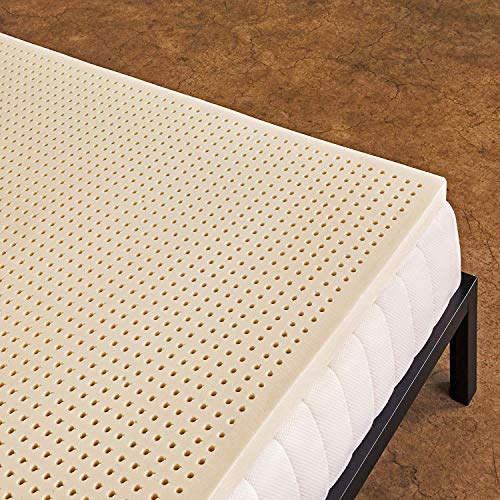
Sleep On Latex
Pure Green Natural Latex Mattress TopperNatural latex from organically grown rubber trees. GOLS is listed as certified for the company in Control Union's public search (not by model); the maker's GOTS is confirmed for the cover only. Skip it if anyone in the household has a latex allergy.
Meets our published criteria, as of Oct 23, 2026
$179ViewOur wool pick (the only wool topper we read)

Sleep & Beyond
Organic myMerino Wool Mattress TopperOrganic merino wool in an organic cotton percale cover; GOTS confirmed in the GOTS database for the company. Wool is not waterproof and the topper is not machine washable.
Meets our published criteria, as of Oct 23, 2026
$389ViewOur organic cotton pad pick (not waterproof)

Coyuchi
Organic Cotton Mattress PadOrganic cotton batting and percale, free of chemical finishes and flame retardants per the maker; GOTS confirmed for the company, MADE SAFE not confirmed for this pad. The maker does not say how it meets the flammability rule.
Meets our published criteria, as of Oct 23, 2026
$298ViewBest waterproof protector without vinyl

Naturepedic
Organic Waterproof Mattress Protector PadOrganic cotton jersey over a thin TPU barrier, with no vinyl/PVC or phthalates per the maker; GOTS (company) and MADE SAFE (product) confirmed in their registers.
Meets our published criteria, as of Oct 23, 2026
$199ViewBest protector that covers the sides

Sleep & Beyond
100% Organic Cotton Waterproof Mattress ProtectorFive-sided TPU-coated organic cotton, no vinyl/PVC or phthalates per the maker. The GOTS database lists a mattress protector of organic cotton and polyurethane for this company. Wash warm, dry low; higher heat damages the lining, the maker says.
Meets our published criteria, as of Oct 23, 2026
$189ViewBest crib or toddler waterproof pad
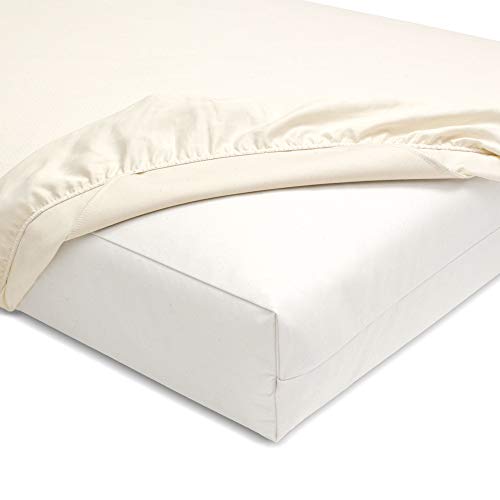
Naturepedic
Organic Waterproof Crib Mattress PadOrganic cotton the maker lists as GOTS certified, with a thin TPU layer and no vinyl, PVC or phthalates, per the maker. We could not confirm from the listing that it is the fitted style. Avocado's crib protector (two layers of organic cotton around a thin polyurethane film, MADE SAFE confirmed in MADE SAFE's index) was out of stock on Amazon on 2026-10-26 and has no buy button here.
Meets our published criteria, as of Oct 23, 2026
$79View
What to avoid
- A vinyl (PVC) waterproof layer — the traditional cheap film, and it generally needs plasticizers, historically phthalates, to stay flexible
- "Waterproof and breathable" with no named layer — that describes the performance and hides the material
- "PFAS-free" with no test shown — a claim, not a result; ask which lab, whether the report is public, and which substances it covered
- Added flame-retardant chemistry, or no word on it — the federal rule can be met by fabric or fiber choice rather than added chemistry; our pad pick does not say which it did, so ask
- Hot dryer heat — Sleep & Beyond says medium or high heat damages its protector's waterproof lining
What to look for
- GOTS — organic fiber plus restricted processing chemicals; on a protector it covers the cotton, and per the makers the thin waterproof film is a permitted addition
- GOLS — the equivalent organic standard for latex; it covers the latex, not the cover and not the topper's other layers
- GREENGUARD Gold — tests the finished product's emissions against limits set with children in mind
- OEKO-TEX Standard 100 — tests the textile for a list of harmful substances; it does not make a textile organic
- MADE SAFE — screens the ingredients in a product against a list of known or suspected harmful substances
- A named waterproof layer — TPU, polyurethane or polyethylene says what you are sleeping on; vinyl or PVC is the one to avoid
- 1Skip: A waterproof cover that does not say what the waterproof layer isBuy instead: Naturepedic, Sleep and Beyond, Avocado Green Mattress Why
- 2Skip: A vinyl crib or toddler padBuy instead: Naturepedic Why
- 3Skip: A foam topper that does not say what the foam isBuy instead: Sleep On Latex, PlushBeds Why
- 4Skip: A 'natural' topper with no named fillBuy instead: Sleep and Beyond Why
- 5Skip: A pad whose maker adds flame-retardant chemicals, or says nothing about themBuy instead: Coyuchi Why
What the label card means
What to skip, and why
A vinyl (PVC) waterproof layer
The traditional cheap film, and it generally needs plasticizers, historically phthalates, to stay flexible.
Know the risks: PVC / soft vinyl"Waterproof and breathable" with no named layer
That describes the performance and hides the material.
"PFAS-free" with no test shown
A claim, not a result; ask which lab, whether the report is public, and which substances it covered.
Know the risks: PFAS / legacy nonstickAdded flame-retardant chemistry, or no word on it
The federal rule can be met by fabric or fiber choice rather than added chemistry; our pad pick does not say which it did, so ask.
Hot dryer heat
Sleep & Beyond says medium or high heat damages its protector's waterproof lining.
Where to buy
The full guide: how we chose
A topper or protector is a layer you add to a bed you already own, so there are two questions: what the layer is made of, and what the waterproof film is. Vinyl is the traditional cheap film; polyurethane and TPU are the thin films that organic-certified protectors use instead; wool is not waterproof at all. An organic standard covers one part of the product, the cotton or the latex, and not the waterproof film.
What this sheet covers
This is the quick version of how to choose the layers you add to a bed you already own: a topper for comfort, a pad for cushioning, and a protector for spills. It sits next to our crib mattress sheet, which is about the mattress itself, and the sleep hub has the wider picture. The detail on off-gassing and the federal fire rule is in can mattresses be toxic.
The sheet sorts nine picks by how people shop for these products: a waterproof protector without vinyl, a five-sided version, a crib or toddler pad, a latex topper, a wool topper, and an organic cotton pad. There is no budget protector on it: we did not review one, and the tips say what to look for if you buy one. Latex and wool toppers and quilted pads are for beds, not cribs; a crib mattress should stay firm and flat with nothing soft on it.
The swaps in prose
The protector is the layer worth getting right, because it sits between the mattress and the sheet. Our pick is Naturepedic's waterproof organic protector pad, organic cotton jersey over a thin TPU layer, which the maker says is made without vinyl, PVC or phthalates. Sleep & Beyond's protector says the same of its layer and is TPU-coated on the top and all four sides. Avocado's uses a thin polyurethane film the maker says is derived from corn starch; its mattress-protector page does not use the words "vinyl" or "PVC", but polyurethane is not PVC. Avocado is also the one that reports a lab test with none detected (we did not open the reports), and the one that says plainly that its thin barrier can diminish with washing and that heavy or prolonged exposure may need a heavier enclosure; the same is true of any thin film. We rank Naturepedic first because two registers back it, one of them for this exact product, and it comes in every bed size. For a crib or toddler bed, Naturepedic's crib-size pad is the pick on our crib mattress sheet, and Avocado makes a crib-size version.
For comfort, the choice is between latex and wool. The latex topper we picked is from Sleep On Latex, sold as Pure Green: natural latex from organically grown rubber trees in Sri Lanka, with GOLS displayed and a certificate number on the page. Control Union's public search lists that company's GOLS certificate as certified (by company, not by model); the GOTS certificate we checked covers the optional organic cotton cover only. PlushBeds is the dearer latex option: its own site says the topper is not returnable (we did not check the Amazon listing's terms), and we could not confirm its GOLS in any register. Both are wrong for a household where anyone has a latex allergy. The wool topper is Sleep & Beyond's organic merino, the only wool topper we read, with GOTS confirmed for the company in the GOTS database; wool is not waterproof, so it wants a fitted sheet and a protector over it, and its maker says not to machine wash it.
The pad is a different job: it cushions and does not repel liquid. Coyuchi's quilted organic cotton pad is free of chemical finishes and flame retardants per the maker, with GOTS confirmed for the company. A mattress pad is a regulated product. In 2024 Avocado recalled about 55,000 of its quilted Organic Cotton Mattress Pad Protectors (model SFMPAVORG) for failing the federal mattress pad flammability regulation; CPSC reported no incidents or injuries, and the remedy was a free replacement (CPSC recall 24-330). That is a different product from the Avocado waterproof protectors on this sheet, and the notice does not mention them. We did not find a recall naming Coyuchi or any other maker on this sheet, and that does not tell you how any of them meet the rule, so ask.
How to read the label
A waterproof protector has a plastic film in it. Which plastic is the question:
- Vinyl (PVC) is the traditional cheap film. It generally needs plasticizers, historically phthalates, to stay flexible, which is the reason people avoid it near a bed; whether the amounts that reach you from a covered mattress matter is not established, so this is precaution, not alarm.
- Polyurethane and TPU (thermoplastic polyurethane) are different plastics, laminated as a thin film between layers of cotton. Naturepedic and Sleep & Beyond name TPU; Avocado names polyurethane. They are not PVC. Naturepedic and Sleep & Beyond also say outright that theirs are made without vinyl, PVC or phthalates. Makers of thin films say they wear out with washing and age.
- Polyethylene is a third film, used on some crib mattress covers (see our crib sheet). None of the protectors here use it.
- Wool's moisture handling is not a waterproof layer. It wicks vapor and holds some water; a spill soaks in.
Fluorinated finishes (PFAS) are a separate question. They are used on some fabrics to repel water and stains, and the CDC's ATSDR lists water-repellent clothing and stain-resistant fabrics among PFAS uses. We found no primary source that names a protector on this sheet as using them. Avocado reports an Intertek test with none detected in its protector, and says it publishes the reports; we did not open them. Sleep & Beyond states its protector is free of PFAS without showing a test. Naturepedic's page says traditional vinyl protectors can introduce phthalates and PFAS and that its design uses TPU instead, which is marketing about other products, not a finding. A maker's claim is a claim; a linked lab report is checkable, once you read which substances it tested.
Five certifications turn up, and each measures a different thing.
- GOTS is an organic textile standard: organic fiber and restricted processing chemicals. On a protector it describes the cotton, and per the makers the thin waterproof film is a permitted addition. Its public database lists companies, sometimes by product line.
- GOLS is the matching organic standard for latex. It covers the latex, not the cover or the other layers. Control Union issues it and lists certified companies in a public search.
- GREENGUARD Gold tests the finished product's emissions against limits set with children in mind.
- OEKO-TEX Standard 100 tests the textile for a list of harmful substances. It does not make a textile organic.
- MADE SAFE screens a product's ingredients against a list of substances known or suspected to be harmful.
If you came here from our old post on vinyl-free waterproof covers
Our 2009 post asked a parent's question, as a toddler moved to a twin bed: how do you protect an organic mattress without covering it in vinyl? That question holds, and this sheet is the current answer. The post recommended an AllerEase cover, which it described as made entirely of polypropylene and polyethylene. We have not carried that recommendation forward, because we have not read the maker's current page for AllerEase protectors, and the retailer listings we saw on 2026-10-23 describe polyester fabrics with a polyurethane or polyethylene layer rather than the materials the post described. If you bought one on our advice, nothing here says it is a problem; the label or the maker's page names the layer. The post also said vinyl "defeats the point" of an organic mattress; that is a preference, and this sheet says what is known about it. Where the post was right is that covers on the shelf often did not say what they were made of, and that is still the thing to check.
Where to go next
For the mattress itself, start with the crib mattress cheat sheet, the Naturepedic review, and the sleep hub. The nursery guide covers setting up the room, and the air quality guide covers ventilating it.
The swaps, in full
A waterproof cover that does not say what the waterproof layer is
Vinyl (PVC) is the traditional cheap waterproof film, and it generally needs plasticizers, historically phthalates, to stay flexible. Whether the amounts that come off a covered mattress matter is not established, so this is a cheap precaution rather than an alarm. The three adult protectors here each name the layer on their own page: a thin TPU or polyurethane film laminated to organic cotton. Naturepedic and Sleep & Beyond say outright that theirs is made without vinyl or PVC; Avocado names polyurethane, which is not PVC.
Hides in: The materials line on the maker's own page, not the 'waterproof and breathable' on the front
Organic cotton jersey over an ultra-thin TPU barrier, which the maker says is made without vinyl/PVC or phthalates. GOTS is confirmed for the company in the GOTS database and MADE SAFE for this product in MADE SAFE's index. Machine washable, 9 to 16 inch pocket. We rank it first because two registers back it, one of them for this exact product, and it comes in every bed size.
A five-sided protector: organic cotton jersey with a TPU coating on the top and all four sides, the maker says, free of vinyl/PVC and phthalates. The GOTS database lists a mattress protector of organic cotton and polyurethane for this company. Fits up to 18 inches. Wash warm and dry low: the maker says higher heat damages the waterproof lining.
Organic cotton around a thin polyurethane layer the maker says is derived from corn starch, with GOTS, MADE SAFE (confirmed in MADE SAFE's index) and GREENGUARD Gold displayed. The maker reports an Intertek test with none detected (we did not open the reports) and says plainly that the thin barrier can diminish with washing and that heavy or prolonged exposure may need a heavier enclosure.

A vinyl crib or toddler pad
A crib pad is the layer a baby or toddler lies on for hours. The same question applies: what is the waterproof layer? Both of these name a thin film (TPU or polyurethane) instead of vinyl, per the maker. A loose pad is not a safe-sleep product. We could not confirm from the listings that either is the fitted style, so check that the pad stays flat on the mattress, and never use one that bunches. Latex and wool toppers and quilted pads are for beds, not cribs.
Hides in: The waterproof layer described on the maker's page
Organic cotton the maker lists as GOTS certified, with a thin TPU waterproof layer made without vinyl, PVC or phthalates, per the maker. It is the protector pick on our crib mattress sheet.
A foam topper that does not say what the foam is
Polyurethane foam is a source of volatile organic compounds, heaviest when new, and they fall over days to weeks. Latex is the alternative with the clearest standard behind it: GOLS covers the organic latex itself. A latex topper is a real choice if no one in the household has a latex allergy.
Hides in: The standard named for the latex, with a number you can ask for
Natural latex from organically grown rubber trees. Control Union's public search lists the company's GOLS certificate (client 868773) as certified, for the company and not by model. The GOTS database confirms the maker's GOTS for the optional cover only. Cheaper than the PlushBeds topper in the listings we read, though this one is 2 inch and that one 3 inch (prices as of 2026-10-23).
Pure Green Natural Latex Mattress Topper - Soft - 2 Inch - Queen Size (GOLS Certified Organic)
Ingredient panel checked · source
The maker's page says GOLS, Oeko-Tex and GREENGUARD Gold; the Amazon listing repeats only Oeko-Tex and GREENGUARD Gold. We found no PlushBeds entry in Control Union's public search (GOLS can be issued by other bodies, so that proves nothing either way), and did not check the others. The PlushBeds site says this topper is not returnable; we did not check the Amazon listing's terms.

A 'natural' topper with no named fill
Wool wicks moisture and breathes well, which is why people choose it for temperature. It is not a waterproof layer: a spill soaks in, and the maker of our pick says to cover it with a fitted sheet and dry clean major stains. Skip it if anyone in the household has a wool allergy.
Hides in: The fill and the cover, each with the standard it is certified to
Organic merino wool fill in an organic cotton percale cover, with the maker's GOTS certificate confirmed in the GOTS database for the company; the register names its wool fiber and other bedding but not this topper. Not machine washable.
A pad whose maker adds flame-retardant chemicals, or says nothing about them
A mattress pad is a regulated product. In 2024 Avocado recalled about 55,000 of its quilted Organic Cotton Mattress Pad Protectors for failing the federal mattress pad flammability regulation; CPSC reported no incidents or injuries. That is a different product from Avocado's waterproof protectors on this sheet. Our pad pick says it is free of chemical finishes and flame retardants and does not say how it meets the rule, so read it as the maker's claim.
Hides in: How the maker says the pad meets the federal rule
A pad of organic cotton, from batting to fabric, free of chemical finishes and flame retardants per the maker. GOTS is confirmed for the company; we could not confirm MADE SAFE for this pad. It cushions and does not repel liquid, so pair it with a protector.
Do the free things first
Check the bed's depth before you buy anything
A protector that is too shallow slips off a mattress with a topper on it. Measure the mattress and the topper together, and read the pocket depth on the maker's page.
Air a new topper
Emissions from new foam, latex and wool products are highest at first and fall off over days to weeks. A few days in a ventilated room is free.
Wash the protector you already have on the maker's terms
Sleep & Beyond says medium or high heat damages the waterproof lining, and Naturepedic's pad says tumble dry low. Check the care label on any protector before it goes in the dryer; gentle care costs nothing and may keep one you already own working longer.
Label traps that are not ingredients
- "Waterproof and breathable" on the front — It says how the cover performs and nothing about what the film is. The material is on the maker's page or it is not, and where it is not, ask.
- An "organic" badge read as the whole product — On a protector, GOTS describes the cotton and the processing; the thin waterproof film is a permitted exception, the makers say. On a topper, GOLS covers the latex and not the cover.
- "PFAS-free" with no test — Some fabrics are treated with fluorinated finishes to repel water and stains. A maker that says its product is free of them has made a claim; a maker that links a lab report has made a checkable one, and it is worth reading which substances were tested.
How we choose
We read the materials and certification statement on the maker's own page, record what it said and on what date, and say which certifications we could confirm in the certifier's own register and which we could only read as the maker's claim. We checked GOTS in the GOTS Certified Suppliers Database, MADE SAFE in its index and GOLS in Control Union's public search on 2026-10-23, and searched CPSC's recall database for mattress, pad, topper, protector and bedding recalls the same day. A register lists the company, not always the model, and we say when it did not list the product by name. We read two latex toppers, one wool topper, one organic cotton pad, and five waterproof protectors or crib pads, so "pick" here means the best of a short field, not of the market.
- A waterproof layer the maker names (TPU, polyurethane or polyethylene), not 'breathable membrane'
- A third-party standard stated with its scope, and confirmed in the certifier's register where one is public
- Certifications we could not confirm are labeled as manufacturer-displayed
Every source we cite is checked against our criteria first — see how we check our sources.
What the research says
The 2022 AAP policy statement, first-authored by Rachel Y. Moon, directs caregivers to place infants on a firm, flat, non-inclined sleep surface such as a tightly fitting crib mattress in a safety-approved crib, covered by a fitted sheet with no other bedding or soft objects, and states that sleep surfaces with inclines of more than 10 degrees are unsafe for infant sleep.
— According to Pediatrics 150(1), American Academy of Pediatrics guidance co-authored by Rachel Y. Moon, MD, ...
Sleep-Related Infant Deaths: Updated 2022 Recommendations for Reducing Infant Deaths in the Sleep Environment — Pediatrics 150(1), American Academy of Pediatrics
The 2022 AAP policy statement (Moon et al.) states that sitting devices - car seats, strollers, swings, infant carriers, and infant slings - are not recommended for routine sleep at home or in the hospital, particularly for infants under 4 months of age.
— According to Pediatrics 150(1), American Academy of Pediatrics guidance co-authored by Rachel Y. Moon, MD, ...
Sleep-Related Infant Deaths: Updated 2022 Recommendations for Reducing Infant Deaths in the Sleep Environment — Pediatrics 150(1), American Academy of Pediatrics
The AAP 2022 technical report, first-authored by Moon, states that room sharing decreases the risk of SIDS by as much as 50%, and the companion policy statement recommends infants sleep in the parents' room, close to the parents' bed but on a separate surface designed for infants, ideally for at least the first 6 months.
— According to Pediatrics 150(1), American Academy of Pediatrics guidance co-authored by Rachel Y. Moon, MD, ...
Evidence Base for 2022 Updated Recommendations for a Safe Infant Sleeping Environment (Technical Report) — Pediatrics 150(1), American Academy of Pediatrics
Sources
- Certified Suppliers Database (GOTS) — Global Standard gGmbH
- Certified companies and products search (GOLS and other Control Union standards) — Control Union Certifications
- MADEWORKS Index: MADE SAFE Certified Products (Avocado, Naturepedic, Coyuchi) — MADE SAFE
- Mattress Pads Recalled Due to Fire Hazard; Violation of Federal Mattress Pad Flammability Regulation; Manufactured by Avocado Mattress (2024) — U.S. Consumer Product Safety Commission (how we check this source)
- PFAS and Your Health — Agency for Toxic Substances and Disease Registry (CDC)
Common questions
Every mattresses & beddingproduct we've reviewed— what we'd buy, what we'd skip, and where each one stands.