
Water filters & tests
Every product in this category we have reviewed, and where each one stands with us. We don’t sell anything: add the ones you want to a list, then send them all to your Amazon cart or buy each one where it’s sold. In a hurry? The cheat sheet below is the short list.
- Reviewed
- 19
- On a cheat sheet
- 12
- Brands
- 17
Water filter, on one page
A winner for each way people buy it, then what to skip. Test first, then match the number to the problem: 42 for taste and odor, 53 for health contaminants such as lead, 58 for reverse osmosis, where the model's listing names the contaminant.
8 winners1 thing to skip12 of these products are on it
- A pitcher from a maker with a 53 lead listing
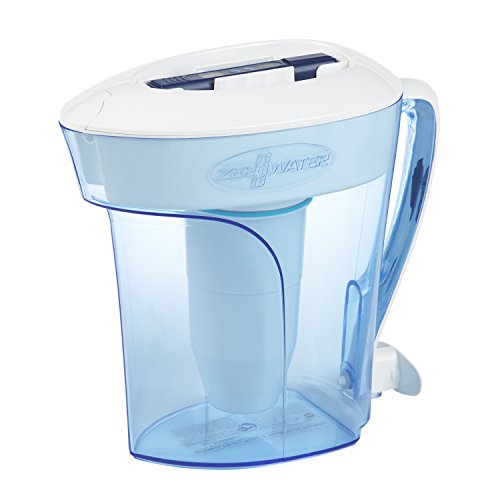 ZeroWater 10-Cup Pitcher Water Filter Removes PFOA/PFASWe could not match this 10-cup model number in IAPMO's file W-17155, so confirm the model in the register. ZeroWater states its filter system is certified by IAPMO R&T to NSF/ANSI 53 for lead (15-gallon rating), and IAPMO's register lists the company's 53 file (checked August 24, 2026).
- A pitcher for chlorine taste and odor
 Clearly Filtered Water Filter PitcherListed on NSF's register for chlorine, taste and odor reduction (42) and lead-free materials (372); neither is a lead-removal claim.
- Budget under-sink
 Waterdrop 10UA Under Sink Water Filter SystemThe low-cost way into under-sink filtration. IAPMO R&T lists the 10UA to NSF/ANSI 42 (chlorine, taste and odor) and 372 (lead-free materials). Neither is a lead-reduction claim.
- Faucet mount with a lead listing
 PUR Plus Vertical Faucet Mount Water Filtration SystemIAPMO R&T lists model FM-3700B (PUR's SKU for this Chrome vertical system) to NSF/ANSI 53 for lead, mercury, total PFAS and VOCs, with the PUR PLUS filter RF-9999 (checked October 23, 2026). Matched to the Amazon listing by title; confirm FM-3700B on the box. It will not fit a pull-out or hand-held faucet.
- Under-sink with a lead listing
 Aquasana Under Sink Water FilterWQA lists the Claryum 3-Stage Max Flow (AQ-6300M and AQ-5300+) to NSF/ANSI 42 and 53 (lead, cyst, mercury, PFOA/PFOS, VOCs tested as chloroform) (checked October 23, 2026); it needs plumbing.
- Reverse osmosis
 Waterdrop G3P600 Tankless Reverse Osmosis Water Filter…IAPMO R&T lists the G3P600 to NSF/ANSI 58 for TDS, fluoride, cadmium, barium, radium 226/228 and lead (WC-13976), and to NSF/ANSI 53 for PFOA/PFOS only (WC-14805), checked October 23, 2026; the Performance Data Sheet on Waterdrop's product page does not list lead, so we could not confirm a lead figure.
- For the bath
 Santevia Organic Cotton Bath Faucet Filter by SanteviaHangs off the tub tap with no plumbing; the brand cites lab testing to the NSF 42 chlorine protocol, not a formal certification.
- For the shower
 Aquabliss SF100 Daily Revitalize Shower FilterThe shower version, for children who shower; the brand lists its filter media and cites no third-party certification.
SkipReading NSF/ANSI 42 as a lead claim
What to know about water filters & tests
The full guide →Two questions, in this order. First, what is actually in your water — your utility publishes a free annual report, and a home test closes the gap it cannot cover, which is what your own service line and plumbing add. Only then choose a filter certified for what you found. Most households buy the filter first, which is how people end up with one certified for the wrong thing.
Common risks
- Reading NSF/ANSI 42 as a health or lead claim — it is neither
- Choosing a filter before you know what you are filtering
- Taking a certification claim on the box on faith — the registers are public
What to look for
- NSF/ANSI 53 — health effects, the standard covering lead, VOCs and cysts
- NSF/ANSI 58 — if you are buying reverse osmosis
- NSF/ANSI 372 — the device's own materials are lead-free
- Your utility's annual report, then a home test, before buying anything
The free change
Run the tap 30 seconds before you fill a bottle.
NSF/ANSI 42 is the certification most commonly printed on filter packaging, and it is an aesthetic claim — taste, odor, particulates. It is not a lead claim. For lead you want NSF/ANSI 53.
Brands in this category
17 brands. The ones with a product on a cheat sheet come first.Every brand, A–Z →



19 reviewed water filters & test kits
Cheat sheet winners first- ZeroWater 10-Cup Pitcher Water Filter Removes PFOA/PFAS★ A pitcher from a maker with a 53 lead listingWe could not match this 10-cup model number in IAPMO's file W-17155, so confirm the model in the register. ZeroWater states its filter system is certified by IAPMO R&T to NSF/ANSI 53 for lead (15-gallon rating), and IAPMO's register lists the company's 53 file (checked August 24, 2026).Why it won, on the cheat sheet →Amazon
- Clearly Filtered Water Filter Pitcher★ A pitcher for chlorine taste and odorListed on NSF's register for chlorine, taste and odor reduction (42) and lead-free materials (372); neither is a lead-removal claim.Why it won, on the cheat sheet →Amazon Clearly Filtered site
- Waterdrop 10UA Under Sink Water Filter System★ Budget under-sinkThe low-cost way into under-sink filtration. IAPMO R&T lists the 10UA to NSF/ANSI 42 (chlorine, taste and odor) and 372 (lead-free materials). Neither is a lead-reduction claim.Why it won, on the cheat sheet →Amazon
- PUR Plus Vertical Faucet Mount Water Filtration System★ Faucet mount with a lead listingIAPMO R&T lists model FM-3700B (PUR's SKU for this Chrome vertical system) to NSF/ANSI 53 for lead, mercury, total PFAS and VOCs, with the PUR PLUS filter RF-9999 (checked October 23, 2026). Matched to the Amazon listing by title; confirm FM-3700B on the box. It will not fit a pull-out or hand-held faucet.Why it won, on the cheat sheet →Amazon
- Aquasana Under Sink Water Filter★ Under-sink with a lead listingWQA lists the Claryum 3-Stage Max Flow (AQ-6300M and AQ-5300+) to NSF/ANSI 42 and 53 (lead, cyst, mercury, PFOA/PFOS, VOCs tested as chloroform) (checked October 23, 2026); it needs plumbing.Why it won, on the cheat sheet →Amazon
- Waterdrop G3P600 Tankless Reverse Osmosis Water Filter System Silver Faucet★ Reverse osmosisIAPMO R&T lists the G3P600 to NSF/ANSI 58 for TDS, fluoride, cadmium, barium, radium 226/228 and lead (WC-13976), and to NSF/ANSI 53 for PFOA/PFOS only (WC-14805), checked October 23, 2026; the Performance Data Sheet on Waterdrop's product page does not list lead, so we could not confirm a lead figure.Why it won, on the cheat sheet →Amazon
- Santevia · Organic Cotton Bath Faucet Filter by Santevia★ For the bathHangs off the tub tap with no plumbing; the brand cites lab testing to the NSF 42 chlorine protocol, not a formal certification.Why it won, on the cheat sheet →Amazon Santevia site
- Aquabliss SF100 Daily Revitalize Shower Filter★ For the showerThe shower version, for children who shower; the brand lists its filter media and cites no third-party certification.Why it won, on the cheat sheet →Amazon Aquabliss site
 APEC Water ROES-50, 5-Stage Under Sink Reverse Osmosis SystemOn a cheat sheetWater filterAmazon
 Brita Elite Replacement Water FilterOn a cheat sheetWater filterAmazon
 CuZn UC-200 Under Sink Water FilterOn a cheat sheetWater filterAmazon
 Safe Home DIY Lead in Drinking Water Combo Test Kit-On a cheat sheetWater filterAmazon Safe Home site
 Crystal Quest Bathtub FilterA pick in our guideBath and shower water filtersAmazon
 Culligan S-H200-C Hand-Held Showerhead with Magnetic Base and FilterA pick in our guideBest Shower FiltersAmazon
 GE Shower Filtration SystemA pick in our guideBest Shower FiltersAmazon
 WaterChef · SF-7C Shower Filter System with Adjustable Handheld Shower WandA pick in our guideBest Shower FiltersAmazon
 Sprite Showers Slim-Line 2 Universal Shower FilterA pick in our guideBest Shower FiltersAmazon
 Tap Score · Advanced Home Water Test KitReviewedWe looked at it; it is not one of our current picks.Amazon
 Tap Score · Professional PFAS Test for Drinking WaterReviewedWe looked at it; it is not one of our current picks.Amazon
Water filters & tests: common questions
Which NSF standard do I need for lead?
NSF/ANSI 53. That is the health-effects standard, and it is the one covering lead, VOCs and cysts. NSF/ANSI 42 — the number most often printed on packaging — covers taste, odor and particulates only.
Is my utility's water quality report enough?
It is the right first step and it is free, but it covers the water leaving the plant and traveling the mains. It cannot account for your own service line and plumbing, which is usually where lead enters. A home test covers that.
Can I check a filter's certification claim myself?
Yes. The certifying bodies publish their listings, so a claim on a box can be verified against the register rather than taken on faith.