
Sunscreen
Every product in this category we have reviewed, and where each one stands with us. We don’t sell anything: add the ones you want to a list, then send them all to your Amazon cart or buy each one where it’s sold. In a hurry? The cheat sheet below is the short list.
- Reviewed
- 28
- On a cheat sheet
- 12
- Brands
- 13
Non-toxic sunscreen, on one page
A winner for each way people buy it, then what to skip. Zinc oxide on the Active ingredients line, "broad spectrum" and SPF 30 to 50 on the front, "fragrance-free" in the inactives.
7 winners1 thing to skip12 of these products are on it
- Best overall
 Blue Lizard Mineral SPF 50 Kids Sunscreen LotionTitanium dioxide 8% and zinc oxide 10%, fragrance-free, and a faint cast that doubles as a coverage check on the ears and nose.
- Best for babies 6 months and up
 Earth Mama Organics Earth MamaZinc oxide 25%, pressed oils and butters, 40-minute water resistance. A December 2025 Proposition 65 notice names it for lead: an allegation of a missing warning label, not a contamination finding, with no case or settlement on the state's register as of October 2026.
- Best for reactive skin
 Thinkbaby Thinkkids Kids Sunscreen SPF 50+Zinc oxide 20% as the only active; the brand states no oxybenzone, avobenzone, PABA, parabens or phthalates.
- Best for grown-up faces
 Vanicream Facial Moisturizer SPF 30 Zinc Oxide Mineral…Zinc oxide 19.5% as the only active, and a label that says free of fragrance and of masking fragrance. A daily face moisturizer; its label makes no water-resistance claim. For a body, the Best overall lotion works on adults too.
- Best stick for faces and ears
 Blue Lizard Kids Mineral SPF 50 Sunscreen StickZinc oxide 20%, no drips and no sticky hands, and the format most likely to be in a bag rather than in the car.
- Fewest ingredients
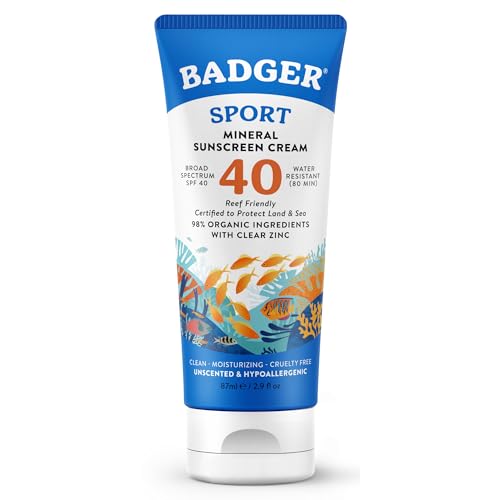 Badger Sport Mineral Sunscreen SPF 40Four ingredients in total: non-nano uncoated zinc oxide 22.5%, organic sunflower oil, organic beeswax and sunflower vitamin E.
- Least white cast
 Babo Botanicals Sheer Mineral Sunscreen Lotion SPF 50 w…Zinc oxide 20%, fragrance-free, 80-minute water resistance, and no PEG, silicone or paraben anywhere in the inactive list.
SkipOxybenzone and the other chemical UV filters
What to know about sunscreen
The full guide →A good sunscreen for a child is broad spectrum, SPF 15 to 50 (FDA says at least 15; AAP says 15 or 30 is fine for most people), and, if you want the simplest choice, a zinc oxide formula with no added fragrance. That is most of the decision. The rest is technique, which matters more than brand: apply generously 15 minutes before going out, reapply every two hours and after swimming, sweating or towelling off, and lean on shade and clothing for babies under six months.
Common risks
- Oxybenzone
- Added fragrance — "unscented" can still mean a masking fragrance was added
What to look for
- Zinc oxide as the active ingredient — sometimes titanium dioxide
- Broad spectrum, SPF 15 to 50 (AAP: 15 or 30 is fine for most; FDA: at least 15)
- "Fragrance-free" on the label — which is not the same as "unscented"
- A short inactive-ingredient list
The free change
Shade and clothing do more work than any bottle.
Flip to the Drug Facts panel. The active ingredient line tells you whether it is mineral or chemical; the inactive list tells you about fragrance. If the actives are mineral and there is no added fragrance, you are most of the way there.
Brands in this category
13 brands. The ones with a product on a cheat sheet come first.Every brand, A–Z →
23 reviewed safer sunscreens
Plus 5 we'd skip, each with its swap. Cheat sheet winners first- Blue Lizard Mineral SPF 50 Kids Sunscreen Lotion★ Best overallTitanium dioxide 8% and zinc oxide 10%, fragrance-free, and a faint cast that doubles as a coverage check on the ears and nose.Why it won, on the cheat sheet →Amazon
- Earth Mama Organics · Earth Mama, Baby Mineral Sunscreen Lotion SPF 40-3 oz★ Best for babies 6 months and upZinc oxide 25%, pressed oils and butters, 40-minute water resistance. A December 2025 Proposition 65 notice names it for lead: an allegation of a missing warning label, not a contamination finding, with no case or settlement on the state's register as of October 2026.Why it won, on the cheat sheet →Amazon Buy direct from Earth Mama
- Thinkbaby · Thinkkids Kids Sunscreen SPF 50+★ Best for reactive skinZinc oxide 20% as the only active; the brand states no oxybenzone, avobenzone, PABA, parabens or phthalates.Why it won, on the cheat sheet →Amazon Thinkbaby site
- Vanicream Facial Moisturizer SPF 30 Zinc Oxide Mineral Sunscreen★ Best for grown-up facesZinc oxide 19.5% as the only active, and a label that says free of fragrance and of masking fragrance. A daily face moisturizer; its label makes no water-resistance claim. For a body, the Best overall lotion works on adults too.Why it won, on the cheat sheet →Amazon
- Blue Lizard Kids Mineral SPF 50 Sunscreen Stick★ Best stick for faces and earsZinc oxide 20%, no drips and no sticky hands, and the format most likely to be in a bag rather than in the car.Why it won, on the cheat sheet →Amazon
- Badger Sport Mineral Sunscreen SPF 40★ Fewest ingredientsFour ingredients in total: non-nano uncoated zinc oxide 22.5%, organic sunflower oil, organic beeswax and sunflower vitamin E.Why it won, on the cheat sheet →Amazon Buy direct from Badger
- Babo Botanicals Sheer Mineral Sunscreen Lotion SPF 50 with 100% Mineral Active…★ Least white castZinc oxide 20%, fragrance-free, 80-minute water resistance, and no PEG, silicone or paraben anywhere in the inactive list.Why it won, on the cheat sheet →Amazon Buy direct from Babo Botanicals
 Sun Bum · Baby Bum SPF 50 Sunscreen LotionOn a cheat sheetNon-toxic sunscreenAmazon
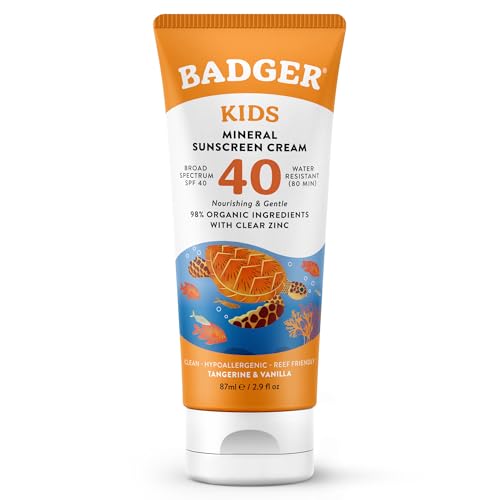 Badger Kids Mineral Sunscreen Cream SPF 40On a cheat sheetNon-toxic sunscreenAmazon Badger site
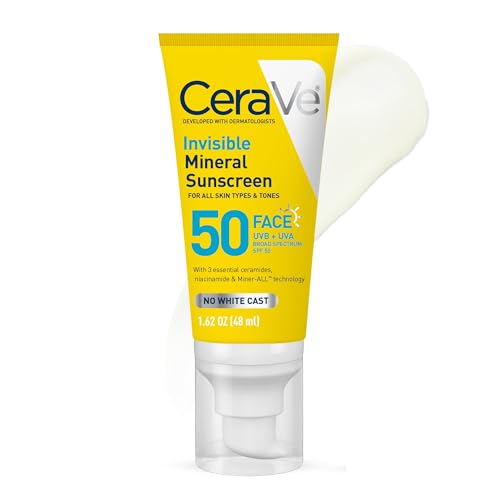 CeraVe Invisible Mineral Sunscreen SPF 50On a cheat sheetNon-toxic sunscreenAmazon
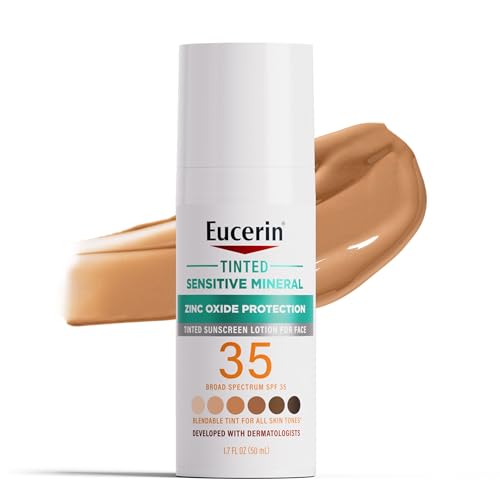 Eucerin Tinted Sensitive Mineral Face Sunscreen LotionOn a cheat sheetNon-toxic sunscreenAmazon
 Neutrogena Sheer Zinc Oxide Mineral Sunscreen Kids SPF 50On a cheat sheetNon-toxic sunscreenAmazon
 Blue Lizard Sensitive Mineral Sunscreen SPF 50 Sunscreen LotionA pick in our guideNon-toxic face sunscreen that wears wellAmazon
 Coppertone Pure & Simple Kids Mineral Face Sunscreen Spray SPF 50A pick in our guideThe best natural sunscreen for pale kidsAmazon
 EltaMD UV Clear Untinted Face Sunscreen with Zinc OxideA pick in our guideNon-toxic face sunscreen that wears wellAmazon
 Badger Mineral Sunscreen Cream SPF 30Our swapfor Coppertone SPORT Mineral Sunscreen Spray SPF 50Amazon Badger site
 Neutrogena Sheer Zinc Oxide Dry-Touch Face Sunscreen with Broad Spectrum SPF 50Our swapfor Neutrogena Beach Defense Sunscreen Spray
 Thinkbaby Baby Sunscreen SPF 50+Our swapfor Coppertone SPORT Sunscreen Lotion Broad Spectrum SPF 100, Equate Sport Sunscreen SPF 100 Lotion Broad SpectrumAmazon Thinkbaby site
 Thinkbaby · Thinksport Mineral Sunscreen SPF 50+ Zinc OxideOur swapfor Coppertone SPORT Sunscreen Spray SPF 50Amazon Thinkbaby site
 Coppertone SPORT Mineral Sunscreen Spray SPF 50We'd skip itSwap: Badger Mineral Sunscreen Cream SPF 30
 Coppertone SPORT Sunscreen Lotion Broad Spectrum SPF 100We'd skip itSwap: Thinkbaby Baby Sunscreen SPF 50+
 Coppertone SPORT Sunscreen Spray SPF 50We'd skip itSwap: Thinksport Mineral Sunscreen SPF 50+ Zinc Oxide
 Equate Sport Sunscreen SPF 100 Lotion Broad SpectrumWe'd skip itSwap: Thinkbaby Baby Sunscreen SPF 50+
 Neutrogena Beach Defense Sunscreen SprayWe'd skip itSwap: Neutrogena Sheer Zinc Oxide Dry-Touch Face Sunscreen with Broad Spectrum SPF 50
 Badger Mineral Baby Sunscreen CreamReviewedWe looked at it; it is not one of our current picks.Badger site
 Blue Lizard Kids Mineral SPF 50 Sunscreen LotionReviewedWe looked at it; it is not one of our current picks.Amazon
 Eucerin Sun Sensitive Mineral Sunscreen LotionReviewedWe looked at it; it is not one of our current picks.Amazon
 Hello Bello Kids SunscreenReviewedWe looked at it; it is not one of our current picks.
Sunscreen: common questions
Is chemical sunscreen unsafe?
No. The FDA has not made a finding of harm. It said it lacks enough modern safety data to classify the chemical filters, and asked manufacturers for more. Zinc oxide and titanium dioxide were proposed as safe and effective — the strongest classification available.
What is the difference between "fragrance-free" and "unscented"?
"Fragrance-free" means no fragrance was added. "Unscented" can mean a masking fragrance was added to cover a base smell. They are not interchangeable, and only the first is what you want on a kids' sunscreen.
Can I use sunscreen on a baby under six months?
FDA says sunscreen is not recommended for infants under six months, to keep them out of the sun and ask a doctor before applying. The AAP says shade and clothing first, and that if those are not available you can put sunscreen on small areas such as the face. Either way, call the doctor right away if a baby under one year is sunburned.
Is a higher SPF always better?
Not by much. FDA says SPF mostly measures protection from UVB burn, and that values up to 50 give greater protection. The AAP says more research is needed to know if SPF above 50 gives extra protection. How much you apply and how often you reapply matters more than the number.
How much sunscreen should I actually use?
About a shot glass for a body and a teaspoon for a face and neck. The AAP notes that most people use too little, which lowers real protection. How much you apply matters as much as the number on the bottle.