
BPA-Free Canned Coconut Milk? What Each Brand Says About Its Can
In 2016, 9 of the 10 coconut milk and cream cans one survey tested had a BPA epoxy lining on the body; in 2020, the can makers' own survey found BPA epoxy on one end of one of 13 coconut cans. Neither tells you about the can on your shelf today. This page sets out what each maker says about its lining, what the two surveys found, and which cans have the most to go on.

Of the coconut milks we could confirm on US shelves, no maker names the material that lines its can; the one maker that does, Cha's Organics (polyester), is a Canadian label. Native Forest and Natural Value say "BPA Non-Intent"; Trader Joe's says "no intentionally added BPA" for all its canned coconut milk and cream; Thai Kitchen says "Non BPA lining" on its coconut cream page only. The other evidence is two surveys that bought one to three cans per product: in 2016, 9 of 10 coconut milk and cream cans had a BPA epoxy body; in 2020, the can makers' own trade group found BPA epoxy on one end of one of 13 coconut cans. We picked Native Forest because it says the most about its cans, and we say plainly what that is worth. Native Forest's unsweetened coconut milk was named in a 2026 California lead notice that settled without a published test result, and we cannot rule out that it covers our pick; we explain it below rather than leave it out.
On your shelf: what the maker says about the lining
These are the brands that turn up most often in six US taste tests published from 2017 to 2025, plus Chaokoh, and the store brands at Walmart, Target, Kroger, Whole Foods and Trader Joe's. We found no public sales ranking for canned coconut milk, so this is a list of what is on shelves, not a best-seller list. Each row starts with the maker's own wording and the date we read it. "No BPA" tells you what is not in the lining. It does not tell you what is.
- Thai Kitchen coconut milkNo clear statement for coconut milk
- McCormick owns Thai Kitchen. Its page for Thai Kitchen Unsweetened Coconut Cream (a 6-pack of cans) says "Non BPA lining." We did not find that line on McCormick's pages for the coconut milk cans. The 2016 Buyer Beware report found BPA epoxy on the body and lid of three Thai Kitchen coconut milk cans, bought in Canada, Washington and California with best-by dates in 2016 and 2017; the same report says McCormick had told it of plans to move out of BPA by 2016 or 2017. The 2020 industry survey found polyester linings on one Thai Kitchen coconut milk can and two coconut cream cans. Those are different cans four years apart, and neither survey says what is on the shelf now. Hannaford's page for the exact can lists coconut, water and guar gum and says "Product of Thailand." Source (checked )
- Goya coconut milkNo clear statement for coconut milk
- We found no lining statement from Goya. The 2016 Buyer Beware report found BPA epoxy on the body of one Goya coconut milk can (best-by March 2019). The 2020 industry survey found no BPA lining on one Goya can; its summary table prints polyester on every part and its appendix prints a vinyl end, and it disagrees with itself there. Separately, a February 2025 Proposition 65 notice from Environmental Health Advocates, Inc. names "Goya Coconut Milk" for BPA, and a failure-to-warn complaint followed in Alameda County Superior Court in June 2025, covering five Goya canned foods, coconut milk among them. We found no judgment or settlement posted as of October 23, 2026. A notice and a complaint are allegations and report no test result. A Stop & Shop page for the exact can says "Product Of: Dominican Republic" and lists potassium metabisulfite, a sulfite preservative. The survey cans are from 2016 and 2020, and neither tells you what is on the shelf now. Source (checked )
- A Taste of Thai coconut milkNo clear statement for coconut milk
- We found no lining statement on A Taste of Thai's own site (atasteofthai.com, run by Andre Prost, Inc.); its coconut milk page lists the products and says nothing about BPA or the lining, and its FAQ says "All our products are authentic Thai, manufactured in Thailand." In the 2020 industry survey this is the only coconut can with any BPA lining: one end of one can (best-by November 2021, bought at Walmart in Seattle) was BPA epoxy, and its body and other end were vinyl. Two other cans of the same product from Fred Meyer were polyester throughout. The report's summary calls its one BPA coconut can "coconut milk from Thailand"; its table prints no origin. In 2016 two A Taste of Thai cans had a BPA epoxy body. These are cans made five to ten years ago, and neither survey tells you what is on the shelf now. Source (checked )
- Aroy-D coconut milkNo clear statement for coconut milk
- Aroy-D's own site (aroydbrand.com, a Thai Agri Foods brand) lists UHT carton coconut milk and, separately, 165 ml, 400 ml and 2,900 ml coconut milk without saying what they are packed in; it says nothing about BPA or the package. US retailers list a 14 oz can, and we found no statement from the maker about it. The 2016 Buyer Beware report found BPA epoxy on the body and lid of one Aroy-D coconut milk can bought at Walmart in Ontario (best-by April 2018). The 2020 survey had no Aroy-D row. Neither survey tells you what is on the shelf now. Source (checked )
- Chaokoh coconut milkNo clear statement for coconut milk
- The maker's product page (Theppadungporn Coconut Co., tcc-chaokoh.com, in Thai) describes the package as a three-piece steel can and says nothing about the lining or BPA; the wording is our translation. Neither survey has a Chaokoh row, so we have no test of its cans in either direction. The same maker sells Mae Ploy; we found no lining statement for that brand either. Maker specification, in our translation: coconut milk 99.98% and sodium metabisulfite 0.02%. Source (checked )
- Native Forest coconut milkMaker says no BPA added to the lining
- Edward & Sons' product pages for Native Forest coconut milk say "Packed in BPA Non-Intent Cans (BPA-NI)." Its FAQ defines the term itself: "Can specifications allow no materials known to contain BPA and testing has found no BPA in them," and adds that "there is currently no USA or Canadian government standard for a BPA-Free claim." The FAQ says that as of 12/31/2011 all of its can linings were tested for BPA by a licensed third-party laboratory; the list of tested cans sits in a linked document behind a sign-in that we could not open. No page names the lining material. The 2020 industry survey found polyester on one Native Forest coconut milk can, and the 2016 report found polyester on one Native Forest Light can. Prop 65: a February 2026 notice alleged lead in Native Forest Organic Unsweetened Coconut Milk sold without a warning. Its example barcode is the Simple can, and it calls that can representative of the class "Native Forest Organic Unsweetened Coconut Milk." The register shows a private settlement dated October 14, 2026, not filed in court; it covers "Organic Unsweetened Coconut Milk" without naming a size, version or barcode, and says Edward & Sons "denies all of the material factual and legal allegations." Edward & Sons' own store also titles the Classic can "Organic Unsweetened Classic Coconut Milk," so we cannot tell you whether the Classic is inside that class. Source (checked )
- Trader Joe's canned coconut milkMaker says no BPA added to the lining
- Trader Joe's FAQ, which is undated, lists "ALL Canned Coconut Milk & Coconut Cream" under "Packages with No Intentionally Added BPA to Interior Linings." It does not name the lining. The Organic Coconut Milk page says "Our Sri Lankan supplier starts with organically-grown King Coconut," lists organic coconut and water, and says the texture is made "without the use of thickeners or gums." The 2020 industry survey found polyester on one Trader Joe's organic coconut cream can. The 2016 report found BPA epoxy on a Trader Joe's coconut cream can (the report gives Aldi Nord, Trader Joe's parent company, as the food company; best-by July 2017). Source (checked )
- 365 by Whole Foods Market organic coconut milkNo clear statement for coconut milk
- The product pages for 365 Organic Coconut Milk and Organic Light Coconut Milk say nothing about the lining, and the ingredients are not printed on them. A Tasting Table review from March 2024 says the can "states that it has a non-BPA lining"; that is a reviewer repeating a label, and we have not read the label ourselves. The 2020 industry survey and the 2016 report each list Whole Foods' coconut-milk cans from other brands, not this one. Source (checked )
- Great Value coconut milk (Walmart)No clear statement for coconut milk
- Walmart's page for Great Value Coconut Milk, 13.5 fl oz, lists coconut extract, water, xanthan gum and sodium carboxymethylcellulose. It makes no statement about the lining, and we found no Walmart statement that covers it. Neither survey has a Great Value coconut row. Source (checked )
- Good & Gather organic coconut milk (Target)No clear statement for coconut milk
- Target's page lists organic coconut milk, water and organic guar gum, gives the package as "Metal," and its specifications tab says "Country of Origin: Vietnam" and "Imported." We found no lining statement from Target for it. Neither survey has a Good & Gather coconut row. Source (checked )
- Kroger and Simple Truth organic coconut milkMaker says no BPA added to the lining
- Kroger's July 2021 Safer Chemicals Statement says it has "transitioned 100% of our canned food products away from BPA-lined cans." That statement is five years old, covers Our Brands canned foods in general, and does not name coconut milk or the replacement lining. The Simple Truth coconut milk pages we read are silent on the lining. Source (checked )
Brands in this guide
- Native Forest2 picks
- Natural Value1 pick
Our picks
Cheat-sheet winners
The winners from our cheat sheet, each chosen for one job.
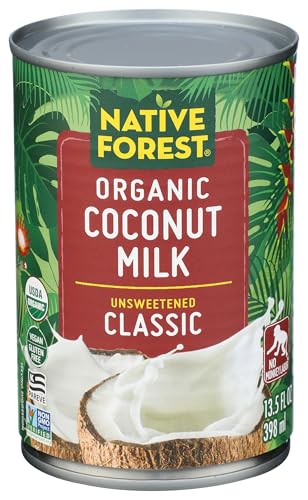
Coconut milk (pantry staple)
Native Forest Coconut Milk Classic Organic
Native Forest organic Classic coconut milk — here for what Edward & Sons says about its cans ("BPA Non-Intent", a term it defines itself, with third-party lining tests as of 2011). A February 2026 California Proposition 65 notice (AG 2026-00794) alleged lead, sold without a warning, in Native Forest Organic Unsweetened Coconut Milk; its example is the Simple can, not this one, but it calls the example representative of the whole class, so we cannot tell you this can is outside the notice. The notice is an allegation, not a contamination finding. The register shows a private settlement dated October 14, 2026, $20,000 in total, and Edward & Sons denies the allegations. If lead is your concern, our coconut milk page explains the settlement's 0.5 microgram-per-serving warning trigger and how to ask the maker for a certificate of analysis for your lot.
Ingredient panel checked · source
$3.39View on Amazon
What the two surveys found
Two surveys, four years apart, tested coconut milk cans. They are snapshots of one to three cans per product, and neither tells you about the can you will open.
- 2016, Ecology Center and partners (Buyer Beware): 192 food cans tested by infrared spectroscopy. Coconut milk was folded into a "canned milk" category that the report says had "a high frequency of BPA-based epoxy (85% of bodies, 45% of lids)." The report's per-product table lists 10 coconut milk and cream cans. Nine had a BPA epoxy body: two A Taste of Thai, one Aroy-D, one Globe (also Thai Agri Foods), one Goya, three Thai Kitchen and one Trader Joe's coconut cream. The tenth, a Native Forest Light can, had a polyester body and lid. The table has no country-of-origin column. The cans carry best-by dates from 2016 to 2019.
- 2020, Can Manufacturers Institute: 234 cans bought in Seattle and Yakima in late February and early March 2020, with brands named. CMI is the can makers' trade association, so this is an industry measurement, not an independent one; it was submitted to Washington's Department of Ecology during its Safer Products for Washington review, and says it was meant to "dispel speculation" about BPA substitutes and show food cans are no longer a significant BPA source. It found two BPA-lined cans in Seattle, "both of those were imported products: coconut milk from Thailand and peaches from Australia." Of 13 coconut cans from nine brands, one had BPA epoxy, on one end: an A Taste of Thai can. The other 12 were polyester or vinyl, including the two other A Taste of Thai cans and an Andre Prost can, plus Thai Kitchen, Native Forest, Goya, Trader Joe's, Target's Simply Balanced, Safeway's O Organics and Imperial Dragon. The report does not print an origin for any row; the "Thailand" in its summary is not tied to a brand there.
Both surveys identify the lining class. Neither measures what, if anything, moves into the milk. The 2016 report says that data on substitute linings is thin, and the 2020 report presents no data on them. So "no BPA lining" means the one thing that was looked for was not found, and the lining on a given can is something to look up, not assume.
The swaps: cartons and powder
If the can lining is what you are trying to avoid, a carton or powder avoids that one question, though not every other one.
- Cartons have no can lining. California notices filed in 2025 by the Center for Environmental Health allege BPA in coconut water sold in cartons, a different product (allegations; the notices publish no test result). Tetra Pak describes its aseptic cartons as paperboard with thin polyethylene layers and aluminum foil. Aroy-D's own site lists coconut milk in cartons and makes no BPA statement; importers that sell it call the carton "BPA free." Thai Kitchen and Kara also sell cartons and publish nothing we could find about them. Pacific Foods says "all of our cartons are BPA free," but its product is a thin drinking milk, not a cooking swap.
- Powder skips the can. Native Forest's powder lists coconut milk, tapioca maltodextrin and gum acacia; Kara's coconut cream powder lists dairy milk protein, so it is not dairy-free. We did not read a package statement for either.
Neither format is documented lining-free from end to end by any coconut milk maker we found.
Every coconut milk product we looked at
Read on each maker's or retailer's own page on 2026-10-23 unless the row says otherwise. The last column states the reason, not a judgment of the product. Origin is "as stated": where a row says "not stated," the page does not say.
| Product | Format | What the maker says about the lining | Origin as stated | Pick, or why not |
|---|---|---|---|---|
| Native Forest Organic Simple, 13.5 fl oz (12-pack) | Steel can | "Packed in BPA Non-Intent Cans (BPA-NI)"; FAQ defines the term; 2011 lab-test claim, list not readable; named in a February 2026 Prop 65 lead notice, settled October 2026 (company denies) | Coconuts from Thailand and Sri Lanka (maker); one Prop 65 notice lot reads "Product of SRI LANKA" | Runner-up, with a seller caveat: the 12-pack we could source is sold by a third party we know nothing about |
| Natural Value Pure, 13.5 oz | Steel can | "Non-Intent BPA Can Lining"; the can prints a "Non Intent BPA Can" badge | "Product of Sri Lanka" (can) | Runner-up |
| Native Forest Organic Classic, 13.5 fl oz | Steel can | Same as Simple; adds under 1% guar gum; not the Prop 65 exemplar, but the notice's class name may include it | As Simple | Top pick: sold by Amazon.com, $3.39 |
| Native Forest Light and creams | Steel can | Same statement on each product page | As Simple | Same maker and statement as the picks; lower fat or cream, so not a separate pick |
| Trader Joe's Organic Coconut Milk, 13.5 fl oz | Steel can | FAQ: "ALL Canned Coconut Milk & Coconut Cream" have "no intentionally added BPA" | "Sri Lankan supplier" | Sold in Trader Joe's stores; no listing we could source |
| Nature's Greatest Foods Organic Coconut Milk, 13.5 oz | Steel can | Product page bullet "NON-INTENT BPA-Free Lining"; its coconut cream was named in a lead notice the same day, by the same plaintiff, as Native Forest's (an allegation) | Not stated | Same kind of statement as Native Forest without the definition or testing claim |
| Wegmans Organic coconut milk | Steel can | July 2018 brand-wide: "all Wegmans brand canned products are packed in cans with liners made without added BPA"; the on-page line appears only on the cream | Not stated | Regional store brand; statement eight years old |
| Cha's Organics Premium, 400 mL | Steel can | FAQ: lined with a polyester resin that "does not contain titanium, BPA, nor related compounds, such as BADGE, BPF or BPS" | Coconuts from Sri Lanka (maker) | Canadian label; we could not confirm it is sold in the US |
| Thai Kitchen coconut milk | Steel can | No statement on the coconut milk pages; "Non BPA lining" on the coconut cream page | Product of Thailand (Hannaford page) | No coconut milk lining statement; 2016 BPA epoxy, 2020 polyester |
| Goya coconut milk | Steel can | No statement | Dominican Republic (Stop & Shop page) | No statement; 2016 BPA epoxy; BPA Prop 65 notice and complaint (allegations) |
| A Taste of Thai | Steel can | No statement on its site | Thailand (maker's FAQ: "manufactured in Thailand") | No statement; BPA epoxy end in 2020, BPA epoxy body in 2016 |
| Aroy-D coconut milk | Carton; 14 oz can per retailers | No statement from the maker | Product of Thailand (importer pages) | No statement; 2016 BPA epoxy can |
| Chaokoh, Mae Ploy | Steel can | No statement | Not stated (the maker is a Thai company) | No statement; no survey row |
| Kara coconut milk | Steel can; carton | No statement; its UHT carton milk was named in an April 2026 lead notice (an allegation) | Not printed on the US distributor pages | No statement |
| 365 by Whole Foods Market | Steel can | None on the product pages | Not stated | No statement on the page |
| Great Value (Walmart) | Steel can | None | Not stated | No statement |
| Good & Gather (Target) | Steel can | None | Vietnam, imported (Target specifications) | No statement |
| Kroger / Simple Truth Organic | Steel can | July 2021: Our Brands canned foods "transitioned 100%" away from BPA-lined cans | Not stated | General, five years old, coconut milk not named |
| Thrive Market Regeneratively Grown | Steel can | None on the product data; the site defines "BPA-free" as no BPA "intentionally added" | The page names both Sri Lanka and the Philippines | No statement for this product |
| Aldi | Steel can | Aldi labels non-BPA packaging with a symbol; we found no coconut milk can page | Not stated | Could not read a product |
What this page cannot tell you
We read statements and two surveys of one to three cans per product. Nobody on this page has tested a finished coconut milk for BPA in our hands, and no survey measured how much, if anything, moves into the milk. A few specifics:
- Statements age. Native Forest's lab-test claim is dated 2011. Kroger's is from 2021 and Wegmans' from 2018. A brand can change its can supplier without changing its website.
- The lining is almost never named. Cha's Organics, a Canadian label, is the exception. "Polyester" in the surveys is a lining class a spectrometer found, not something a maker told us.
- Sri Lanka and Thailand are where the coconuts come from. Makers state that, and some state nothing. A can is made and filled wherever the packer is, which is rarely printed.
- Lead is a separate question from the lining. We found no published lead test for any product here. The notices described above are allegations about warnings, not measurements.
- Additives are not the lining either. Guar gum, xanthan gum and carboxymethylcellulose thicken some cans, and sulfites preserve some imports; a short label is not evidence of a safe lining, and a longer one is not evidence of an unsafe one.
For what else to do about canned food in general, see the BPA-free canned food cheat sheet and our explainer on BPA.
Our top pick
Ingredient panel checked · source
Native Forest Organic Classic Coconut Milk, one 13.5 fl oz can, sold by Amazon.com at $3.39 on October 23, 2026. Ingredients on the maker's page: organic coconut, filtered water and "a tiny amount (less than 1%)" of organic guar gum, a plant thickener. Per 1/3 cup: 140 calories, 14 g fat. The maker says the cans are "BPA Non-Intent," defines that term itself, and says it had can linings tested by a third-party laboratory as of 2011. Two surveys found polyester on Native Forest cans, in 2016 and 2020. What we cannot tell you: the lining material, which country a given can comes from (the maker says Thailand and Sri Lanka), or what today's cans are lined with. Why this one over the Simple: the Simple's multi-pack listings we could source were all sold by a third-party seller we could not vouch for (see below), and this can is sold by Amazon.com. Prop 65: a February 2026 California notice alleged lead without a warning in Native Forest Organic Unsweetened Coconut Milk; its example is the Simple can (barcode 043182002066), not this one (043182002080), but it calls the example representative of the whole class, the settlement of October 14, 2026 covers "Organic Unsweetened Coconut Milk" without naming a version, and Edward & Sons' store titles this can "Organic Unsweetened Classic Coconut Milk." So we cannot tell you it is outside the notice. The settlement was private, for $20,000, $17,000 of it the other side's legal fees; Edward & Sons denies the allegations. After a 90-day compliance period, cans it ships into California that expose a person to more than 0.5 micrograms of lead per labeled serving must carry a lead warning. No one has published a lead number for this product.
Also worth considering

Natural Value Pure coconut milk, 13.5 oz cans, 6-pack ($20.99, about $3.50 a can on October 23, 2026), sold by Natural Value Inc. The can's own panel, which we read as an image on the maker's page, prints a "Non Intent BPA Can" badge, "Coconut Extract (85%), Water (15%)" and "Product of Sri Lanka." Per 1/4 cup (60 g): 110 calories, 10.8 g fat, 18 mg sodium. The maker's page also says "Non-Intent BPA Can Lining" and "No Guar Gum." It says nothing about testing or about what the term means, so this is a weaker lining statement than Native Forest's, and neither survey tested a Natural Value can. We found no California notice naming its coconut milk.

Ingredient panel checked · source
Native Forest Organic Unsweetened Simple coconut milk, 13.5 fl oz cans, 12-pack. Read this before you buy: on October 23, 2026 the only offer we could source was $44.28 from a third-party seller listed as "LUMlNlZE" (spelled with lowercase L's where capital I's would be), about $3.69 a can, and we know nothing about that seller; the Classic single can is sold by Amazon.com at $3.39. For a case of food, check the best-by date on arrival or buy the Simple from the maker's own store, store.edwardandsons.com, which we read on the same date. Ingredients on the maker's page: organic coconut and filtered water, "Contains NO guar gum." Per 1/3 cup: 140 calories, 14 g fat. Same maker statement as the Classic. This is the can named as the example in the February 2026 Proposition 65 lead notice (barcode 043182002066); see the Classic note above for what the notice and its October 2026 private settlement say and do not say.
What does not tell you a can is BPA-free
- "BPA-free" or "BPA Non-Intent" on its own — Edward & Sons says there is no US or Canadian government standard for a "BPA-Free" claim, and defines Non-Intent itself. Neither phrase names the material that lines the can. Edward & Sons' lab statement covers BPA only, by HPLC, as of 2011; it says nothing about substitutes such as BPS, BPF or BADGE.
- A "BPA-free can" in a taste test or product listing — Tasting Table's 2024 reviews repeat the makers' own claims for Native Forest and 365. A reviewer or a third-party seller repeating a label is not the maker's statement and is not a test.
- A brand name you trust — In 2016 nearly every conventional coconut milk can tested had a BPA epoxy lining, and in 2020 almost none did. The same label can sit on a different can four years later.
- Where the can was made, in either direction — The 2020 survey's summary said both BPA cans it found were imports, and coconut milk is almost all imported, so origin is a weak signal. We record the origin where a maker or label states it. Several makers state only where the coconuts are grown.
- A carton as proof of anything — Cartons skip the can lining. They are not a documented lining-free package: Tetra Pak describes them as layered paperboard, plastic and aluminum, and the coconut milk makers we read publish nothing about the layers.
How we choose
A coconut milk earns a pick here when the maker has written down something specific about the can, we read it on the maker's own page, and the label is short. We quote the wording rather than turn "no intentional addition" into "BPA-free." No maker we could confirm on US shelves names its lining material, so every pick rests on a statement we cannot check and on two surveys of a few cans each. Every brand on the shelf list, and every natural-store brand we checked that makes a lining statement, is in the table below with the reason it was or was not picked.
- The maker's own page says the can is BPA Non-Intent or BPA-free, and we read it on that date
- Scope is clear: this product, a line, or the whole brand
- Exact label read: ingredients, gums and preservatives, fat per serving
- A third-party reading of the lining where one exists, with its date and who ran it
- In stock from a seller we can name, at a price a parent would pay
- No open recall found for the pick
Every source we cite is checked against our criteria first — see how we check our sources.
What the research says
A flexible 9-day road map for safely introducing top allergens
— Malina Malkani, MS, RDN, CDN told BenBella Books (distributed by Simon & Schuster), ISBN 9781637745359 that ...
Safe and Simple Food Allergy Prevention: A Baby-Led Feeding Guide to Starting Solids and Introducing Top Allergens — BenBella Books (distributed by Simon & Schuster), ISBN 9781637745359 (2024-11-12)
the tactile investigation of food is part of development - it's necessary, productive and speeds up the learning curve.
— Jill Castle, MS, RDN told The Washington Post that ...
Let picky eaters play with their food, and don't force 'thank you' tastes — The Washington Post (2018-11-01)
When a child's appetite is ignored, he or she may lose the ability to regulate his or her own internal hunger and fullness cues
— Jill Castle, MS, RDN told CNN that ...
Of the four parental 'feeding styles,' only one is good for kids' health, experts say — CNN (2018-10-04)
Sources
- Washington State Canned Food Market Basket Survey (Can Manufacturers Institute, 2020) — Can Manufacturers Institute
- Buyer Beware: Toxic BPA and Regrettable Substitutes in the Linings of Canned Food (Ecology Center et al., 2016) — Ecology Center et al. (how we check this source)
- Edward & Sons — FAQ (Is the coconut milk can BPA free?; can lining testing) — Edward & Sons Trading Co.
- Native Forest Organic Unsweetened Simple Coconut Milk — Edward & Sons Trading Co.
- Native Forest Organic Classic Coconut Milk — Edward & Sons Trading Co.
- Natural Value Pure Fairtrade Coconut Milk 13.5oz — Natural Value Inc.
- Trader Joe's — Product FAQs (BPA) — Trader Joe's
- Thai Kitchen Unsweetened Coconut Cream, 6-pack — McCormick & Company
- Kroger — Safer Chemicals Statement (July 2021) — The Kroger Co.
- California Attorney General — Proposition 65 notice 2026-00794 (Native Forest; settlement) — California Department of Justice
- California Attorney General — Proposition 65 notice 2025-00574 (Goya coconut milk; complaint) — California Department of Justice
- Aroy-D — Thai Agri Foods
- Chaokoh — canned coconut milk specification (Thai-language page) — Theppadungporn Coconut Co.
- FDA — Lead in Food, Foodwares, and Dietary Supplements (interim reference levels) — U.S. Food and Drug Administration (how we check this source)
- Tetra Pak — aseptic packaging FAQ — Tetra Pak
Side by side
| Attribute | Native ForestCoconut Milk Classic Organic | Natural ValueCoconut Milk | Native ForestOrganic Unsweetened Coconut Milk- Simple |
|---|---|---|---|
| Why it's here | Our top pick | — | — |
| Price | $3.39 | $20.99 | $47.99 |
| Availability | In stock | In stock | In stock |
Common questions
Cheat sheets for this
Part of the BPA & Canned Food hub— the rest of our coverage in this category.
Every bpa-free canned foodproduct we've reviewed— what we'd buy, what we'd skip, and where each one stands.