
First Alert Battery Carbon Monoxide Alarm
Manufacturer statement checked · source
$21.99
View on AmazonIndoor air is usually worse than outdoor air, and the fixes are unglamorous: stop the source, open a window, then filter what is left. Buying a purifier first is the common order and the least effective one.
Source, then ventilation, then filter — in that order. Most people run the list backwards, buy a purifier first, and are disappointed, because a machine cannot out-filter a source you are still feeding. And one item is not optional at any point in the order: a working carbon monoxide alarm on every level of the home and outside each sleeping area.
1. Remove the source. Nothing else on this list competes with simply not introducing the pollutant. Fragranced products, aerosols, scented candles, smoking indoors, idling a car in an attached garage, a gas hob without extraction — each is a source you can reduce at zero cost.
2. Ventilate. Opening windows for a few minutes is startlingly effective and completely free. Use the extractor over the hob every time you cook, and run the bathroom fan during and after showers. Ventilation dilutes everything at once, including the things no filter captures.
3. Then filter. A purifier is genuinely useful — for particulates, allergens, wildfire smoke — and it works far better once you have done the first two steps. It is a last step, not a first one.
Most people run this list backwards, buy a purifier, and are disappointed. A machine cannot out-filter a source you are still feeding.
A HEPA-class filter — one the maker states captures 99.97% of 0.3-micron particles — is very good at particulates: dust, pollen, dander, smoke particles. That is a real and worthwhile job, especially for a child with allergies or asthma, or during wildfire season.
It does considerably less about gases and VOCs unless it carries a meaningful quantity of activated carbon — and most consumer units carry a thin carbon layer that saturates quickly. Ventilation and source removal do more here.
It does nothing about humidity, mold behind a wall, or a combustion problem. Those are different jobs with different equipment, and one of them is an emergency.
And avoid anything that generates ozone to do its work, however it is marketed. Ozone is a lung irritant. "Ionizer" and "activated oxygen" are the phrases to look at carefully.
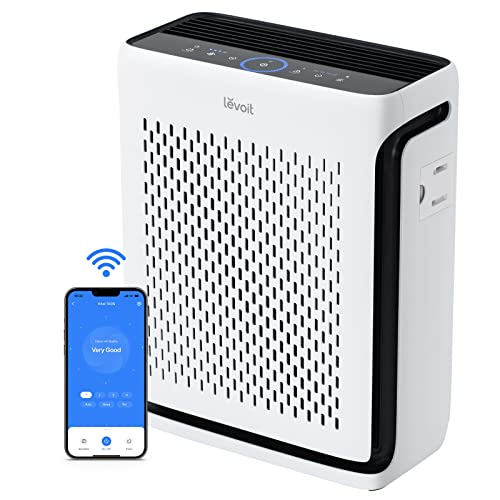
There is a way to check that is not the maker's say-so. California requires every portable air cleaner sold there to be certified, and the state's public list files each model as either "Mechanical" (classified as physical filtration only, so not an ozone- or ion-generating design) or "Electronic" (may generate ozone, but tested to no more than 50 parts per billion; the category includes ionizers). The same brand can appear in both: Levoit's Core 300 is listed as Mechanical, while some other Levoit model numbers are listed as Electronic. So look up the model number on the box, not the brand. We only recommend models listed as Mechanical. CARB is explicit that its list does not say a unit works well or is safe to use; it tells you what kind of technology the model is. We read the list on 2026-10-23.
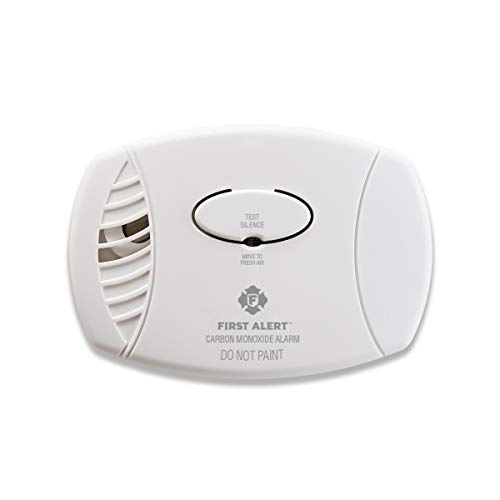
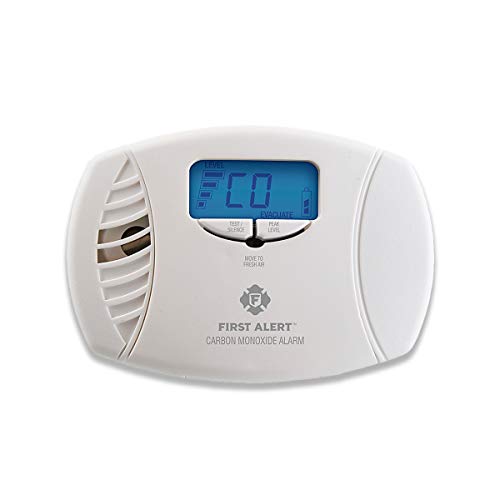
A working carbon monoxide alarm on every level of the home and outside each sleeping area, and a smoke alarm alongside it. That is CPSC's advice (read 2026-10-26), and NFPA's is the same: a central location outside each sleeping area and on every level. CDC calls carbon monoxide an odorless, colorless gas that kills without warning, and says people who are asleep can die before they have symptoms.
We picked five alarms from First Alert and Kidde, and the best carbon monoxide alarm page has what each maker says about UL 2034, the standard for CO alarms, and what we could and could not check. We read that on the makers' own pages, data sheets and manuals, not in UL's directory. CPSC's warning of August 20, 2026 says to buy only CO detectors that meet UL 2034, and that they should be battery operated or have a battery backup. Whichever you buy, replace it when its end-of-life signal sounds or its replace-by date passes, whichever comes first.
Nothing else on this page is urgent. That one is.
We work in the order that actually changes air quality: remove or reduce the source, ventilate, then filter the remainder. For filtration we read CADR and room size rather than marketing claims, we look the exact model up in California's register of certified air cleaners, and we screen out anything that generates ozone or ions as a by-product of 'purifying'.
Save & share
A purifier is a last step, not a first one. It works far better once the source is gone and the room has been aired.
The science, briefly
A HEPA-class filter, one the maker states captures 99.97% of 0.3-micron particles, is very good at particulates — dust, pollen, dander, smoke particles. That is a real and worthwhile job, especially for a child with allergies or asthma, or during wildfire season.
It does considerably less about gases and VOCs unless it carries a meaningful quantity of activated carbon, and most consumer units carry a thin carbon layer that saturates quickly. Ventilation and source removal do more here.
It does nothing about humidity, mold behind a wall, or a combustion problem. Those are different jobs with different equipment, and one of them is an emergency. Avoid anything that generates ozone to do its work, however it is marketed — ozone is a lung irritant, and "ionizer" and "activated oxygen" are the phrases to look at carefully.
Common mistakes
Not while the source is still running. Fragranced products, aerosols, scented candles, a gas hob without extraction — each is a source you can reduce at zero cost, and doing so beats any machine. A purifier is the third step.
Opening windows for a few minutes is startlingly effective and completely free. Ventilation dilutes everything at once, including the things no filter captures.
Anything generating ozone to do its work is introducing a lung irritant. However it is marketed, that is the trade being made.
Start here
Matched to room size and quiet enough to sleep through.
See picksUL 2034, battery or battery backup, and where CPSC and NFPA say to put them.
See picksFor odor specifically — and why that is a different problem.
See picksWhat we'd buy
Manufacturer statement checked · source

Manufacturer statement checked · source
Manufacturer statement checked · source
Manufacturer statement checked · source

Manufacturer statement checked · source

Certifier record checked · source

Certifier record checked · source

Certifier record checked · source

Certifier record checked · source
Certifier record checked · source
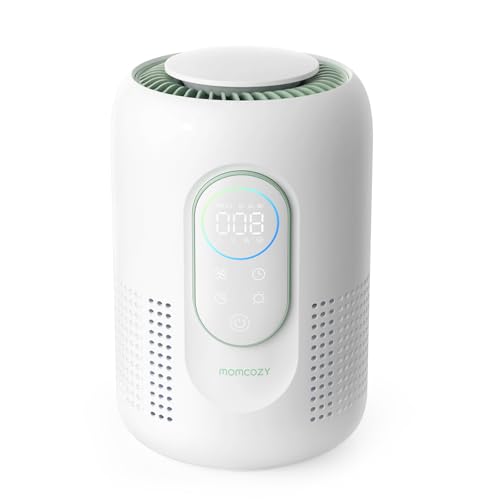
Certifier record checked · source
Go deeper
Farmer co-led the HOMEChem experiment, in which roughly 60 scientists from 13 universities measured indoor chemistry during typical household activities in a test house. Cooking produced the largest concentrations of potentially toxic compounds, including benzene, formaldehyde, acrolein and isocyanic acid. Farmer's team reported that most emitted compounds occur in low quantities and can be cleared through ventilation.
— Delphine Farmer, PhD of Colorado State University College of Natural Sciences explains that ...
Indoor air quality experiments show exposure risks while cooking, cleaning — Colorado State University College of Natural Sciences (2022-09-21)
This paper is a key initial step towards providing actionable and practical information on how to protect yourself and clean your home.
— Delphine Farmer, PhD of Colorado State University College of Natural Sciences explains that ...
Wildfire smoke may linger in homes long after initial blaze — Colorado State University College of Natural Sciences (2023-10-13)
Particles are one of the few things that we really know directly correlate to negative health outcomes.
— Delphine Farmer, PhD told Colorado Public Radio that ...
How luften, or 'home burping,' results in the sweet smell of success for your home — Colorado Public Radio (2026-06-24)