
Non-Toxic Slime and Kinetic Sand: Borax, the AP Seal, and What We'd Buy
Glue slime gets its stretch from a borate, a boron compound that Europe caps in toy slime. Germany's risk institute assessed the commercial slime it could find and concluded that harm to children is not likely; the cases that go wrong involve homemade slime and long skin contact. Here is what ACMI's AP seal and ASTM D-4236 cover, what we could and could not check for Elmer's, Crayola and Kinetic Sand, and how Kinetic Sand differs from play sand.
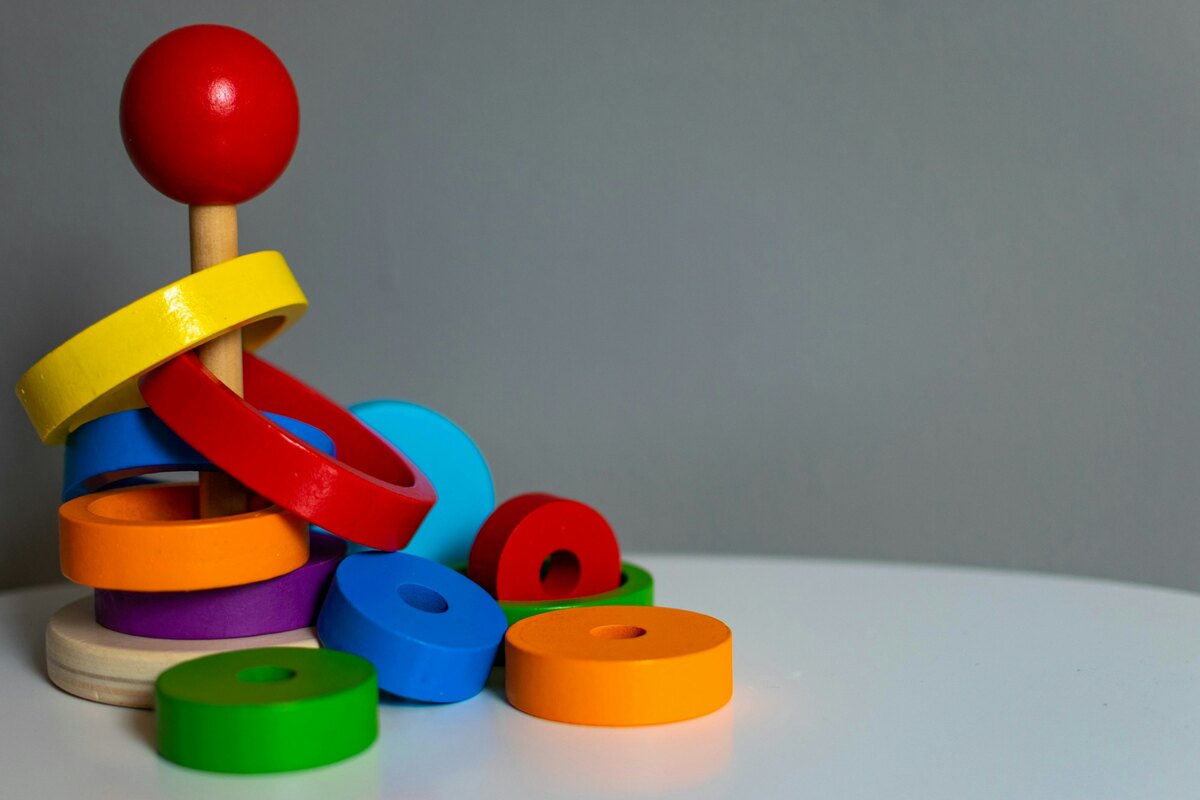
Slime and kinetic sand look alike and are not. Glue slime gets its stretch from a borate (boric acid or sodium borate), which the EU classes as toxic to reproduction and limits by capping the boron that can migrate out of toy slime at 300 milligrams per kilogram. Germany's risk institute (BfR, 2022) assessed commercial slime on the assumption that children will sometimes swallow a little, and concluded harm is not likely at the boron levels it saw; its concern starts at roughly ten to forty times the EU limit. It still tells parents to follow the age label and keep slime out of mouths, and advises against making slime at home from products such as contact-lens cleaner. The AP seal and ASTM D-4236 do not answer the boron question: ACMI's register lists slime kits and an Elmer's slime activator with the AP seal, and the Elmer's safety data sheet we read names boric acid and disodium tetraborate. Kinetic Sand lists no cross-linker (a safety data sheet issued by its Swedish supplier in 2014 says it is made of silicon dioxide and polydimethylsiloxane, a silicone), so it is our pick for a child who wants a squishy, moldable material, with the caveat that the sheet does not say whether the silicon dioxide is crystalline. We read makers' pages, an SDS and ACMI's register on 2026-11-15; we did not test anything.
Slime and activators: what each maker lets you check about borates
Four products you may already have at home, checked on 2026-11-15 against ACMI's certified-product search (for the art materials; Kinetic Sand is sold as a toy), the maker's own pages, and, for Elmer's and Kinetic Sand, a safety data sheet. The badge asks one question about boron: what can you actually confirm? Amber means the maker's materials do not say, and BfR says toy makers use boric acid or sodium borate for slime, so amber is not a clean bill; red means a borate is named in the maker's own safety data sheet; green means the stated makeup lists no borate. It is a statement about what is checkable, not a finding that a product is unsafe. We did not contact the companies or test any product.
- Elmer's Magical Liquid slime activatorBorate named in the maker's safety data sheet
- Elmer's product page says the formula is "washable, safe, and nontoxic" and replaces contact-lens solution and baking soda; it lists no ingredients. Elmer's 2019 safety data sheet for Magical Liquid 2.0 (SDS-149, Newell Brands; we read a copy hosted by CleverPatch) shows "Non-hazardous Ingredients 100 %" in its composition table, but its exposure-limit table, which it says covers "the only constituents of the product" that have a limit, names boric acid, disodium tetraborate and sodium hydroxide, and its state right-to-know tables list sodium tetraborate. The same sheet classifies the product as needing no hazard label; it does not say which ingredient causes the skin-reaction line. We cannot tell you the percentage or whether today's "updated formula" matches. ACMI's search lists "Elmer's Magical Liquid Scented Slime Activators" with the AP seal, so the seal and a borate can be on the same shelf. Source (checked )
- Crayola Goo (powder-and-water slime kits)Not stated either way
- Crayola's Goo pages call the kits "safe, nontoxic", grade them 6+, and say to wash hands "before and after playing with Goo". ACMI lists "Crayola Goo Powder" with the AP seal. The pages we read give no ingredient list and do not say whether the powder contains a borate. We did not open Crayola's printable instruction sheet, which may carry more. Source (checked )
- Silly Putty (Crayola)Not stated either way
- Crayola's FAQ says "Silly Putty is made primarily from silicone and color pigments" and that the formulas are proprietary. ACMI lists eight Silly Putty products with the AP seal. Neither says whether a borate is present. BfR's opinion covers bouncing putty as well as slime, so the question is fair to ask of putty too; we found no statement either way. Source (checked )
- Kinetic Sand (Spin Master)Stated makeup lists no borate
- A 2014 safety data sheet (version 1.2, issued by Delta of Sweden AB and hosted by the distributor Rompa) says "Product made of silicon dioxid and polydimethyl siloxane. No hazard ingredients."; Spin Master's pages say only "made with natural sand". Neither names a borate. Spin Master states no ASTM or AP statement on the pages we read, and ACMI's search has no Kinetic Sand row. "Free" here means the stated makeup lists no borate; the sheet is old, gives no percentages, and we cannot confirm today's Spin Master product matches it. Source (checked )
Brands in this guide
- Kinetic Sand1 pick
- Crayola1 pick
- Elmer's1 pick
Our top pick

Kinetic Sand, 2 lb, brown, for ages 3 and up per the listing and Spin Master's pages. It leads because it skips the borate question: a 2014 safety data sheet from Delta of Sweden AB, the supplier named on it, says "Product made of silicon dioxid and polydimethyl siloxane. No hazard ingredients." That lists sand plus a silicone and no cross-linker (a list is not a guarantee: the sheet gives no percentages). Spin Master's pages say "made with natural sand" and sell it for pretend play, arts and crafts. The limits: the sheet is more than ten years old and is hosted by a distributor. Kinetic Sand is sold as a toy, so it is not an ACMI art-material listing (we searched "Kinetic" and Spin Master is not on ACMI's list of companies); toys go through a separate set of rules, and Spin Master states no standard or seal on the pages we read. The sheet does not say whether the silicon dioxide is crystalline (see below). The brown set also has no dye to ask about. On 2026-11-15 Amazon listed the 2 lb bag in stock from Amazon.com at $10.99, about $5.50 a pound.
Also worth considering

Manufacturer statement checked · source
Crayola Goo Mix-In Mania slime kit, for ages 6+ per Crayola: the kit pick, for a child who wants to make slime from powder and water. Crayola's page says "safe, nontoxic", recommends hand washing "before and after playing with Goo", and ACMI's register lists "Crayola Goo Powder" with the AP seal. BfR says toy makers use boric acid or sodium borate for slime, and Crayola does not say either way: what we could not find is any ingredient list or any statement about borates, the kit pages we read name neither borax nor a "borax-free" claim, and the register row names the powder, not this kit. So the seal can be checked and the cross-linker cannot. Read the kit's printed instructions and wash hands as it says. On 2026-11-15 Amazon listed the kit in stock from Amazon.com at $22.99.

Elmer's Magical Liquid slime activator, 8.75 oz: the pick if you want classic stretchy glue slime and will handle it carefully. It is only the activator; you add Elmer's school glue (ACMI lists many Elmer's glue sticks with the AP seal; we did not confirm the liquid glue you would use). Elmer's page says its formula is "washable, safe, and nontoxic" and names no ingredients, and it prints no age grade (a retailer listing says 3+; BfR's advice is to follow the maker's minimum age). A 2019 Elmer's safety data sheet for Magical Liquid 2.0 (copy hosted by CleverPatch) classifies the product as needing no hazard label and lists its composition as "Non-hazardous Ingredients 100 %", yet its exposure-limit table names boric acid, disodium tetraborate and sodium hydroxide. Later the same sheet says "May cause slight skin irritation", "May cause an allergic skin reaction" and "Harmful if swallowed", without saying which ingredient. BfR's figures are for finished slime; they do not cover slime you mix yourself from an activator, and we found no boron data for this one. We do not know that this is the formula in the current bottle ("Updated Formula"). The seal in ACMI's register is for the scented activator, not the clear bottle we link. If anyone in the house has sensitive skin or a mouthing habit, choose Kinetic Sand instead. On 2026-11-15 Amazon listed the bottle in stock from Amazon.com at $5.99.
What this page is for
"Non-toxic slime" and "non-toxic kinetic sand" are two searches with two different answers, so this page has both. Glue slime is a chemistry question: the stretch comes from a borate (boric acid or sodium borate), and whether a particular bottle contains one is a question the label rarely answers. Kinetic Sand is a different material, sand held together by a silicone, and its questions are silica and swallowing. We read the makers' pages, a safety data sheet, the German risk institute's opinion and ACMI's register on 2026-11-15, and we did not test anything.
If you want one product, Kinetic Sand is our pick for sensory play: a 2014 safety data sheet lists only sand and a silicone, with no cross-linker. If your child wants real slime, the two runners-up say what we could and could not check, and the short rule is: buy a made-for-kids kit, follow its age grade, wash hands before and after, and do not make it at home from borax, laundry products or contact-lens cleaner.
What "AP non-toxic" and ASTM D-4236 cover, and what they do not
The seal to look for is ACMI's AP (Approved Product) seal, and ACMI has a search tool where you can type a product and see whether it is listed. ACMI says the seal means a board-certified toxicologist evaluated the formula for acute and chronic hazards and that the product is labeled under ASTM D-4236 and the federal art-materials labeling act. ACMI is an association of art-supply makers, so this is an industry program, not a government approval. "Conforms to ASTM D-4236" on its own is the baseline: CPSC's guidance says art materials have to be reviewed by a toxicologist at least every five years and carry that statement where practicable, and that it is not a safety rule requiring certification. Both are about chronic-hazard labeling. Neither publishes an ingredient list, and ACMI's own advice on whether a product contains a given ingredient is to contact the manufacturer.
That matters most for slime. In ACMI's register we found "Crayola Goo Powder", Crayola's slime kit glue and activator, "Crayola Scented Slime" and "Elmer's Magical Liquid Scented Slime Activators", all with the AP seal. ACMI has no slime category; they sit under "Craft Materials, Misc." The seal is a real toxicologist's review, and it is not a statement that a product is boron-free.
Borax and boron in slime: the EU limits and the burn case
Glue slime forms when a borate ties together the molecules in white or clear school glue. Germany's risk institute, BfR, says toy makers use boric acid or sodium borate for this. Boric acid and borates have a harmonised EU classification as toxic to reproduction, category 1B, and BfR describes the hazard statement as "may damage fertility; may harm the unborn child".
The EU's Toy Safety Directive (2009/48/EC) therefore limits how much boron can migrate out of a toy: 300 mg per kg for liquid or sticky material such as slime, and 1,200 mg per kg for dry or pliable material. In its 2022 opinion (No 013/2022) BfR looked at slime sold in Germany and concluded that health impairments for children are not considered likely under conditions of normal play. Its reasoning, in short:
- A 3-to-6-year-old could swallow up to about 58 mg of boron with a low probability of acute poisoning; at higher amounts nausea, vomiting, diarrhoea or abdominal pain can occur.
- Skin absorption through the palms accounts for a small fraction (about 6%) of intake.
- In Germany's 2017 monitoring plan about 80% of slime tested complied with the 300 mg/kg limit. Of 141 slime and putty products that had been reported to the EU's Safety Gate as problem toys over six years, 117 were below the level BfR used for daily long-term play. In the state laboratories' data, two products exceeded it, the highest at 6,384 mg/kg.
- BfR's concern for a single large swallow starts only at roughly 40 times the legal limit, and it judged it unlikely that children would swallow large amounts of slime at that level.
- Most slime is sold with a not-under-36-months label. BfR tells parents to follow the maker's age and keep slime out of mouths, to keep contact with boric acid minimal.
- BfR advises against home production of boron-containing slime from other consumer products such as contact-lens cleaners, because boron released from home-made slime could well exceed the commercial levels.
BfR's numbers are for finished slime. They do not cover slime you mix yourself from an activator or a powder kit, and we found no boron data for either runner-up. The single kit BfR mentions was a 2015 non-compliance notice, which says nothing about Crayola's. A reproductive-toxicity class describes what a substance can do at high doses; that is why the EU limits boron in toys rather than banning it.
We did not find a US counterpart to the migration limit, so the EU number is the one we can cite.
The burn case. In March 2017 CBS News reported that an 11-year-old in Massachusetts was treated for second- and third-degree chemical burns on her hands after playing for a long time with slime she made from glue, water and borax. A burn specialist not involved in the case told Live Science that borax is a mild irritant that usually does not cause such deep burns, and that severity depends on how long skin is in contact, how strong the chemical is and how thick the skin is; he said her thin skin and the long play session likely played a role, and that the borax may have been concentrated. He added that a chemical keeps damaging skin until it is washed off. That is the lesson for any slime: wash hands when you are done, and do not leave slime on skin. We found that case in news reports, not a medical case series, so we cannot say how common it is. It involved slime mixed at home with borax, not a finished commercial slime.
What we could and could not check
For Elmer's Magical Liquid, Elmer's page says the formula is "washable, safe, and nontoxic" and lists no ingredients. The 2019 Elmer's safety data sheet for Magical Liquid 2.0 classifies the product as needing no hazard label and shows its composition as "Non-hazardous Ingredients 100 %", yet its exposure-limit table names boric acid, disodium tetraborate and sodium hydroxide, and later it says "May cause slight skin irritation", "May cause an allergic skin reaction" and "Harmful if swallowed", without saying which ingredient. We cannot tell you the boron percentage, and we do not know whether today's bottle uses that formula. For Crayola Goo, the pages we read say "safe, nontoxic" and 6+ and do not address borates either way. We did not find a slime maker whose own page says "borax-free" and backs it with a safety data sheet.
Kinetic Sand and play sand
Kinetic Sand is not slime. The one composition statement we could read is a 2014 safety data sheet from Delta of Sweden AB, the supplier named on it, hosted by the distributor Rompa: "Product made of silicon dioxid and polydimethyl siloxane. No hazard ingredients." Polydimethylsiloxane is a silicone. Spin Master says the product is made with "natural sand" that holds together and does not dry out. There is no glue and no activator. The sheet gives no percentages, it is more than ten years old, and we cannot confirm that today's Spin Master product matches it. The sheet itself notes that the product does not legally require one. It says no first aid is anticipated if swallowed and that mechanical eye irritation may occur. It is sold as a toy, so it is not an ACMI art-material listing; toys go through separate toy-safety rules, and Spin Master states no seal or standard on the pages we read.
The sand question is silica. Our play sand explainer covers why some play sand is crushed rock that can contain crystalline silica dust, which OSHA classifies as a carcinogen when inhaled repeatedly. The data sheet names silicon dioxide, which is silica, without saying whether it is crystalline or how fine it is, and we found no Spin Master statement about crystalline silica or dust testing, so we cannot say it is silica-free. What we can say is that it is sold as a sand that holds together, which may be different from a loose bag of dusty play sand, though the grain is fine. That is our inference, and the one to check with the maker if it matters to you. Until you know, use it on a tray or table and wipe it up rather than sweeping it dry.
Under three, and over three
BfR says most slime sold in Germany is labeled not under 36 months; here, Crayola grades its Goo kits 6+ and Kinetic Sand is 3+ on its listings. For a child who still mouths everything, wait on slime and stay within arm's reach of Kinetic Sand, since sand in a small child's mouth is a choking and mess risk (that advice is ours, not the maker's). If your child is over six, the cards above say what each product does and does not tell you.
If a child swallows slime or a large amount of Kinetic Sand, call Poison Help at 1-800-222-1222 (free, 24 hours, in the U.S.), and call 911 if they are choking or have trouble breathing.
The rest of the craft table
Slime and sand sit next to the other things on that table. Our non-toxic markers guide covers what the seal and the ink statement tell you, the non-toxic crayons guide covers wax, and the play dough showdown covers doughs that publish a recipe. The toys and art supplies cheat sheet is the short version, and the toys hub collects everything we cover for play.
- SafeMama's safer toy guide: lead, ASTM F963 and small parts.
- Recall Watch: search a product or brand against CPSC, FDA and NHTSA recalls.
What a slime bottle can say without telling you much
- "Non-toxic" or "AP certified" as a borate answer — The AP seal and ASTM D-4236 decide whether a formula needs a chronic-hazard warning and that a toxicologist reviewed it. They do not say whether it contains boron. ACMI lists slime kits and an Elmer's slime activator with the AP seal, and the Elmer's safety data sheet we read names borates, so the seal and a borate can coexist.
- Homemade slime from borax, laundry products or contact-lens cleaner — BfR, Germany's risk-assessment institute, advises against making slime at home from products such as contact-lens cleaner, because boron released from home-made slime could well exceed the levels measured in commercial slime. In the one well-reported case we found (2017), a child who played for a long time with slime she made from glue, water and borax was treated for chemical burns to her hands (below).
- Boron-free claims you cannot check — We found no slime maker whose own pages state "borax-free" and back it with a safety data sheet. Several slime recipes swap borax for eye drops, contact solution or laundry detergent; some of those contain boric acid or borates too. Read the ingredient list or the SDS, and treat a missing list as a missing answer.
- Age grades — BfR says most slime is labeled not suitable under 36 months, and that parents should follow the maker's minimum age and keep slime out of the mouth. Crayola grades its Goo kits 6+, Kinetic Sand 3+ on its listings, and Elmer's prints no age on the page we read.
- A seal that is not the AP seal — ACMI's CL seal is for materials with a health warning, meant for kids in seventh grade and up, and appears on no children's materials. ACMI's category list has no slime category at all; slime products appear under "Craft Materials, Misc."
How we choose
We looked at four checkable things: what the maker's own page or safety data sheet says about a cross-linker, whether the product appears in ACMI's register with the AP seal (searched in a browser on 2026-11-15), an age grade printed on the maker's page, and a purchasable listing in stock on the day we checked. Passing them is a floor, not a ranking. The one preference we added is not a safety test: a material with no cross-linker to ask about (Kinetic Sand) over a glue slime, for the youngest users and for anyone with sensitive skin. That is why Kinetic Sand leads and the two slime picks follow with their caveats. We did not test any product.
- The maker's own page or safety data sheet says what the cross-linker is, or the stated makeup has none
- The product line appears in ACMI's certified-product search with the AP seal
- An age grade is printed on the maker's page
- A purchasable Amazon listing resolved in stock on 2026-11-15, with the seller named
- Preference, not a safety test: no borate in the stated makeup
Every source we cite is checked against our criteria first — see how we check our sources.
What the research says
The CPSC this year issued 498 notices of violations for toys through June, as of the latest data available (Sept. 23, 2025).
— A U.S. PIRG Education Fund report authored by Teresa Murray found ...
Trouble in Toyland 2025: A.I. bots and toxics present hidden dangers — U.S. PIRG Education Fund (2025-11-13)
When you buy a toy or any other product online and it's shipped directly to you from another country, it generally doesn't get inspected before it gets to your mailbox.
— A U.S. PIRG Education Fund report authored by Teresa Murray found ...
Trouble in Toyland 2024: Unsafe toys that slip through the border — U.S. PIRG Education Fund (2024-11-19)
Selecting products labeled 'fragrance-free' rather than 'unscented' may help reduce exposure to endocrine-disrupting chemicals because unscented products may contain multiple scents, still bound by phthalates, that are mixed to cancel each other out.
— According to American College of Obstetricians and Gynecologists guidance co-authored by Tracey J. Woodruff, PhD, MPH, ...
Reducing Prenatal Exposure to Toxic Environmental Agents (Committee Opinion No. 832) — American College of Obstetricians and Gynecologists
Sources
- BfR — Boron in viscous masses such as toy slime and bouncing putty: health impairments for children are not considered likely (Opinion No 013/2022, 16 June 2022) — German Federal Institute for Risk Assessment (BfR)
- Live Science — Here's Why 'Homemade Slime' Can Be Bad for Kids (March 29, 2017) — Live Science
- Delta of Sweden AB — Kinetic Sand safety data sheet, version 1.2 (2014), hosted by Rompa — Delta of Sweden AB (supplier named on the sheet)
- ACMI — Materials Safety (AP and CL seals, allergens, smell) — Art and Creative Materials Institute
- ACMI — Certified Products Search Tool — Art and Creative Materials Institute
- ACMI — Regulations (ASTM D-4236 and the art-materials labeling law) — Art and Creative Materials Institute
- CPSC — Art Materials business guidance — U.S. Consumer Product Safety Commission (how we check this source)
- Elmer's — Slime Activator (Magical Liquid) — Elmer's Products (Newell Brands)
- Elmer's Magical Liquid 2.0 safety data sheet, SDS-149 (issued 8-20-2019; copy hosted by CleverPatch) — Newell Brands, Elmer's Products
- Crayola — Goo Mix-In Mania Slime Kit — Crayola
- Crayola — What Is Silly Putty Made Of? — Crayola
- Spin Master — Kinetic Sand — Spin Master
- OSHA — crystalline silica — Occupational Safety and Health Administration
Side by side
| Attribute | Kinetic Sand2lb Brown | CrayolaGoo Mix-In Mania | Elmer'sMagical Liquid |
|---|---|---|---|
| Why it's here | Our top pick | — | — |
| Price | $10.99 | $22.99 | $5.99 |
| Availability | In stock | Check retailer | In stock |
Common questions
Cheat sheets for this
Part of the Toys & Art Supplies hub— the rest of our coverage in this category.
Every toys & art suppliesproduct we've reviewed— what we'd buy, what we'd skip, and where each one stands.