
Non-Toxic Crayons: What the Seal Covers, What the Wax Is, and What We'd Buy
Every crayon sold in the US has to be reviewed by a toxicologist and labeled to a federal standard, so "non-toxic" on the box does not separate one brand from another. What does differ is whether the maker says what the wax is, whether a seal can be looked up, and what age it is made for. Here is what Crayola, Faber-Castell and Prang say, and what we found on the pages of the makers behind our picks.
Federal labeling law already requires a toxicologist's review of every art material sold in the US, so the useful questions are narrower: does the maker say what the wax is, can the seal be looked up, and what age is it for? We read eight makers' pages and searched ACMI's certified-product register on 2026-10-26. If you do not mind paraffin, Crayola's crayons say what they are made of ("primarily paraffin wax and color pigment"), carry the AP seal that ACMI's register confirms, and cost a fraction as much per crayon; nothing we found says they are unsafe. If you want a plant or beeswax crayon, Crayon Rocks (soy) states the most of the plant- and beeswax sets (a named wax, standards and a lab report posted by the maker, though only Stockmar's seal can be looked up); Honeysticks prints a beeswax line but names no standard or seal; Stockmar is in ACMI's register, but its own FAQ says about 10% beeswax and does not say what the rest of the wax is. The only independent lab results we found came from one advocacy group and reported detectable lead and arsenic, in parts per billion, in a Honeysticks and a Crayola crayon alike; the lead figures are far below the 100 ppm legal limit for lead in children's products, and no health limit exists for crayons. We read labels and registers; we did not test any crayon.
On your shelf: what Crayola, Faber-Castell and Prang let you check
Three brands you may already own, read on their own pages on 2026-10-26 and set against ACMI's certified-product search. The badge asks one question: can you check both the wax and the seal? Green means the maker says what the wax is and ACMI's register lists the product with the AP seal; amber means only part of that can be checked. It is a statement about what is checkable, not a safety finding. Every crayon below is sold under the same US labeling rules. We did not contact the companies or test the crayons.
- Crayola crayonsWax stated and AP seal in ACMI's register
- Crayola's FAQ says: "Crayola® Crayons are made using primarily paraffin wax and color pigment." Its safety FAQ says "Both Crayola and Silly Putty art materials carry the Art and Creative Materials Institute's (ACMI) APPROVED PRODUCT (AP) seal", and ACMI's search lists Crayola Crayons, Large, Jumbo, Washable and Triangular crayons with the AP seal, so that claim checks out. What we could not find on the Crayola pages we read: which pigments are used, a statement of ASTM D-4236 conformance, or any test results. Crayola's safety data sheets are on a public portal and we did not open them. Paraffin is a wax made from petroleum; we are describing the wax, not calling the crayons unsafe, and we found no maker or regulator statement on the pages we read that paraffin crayons are harmful. If you want a crayon whose wax is a plant or beeswax, Crayola is not that; if you do not mind paraffin, it meets the page's tests. Source (checked )
- Faber-Castell Beeswax CrayonsOnly part of that can be checked
- Faber-Castell's World Colors page for its beeswax crayons says "highly pigmented beeswax" and lists the age as 3+; its 24-pack page also lists 3+. They give no percentage, no other waxes and no pigment type, so the name "Beeswax Crayons" does not tell you whether beeswax is the only wax. We found no wax crayon from any of Faber-Castell's four ACMI member entries in the certified-product search (it lists many Faber-Castell pencils, paints and pastels), and the pages we read cite no standard or seal. That is not a finding that the crayons lack a toxicological review; it means no AP seal is listed under that name. Source (checked )
- Prang (Dixon Ticonderoga) crayonsOnly part of that can be checked
- Prang's page for its standard-size crayons says "AP certified; great for kids ages 3 & up" and "intense pigments", and says nothing about the wax. ACMI's search lists other Prang products under Dixon Ticonderoga (Payons watercolor crayons, Color Wands, Sketcho oil pastels) but we found no row for the standard-size crayons. ACMI says only products with its seal appear in the search, so we cannot say whether this is a naming gap in the register or a claim ACMI does not list; we are reporting the mismatch, not deciding it. Source (checked )
Brands in this guide
- Crayon Rocks1 pick
- Honeysticks1 pick
- STOCKMAR1 pick
- Crayola1 pick
Our picks
Cheat-sheet winners
The winners from our cheat sheet, each chosen for one job.

Crayons for toddlers
Honeysticks 100% Pure Beeswax Crayons
Pure beeswax and food-grade pigments with no paraffin wax, per the brand's own page.
Ingredient panel checked · source
$22.95View on Amazon
Our top pick

Crayon Rocks, 16 count, soy wax crayons shaped like small rocks. Of the plant- and beeswax options it states the most (a named wax, named standards and a posted lab report), which is why it leads; it is not a safety ranking over the others, and Stockmar is the only one of them whose seal you can look up. The maker's page says "Crafted from natural soy wax with non-toxic pigments" (its FAQ says "natural mineral pigments"), states the crayons are "Certified to ASTM D-4236, ASTM F-963, EN71-3, and CPSIA", and grades them for ages 3 and up. Its safety page links an SGS test report (dated November 2024 and revised February 2025, for a 32-crayon set) covering lead (CPSIA) and EN71-3 element migration; we read the report's text, it names no pigments, its reporting limits are in parts per million (lead 20 ppm; soluble arsenic 2.5 ppm), so its "not detected" results cannot be compared with the parts-per-billion results under Independent testing, and we did not check it against this 16-count set. The limits: the standards are the maker's statements, "soy wax" does not say the formula is all soy, and Crayon Rocks does not claim ACMI's seal and is not in ACMI's register. Its FAQ credits "All testing" to Bureau Veritas while the posted report is SGS's. The crayons are small (1 1/4 by 3/4 inch per the listing), and the listing carries a choking warning and "Not for children under 3 years". On 2026-10-26 Amazon listed this set in stock from the seller it spells "Crayons Rocks" at $16.95, about $1.06 a crayon.
Also worth considering
Honeysticks 100% Pure Beeswax Crayons, 12 pack: the beeswax pick, and the set its maker sells for toddlers aged 1 to 3. The maker's page says "100% pure beeswax and food-grade pigments" with "no paraffin wax or cheap fillers", and its FAQ repeats that the crayons contain no paraffin wax. Three things limit it. There is nothing to look up: Honeysticks' site names no ASTM, EN71, CPSIA or ACMI standard or seal for its crayons, ACMI's register has no Honeysticks entry, "non-toxic" is the maker's word, and the pigments are called "food-grade" without being named. The only independent lab result we found for it is unflattering (see Independent testing below the picks): a pink and a red crayon tested positive for lead and arsenic at parts-per-billion levels, as did the one Crayola crayon the same group tested. And the 1-to-3 age grade is the maker's, not a tested one, and its product page carries no choking or supervision note; under 3, stay within arm's reach of any crayon. On 2026-10-26 Amazon listed the 12 pack in stock from Honeysticks at $22.95, about $1.91 a crayon.

Stockmar wax block crayons, set of 8 in a tin per the listing, for ages 3 and up per the maker. This is the runner-up if you want a beeswax-containing set whose line is in ACMI's register: it lists "Stockmar Wachsfarben", the maker's wax crayon line, with the AP seal, and Stockmar's FAQ says the packaging carries "AP – conforms to ASTM D-4236". The register row names the line, not this set by SKU. The wax is the catch, and the maker's FAQ points two ways: it says the formula "contains approximately 10% beeswax" and that Stockmar "uses pure beeswax" in its wax crayons. Read together, the second sentence appears to describe the grade of beeswax, not the whole formula, and the wax crayon page adds "crystalline waxes"; we did not ask the company, and the pages we read never say paraffin or no paraffin. On 2026-10-26 Amazon listed it in stock at $20.80 from a third-party seller, Undersun Premium Suppliers; Stockmar has no US shop on its site, so this is the only listing we resolved, and the AP mark is on genuine Stockmar packaging, so check the box when it arrives. About $2.60 a block.
Manufacturer statement checked · source
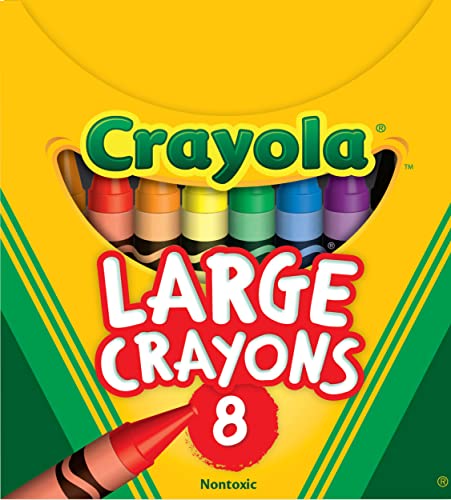
Crayola Large Crayons, 8 count, for ages 3 and up per the maker's page. The pick if you do not mind a paraffin wax: Crayola's FAQ says its crayons are "made using primarily paraffin wax and color pigment", the AP seal it claims is in ACMI's register, and its pigments are not named. We found no maker or regulator statement that paraffin crayons are harmful, and no CPSC recall of Crayola crayons between October 2021 and October 2026. The Crayola pages we read state no ASTM D-4236 conformance, and we did not open its safety data sheets. On 2026-10-26 Amazon listed the 8 count in stock at $5.11 from a third-party seller, VerSure, about 64 cents a crayon.
The crayon makers we looked at
One card per maker. The badge asks whether you can check both the wax and the seal: the maker's own pages say what the wax is, and ACMI's certified-product search lists the product with the AP seal (searched 2026-10-26). It is not a safety finding. A maker name links to its SafeMama profile when one is published.
Crayon Rocks
Only part of that can be checkedPick"Crafted from natural soy wax with non-toxic pigments." FAQ: "made with soy wax and natural mineral pigments"
- Seal or standard on the maker's pages
- Says "Certified to ASTM D-4236, ASTM F-963, EN71-3, and CPSIA"; it does not claim ACMI's seal
- ACMI search
- No Crayon Rocks entry found
- Test report
- Its safety page links an SGS report (24 pages, dated November 2024, revised February 2025, for a 32-crayon set) covering lead (CPSIA) and EN71-3 element migration; it names no pigments, does not mention ASTM D-4236, and reports in parts per million (lead 20 ppm; soluble arsenic 2.5 ppm), so it cannot be compared with the parts-per-billion results below. The FAQ says "All testing was conducted by Bureau Veritas", which does not match the posted SGS report
- Wax
- "Soy wax"; the pages we read do not say it is the only wax
- Age, per maker
- 3 and up; the listing carries a choking warning, not for children under 3
- Amazon, 2026-10-26
- 16 count $16.95, in stock from the seller Amazon spells "Crayons Rocks"
Where it landed: Top pick for a plant-wax crayon: it states the most, though its standards are the maker's own statements and only Stockmar's seal can be looked up
Honeysticks
Only part of that can be checkedPick"100% pure beeswax and food-grade pigments for color." FAQ: "They contain no paraffin wax." ("100%" describes the wax; the pigments are added to it.)
- Seal or standard on the maker's pages
- None named for the crayons (no ASTM, EN71, CPSIA or ACMI text on the crayon pages we read)
- ACMI search
- No Honeysticks company or product entry found
- Pigments
- "FDA-approved food-grade pigments"; none named. Its FAQ says they are "a lot safer" than the pigments many other brands use; we found no test behind that comparison
- Independent lab result
- Lead Safe Mama, July 2025: a pink and a red crayon tested positive for lead (up to 208.8 ppb) and arsenic (about 660 ppb); see Independent testing below the picks
- Age, per maker
- 12 pack: toddlers aged 1 to 3; its Super Jumbo and Triangle sets say 1+ and its Jumbo sets 3+. No choking note on the product page
- Amazon, 2026-10-26
- 12 pack $22.95, in stock from Honeysticks
Where it landed: Runner-up pick: the beeswax set sold for ages 1 to 3, with the caveat that nothing on it can be looked up
Stockmar
Only part of that can be checkedPickFAQ: "Our carefully developed formula contains approximately 10% beeswax"; also "STOCKMAR uses pure beeswax" in its wax crayons. Wax crayon page: "Crystalline waxes act as a carrier for transparency" and add structure and gloss.
- Seal or standard on the maker's pages
- FAQ says packaging carries "AP – conforms to ASTM D-4236" from ACMI; products "tested according to DIN EN 71"
- ACMI search
- Listed with the AP seal: "Stockmar Wachsfarben", under Crayons, Molded. The row names the line, not the 8-block set
- Paraffin
- The word does not appear on the pages we read, so we neither say it contains nor lacks paraffin
- Independent test
- Lead Safe Mama's 2018 XRF screening of a Stockmar block set found no lead, arsenic or cadmium it could detect; XRF is a coarser method (parts per million) than the 2025 lab results above, so the two are not comparable
- Age, per maker
- 3 and up, because of small parts
- Amazon, 2026-10-26
- Set of 8 $20.80, in stock from third-party seller Undersun Premium Suppliers
Where it landed: Runner-up pick, for a beeswax-containing set whose line is in ACMI's register
Crayola
Wax stated and AP seal in ACMI's registerPick"Crayola® Crayons are made using primarily paraffin wax and color pigment."
- Seal on the maker's pages
- ACMI AP seal; "independent toxicologists" evaluate its products. No ASTM D-4236 text on the pages we read
- ACMI search
- Listed with the AP seal: Crayola Crayons, Large, Jumbo, Washable, Triangular and others
- Pigments
- Not named; Crayola says it buys powder pigments and mixes them
- Independent lab result
- Lead Safe Mama, published December 2025 (tested July 2025, from a 16-count box): one red Large crayon tested positive for lead (291.9 ppb) and arsenic (184.3 ppb); cadmium and mercury were below 5 ppb. See Independent testing below the picks
- Age, per maker
- Large Crayons, 8 count: 3+ (read on its Canadian site)
- Amazon, 2026-10-26
- 8 count $5.11, in stock from third-party seller VerSure
Where it landed: Runner-up pick, for anyone who does not mind paraffin: the cheapest per crayon, and its wax and seal can both be checked
Kitpas
Wax stated and AP seal in ACMI's registerRice Bran Wax Art Crayons: "Rice bran wax, Pigment, Emulsifier"
- Seal or standard on the maker's page
- None named on the product page we read; it says "lead-free, asbestos-free, phthalate-free"
- ACMI search
- Listed with the AP seal: Kitpas Rice Bran Wax Art Crayons in 6, 12, 16 and 24 colors, and bath crayons. Older Kitpas lines are listed too
- Caveat
- The same page says Kitpas made its crayons with paraffin wax "from the very beginning" and is now "pure food-grade rice bran wax", so older Kitpas lines in the register may be the older formula. Pigments and the emulsifier are not named
- Age, per maker
- 3 years and above
- Where to buy
- No Amazon listing resolved in our product search on 2026-10-26; we did not check other US stores
Where it landed: Not picked: no purchasable listing found. Its page names rice bran wax and ACMI's register lists its rice bran crayons with the AP seal, though its own page does not mention the seal. If you find it in a US shop, check that the box says rice bran wax
Faber-Castell
Only part of that can be checked"The crayons are made with highly pigmented beeswax" (World Colors set); no percentage or other wax stated
- Seal or standard on the maker's pages
- None named on the beeswax crayon pages we read
- ACMI search
- No wax crayon found under any of its four member entries
- Age, per maker
- 3+
Where it landed: Not picked: the pages do not say whether beeswax is the only wax, and no seal is listed
Prang
Neither can be checked"AP certified; great for kids ages 3 & up"; the wax is not stated
- ACMI search
- Other Prang products listed with the AP seal; no row found for the standard-size crayons
Where it landed: Not picked: no wax statement, and we could not match its AP claim in the register
Also read, not carded: Melissa & Doug's Jumbo Triangular Crayons (its page says they are "made of plastic, not wax" and states no ingredients or standards). Not evaluated: Eco-Kids and Filana (no maker page we could read; retailer descriptions of their waxes conflict), and Lyra, Hygloss and Natureplay (no kids' wax crayon found). ACMI's search shows only products that carry its AP or CL seal, so a product missing from it may simply not bear ACMI's seal.
What this page is for
"Non-toxic" is on nearly every box of crayons, and in the US it means less than it sounds like: every art material sold here has to be reviewed by a toxicologist and labeled under a federal standard, so the word does not separate one brand from another. This page is for the parent choosing between the crayons they already know and a plant- or beeswax set that costs roughly two to four times as much per crayon on the 2026-10-26 prices we resolved. We looked at what each maker's page says about the wax, what seal a parent can look up, and what age the crayon is made for.
If you do not mind paraffin, Crayola's crayons say what they are made of, carry a seal you can look up, and cost about 64 cents a crayon in the 8-count box we resolved. Nothing we read says paraffin crayons are unsafe. Choose the plant- or beeswax picks if you specifically want a wax that is not petroleum-derived, knowing what each one does and does not give you.
What the AP seal covers, and what it does not
The seal to look for is the Art and Creative Materials Institute's AP (Approved Product) seal, and ACMI has a search tool where you can type a brand or product and see whether it is listed. ACMI says the seal means a board-certified toxicologist evaluated the formula; it is meant for products used by children in sixth grade or younger. ACMI is an association of art-supply makers, so this is an industry program, not a government approval, but it is still a toxicologist's review you can look up. It publishes no ingredient list: ACMI's own advice is to contact the manufacturer to find out whether a product contains a particular ingredient. The seal also does not name the wax. Crayola's paraffin crayons hold it, and Stockmar's, which are about 10% beeswax, do too.
"Conforms to ASTM D-4236" is a different, smaller thing. It is the labeling standard for chronic hazards in art materials, and CPSC's guidance requires a conformance statement in one of three wordings on the product where practicable; the guidance also says the federal art-materials labeling rules are not a safety rule that requires certification. Since ACMI's regulations page says every art material sold in the US has to be evaluated and labeled that way, a maker stating it is meeting the baseline.
The wax is the part you can check
The reason to read a crayon's wax line is not that paraffin has been shown to harm children. We found no maker or regulator statement on the pages we read saying so. It is that the wax is the one thing most makers will tell you: Crayon Rocks says soy, Honeysticks says beeswax, Kitpas says rice bran wax, Crayola says paraffin. If you prefer a crayon that is not made from petroleum, that is a reasonable thing to buy for, and the maker's page is where you confirm it. Beyond the wax, none of the makers we read named its pigments, and only one posts a lab report, so a claim like "food-grade pigments" is the maker's word and we say so on each card.
Independent testing
The pigments are where a crayon's lead or arsenic would come from, and the makers do not name them, so we looked for outside results. The only source we found is Lead Safe Mama, an advocacy project run by Tamara Rubin that raises money to send consumer products to a third-party lab. In July 2025 it reported that a pink and a red Honeysticks crayon tested positive for lead (up to 208.8 parts per billion) and arsenic (about 660 ppb in the pink one); in December 2025 it published a result for one red Crayola Large crayon, from a 16-count box tested in July 2025, that was positive for lead (291.9 ppb) and arsenic (184.3 ppb), with cadmium and mercury below 5 ppb. In 2018 its XRF screening, a coarser method that reads parts per million, found no lead, arsenic or cadmium it could detect in a Stockmar block set.
How to read that. The group compares its numbers to FDA guidance for food, which does not cover crayons. Its own post notes that toys may legally contain 100 parts per million of lead, which is 100,000 ppb, and that an item can be legal as a toy and still exceed food guidance. Nothing sets a health limit for lead or arsenic in crayons, so we cannot say what a few hundred parts per billion means for a child who chews one. The group's own position is that no level of lead exposure is safe for children, and its advice is to keep crayons away from children who eat them. We have not verified its lab or methods, one color of Crayola and two of Honeysticks were tested, and we did not contact either company, so this is one outside data point, not a verdict. It does mean that "beeswax" and "food-grade pigments" on a box are not evidence of a cleaner crayon, which is why none of the picks above is a safety ranking.
Under three, and over three
Almost every crayon here is graded 3+ by its maker, because the pieces can be bitten off. Honeysticks sells its 12 pack for toddlers aged 1 to 3 (Crayola also sells toddler lines we did not review) and says the crayons are not made for eating; its product page carries no choking or supervision note, so the supervision advice here is ours; check the pack. For a child who still mouths everything, the grade on the box matters more than the wax. If your child is over three, the cards above say what each of the others does and does not tell you.
What we could not check
We did not test any crayon. Only Crayon Rocks posts a lab report (we read it; it names no pigments), and we did not check it against the exact set we link. Crayola's safety data sheets, which are on a public portal and are the place to see its declared components, we did not open. ACMI's search names a Stockmar wax crayon line, not the 8-block set by SKU. Kitpas' US availability and prices were not checked outside Amazon, and we did not contact any company. A maker's page can lag its package, so the box in your hand wins.
Where to go next
- The toys and art supplies cheat sheet: the short version, including washable paint and bath toys.
- Toys hub: the materials question answered once.
- The play dough showdown: doughs that publish their recipe.
- SafeMama's safer toy guide: lead, ASTM F963 and small parts.
- Recall Watch: search a product or brand against CPSC, FDA and NHTSA recalls.
What a crayon box can say without telling you much
- "Non-toxic" on the box — US law expects every art material to be reviewed by a toxicologist and labeled to ASTM D-4236, so "non-toxic" or "conforms to ASTM D-4236" is the baseline. It cannot separate two brands. A maker who prints its wax and pigments is telling you something more.
- "Certified" with no name — ACMI's AP seal is the one you can look up. ACMI is an association whose members make art supplies, so the seal is an industry program's toxicological review, not a government approval. It is still a toxicologist's review you can verify, which a bare "non-toxic" is not. It does not name the wax or the pigments.
- "Beeswax" in the name — Stockmar's own FAQ says about 10% beeswax, and Faber-Castell's pages do not say whether beeswax is the only wax. "100% beeswax" on a crayon describes the wax; the pigments are added to it. Look for a percentage or a materials line.
- A seal that is not the AP seal — ACMI also has a CL seal, for materials with a health warning, meant for kids in seventh grade and up. ACMI says to avoid giving it to children in sixth grade or younger, and that it appears on no children's materials; look for AP.
- The age grade — Most crayon makers grade theirs 3+ because of small pieces. Honeysticks sells its 12 pack for toddlers aged 1 to 3 and says the crayons are not made for eating. For a child who still mouths everything, stay within arm's reach whatever the box says.
How we choose
We looked at five checkable things: the maker's own page names the wax, a seal or standard is stated (and, for ACMI's AP seal, appears in ACMI's register), an age grade is printed, a listing was in stock on the day we checked, and no CPSC crayon recall turned up for the brand in five years. Passing them is a floor, not a ranking: Crayola passes all five and is paraffin; Crayon Rocks passes on paper, but its standards are its own statements and not in ACMI's register; Honeysticks states no seal or standard; and Stockmar does not name its whole wax and is sold by a third party. We also add one preference that is not a safety test: a wax that is not petroleum-derived. That preference is why the plant- and beeswax sets lead and Crayola is the runner-up for parents who do not share it. We read each maker's page and ACMI's certified-product search on 2026-10-26, and did not test the crayons.
- The maker's own page names the wax (and ideally the pigment type)
- A seal or standard is stated on the maker's page and, where it is ACMI's AP seal, appears in ACMI's certified-product search (a standard is the maker's statement; the AP seal is the one we can look up)
- An age grade is printed on the maker's page
- A purchasable Amazon listing resolved in stock on 2026-10-26, with the seller named
- No CPSC recall of the brand's crayons in the five years to October 2026 (a text search of CPSC's recall feed)
- Preference, not a safety test: a wax that is not petroleum-derived
Every source we cite is checked against our criteria first — see how we check our sources.
What the research says
The CPSC this year issued 498 notices of violations for toys through June, as of the latest data available (Sept. 23, 2025).
— A U.S. PIRG Education Fund report authored by Teresa Murray found ...
Trouble in Toyland 2025: A.I. bots and toxics present hidden dangers — U.S. PIRG Education Fund (2025-11-13)
When you buy a toy or any other product online and it's shipped directly to you from another country, it generally doesn't get inspected before it gets to your mailbox.
— A U.S. PIRG Education Fund report authored by Teresa Murray found ...
Trouble in Toyland 2024: Unsafe toys that slip through the border — U.S. PIRG Education Fund (2024-11-19)
Selecting products labeled 'fragrance-free' rather than 'unscented' may help reduce exposure to endocrine-disrupting chemicals because unscented products may contain multiple scents, still bound by phthalates, that are mixed to cancel each other out.
— According to American College of Obstetricians and Gynecologists guidance co-authored by Tracey J. Woodruff, PhD, MPH, ...
Reducing Prenatal Exposure to Toxic Environmental Agents (Committee Opinion No. 832) — American College of Obstetricians and Gynecologists
Sources
- ACMI — Materials Safety (AP and CL seals) — Art and Creative Materials Institute
- ACMI — Certified Products Search Tool — Art and Creative Materials Institute
- ACMI — About us (membership) — Art and Creative Materials Institute
- ACMI — Regulations (ASTM D-4236 and the art-materials labeling law) — Art and Creative Materials Institute
- CPSC — Art Materials business guidance — U.S. Consumer Product Safety Commission (how we check this source)
- CPSC — Primark recalls The Nightmare Before Christmas Glow-in-the-Dark Coloring Sets — U.S. Consumer Product Safety Commission (how we check this source)
- Lead Safe Mama — lab results for two Honeysticks crayons (July 2025) — Lead Safe Mama, LLC (advocacy project)
- Lead Safe Mama — lab result for a Crayola Large crayon, red (December 2025) — Lead Safe Mama, LLC (advocacy project)
- Lead Safe Mama — XRF results for Stockmar block crayons (2018) — Lead Safe Mama, LLC (advocacy project)
- Honeysticks — Originals 12 pack — Honeysticks
- Honeysticks — FAQ — Honeysticks
- Stockmar — FAQ — Stockmar
- Stockmar — Wax crayons — Stockmar
- Kitpas — Rice Bran Wax Art Crayons — Nihon Rikagaku Industry Co., Ltd.
- Crayon Rocks — FAQs — Crayon Rocks
- Crayon Rocks — Safety and Toxicology — Crayon Rocks
- Crayola — What are the basic ingredients of Crayola crayons? — Crayola
- Crayola — The science of Crayola crayons — Crayola
- Crayola — Are Crayola products nontoxic? — Crayola
- Crayola — Large Crayons, 8 Count (Canadian site) — Crayola
- Faber-Castell — 24 Brilliant Beeswax Crayons — Faber-Castell USA
- Faber-Castell — World Colors Beeswax Crayons — Faber-Castell USA
- Prang — Crayons, standard size — Dixon Ticonderoga
Side by side
| Attribute | Crayon RocksCrayons in a Rock Shape | Honeysticks100% Pure Beeswax Crayons | STOCKMARBeeswax Block Crayons | CrayolaLarge Crayons |
|---|---|---|---|---|
| Why it's here | Our top pick | — | — | — |
| Price | $16.95 | $22.95 | $20.80 | $5.11 |
| Availability | In stock | In stock | In stock | In stock |
Common questions
Cheat sheets for this
Part of the Toys & Art Supplies hub— the rest of our coverage in this category.
Every toys & art suppliesproduct we've reviewed— what we'd buy, what we'd skip, and where each one stands.