Start with the safety issue, not the chemistry
One thing in this category can hurt you today rather than theoretically:
Never mix bleach with ammonia, and never mix bleach with acids — including vinegar and many
descalers and toilet cleaners. Bleach plus ammonia produces chloramine gas; bleach plus acid
produces chlorine gas. Both send people to hospital every year, and the usual route is not a
deliberate mixture but using one product on a surface that still has another on it.
If you take one thing from this page, take that. It matters more than any ingredient list below.
The biggest win is owning less
Most homes have a cupboard of single-purpose products. The majority of routine cleaning is covered
by a general-purpose cleaner, a dish soap, a scouring agent, and — where you genuinely need
disinfection — one disinfectant used correctly.
That is not a frugality point. Fewer products means fewer ingredients in the house, fewer things to
mix by accident, and less to keep out of reach.
Our non-toxic cleaning guide is organized by job rather than by
brand for exactly this reason.
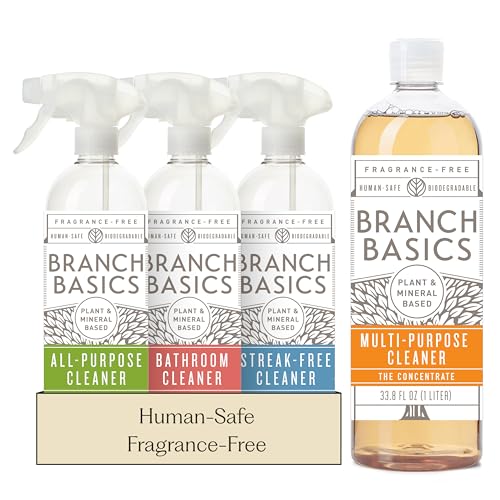
Fragrance is the filter that does the most
As in personal care, "fragrance" or "parfum" can legally stand in for an undisclosed mixture. In
cleaning products it is also the main thing you inhale, in an enclosed room, often while the product
is aerosolized.
Filtering for fragrance-free removes a large share of what people react to, costs nothing, and does
not compromise cleaning performance at all.
Ventilation beats product choice
Open a window while you clean, and for a while afterwards. VOCs from cleaning products are a real
contributor to indoor air quality, and airing the room does more than switching brands.
Our air quality guide covers the indoor side properly — including which of the
things sold as air-cleaning actually do something.
On certifications and ratings
EPA Safer Choice and Green Seal both mean a specific, documented standard was met. Both are
in our Sources registry with their scope written out.
"Natural," "eco," "green" and "non-toxic" on a bottle mean nothing in particular — none is a
regulated term here.
For hazard ratings, our take on the EWG's cleaning
guide explains where we find it
useful and where we think it over-reaches.