
BPA-free pacifiers and teethers cheat sheet
One winner for each way people buy BPA-free pacifiers and teethers.
BPA is now out of bottles, sippy cups and formula packaging. Pacifiers and teethers were never part of that, which is why parents still ask what the soft parts are made of — and why this list still exists.
How we scoreHow we earnChecked August 21, 2026
Our winner for each way people buy
How we scoreHow we earnChecked August 21, 2026
Best overall pacifier
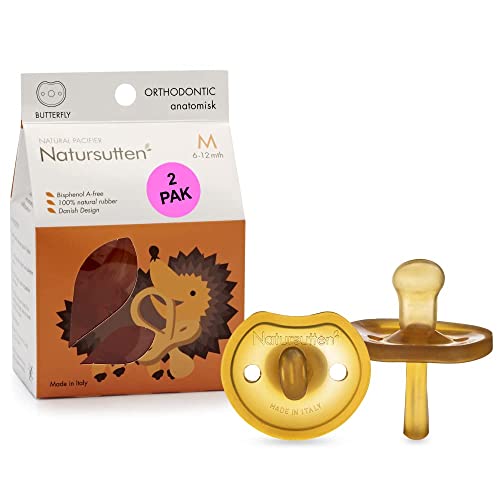
Natursutten
2-Pack Natural Rubber PacifiersNatursutten natural rubber pacifiers — one-piece natural rubber, so there is no plasticizer to ask about.
Meets our published criteria, as of Aug 21, 2026
$19.99ViewUndecorated natural rubber teether

Sophie la girafe
So'pure Circle TeetherSophie la girafe So'Pure circle teether — natural rubber, undecorated. Two other Sophie toys were recalled in France in 2026; no US recall of this teether found as of October 2026.
Meets our published criteria, as of Aug 21, 2026
$19.95ViewLower price point teether

Nuby
Jackie The Giraffe Super Soft Teether Toy for Sore GumsNuby Jackie the Giraffe — natural rubber teether at a much lower price point.
Meets our published criteria, as of Aug 21, 2026
$12.98ViewSilicone teether (latex allergy in the family)

haakaa
Silicone Clover TeetherHaakaa Silicone Clover Teether — silicone, the alternative to natural rubber; the maker declares 100% food-grade silicone and BPA, PVC and phthalate-free.
Meets our published criteria, as of Aug 21, 2026
$9.99ViewSilicone pacifier (0-6 months)

Dr. Brown's
Advantage One-Piece Silicone Baby PacifierDr. Brown's Advantage One-Piece Silicone Pacifier — soft silicone, declared BPA-free by the maker; silicone is the alternative where there is a latex allergy.
Meets our published criteria, as of Aug 21, 2026
$5.97View
What to avoid
- BPA — removed from bottles, sippy cups and formula packaging — but pacifiers and teethers were never part of those actions
- Hollow squeezy soft plastic — the classic PVC application; a format that deserves a materials question
- Painted or printed chew surfaces — prefer the undecorated version where the manufacturer offers one
- Discontinued models on old lists — this category turns over fast — a model named on a years-old cheat sheet is often no longer made
What to look for
- One-piece natural rubber or silicone — these materials do not need BPA or phthalate plasticizers to work, so being free of both is structural rather than a reformulation
- Manufacturer-declared BPA/PVC/phthalate-free status — declaring materials is voluntary, so a company making the claim is staking its reputation on it
- Undecorated chew surfaces — fewer things on the part that actually goes in a mouth
What the label card means
What to skip, and why
BPA
Removed from bottles, sippy cups and formula packaging — but pacifiers and teethers were never part of those actions.
Know the risks: BPA & plastic substitutesHollow squeezy soft plastic
The classic PVC application; a format that deserves a materials question.
Painted or printed chew surfaces
Prefer the undecorated version where the manufacturer offers one.
Discontinued models on old lists
This category turns over fast — a model named on a years-old cheat sheet is often no longer made.
Where to buy
The full guide: how we chose
BPA is now out of infant formula packaging, baby bottles and sippy cups — a real change. It never covered pacifiers and teethers, which is the gap this page exists for. One-piece natural rubber is the simplest answer available, and silicone is the right call where there is a latex allergy.
What changed, and what did not
Fifteen years ago the whole conversation was about finding BPA-free products — bottles, sippy cups, and the question of what else in a baby's routine needed changing. It was genuinely hard to know what to buy. More than one parent has said out loud: can't someone just tell me what to buy?
Today BPA is out of infant formula packaging, baby bottles and sippy cups. That is a real improvement, and it is worth being precise about its edges: those actions did not cover pacifiers and teethers. This category was never the subject of the same regulatory attention, which is why a cheat sheet still earns its place.
The good news is that the category was mostly fine anyway, for a structural reason rather than a regulatory one.
Why most pacifier materials were never a BPA problem
BPA is used to make polycarbonate hard, rigid and clear. Pacifiers and teethers are supposed to be soft. The materials that make them soft — silicone, natural rubber, TPR — do not need a hardening agent, so BPA has no role in them.
The same logic identifies where the real question sits. PVC is rigid by default, so making it soft and squeezable requires plasticizers, historically phthalates. That is why hollow, squeaky soft plastic is the format worth asking about, and why a one-piece natural rubber pacifier simply does not raise the question.
Our explainer on TPR covers the soft rubbery sections you find on otherwise hard plastic teethers.
What we recommend
Natursutten natural rubber pacifiers are the simplest answer available: one piece, one natural material, nothing to plasticize. Sophie la girafe So'Pure is the undecorated version of the teether most people already recognize. Nuby's Jackie the Giraffe does the same job in natural rubber at a considerably lower price.
If there is a latex allergy in the family, skip natural rubber entirely and choose silicone.
Brands that have declared BPA, PVC and phthalate-free status
Retained from our original list, and worth treating as a starting point rather than a guarantee — this category turns over quickly and specific models come and go.
Pacifiers: Natursutten and EcoPiggy (natural rubber), plus declared BPA/PVC/phthalate-free lines from Playtex, Gerber/NUK, The First Years, Evenflo, Sassy and Avent.
Teethers: Vulli (Sophie la girafe and the Chan Pie Gnon range), Green Sprouts cornstarch and wood teethers, Camden Rose maple teethers, Kushies, Nuby's natural rubber and silicone range, and Combi.
This is not a comprehensive list — it is the set we are aware of. A product's absence is not a verdict on it. If a soft part matters to you and the packaging is silent, ask the manufacturer; declaring materials is voluntary, so when a company does declare, they are staking their reputation on it.
On the BPA claims you will read elsewhere
BPA is a hormone-mimicking chemical that was widely used in polycarbonate plastics and resins. It has been studied extensively, and it can migrate from the lining of canned foods and, to a lesser degree, from polycarbonate containers — particularly when they are heated, cleaned with harsh detergents, or used for acidic contents.
Research on health effects is ongoing and genuinely contested; you will find confident claims in both directions online, and we would rather point you at the regulator's current position than pick a side. What is not contested is the exposure pathway, which is why the practical advice has stayed stable: avoid heating food in plastic, and prefer glass, stainless steel and — for the things a baby chews — materials that never needed BPA in the first place.
Canned food, not bottles, remains the larger dietary route. Our BPA-free canned food cheat sheet covers it.
The swaps, in full
Hollow, squeezy bath-toy-style teethers
Hollow, squeaky soft plastic is the classic PVC application. Teethers in that format deserve a materials question.
Hides in: Bath-toy-shaped teethers with a hollow, squeaky body
Natursutten natural rubber pacifiers — one-piece natural rubber, so there is no soft-plastic question to answer at all.
Manufacturer statement checked · source
Sophie la girafe So'Pure circle teether — natural rubber, and the version without the painted detailing. One thing to know: in 2026 two other Sophie la girafe toys, a bath-toy set and a battery-operated book, were voluntarily recalled in France, and French prosecutors opened an inquiry into the brand's "made in France" claim after its maker said some of its giraffes are produced in China, a labeling question rather than a safety finding. We found no US recall of this teether or of either recalled toy in CPSC data as of October 2026.
Manufacturer statement checked · source
Nuby Jackie the Giraffe — natural rubber teether at a much lower price point.
Painted or printed detailing on a chew surface
Prefer the undecorated version of a teether where the manufacturer offers one.
Hides in: Printed graphics or paint directly on the part your child chews
Sophie la girafe So'Pure circle teether — natural rubber, undecorated. Two other Sophie toys were recalled in France in 2026; no US recall of this teether found as of October 2026.
Manufacturer statement checked · source
Natural rubber, if there is a latex allergy in the family
Natural rubber is the cleanest answer to the plastics question and the wrong answer if there is a latex allergy in the family. Silicone is the alternative.
Haakaa Silicone Clover Teether — silicone, the alternative to natural rubber. Haakaa's own page declares it 100% food-grade silicone and BPA, PVC and phthalate-free; that is a manufacturer declaration, not an independent test.
Manufacturer statement checked · source
Dr. Brown's Advantage One-Piece Silicone Pacifier, 0-6 months — soft silicone, declared BPA-free on Dr. Brown's own page. The page makes no statement about phthalates or PVC.
Manufacturer statement checked · source
What to check before you buy
- Assuming the bottle rules covered this — BPA was removed from baby bottles, sippy cups and infant formula packaging. Pacifiers and teethers were not part of those actions.
- Hollow squeezy bath-toy-style teethers — Hollow, squeaky soft plastic is the classic PVC application. Teethers in that format deserve a materials question.
- Latex allergy and natural rubber — Natural rubber is the cleanest answer to the plastics question and the wrong answer if there is a latex allergy in the family. Silicone is the alternative.
- Painted or printed detailing on a chew surface — Prefer the undecorated version of a teether where the manufacturer offers one.
- Discontinued models on old lists — This category turns over fast. A model named on a years-old cheat sheet is often no longer made.
How we choose
We prefer materials that avoid the question rather than answer it: one-piece natural rubber and silicone do not need BPA or phthalate plasticizers to work, so their being free of both is structural rather than a reformulation. Where a manufacturer voluntarily declares BPA, PVC and phthalate status, we treat that as reliable.
- One-piece natural rubber or silicone where possible
- Free of BPA, PVC and phthalates
- Manufacturer declares materials
- Undecorated chew surfaces preferred
- Currently in production, with no active recall on the pick
Every source we cite is checked against our criteria first — see how we check our sources.
What the research says
Child passenger safety technicians across the country report identifying one to two unregulated or counterfeit seats each month during routine safety checks.
— In 2026-02-07 testimony, Ben Hoffman, MD, CPST-I cited ...
Public testimony on counterfeit car seats, Oregon House Committee on Commerce and Consumer Protection — Oregon Legislative Information System (2026-02-07)
Car seat use reduces the risk for injury in a crash by 71-82% for children, compared with seat belt use alone
— In 2026-02-07 testimony, Ben Hoffman, MD, CPST-I cited ...
Public testimony on counterfeit car seats, Oregon House Committee on Commerce and Consumer Protection — Oregon Legislative Information System (2026-02-07)
A flexible 9-day road map for safely introducing top allergens
— Malina Malkani, MS, RDN, CDN told BenBella Books (distributed by Simon & Schuster), ISBN 9781637745359 that ...
Safe and Simple Food Allergy Prevention: A Baby-Led Feeding Guide to Starting Solids and Introducing Top Allergens — BenBella Books (distributed by Simon & Schuster), ISBN 9781637745359 (2024-11-12)
Common questions
Every feedingproduct we've reviewed— what we'd buy, what we'd skip, and where each one stands.