
Non-toxic toys for toddlers, 1 to 3 years
One winner for each way people buy toys for toddlers, 1 to 3 years.
The toy-buyer's version for one-, two- and three-year-olds: blocks, pull toys, play kitchens, dolls, art and sand, with the real hazards (magnets, small parts, lead) stated plainly and the label claims that do not tell you anything set aside. Every pick names its main material on the maker's own page.
How we scoreHow we earnChecked November 13, 2026
Our winner for each way people buy
How we scoreHow we earnChecked November 13, 2026
Blocks for a one-year-old

PlanToys
40 Unit Blocks Wooden Montessori Building & Stacking…Forty solid-wood blocks. PlanToys names rubberwood, formaldehyde-free glue, organic pigments and water-based dyes, and tags the set 18 months and up. ASTM and EN71 test reports are linked on its page; we did not read them.
Meets our published criteria, as of Nov 13, 2026
$35.99ViewCrayons for a toddler

Honeysticks
100% Pure Beeswax CrayonsPure beeswax and food-grade pigments with no paraffin, ages 1 to 3, per Honeysticks' own page. No safety standard is named.
Meets our published criteria, as of Nov 13, 2026
$22.95View
What to avoid
- Magnetic tiles and magnet toys for a child under 3 — a swallowed magnet needs an emergency visit, not a wait-and-see, and Magna-Tiles grades its tiles 3 and up
- A kitchen in composite wood with no label — EPA generally requires finished goods made with MDF, particleboard or hardwood plywood to carry a TSCA Title VI compliance label
- Any toy graded 3+ in a house with a one-year-old — the grade usually means small parts, and the small-parts rule is the toddler rule
- Soft vinyl of unknown material — PVC needs plasticizers to be soft; see our TPR explainer
What to look for
- A materials list on the maker's own page — it puts a claim where you can check it
- A named wood, glue and finish — water-based paint and formaldehyde-free glue are things a maker can be held to
- An age grade at or below your child's age — the grade is where small-parts testing shows up
- Solid or open shapes — no sealed hollow to hold water or break open
- 1Skip: Blocks and stackers that don't name the wood or the finishBuy instead: PlanToys, Fisher-Price, mushie Why
- 2Skip: Pull and push toys that don't say what they are made ofBuy instead: PlanToys Why
- 3Skip: A play kitchen in composite wood with no compliance labelBuy instead: Under the Nile Why
- 4Skip: Dolls and plush that don't say what is insideBuy instead: Apple Park, Under the Nile Why
- 5Skip: Art supplies that only say non-toxicSee all non-toxic crayons, and what Crayola, Faber-Castell and Prang say Why
- 6Skip: Sand toys of unnamed soft plasticBuy instead: Green Toys Why
What the label card means
What to skip, and why
Magnetic tiles and magnet toys for a child under 3
A swallowed magnet needs an emergency visit, not a wait-and-see, and Magna-Tiles grades its tiles 3 and up.
A kitchen in composite wood with no label
EPA generally requires finished goods made with MDF, particleboard or hardwood plywood to carry a TSCA Title VI compliance label.
Any toy graded 3+ in a house with a one-year-old
The grade usually means small parts, and the small-parts rule is the toddler rule.
Soft vinyl of unknown material
PVC needs plasticizers to be soft; see our TPR explainer.
Know the risks: PVC / soft vinyl
The full guide: how we chose
For a toddler's toy, two questions do most of the work: what is it made of, and did the maker say so on its own page? A compliant toy has already cleared a lead limit and the mandatory toy standard, so "non-toxic" on the box separates nothing; non-compliant toys still turn up, mostly through marketplace sellers, so check the recall list too. The hazards that actually hurt toddlers are mechanical: small parts, and magnets. A toy graded 3 and up is not for a one-year-old, whatever the material, and magnetic tiles are graded 3 and up for a reason.
What this sheet covers
This is the toddler version of what we have already written about toys: what to check on the blocks, the pull toys, the pretend-play food, the dolls, the crayons and the sand set, and where the real hazards sit. It is for the parent or grandparent choosing a gift for a one-, two- or three-year-old. The full reasoning behind the labels lives on the pages linked in each section.
Every swap pick above is graded by its maker or listing for a child under 3: blocks, a pull toy, play food, dolls and plush, crayons and a sand set. We have no play kitchen pick and no magnetic tile pick, and the sections below say why.
By age: what to look for
The ages below are the makers' own grades (for the doll and the sand set, the Amazon listing's), not ours. A toy for children under 3 has to pass the small-parts rule, so a maker's 12-months-and-up grade is its claim that the toy does. A 3-and-up grade means it is not making that claim; keep those toys away from a child under 3.
12 to 18 months: blocks, stackers, pull toys
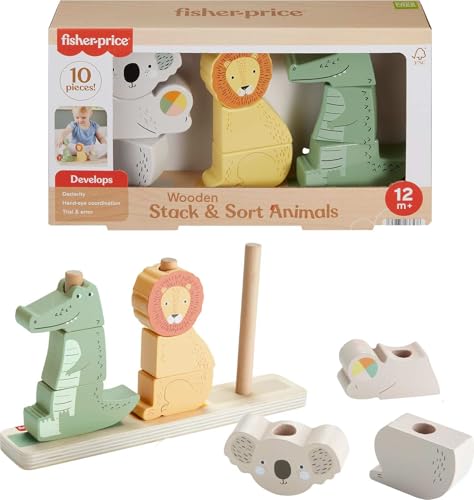
This is the age of mouthing, dropping and dragging. Solid wood or open plastic shapes with the material and finish named on the maker's page are the easiest to check. Our blocks pick is graded 18 months and up by PlanToys; the wooden stacker is graded 12 months and up and the stacking cups 10 months and up. For a new walker, the pull snail is tagged 12 months and up.
18 to 24 months: pretend play, dolls, crayons
Soft play food, a doll and toddler crayons make sense here. The strawberry and doll name their fabric and filling on the makers' pages, and Honeysticks crayons are graded for ages 1 to 3 by the maker. For the full crayon read, including Crayola, Faber-Castell and Prang, see non-toxic crayons.
2 to 3 years: kitchens, sand, dough, and the magnet line
This is when play kitchens, sand sets and dough show up, and also when the older sibling's magnetic tiles are most tempting to share. Two things change. Check the age grade on dough and art sets; homemade or tested dough is a supervised activity at this age. And magnetic tiles are graded 3 and up by their maker, so they wait.
Wooden toys: what "non-toxic wood" does and does not mean
People search for wooden non-toxic toys because wood feels like the plain answer, and partly it is. Solid wood does not need a hardening agent like BPA, and it is not soft enough to need a plasticizer like the phthalates in soft PVC. Our safer toy guide lays this out. What wood does not skip: lead in paint, small parts, and glue. A wooden toy still has to clear the same lead limit as any other toy, 100 parts per million in the toy and 90 in paint and coatings, and CPSC said in June 2026 that it is not lowering them. A toy legally sold in the US has cleared that number. The wood sets above state rubberwood, formaldehyde-free glue and water-based dyes; those are the makers' words. PlanToys' blocks page links ASTM and EN71 reports that we did not open; the snail page links none.
Play kitchens: wood or plastic, finishes and what is in the board
A play kitchen is where the material question gets practical. A kitchen sits in a room for years, is climbed on and handled daily, and costs more than any other toy on this sheet.
Wood kitchens. Many wooden kitchens are built from MDF, particleboard or hardwood plywood. Those composite woods are held together with formaldehyde resins, and EPA says they are commonly used in "wooden children's toys, among other products." The federal rule, TSCA Title VI, sets emission limits for the panels, and finished goods made with them generally have to carry a compliance label. So the question is not "MDF or solid wood?" but "does the page or the box carry a TSCA Title VI compliance statement (it should name the fabricator and the month and year of production), and does the maker say what the board is?" MDF is not itself evidence of a problem; a labeled kitchen is a legal product. An unlabeled one, or a page that says "wood" and nothing else, is a question to ask the maker before buying.
Plastic kitchens. The question for plastic is the usual one: what plastic, and does the maker name it? Federal rules cap eight phthalates at 0.1% in children's toys, so soft vinyl is the part to look at and hard plastic is the part to read the label on. Our phthalates and PVC page covers what is actually banned, and what TPR is covers soft plastic that is not PVC.
Finishes. "Water-based paint" is a claim a maker can be held to. "Non-toxic paint" is a brand's word, since toy paint has to meet the lead limit whatever it says on the box. Our lead page covers where lead exposure from toys still comes from.
We have not added a kitchen pick. It takes a maker page that names the board and the finish, and we would rather leave the slot empty than pick one from a title.
Magnetic tiles: the real hazard is a swallowed magnet
Parents ask whether magnetic tiles are non-toxic. The plastic is the lesser question. Magna-Tiles' page says its tiles are "food-grade, non-toxic MABS plastic" free of BPAs, phthalates and latex, which is the maker's statement, and the same page grades them "Suggested Age 3-99 Years." The hazard that matters is the magnet.
CPSC's account of the problem is specific. When high-powered magnets are swallowed, "they can attract to each other, or to other material that attracts to magnets, through internal body tissue," which can mean perforation, twisting or blockage of the intestines, infection and death. CPSC estimates 26,600 magnet ingestions were treated in emergency rooms from 2010 through 2021 and knows of seven deaths, and says most of those cases likely involved magnet sets rather than toys; it does not break the count out by product. Magna-Tiles says rivets hold its magnets in place, so the risk with a tile is one that cracks. CPSC also notes that toys for children under 14 fall under ASTM F963 rather than its separate magnet rule.
So for a toddler: no magnetic tiles, and no magnet-bearing toy of any kind, until the youngest child in the house is 3. If a tile cracks, throw it out. If you think a child has swallowed a magnet, go to an emergency department without waiting for symptoms; Harvard Health gives the same advice for a swallowed magnet. We have no magnetic tile pick on this sheet for the same reason: the picks are for a child under 3.
How to read the label
"Non-toxic." For toys this is not a defined regulatory term. Treat it as the brand's word.
The age grade. A toy for children under 3 cannot have a part that fits inside the small-parts cylinder, about the size of a young child's throat, including a piece that breaks off in testing. A "3+" grade means the maker is not making that claim. Check it against the youngest child in the house.
CPSIA and ASTM F963. For toys, these are the legal baseline: a lead limit and a mandatory toy standard, current version F963-23. A toy that says "CPSIA compliant" is telling you it is legal to sell. Our safer toy guide lays out what each covers.
"PVC-free" and "phthalate-free." A voluntary statement is reasonably trustworthy, because a maker is staking its name on it. Silence is not a claim; ask. See the phthalates page.
"Organic" and "GOTS." Organic cotton describes how the fiber was grown and GOTS is a certification program for the fabric and its processing. Neither is a safety claim about the toy, and we have not checked GOTS's public database for these picks.
Art, dough and sand
Our toys and art supplies cheat sheet covers the label rules for paint, dough, crayons and bath toys. For crayons see non-toxic crayons; for dough, the play dough showdown. Sand has its own question, a mineral one: see play sand before you fill a box. The Green Toys sand set is open and hard, which makes it easy to rinse; the sand is the part to read about.
Where to go next
- Toys hub: the materials question answered once.
- Toys and art supplies cheat sheet: the label rules and picks by cut.
- Non-toxic crayons: what the seal covers and what the wax is.
- The play dough showdown: tested doughs and a homemade recipe.
- Play sand: silica and safer sand.
- What is TPR, and is it safe?: soft parts and the PVC question.
- Phthalates in PVC and soft vinyl: what is actually banned.
- Lead and heavy metals: where exposure still comes from.
- SafeMama's safer toy guide: lead, ASTM F963 and small parts.
The swaps, in full
Blocks and stackers that don't name the wood or the finish
Blocks get mouthed, thrown and passed down. A maker that names the wood, the glue and the paint has put its claim where you can check it. Wood sidesteps the plasticizer question, not the lead or small-parts rules, so the age grade still matters: the blocks below are graded 18 months, 12 months and 10 months by their makers.
Hides in: Bulk sets with "natural" or "eco" in the title and no materials on the page
Forty blocks in six shapes. PlanToys' page names rubberwood, formaldehyde-free glue, organic pigments and water-based dyes ("chemical-free" is its word) and links ASTM and EN71 test reports we did not read. Its own age tag is 18 months and up.
Ten wood pieces. Mattel's page says FSC-certified wood and water-based paint ("non-toxic" is its word) and names no plastic part.
Manufacturer statement checked · source
Eight open polypropylene cups; mushie states them free of BPA, BPS, PVC and phthalates and grades them 10 months and up. They are open, with no sealed interior where water can sit. mushie's page does not market them for the bath.

Ingredient panel checked · source
Pull and push toys that don't say what they are made of
A new walker drags a pull toy across the floor and chews on it at the first chance. The same test applies as for blocks: a named wood and finish, and an age grade that covers the youngest child. Check the string and the wheels too, since a page that describes the wood often does not describe those.
Hides in: Marketplace pull-alongs sold under dozens of brand names with no materials page
PlanToys' page names rubberwood, formaldehyde-free glue, organic pigments and water-based dyes and tags it 12 months and up. It does not describe the string.

A play kitchen in composite wood with no compliance label
A play kitchen is the biggest toy most families buy and the one that sits in a room for years. Many wooden kitchens are built from MDF, particleboard or hardwood plywood, which are held together with formaldehyde resins; EPA names wooden children's toys among the products made with them and in most cases requires finished goods containing them to carry a TSCA Title VI compliance label. We have not added a full-size kitchen pick yet: that takes a maker page that names the board and the label, and we do not want to recommend one without it. Below is play food, which is the part of kitchen play that goes in a child's hands and mouth.
Hides in: Kitchens whose product page says "wood" and nothing about the board or the paint
A 4.5-inch strawberry, "made and stuffed with 100% organic Egyptian cotton" per Under the Nile's page, which says "suitable for all ages 0+" and names no plastic part.

Ingredient panel checked · source
Dolls and plush that don't say what is inside
Soft toys get chewed, carried to bed and washed rarely. The useful claims are a named fabric, a named filling and honesty about any hard parts. Organic cotton is a farming claim, not a safety one, so a "GOTS certified" line is worth reading as the maker's statement unless you look the brand up in GOTS's own database, which we have not done for these.
Hides in: Plush with "hypoallergenic" or "non-toxic" and no fabric or filling named
Nine inches, organic cotton with a corn-fiber filling, per Apple Park's page. It has a sewn-in rattle and squeaker that the page calls BPA-free and phthalate-free and does not otherwise name; it does not say whether they are PVC-free (the mint version's page does). Email the maker if that matters to you.

Ingredient panel checked · source
Under the Nile's page says it is made and stuffed with organic Egyptian cotton (it calls it GOTS certified) and tags it for all ages. It names no plastic part.

Ingredient panel checked · source
Art supplies that only say non-toxic
Federal law requires art materials to be labeled for chronic hazards, and a crayon box that says "non-toxic" is making a labeling statement that tells you little about one brand over another. What does differ is whether the maker prints the wax and grades the product for toddlers. Our crayon page has the full read.
Hides in: The maker's product page, not the front of the box
Top pick: Honeysticks
Sand toys of unnamed soft plastic
Sand toys are dropped in dirt, left in the sun and chewed. Open shapes dry fast and a hard, named plastic is easier to read about than a squishy unnamed one. The sand matters more than the pail: see our play sand page before you fill the box.
Hides in: Beach sets with no material on the label or the listing
Bucket, shovel, rake and mold. Green Toys' page says recycled plastic with no BPA, phthalates or PVC and "meets FDA food contact standards" (its statement). The 18-month age grade is from the Amazon listing; the maker's page tags span several age ranges. The maker's own site showed the set as unavailable on November 13, 2026.

Ingredient panel checked · source
Do the free things first
Use what is already a toy
A set of nesting plastic or steel bowls, wooden spoons, cardboard boxes and clean empty containers cover most of what a one-year-old does with blocks and a kitchen. You know what they are made of.
Make the dough
Dough costs pennies. The recipe, including a wheat-free one, is on our showdown page. Check the age grade on any dough you buy, and keep a grown-up in the room with a toddler.
Cut the sand's dust, not the sandbox
The dust in dry play sand is the real question, not the pail. See our play sand page before you buy a bag.
Label traps
- "Non-toxic" on a toy — For toys it is not a defined regulatory term, and a toy legally sold in the US already has to clear the lead limit and the mandatory toy standard.
- "Montessori" or "eco" in the title — Marketing words. They say nothing about the wood, the glue, the paint or the age grade.
- "CPSIA compliant" as a selling point — Compliance is the legal baseline for toys sold in the US, so it separates nothing.
- "BPA-free" on a soft toy — Soft materials never needed BPA. The question that applies to them is PVC.
- An age grade you ignore — "3+" means the maker is not claiming the toy is suitable for children under 3, usually because it has small parts or magnets. Check the grade against the youngest child in the house.
How we choose
We read the maker's own page and record what it says, including what it does not say. We favor toys that name their materials and grade themselves for the ages we are writing for. Where a brand names a standard or a certification we repeat it as the brand's statement, not as proof.
- The maker's own page names the materials
- An age grade that covers a one- to three-year-old
- No PVC stated, or a wooden toy whose maker names the wood and finish
- Maker's page read and dated on our product panel; six picks were sourced for this sheet on November 13, 2026, and the rest are reused from our other toy pages
Every source we cite is checked against our criteria first — see how we check our sources.
What the research says
The CPSC this year issued 498 notices of violations for toys through June, as of the latest data available (Sept. 23, 2025).
— A U.S. PIRG Education Fund report authored by Teresa Murray found ...
Trouble in Toyland 2025: A.I. bots and toxics present hidden dangers — U.S. PIRG Education Fund (2025-11-13)
When you buy a toy or any other product online and it's shipped directly to you from another country, it generally doesn't get inspected before it gets to your mailbox.
— A U.S. PIRG Education Fund report authored by Teresa Murray found ...
Trouble in Toyland 2024: Unsafe toys that slip through the border — U.S. PIRG Education Fund (2024-11-19)
Selecting products labeled 'fragrance-free' rather than 'unscented' may help reduce exposure to endocrine-disrupting chemicals because unscented products may contain multiple scents, still bound by phthalates, that are mixed to cancel each other out.
— According to American College of Obstetricians and Gynecologists guidance co-authored by Tracey J. Woodruff, PhD, MPH, ...
Reducing Prenatal Exposure to Toxic Environmental Agents (Committee Opinion No. 832) — American College of Obstetricians and Gynecologists
Sources
- Toy safety requirements for children's products (CPSIA) — U.S. Consumer Product Safety Commission (how we check this source)
- CPSC Approves New Federal Safety Standard for Magnets to Prevent Deaths and Serious Injuries from High-Powered Magnet Ingestion — U.S. Consumer Product Safety Commission (how we check this source)
- Swallowed object (battery, magnet or object larger than a quarter: contact a doctor or go to an emergency room, even without symptoms) — Harvard Health Publishing
- Art Materials Business Guidance (LHAMA and ASTM D-4236 conformance statements) — U.S. Consumer Product Safety Commission (how we check this source)
- Magnets Business Guidance (16 CFR part 1262 and the toy exemption) — U.S. Consumer Product Safety Commission (how we check this source)
- Frequent Questions for Consumers about the Formaldehyde Standards for Composite Wood Products Act — U.S. Environmental Protection Agency (how we check this source)
- Notice of Commission determination regarding technological feasibility of lead content reduction, 91 FR 37957 (June 24, 2026) — U.S. Consumer Product Safety Commission
- Safety standard mandating ASTM F963 for toys, direct final rule, effective April 20, 2024 — U.S. Consumer Product Safety Commission
- CPSC Prohibits Certain Phthalates in Children's Toys and Child Care Products — U.S. Consumer Product Safety Commission (how we check this source)
Common questions
Every toys & art suppliesproduct we've reviewed— what we'd buy, what we'd skip, and where each one stands.