
Smoke detectors compared: ionization, photoelectric, dual-sensor and combination alarms
NFPA and the U.S. Fire Administration both say the same thing about sensor types: use both ionization and photoelectric alarms, or dual-sensor alarms that contain both. This page lays out what each type does, where a combination smoke and carbon monoxide alarm fits, and eight alarms from First Alert and Kidde whose own pages or manuals name UL 217.
Six kinds of smoke alarm, side by side
Each type senses fire differently, and none replaces an escape plan. Tap a type to see the models we have listed for it.
- Type 1Photoelectric alarmsSmoke from smoldering fires, which NFPA says photoelectric alarms respond to more.2 picks · $25–$32
- Type 2Ionization alarmsFlaming fires, which NFPA says ionization alarms respond to more.1 pick · $30
- Type 3Dual-sensor alarmsBoth kinds of fire, with ionization and photoelectric sensors in one unit.1 pick · $50
- Type 4Smoke and CO combination alarmsSmoke and carbon monoxide in one unit.2 picks · $46–$60
- Type 5Hardwired, interconnected alarmsSmoke, like the battery alarms, but wired into the home's power and, with compatible alarms, to each other.1 pick · $43
- Type 6Wire-free interconnected battery alarmsSmoke, like the battery alarms, and they signal each other by radio instead of wires.1 pick · $48
| Type | Good at | Watch out for | Best for |
|---|---|---|---|
| Photoelectric alarms | NFPA says a photoelectric alarm is more responsive to smoldering fires. Both picks have a sealed 10-year battery, so there is no battery to change. | NFPA says ionization alarms respond more to flaming fires, and NFPA and USFA recommend both types or a dual-sensor alarm, so photoelectric on its own is half of that advice. Kidde's data sheet for the 20SD10 says the same. | Pairing with an ionization or dual-sensor alarm elsewhere in the home, or replacing an old single alarm with a sealed battery. |
| Ionization alarms | NFPA says an ionization alarm is more responsive to flaming fires, the half of the pair a photoelectric alarm is weaker on. | On their own they are the other half of NFPA's advice, since photoelectric responds more to smoldering fires. First Alert's newer photoelectric SM2-B01 lists the SMI100, and the SM2-B10 lists the SMI110, as models they replace. | Adding the ionization half to a home that already has photoelectric alarms. Existing ionization alarms under 10 years old can stay until their date, on our reading of NFPA. |
| Dual-sensor alarms | It is the one-unit version of what NFPA and USFA both recommend: dual-sensor alarms contain both sensors. | First Alert lists its photoelectric-only SM2-B10 as the model that replaces the SM310, so the dual-sensor version may get harder to find. Recalls have covered battery, hard-wired, dual-sensor and combination alarms from both makers; see "A recalled model" below. First Alert's manual says to test weekly; NFPA says at least monthly. | One alarm per spot when you want NFPA's both-types protection without buying two. |
| Smoke and CO combination alarms | One device to mount, test and replace where you need both. NFPA says to install a combination alarm the way you install a smoke alarm. | Both here use a photoelectric smoke sensor only, so they do not give NFPA's both-types protection on their own. When the battery or a sensor reaches end of life the whole unit is replaced, and NFPA says to follow the maker for combination alarms. | The hallway outside the bedrooms and other spots that need a smoke alarm and a CO alarm. |
| Hardwired, interconnected alarms | NFPA says to interconnect all smoke alarms so that when one sounds they all sound, and that this is especially important if you sleep with bedroom doors closed. USFA says interconnected alarms are the better choice. | NFPA says hardwired alarms can be interconnected by a licensed electrician, and USFA says only qualified electricians should install them. Kidde's guide says connections should be made by a qualified electrician. An alarm only interconnects with alarms its maker lists as compatible, and a single one wired by itself cannot signal others. | A home you are having wired, or hardwired alarms you are replacing with a compatible model. |
| Wire-free interconnected battery alarms | USFA says interconnected alarms are the better choice and NFPA says interconnecting matters especially if you sleep with bedroom doors closed. NFPA also says hard-wired alarms can be interconnected by installing battery-powered wireless interconnected smoke alarms, so a wire-free alarm gets you that without an electrician or running wire. | Kidde's compatibility guide says the 20SDR-VRF links only to a short list of Kidde wire-free models, not to other makers' alarms, not to Kidde's older wireless alarms, and not to the other Kidde alarms on this page (20SD10, 30CUD10, 20SA10). Kidde says one system holds up to 12 smoke or combination alarms (NFPA's limit) and up to 24 Kidde devices counting other kinds of devices. The batteries are replaceable AA cells (alkaline only) that Kidde's data sheet says to change every 6 months or when the low-battery chirp sounds, so there is a battery to maintain. Kidde's product page says this alarm is not recommended for mobile homes, although its user guide has mobile-home placement instructions; if that is your home, ask Kidde before you buy. | Renovations, rentals and finished rooms where you cannot run wire but want the alarms to sound together. |
Type 1Photoelectric alarmsOur picks · $25–$32
These two are single-sensor photoelectric alarms. First Alert's page says the SM210 conforms to UL 217 10th Edition, and Kidde's user guide says the 20SD10 is certified to UL 217. Neither has an ionization sensor.

Manufacturer statement checked · source
Photoelectric, sealed 10-year battery
First Alert SM210. First Alert's page lists a photoelectric sensor, a sealed 10-year battery that is not replaceable, an end-of-life warning, 85 dB at 10 feet and a 10-year limited warranty, and its "Approvals and Standards" line reads "Conforms to UL 217 10th Edition Standard." We did not check UL's directory, so UL 217 here is First Alert's statement; check the box for a testing-laboratory mark. Go by the manufacture date printed on the alarm: NFPA says to replace a smoke alarm 10 years after that date.

Photoelectric, sealed 10-year battery
Kidde 20SD10 (the one-pack). Kidde's user guide lists a photoelectric smoke sensor and says the model is tested and certified to UL 217; Kidde also publishes an Intertek authorization to mark, issued September 4, 2025, that names 20SD10 for UL 217:2024 Ed. 10. The alarm beeps to say replace it 10 years after it is powered, and Kidde's guide says to test it weekly. Kidde's own data sheet for it says industry experts recommend both ionization and photoelectric alarms.
Type 2Ionization alarmsOur picks · $30
The First Alert SMI100 is the one ionization-only alarm here: First Alert's page lists an ionization sensor and a replaceable 9-volt battery, and its manual prints CONFORMS TO UL STD 217. It is a pairing alarm, not a whole-house answer, because NFPA and USFA say both types or dual-sensor. First Alert's SM2-B01 page lists the SMI100 as a model it replaces, and First Alert's SMI100 page, read 2026-11-23, shows it as backordered with a "View Replacement Products" link, so it may be hard to find. If the dual-sensor SM310 is available, it is the simpler way to get both types. The manual or the maker's page for your own model number says which sensor it has.

Manufacturer statement checked · source
Ionization, replaceable 9-volt battery
First Alert SMI100 (the two-pack). First Alert's page lists an ionization sensor, one replaceable 9V alkaline battery, 85 dB at 10 feet, an end-of-life warning and a 10-year limited warranty, and its manual prints CONFORMS TO UL STD 217 (no edition named). This is the ionization half of NFPA's both-types advice, not a stand-alone answer. First Alert's SM2-B01 page lists the SMI100 as a model it replaces. We did not check UL's directory, so UL 217 here is First Alert's statement. Go by the manufacture date printed on the alarm: NFPA says to replace a smoke alarm 10 years after that date.
Type 3Dual-sensor alarmsOur picks · $50
The First Alert SM310 lists both sensors on its page and has a sealed 10-year battery. Its manual prints CONFORMS TO UL STD 217. First Alert's store pages showed "backordered" on 2026-11-23 for the SM310 and for the other First Alert alarms we checked, including the SM210, so that banner alone does not mean the SM310 is discontinued. First Alert's SM2-B10 page does list the SM310 under "Replaces Model", and the SM2-B10 has a photoelectric sensor only. Confirm the listing you buy says dual sensor (ionization and photoelectric) and check the manufacture date on the box.

Manufacturer statement checked · source
Dual sensor, sealed 10-year battery
First Alert SM310, also the Smoke alarm pick in our smoke and CO kit. First Alert's page lists "Photoelectric; Ionization" sensors, a non-replaceable 10-year battery, an end-of-life warning and 85 dB at 10 feet; its manual prints "CONFORMS TO UL STD 217" and says to replace the alarm 10 years after installation and to test it weekly. NFPA counts the 10 years from the manufacture date on the alarm, so use the earlier date, and test weekly as First Alert's manual says (NFPA's floor is monthly). The manual names UL 217 without an edition. First Alert's SM2-B10, a photoelectric-only alarm, lists the SM310 as a model it replaces, so check that the listing you buy still says dual sensor.
Type 4Smoke and CO combination alarmsOur picks · $46–$60
The Kidde 30CUD10 and the First Alert SMCO210 are close to each other on paper: photoelectric smoke sensor, electrochemical CO sensor, sealed 10-year battery. Kidde's user guide says its combination models are certified to UL 217 and UL 2034, and First Alert's page says the SMCO210 conforms to both. One caution: First Alert's own SMCO210 page, read 2026-11-23, says "The product is no longer available for sale" and links to replacement products, so a retailer listing may be old stock.

Combination smoke and CO, sealed 10-year battery
Kidde 30CUD10 (the one-pack). Kidde's user guide lists a photoelectric smoke sensor and an electrochemical CO sensor for its combination models, and says they are tested and certified to UL 217 and UL 2034. The Intertek mark authorization we found covers Kidde's smoke-only models, not this one, so UL 217 and UL 2034 here rest on Kidde's guide. The end-of-life signal comes 10 years after power-up.

Manufacturer statement checked · source
Combination smoke and CO, sealed 10-year battery
First Alert SMCO210. First Alert's page lists a photoelectric smoke sensor and an electrochemical CO sensor and says it conforms to UL 217 and UL 2034. Its battery is sealed and cannot be replaced, so the whole alarm goes when it reaches end of life. The smoke side is photoelectric only. First Alert's own SMCO210 page, read 2026-11-23, says "The product is no longer available for sale" and links to replacement products, so a retailer listing may be old stock: check the manufacture date printed on the alarm and a testing-laboratory mark before you buy.
Type 5Hardwired, interconnected alarmsOur picks · $43
The Kidde 20SA10 runs on household power with a sealed 10-year backup battery and a photoelectric sensor. Battery-powered wireless interconnected alarms also exist; the next card has one, but it does not link to the 20SA10.
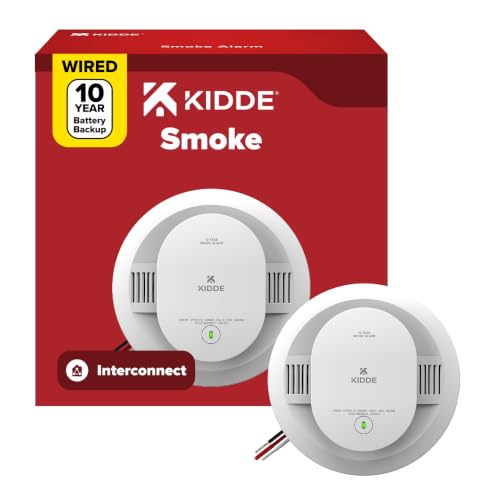
Hardwired smoke alarm with 10-year backup battery
Kidde 20SA10 (the one-pack). Kidde's guide lists a photoelectric sensor, 120-volt AC power with a sealed 10-year backup battery, and hardwire interconnect with other compatible alarms; it says the model is certified to UL 217 and that connections should be made by a qualified electrician. The Intertek authorization to mark also names 20SA10. Check the guide for which alarms it interconnects with before mixing brands.
Type 6Wire-free interconnected battery alarmsOur picks · $48
The Kidde 20SDR-VRF has a photoelectric sensor, voice alerts and wire-free interconnect, and runs on two replaceable AA batteries. Kidde's wire-free user guide says the smoke models conform to UL STD 217, with no edition named, and its data sheet says it is designed to the latest UL standard. It only helps if every alarm in the set is on Kidde's wire-free compatibility list, so plan to buy the set, not one.
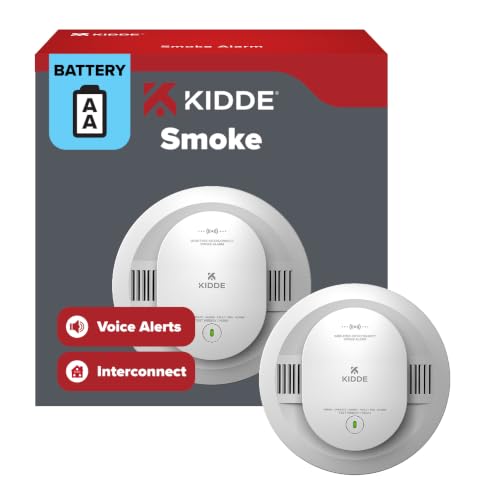
Photoelectric, wire-free interconnect, replaceable AA batteries
Kidde 20SDR-VRF. Kidde's data sheet lists a photoelectric sensor, two AA batteries (alkaline only), voice alerts, wire-free interconnect with compatible Kidde alarms, and an end-of-life notification 10 years after power-up; Kidde's wire-free user guide says it conforms to UL STD 217 (no edition named) and the data sheet says it is designed to the latest UL standard. We did not check UL's directory, so UL 217 here is Kidde's statement. Check Kidde's compatibility guide before mixing models, and replace the alarm 10 years after its manufacture date per NFPA.
NFPA says you could have as little as two minutes to get out once a smoke alarm sounds, and an alarm that is missing, dead or past its date takes that away. The decision this page helps with is narrower than whether to have alarms: which type, and whether to put a carbon monoxide sensor in the same unit.
What NFPA and USFA say about types
We read NFPA's 2026 Educational Messages Desk Reference and USFA's smoke alarms page on 2026-11-23. Both say the two common sensor types, ionization and photoelectric, respond differently: ionization more to flaming fires, photoelectric more to smoldering ones. Both then say not to pick one. NFPA recommends both types or dual-sensor alarms for the best protection; USFA recommends both types, or dual-sensor alarms, and says to choose interconnected alarms so that when one sounds, they all sound.
NFPA also describes newer multi-criteria alarms ("smart sensing"), which use more than one sensor to detect heat, smoke or gases and tell real fires from steam, cooking fumes and dust. It says replacing older alarms with these can help, and that they can go as close as 6 feet from a cooking appliance when the maker allows it. We did not source one as a pick, and the makers' pages for the alarms above do not describe them that way, so do not assume they are.
Combination smoke and carbon monoxide alarms
A smoke alarm and a CO alarm do different jobs. NFPA says CO alarms are not substitutes for smoke alarms and vice versa, so a home needs both, and a combination alarm is one way to get there. CPSC notes that combination alarms are available, and NFPA says to install them the way you install a smoke alarm.
The placement rules overlap in one useful place. NFPA says smoke alarms belong in every room where someone sleeps, outside each sleeping area and on every level; its desk reference says the same for CO alarms, including every room or area where a person sleeps. CPSC's CO page is narrower: each level and outside sleeping areas. Either way, the hallway outside the bedrooms needs both, and a combination alarm does that with one device.
In a basement the two agencies differ. CPSC says not to install a CO alarm in an attic or basement unless it includes a sleeping area, while NFPA says every level, including the basement. If a furnace or water heater is in your basement, ask your fire department or follow the alarm maker's manual rather than leaving that level to chance; our CO alarm guide covers the CO placement rules in full.
The two we looked at are alike: both list a photoelectric smoke sensor, an electrochemical CO sensor and a sealed 10-year battery, and both makers say they meet UL 217 for the smoke side and UL 2034 for the CO side (Kidde in its user guide for combination models, First Alert on the SMCO210's page). The honest limit is that neither has an ionization sensor. One way to get both smoke sensor types and CO without doubling up is a combination alarm in the hallway outside the bedrooms and a dual-sensor alarm in the bedrooms and on other levels; that is our reading of NFPA and USFA, not their wording. Replacing a combination alarm is a whole-unit job, and NFPA says to follow the maker's recommendations for when.
Where they go, and when they come out
NFPA's placement numbers, which apply to every alarm above: ceiling or high on a wall; on a wall, 4 to 12 inches from the ceiling and 4 inches from a corner; at least 10 feet from a cooking appliance and 3 feet from a bathroom with a shower or tub; at least 3 feet from vents and ceiling fan blades; not in garages, unfinished attics without heat or air conditioning, or anywhere the temperature falls below 40°F or rises above 100°F. In stairways, put them where rising smoke will not be blocked by a door, and in a basement near the entry to the stairs.
Test at least monthly. Replace each alarm 10 years after the manufacture date, read from the back or outside of the alarm.
For the rest of the fire-and-CO picture, see the smoke and CO detector kit, which pairs a smoke alarm with a CO alarm, a combination alarm and an extinguisher, and puts the free steps first: the escape plan and counting the alarms you already have.
What we checked, and what we did not
For each alarm we read the maker's own page, and where the page did not name a standard, the user manual or guide. We used the maker's statement for UL 217 and UL 2034; we did not search UL's directory for these models, and the alarm's box should carry a testing-laboratory mark. Kidde also publishes an Intertek authorization to mark for UL 217:2024 Ed. 10 that names the 20SD10 and the 20SA10, but not the 30CUD10. We searched CPSC's recall database by maker and for "smoke" on 2026-11-23 and found no recall naming the eight models; a search is not a guarantee, so check the model number against CPSC's list. First Alert's store pages showed a "backordered" banner on every alarm we opened, and its SMCO210 page also says the product is no longer available for sale. We did not test any alarm, and prices and availability on the cards update from the live catalog.
We left out alarms for people with hearing loss (strobe and bed-shaker models) because we have no sourced pick we can stand behind. The ionization-only and wire-free picks are single makers' models read from their own pages, and we did not test either.
What the research says
Farmer co-led the HOMEChem experiment, in which roughly 60 scientists from 13 universities measured indoor chemistry during typical household activities in a test house. Cooking produced the largest concentrations of potentially toxic compounds, including benzene, formaldehyde, acrolein and isocyanic acid. Farmer's team reported that most emitted compounds occur in low quantities and can be cleared through ventilation.
— Delphine Farmer, PhD of Colorado State University College of Natural Sciences explains that ...
Indoor air quality experiments show exposure risks while cooking, cleaning — Colorado State University College of Natural Sciences (2022-09-21)
This paper is a key initial step towards providing actionable and practical information on how to protect yourself and clean your home.
— Delphine Farmer, PhD of Colorado State University College of Natural Sciences explains that ...
Wildfire smoke may linger in homes long after initial blaze — Colorado State University College of Natural Sciences (2023-10-13)
Particles are one of the few things that we really know directly correlate to negative health outcomes.
— Delphine Farmer, PhD told Colorado Public Radio that ...
How luften, or 'home burping,' results in the sweet smell of success for your home — Colorado Public Radio (2026-06-24)
Sources
- Educational Messages Desk Reference, 2026 edition (NFPA; chapter 1 and sections 3.4) — National Fire Protection Association (how we check this source)
- Smoke alarms (U.S. Fire Administration) — U.S. Fire Administration, FEMA
- CO Alarms (CPSC) — U.S. Consumer Product Safety Commission (how we check this source)
- Kidde Recalls Dual Sensor Smoke Alarms (CPSC 09-266, July 2009) — U.S. Consumer Product Safety Commission (how we check this source)
- Kidde Recalls Smoke and Combination Smoke/CO Alarms Due to Alarm Failure (CPSC 14-275, September 2014) — U.S. Consumer Product Safety Commission (how we check this source)
- Kidde Recalls Combination Smoke/CO Alarms Due to Alarm Failure (CPSC 17-031, November 2016) — U.S. Consumer Product Safety Commission (how we check this source)
- Kidde Recalls Dual Sensor Smoke Alarms Due to Risk of Failure to Alert Consumers to a Fire (CPSC 18-128, March 2018) — U.S. Consumer Product Safety Commission (how we check this source)
- Kidde Recalls TruSense Smoke and Combination Smoke/Carbon Monoxide Alarms (CPSC 21-130, May 2021) — U.S. Consumer Product Safety Commission (how we check this source)
- First Alert Smoke Alarms and Combination Smoke/CO Alarms Recalled for Rapidly Draining Battery Power (CPSC 06-151, May 2006) — U.S. Consumer Product Safety Commission (how we check this source)
- First Alert SM310 10-Year Sealed Battery Dual Sensor Smoke Alarm (maker page and manual M08-170681; read 2026-11-23) — First Alert (Resideo)
- First Alert SMI100 Battery-Operated Smoke Alarm (maker page and manual M08-179721; read 2026-11-23) — First Alert (Resideo)
- Kidde 20SDR-VRF wire-free interconnect smoke alarm (maker page and data sheet; read 2026-11-23) — Kidde
- Kidde wire-free interconnect user guide G-000075-00, models 20SDR-VRF, 30CUDR-VRF and SMDCFEX-VRF (read 2026-11-23) — Kidde
- Kidde wire-free compatibility guide (read 2026-11-23) — Kidde
- Kidde DETECT smoke and combination alarm user guide, models 20SD10 and 30CUD10 (read 2026-11-23) — Kidde
Every source we cite is checked against our criteria first — see how we check our sources.
Related product categories
Common questions
Cheat sheets for this
Part of the Indoor Air Quality hub— the rest of our coverage in this category.
Every air quality product we've reviewed— what we'd buy, what we'd skip, and where each one stands.