
How to test your tap water
Your utility's report is free and tells you about the water in the mains. It cannot tell you what your own pipes add — which, for lead, is where the problem almost always is. Here is how to close that gap without spending much.
- Steps
- 4
- Cost
- Free to start
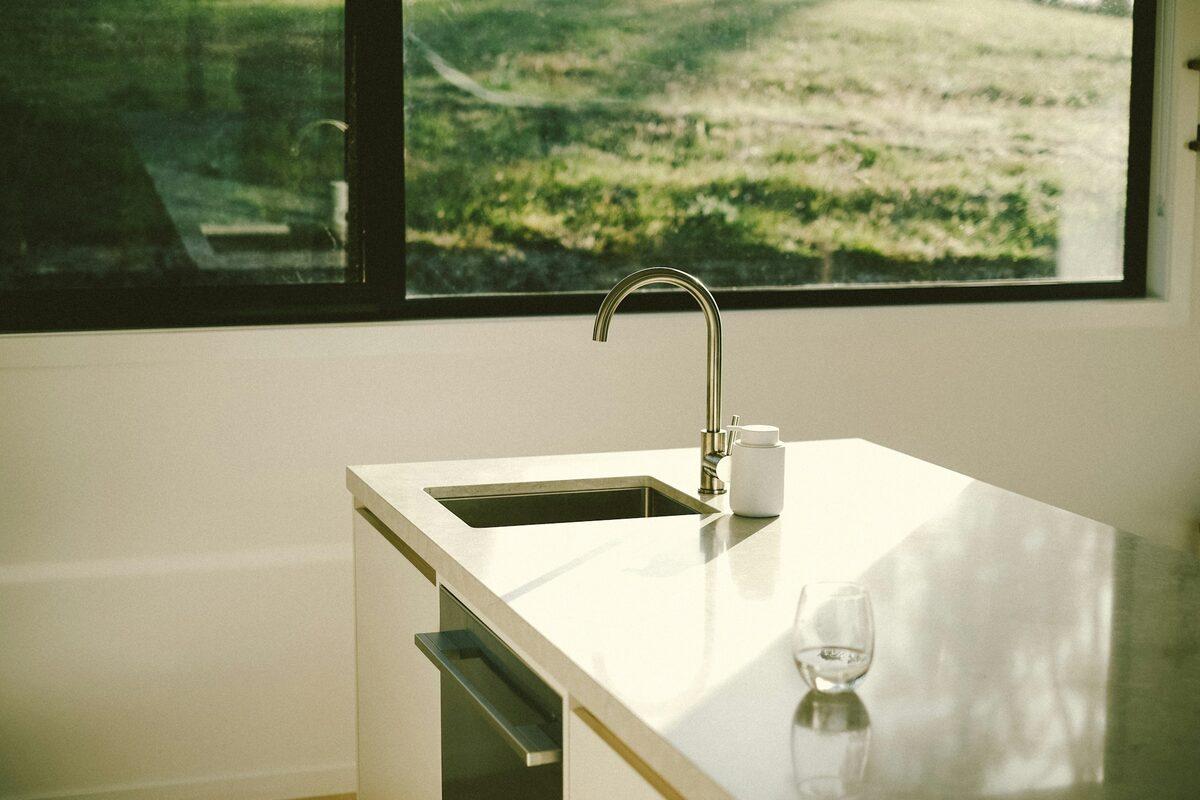
Start with the free document you already have. Every community water system publishes an annual Consumer Confidence Report listing what was detected and at what levels against regulatory limits. It cannot tell you what your own service line and plumbing add — which for lead is exactly where the problem usually is — so a home test closes that gap.
4 steps, in order
Read the free report you already have
Every community water system publishes an annual Consumer Confidence Report — sometimes called a water quality report. It is free, it is usually on your utility's website, and it lists what was detected, at what levels, against the regulatory limits. Read it before you buy anything: it tells you what your utility is actually managing — hardness, disinfection byproducts, whatever the local issue is — and that shapes every decision after it.
What it cannot tell you
What happens between the main and your glass. Your service line, household pipes, solder and fixtures are outside its scope — and for lead, that gap is where the problem almost always is. Lead is rarely in the source water; it leaches from the plumbing on the way to you.
Ask your utility before you pay anyone
Many utilities will test for lead free of charge on request, and some prioritize households with young children. That is the cheapest reliable path and it is under-used. Ask what your service line is made of at the same time — utilities are increasingly required to inventory service line materials and disclose them.
Worth knowing
If your service line turns out to be lead, that single fact reframes everything that follows — it moves you from "should I test" to "what am I doing about it."
Take a first-draw sample
Lead leaches into water that sits in pipes, so the sample that reveals it is a first-draw sample: water collected the moment you open the tap, after it has been standing for at least six hours. First thing in the morning is ideal.
The mistake everyone makes
Running the tap to get "fresh" water before sampling is the intuitive thing to do, and it is exactly how a genuine lead problem produces a clean result — you have flushed away the water that was in contact with the pipe.
Decide whether you are screening or measuring
Consumer strip kits are a screen, not a measurement. They can reasonably tell you "look harder," or give you a first read before deciding whether to pay for a lab. They cannot give you a number you should base a decision on for lead. If you are going to act on a result — plumbing work, a filtration purchase, a conversation with a landlord — get a certified laboratory result. Many labs sell a mail-in kit: you collect the sample yourself following their instructions and post it back.
What it cannot tell you
A TDS meter is not a safety instrument, though it is widely sold as if it were. It measures total dissolved solids by conductivity: safe, mineral-rich water reads high, and water containing lead can read low.
For this step

What to do with the result
If…
Nothing detected, and you were only curious
You are done. Not every household needs a filter, and this is a legitimate outcome.
If…
Something detected
Filter to the standard that matches it — a more precise instruction than it sounds, because NSF/ANSI 42 (taste and odor) is not a lead certification and is the one most commonly printed on packaging.
Match a filter to what you foundIf…
Lead detected, and you rent
Test results are the strongest thing you can bring to a landlord conversation, and in many jurisdictions they trigger obligations. Keep the lab report.
What to avoid
Where water testing goes wrong
Testing a flushed tap when you are looking for lead
Lead leaches from pipes into standing water. A first-draw sample — after water has sat 6+ hours — is what shows it. Running the tap first is how a real problem tests clean.
Treating a strip kit as a measurement
Consumer strips are a screen. They can tell you to look harder; they cannot give you a number you should act on for lead.
Assuming a TDS meter says anything about safety
Total dissolved solids measures conductivity, not hazard. Perfectly safe mineral-rich water reads high; water containing lead can read low. It is not a safety instrument.
Relying on the utility report for your own plumbing
It describes water in the distribution system. Your service line, solder and fixtures are outside its scope and inside your house.
Assuming a new-build is exempt
Lead-free plumbing requirements tightened over time, but fittings and solder in older stock persist, and 'lead-free' historically permitted a small percentage.
Common questions
Sources
How we check sources- Consumer Confidence Reports and drinking water standards — U.S. Environmental Protection AgencyIn our registry
- Basic information about lead in drinking water — U.S. Environmental Protection AgencyIn our registry
The cheat sheet for this
Part of the Water & Filtration hub— the rest of our coverage in this category.
Every water filters & testsproduct we've reviewed— what we'd buy, what we'd skip, and where each one stands.