
Best water filters, by what you are actually filtering
There is no best water filter, only a filter certified for the thing you are trying to remove. The most common expensive mistake in this category is buying a well-reviewed filter that is certified for taste and expecting it to handle lead.

There is no best filter, only one certified for the contaminant you are trying to remove — which is why this page is organized by problem rather than by rank. And it starts a step earlier than most guides: test first. Buying filtration before knowing what is in your water is how households end up certified for the wrong thing. One more distinction decides most of the rest: a filter certified to NSF/ANSI 53 has been listed by a certifier you can look it up with, while a filter tested to NSF/ANSI 53 has had the test run on it by a laboratory. Both appear below and we name which is which.
Brands in this guide
- ZeroWater1 pick
 Clearly Filtered1 pick · safety review
- CuZn1 pick
- Waterdrop2 picks
 Safe Home1 pick · safety review
- PUR1 pick
- Aquasana1 pick
- BRITA1 pick
- APEC WATER1 pick
Our picks
Cheat-sheet winners
The winners from our cheat sheet, each chosen for one job.
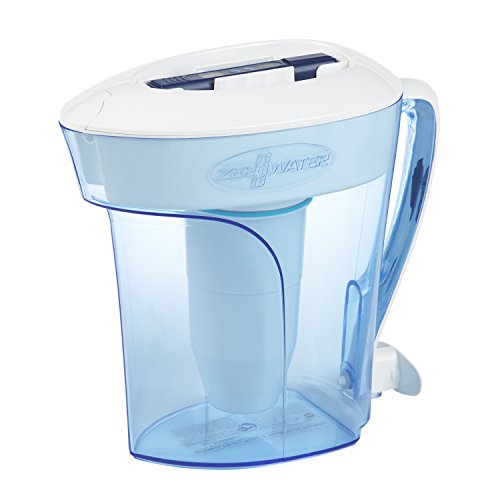
A pitcher from a maker with a 53 lead listing
ZeroWater 10-Cup Pitcher Water Filter Removes PFOA/PFAS
We could not match this 10-cup model number in IAPMO's file W-17155, so confirm the model in the register. ZeroWater states its filter system is certified by IAPMO R&T to NSF/ANSI 53 for lead (15-gallon rating), and IAPMO's register lists the company's 53 file (checked August 24, 2026).
Certifier record checked · source
$34.99View on Amazon
A pitcher for chlorine taste and odor
Clearly Filtered Water Filter Pitcher
Listed on NSF's register for chlorine, taste and odor reduction (42) and lead-free materials (372); neither is a lead-removal claim.
Certifier record checked · source
$109.99View on Amazon
Budget under-sink
Waterdrop 10UA Under Sink Water Filter System
The low-cost way into under-sink filtration. IAPMO R&T lists the 10UA to NSF/ANSI 42 (chlorine, taste and odor) and 372 (lead-free materials). Neither is a lead-reduction claim.
Certifier record checked · source
$43.99View on Amazon
Faucet mount with a lead listing
Pur Plus Vertical Faucet Mount Water Filtration System
IAPMO R&T lists model FM-3700B (PUR's SKU for this Chrome vertical system) to NSF/ANSI 53 for lead, mercury, total PFAS and VOCs, with the PUR PLUS filter RF-9999 (checked October 23, 2026). Matched to the Amazon listing by title; confirm FM-3700B on the box. It will not fit a pull-out or hand-held faucet.
Certifier record checked · source
$31.85View on Amazon
There is no best filter
There is only a filter certified for the contaminant you are trying to remove — which is why this page is organized by problem rather than by rank.
And it starts one step earlier than most guides: test first. Buying filtration before knowing what is in your water is the most expensive mistake in this category, and it is the standard one.
The certification table, because this is where people lose money
| Standard | What it actually covers |
|---|---|
| NSF/ANSI 42 | Aesthetic — chlorine taste, odor, particulates. Not a health or lead claim. |
| NSF/ANSI 53 | Health effects — lead, VOCs, cysts. This is the lead one for filters. |
| NSF/ANSI 58 | Reverse osmosis systems. Lead is covered only where the model's listing names it |
| NSF/ANSI 372 | The device's own materials are lead-free — about the filter, not your water |
NSF/ANSI 42 is the certification most commonly printed on filter packaging, and it is the one most commonly mistaken for a safety claim. A filter can be well made, honestly marketed, certified to 42, and do nothing measurable about lead — because that is not what it was certified to do.
Certifications are published in searchable public listings. A claim on a box can be checked against the register in about a minute, and for anything health-related it is worth the minute.
By what you are filtering
If lead is why you are here, the certification to look for is NSF/ANSI 53, and you should verify it in the listing for the specific model rather than trusting the marketing. Our top pick is ZeroWater, a pitcher from a maker with a 53 lead listing: its lead claim is a certification against NSF/ANSI 53 (IAPMO R&T). We could not match the 10-cup model number in its file, so confirm that. Brita's Elite filter, below, also has a 53 lead listing, in named pitchers only. Culligan ZeroWater's own published wording is specific about what it holds and what it covers: the 5-stage filter and compatible pitchers are "system certified by IAPMO R&T against NSF/ANSI Standard 42 for reduction of chlorine taste and odor and against NSF/ANSI Standard 53 for reduction of lead, chromium (Hexavalent), PFOA, PFOS and mercury for 15-gallon capacity" (checked on ZeroWater's own site, September 10, 2026). Note the last four words. Fifteen gallons is a short rated life — call it a few weeks for a household drinking from it — and running past the rating means you are no longer protected. The bundled TDS meter is genuinely useful here, because it makes exhaustion visible rather than theoretical. Be clear about what TDS is and is not: it measures dissolved solids, which makes it a good exhaustion indicator and a poor safety instrument.
A word about the pick this replaced. Until this update the top pick here was the Clearly Filtered pitcher, on the reasonable-sounding grounds that it is positioned squarely at lead. Held against the table above, that did not survive. Clearly Filtered's own performance-data page states the pitcher is "certified by NSF to NSF/ANSI Standards 42 and 372" — the aesthetic standard and the lead-content-of-the-materials standard, which are precisely the two this page warns are not lead claims. Its lead figure, 99.34% reduction, comes from "additional testing" by an independent ISO 17025 laboratory "capable of testing following NSF/ANSI protocols" rather than from a certification (both quotes checked September 10, 2026). That is more published data than most of this category offers and we still list it. It is not a certification you can look up, which is the thing this page tells you to require, so we no longer recommend it for lead, and say why.
If you want filtered water at the faucet without plumbing, a faucet mount is the no-plumbing route. The PUR PLUS vertical faucet system (model FM-3700B, with the RF-9999 filter) is listed to NSF/ANSI 53 for lead by IAPMO R&T. Check your faucet first: it is not designed for pull-out or hand-held models. If you want a plumbed-in system with a lead listing, the Aquasana Claryum 3-Stage Max Flow is listed to 53 by WQA. And if you already own a Brita pitcher, the Brita Elite filter is listed to 53 for lead, but only inside the pitchers and the Ultramax dispenser on that listing.
If you want reverse osmosis, read the model's own listing, because NSF/ANSI 58 certifies a system only for the claims on that listing and the claims differ. IAPMO's register lists the Waterdrop G3P600 under NSF/ANSI 58 for a set that includes lead, but the Performance Data Sheet on Waterdrop's product page does not list lead, so we could not confirm it; the APEC ROES-50 is listed for TDS only. APEC's own page also states "Removes a wide variety of contaminants including arsenic, bacteria, lead, fluoride, chromium, radium and more," which is a manufacturer claim and not what the register lists for this model. Both need plumbing, and both waste water as they filter.
If it is taste, chlorine and general improvement, you have far cheaper options and the common NSF/ANSI 42 certification is genuinely the right one. The Waterdrop 10UA under-sink unit does this well at a low price, and the CuZn UC-200 claims an unusually long five-year cartridge life, though we could not confirm its certification. Five years is the brand's figure; check the gallon rating too.
If it is the shower and the bath, that is a different product and a different job — chlorine on skin rather than anything you drink. Our shower filter guide covers which shower filters are named in a certifier's register and what that standard does and does not test, and our bath filter review covers the bath.
The cost nobody quotes
The unit price is the small number. Cartridges over three years are the real cost, and the ranking changes substantially once you include them — a cheap housing with expensive cartridges on a short cycle is routinely the most expensive option on a shelf.
Hard water shortens every cartridge's life below its rating, so if your utility report says hard, plan on changing sooner than the box claims.
And write the change date on the housing. Past its rating a filter stops doing what it was certified to do, and some media can shed part of what they have captured.
Prices come from the live catalog and can change; check the retailer before you buy.
Our top pick
ZeroWater — a pitcher from a maker with a 53 lead listing, so a pick when lead is the reason you are here. We could not match this 10-cup model number in IAPMO's file, so confirm the model first. Its lead claim is a certification against NSF/ANSI 53 (IAPMO R&T) rather than a test result. Brita's Elite filter, below, also has a 53 lead listing, in named pitchers only. The bundled TDS meter makes cartridge exhaustion obvious, and you will need it: the certification is rated to 15 gallons, which is not long.
Also worth considering
Clearly Filtered — it publishes detailed third-party performance data. NSF's own database lists the pitcher under NSF/ANSI 42 (chlorine, taste and odor reduction) and NSF/ANSI/CAN 372 (its components do not leach lead) — and neither is a lead-removal certification. Its 99.34% lead figure is lab testing, not a 53 listing. A reasonable buy, but not the one to reach for on the strength of a certification.

CuZn UC-200 Under Sink Water Filter, NSF/ANSI 42 & 372, 5-Year Filter Life | Reduces PFAs, PFOS, Lead, Chlorine, Improves Tap Water Taste, Inline Faucet Connection for Simple Installation
CuZn UC-200 under-sink — a claimed five-year cartridge life (five years is the brand's figure; check the gallon rating too). Its Amazon listing claims two NSF standards, and we could not confirm either: searching NSF's own certified-product database on 2026-09-10, by trade name and by company, returned no listing for CuZn in the drinking-water treatment or system-components categories. Treat the certification as the brand's claim, not a verified one, and read the certification note below.
Waterdrop 10UA under-sink — the budget entry to under-sink filtration. Worth knowing what its certification covers: the certifier is IAPMO R&T rather than NSF, and IAPMO's register lists the 10UA to 42 for chlorine, taste and odor reduction and to 372 for lead-free materials (files W-11590 and W-13936, checked October 14, 2026). Neither is a lead-reduction certification — that would be 53.

Safe Home lead test kit — buy this before any of the above if you have not tested.
PUR PLUS vertical faucet system — the no-plumbing option, and the one that fills the faucet-mount gap on this page. IAPMO R&T lists model FM-3700B (PUR's SKU for this Chrome vertical system) with the PUR PLUS filter RF-9999 to NSF/ANSI 53 for lead, mercury, total PFAS and VOCs (file W-29904, checked October 23, 2026). It is not designed for pull-out or hand-held faucets, and the filter is rated for 100 gallons or about three months.

Aquasana Claryum 3-Stage Max Flow under-sink — an under-sink system with a lead listing, which the two cheaper under-sink picks above do not have. WQA lists the AQ-6300M and AQ-5300+ to NSF/ANSI 42 and 53 (lead, cysts, mercury, PFOA/PFOS, VOCs tested as chloroform) (checked October 23, 2026). It needs plumbing.

Brita Elite filter — worth knowing about if you already own a Brita pitcher. IAPMO R&T lists it to NSF/ANSI 53 for lead only inside the pitchers and the Ultramax dispenser named on that file (W-13905, checked October 23, 2026). IAPMO's file names the pitchers; Brita's own page qualifies the claim even more narrowly, to the Pacifica pitcher. It is not a lead claim for any other pitcher, or for a filter on its own.

Waterdrop G3P600 reverse osmosis — IAPMO R&T lists it to NSF/ANSI 58 for TDS, fluoride, cadmium, barium, radium 226/228 and lead (file WC-13976), and to NSF/ANSI 53 for PFOA/PFOS only (file WC-14805), checked October 23, 2026. The Performance Data Sheet linked from Waterdrop's product page (version V005, read October 23, 2026) lists TDS, cadmium, hexavalent chromium, selenium and fluoride for NSF/ANSI 58 and does not list lead, so the register and the data sheet do not agree and we could not confirm a lead reduction figure. It needs plumbing and wastes water.

Certifier record checked · source
APEC ROES-50 reverse osmosis. WQA lists it to NSF/ANSI 58 for TDS and no other claim (checked October 23, 2026), so it is not a lead pick; other APEC models carry longer claim lists. APEC's own page also states "Removes a wide variety of contaminants including arsenic, bacteria, lead, fluoride, chromium, radium and more" (read October 23, 2026), which is a manufacturer claim and not what the register lists for this model.
How money gets wasted here
- Buying before testing — The most expensive mistake in the category. Without knowing what is in your water you are buying a filter for an imagined problem.
- Reading NSF/ANSI 42 as a health certification — 42 is taste, odor and particulates. Lead lives under NSF/ANSI 53. This single confusion sells an enormous number of filters.
- Ignoring cartridge cost and cadence — The unit price is the small number. A cheap housing with expensive cartridges on a short cycle costs far more over three years.
- Letting a cartridge run past its rating — Past its rating a filter stops doing what it was certified to do, and some media can shed part of what they have captured. Note the change date somewhere you will see it.
- Buying whole-house for a drinking-water problem — Point-of-use filtration at the kitchen tap is cheaper and more effective for what you actually drink. Whole-house solves different problems, like hardness.
How we choose
We match filters to contaminants rather than ranking them absolutely, and we read the specific NSF/ANSI standard on the certification listing rather than the phrase on the box. We weigh three-year cost including cartridges, not the unit price, and we say plainly when a well-made product is certified for something other than what buyers assume.
- Certified to the standard matching the target contaminant
- Certification checkable in a public listing
- Three-year cost including cartridges
- Cartridge availability and a realistic change cadence
- No active recall on the pick
Every source we cite is checked against our criteria first — see how we check our sources.
What the research says
more than 98 percent of U.S. residents tested are carrying PFAS in their blood or tissue
— In 2019-05-15 testimony, Erik D. Olson, JD cited ...
Testimony of Erik D. Olson - PFAS — U.S. House Committee on Energy and Commerce (2019-05-15)
112.3 million people got their water from systems that detected lead at or above the 5 ppb lead level
— In 2026-02-24 testimony, Erik D. Olson, JD cited ...
Testimony of Erik D. Olson, Senior Strategic Director for Health, NRDC — U.S. House Committee on Energy and Commerce, Subcommittee on Environment (2026-02-24)
prevent up to 200,000 IQ points lost in children
— In 2026-02-24 testimony, Erik D. Olson, JD cited ...
Testimony of Erik D. Olson, Senior Strategic Director for Health, NRDC — U.S. House Committee on Energy and Commerce, Subcommittee on Environment (2026-02-24)
Sources
- IAPMO R&T file W-29904: Kaz USA (PUR) faucet models, NSF/ANSI 53-2024 — IAPMO R&T
- WQA Gold Seal listing: Aquasana Claryum 3-Stage Max Flow (AQ-5300+, AQ-6300M), NSF/ANSI 42, 53 — WQA
- IAPMO R&T file W-13905: Brita LP, NSF/ANSI 53-2021 (Elite filter in listed pitchers) — IAPMO R&T
- IAPMO R&T files WC-13976 and WC-14805: Waterdrop WD-G3P600, NSF/ANSI 58 and 53 — IAPMO R&T
- Waterdrop WD-G3P600 Performance Data Sheet (V005), linked from the G3P600 product page — Waterdrop
- WQA Gold Seal listing: APEC ROES-50, NSF/ANSI 58 (TDS) — WQA
- Culligan ZeroWater FAQ — IAPMO R&T certification against NSF/ANSI 42 and 53 (lead, chromium, PFOA/PFOS, mercury), 15-gallon capacity — Culligan ZeroWater
- Clearly Filtered pitcher performance data — "certified by NSF to NSF/ANSI Standards 42 and 372", plus additional ISO 17025 laboratory testing — Clearly Filtered
Side by side
| Attribute | ZeroWater10-Cup Pitcher Water Filter Removes PFOA/PFAS… | Clearly FilteredWater Filter Pitcher | CuZnUC-200 Under Sink Water Filter | Waterdrop10UA Under Sink Water Filter System | Safe HomeDIY Lead in Drinking Water Combo Test Kit- | PURPlus Vertical Faucet Mount Water Filtration S… | AquasanaUnder Sink Water Filter | Claryum 3-Stage Max… | BRITAElite Replacement Water Filter | WaterdropG3P600 Tankless Reverse Osmosis Water Filter… | APEC WATERROES-50 |
|---|---|---|---|---|---|---|---|---|---|---|
| Why it's here | Our top pick | — | — | — | — | — | — | — | — | — |
| Price | $34.99 | $109.99 | $119.96 | $43.99 | $36.99 | $31.85 | $224.99 | $19.38 | $429 | $179.99 |
| Availability | In stock | In stock | In stock | In stock | In stock | In stock | In stock | In stock | In stock | In stock |
Common questions
The cheat sheet for this
Part of the Water & Filtration hub— the rest of our coverage in this category.
Every water filters & testsproduct we've reviewed— what we'd buy, what we'd skip, and where each one stands.