
Pool & Spa Barriers, Gates & Alarms
Spot it
A pool or spa with no fence, or with the back of the house as one side of the barrier; a gate that has to be latched by hand or that is propped open; doors from the house to the pool that nobody alarmed; a hot tub with a loose or missing cover.
Fix it
No single product makes a pool safe, so CPSC asks for layers: a full barrier, a self-latching gate, alarms, and an adult whose only job is watching the water. Work down this list and stop at the first gap you find. Start with the barrier: it is the layer that keeps a child from reaching the water at all.
1. A barrier that goes all the way around the pool. CPSC's barrier guidelines (Pub. 362): a fence that completely surrounds the pool is better than one that uses the house as the fourth side. It should be at least 4 feet high (5 feet or higher is preferable), measured on the side facing away from the pool, with no more than 4 inches between the ground and the bottom of the fence (CPSC says industry recommends 2 inches where it rests on grass or gravel), no opening a 4-inch ball can pass through, and nothing nearby a child can climb. Some local codes require a taller barrier than the federal guideline, so check yours before you buy or build.
2. A gate that closes and latches by itself. CPSC says gates should open outward, away from the pool, and be self-closing and self-latching. A latch you have to remember to push does not count. Look for a latch with the release set high, out of a small child's reach (CPSC puts the release at least 54 inches up, or on the inside of the gate, at least 3 inches below its top), and for self-closing hinges. A bottom hinge a toddler can step on is a foothold, so cap it. After installing, check that the gate swings outward and that it closes and latches by itself from fully open and from a few inches ajar.
3. Alarms on every door that opens to the pool, if the house is one side of the barrier. CPSC says the alarm should meet UL 2017, be at least 85 decibels measured 10 feet away, sound for 30 seconds or more, and have a bypass of up to 15 seconds for adults that sits at least 54 inches up, out of a child's reach. A door alarm tells you a child has gone out; it does not keep one in. A pool cover is another layer: CPSC says make sure it is well maintained and keep its control device out of children's reach.
4. An in-water alarm, if you want one more layer. These sound after something has already entered the water, so they only help if an adult is close enough to hear one and get there in seconds. They are an extra, never a replacement for the fence or for watching the water. Check the model against your pool type: the one listed below says it may not suit saltwater pools or pools with fountains or waterfalls.
5. People. CPSC's drowning release asks for a designated adult "Water Watcher" whose only job is watching the water, kids learning to swim, and adults learning CPR. Of the fatal pool and spa drownings of children under 15 where the location was known, 81% were at a residence, either their own home or a relative's, friend's or neighbor's (Pool Safely), so the same checks apply when you visit.
The products below are examples we have listed, not tested. They show what to look for in each layer. Other models that meet the same specs and your local code can serve the same purpose.
The whole picture. Fence types compared, gate and door hardware, in-water alarms, cameras and wearables, covers and life jackets, with the habits that matter most: Pool safety, every layer in order.
Safer swaps
What actually fixes this — the category to look for, not a brand we were paid to name.
Name a Water Watcher for every swim — one adult, phone down, eyes on the waterHabit
Free; CPSC and Pool Safely ask for a designated adult who is not distracted
Keep gates closed and latched, and keep toys and chairs away from the fenceHabit
Free; a latch only works if the gate is shut, and anything climbable beside the fence defeats it (our reading of CPSC's no-footholds guidance)
Pool gate kit: top-pull magnetic latch, self-closing hinges and a hinge safety cap
The gate layer in one box: a self-latching magnetic latch with the release at the top, two self-closing hinges, and a cap over the bottom hinge so it is harder to use as a step. Made for square gate frames and posts, so measure yours first. The kit does not make a gate swing outward; check that, and test that it latches on its own, after you install it. An example we have listed, not tested.
 D&D TECHNOLOGIES
D&D MLTPTCA1CAPSPKA Pool Safety Gate Kit: MagnaLatch Top Pull, Hinges & Cap | Pool safety gate hardware kit includes MagnaLatch Top Pull 20-inch gate latch, 2 self-closing TruClose hinges & a Safety Cap
$154.33View on AmazonMagnetic self-latching pool gate latch, top-pull release
If your gate already closes on its own and only the latch is wrong, this is the latch alone (the listing says top pull, lockable and rekeyable). Pair it with self-closing hinges. An example we have listed, not tested.
 D&D TECHNOLOGIES
D&D ML3TPKA MagnaLatch Top Pull 20-inch Pool Safety Gate Latch, Black | Pool safety gate latch & lock, magnetic latching system. Weather-resistant. For any square gate frame & fence post.
Door alarm for the doors that open to the pool (loud alarm, adult bypass buttons)
For a house that forms one side of the barrier. The listing says UL 2017 compliant and ETL listed (the standard CPSC points to), with two bypass buttons that silence it for 10 seconds so adults can pass through. It gives 110 to 115 dB but not the distance that was measured at, so that figure is not directly comparable to CPSC's 85 dB at 10 feet; check your local code. One alarm per door; the maker adds a secondary sensor for sliding doors with a screen. An example we have listed, not tested.
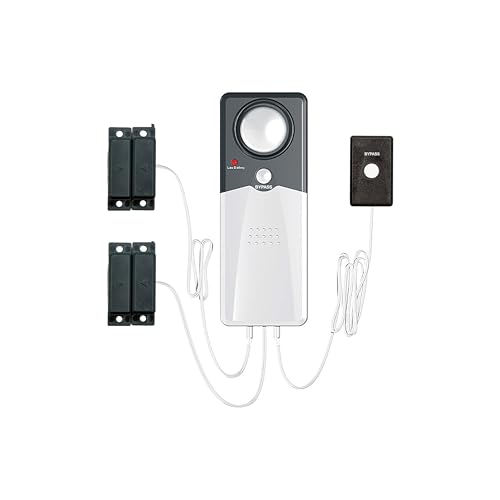 TECHKO
Techko S189 Ultra Slim Safe Pool Alarm for Kids, ETL Listed UL 2017 Compliant, Indoor/Outdor Weather Resistant, 110db Loud Alarm with 2X Bypass Buttons, Gray, 1Count
$44.99View on AmazonIn-water pool alarm (listing says it meets ASTM F2208)
An extra layer that sounds once something has already hit the water, so it only helps if an adult can hear it and reach the pool fast; the listing says it detects objects of 15 lb and up and has adjustable sensitivity. The listing also warns it may not suit saltwater pools or pools with fountains or waterfalls. It does not replace a fence or a Water Watcher. An example we have listed, not tested.
 Pool Patrol
PA-30 | Pool Patrol | Pool Alarm | Certified ASTM Safety Specification F2208 | Safe for Pool Owners with Children, Pet, Neighbors | Easy to Install with Adjustable Sensitivity
$219.99View on AmazonA pool fence or barrier installer to put a barrier all the way around the poolService
For pools with no fence or the house as a side. Check your local code and permit rules first; no installer is named or endorsed here
Water-safety and swim lessons, and an infant and child CPR classService
CPSC's drowning release lists learning to swim and learning CPR alongside the physical barriers. Lessons are one layer, not a substitute for barriers or supervision
Related product category: Home safety equipment
Sources cited
Sources
- CPSC: between 2019 and 2021, an average of 269 children under 5 drowned in pools or spas each year, about 75% of the pool and spa drowning deaths of children under 15 — U.S. Consumer Product Safety Commission (incl. SaferProducts.gov), 2024 (how we check this source)
Every source we cite is checked against our criteria first — see how we check our sources.
Related checks
- Bath & Bucket Drowning — Children can also drown in a few inches of water indoors: tubs and buckets.
- Pool & Spa Drain Covers — Drain covers are the other pool-safety layer.