


Best overall
Blue Lizard Mineral SPF 50 Kids Sunscreen Lotion
Titanium dioxide 8% and zinc oxide 10%, fragrance-free, and a faint cast that doubles as a coverage check on the ears and nose.
Ingredient panel checked · source
$13.46
View on AmazonSunscreen is one of the easiest safety wins for a family and one of the most confusing aisles in the store. Here is the plain version: the types, what the SPF and broad-spectrum labels mean, babies, and how often to reapply.
Our picks
The winners from our cheat sheet, each chosen for one job.
Best overall
Titanium dioxide 8% and zinc oxide 10%, fragrance-free, and a faint cast that doubles as a coverage check on the ears and nose.
Ingredient panel checked · source

Best for babies 6 months and up
Zinc oxide 25%, pressed oils and butters, 40-minute water resistance. A December 2025 Proposition 65 notice names it for lead: an allegation of a missing warning label, not a contamination finding, with no case or settlement on the state's register as of October 2026.
Ingredient panel checked · source

Best for reactive skin
Zinc oxide 20% as the only active; the brand states no oxybenzone, avobenzone, PABA, parabens or phthalates.
Ingredient panel checked · source

Best for grown-up faces
Zinc oxide 19.5% as the only active, and a label that says free of fragrance and of masking fragrance. A daily face moisturizer; its label makes no water-resistance claim. For a body, the Best overall lotion works on adults too.
Ingredient panel checked · source
A good sunscreen for a child is broad spectrum, SPF 15 to 50 (FDA says at least 15; AAP says 15 or 30 is fine for most people), and, if you want the simplest choice, a zinc oxide formula with no added fragrance. That is most of the decision. The rest is technique, which matters more than brand: apply generously 15 minutes before going out, reapply every two hours and after swimming, sweating or towelling off, and lean on shade and clothing for babies under six months.
Most of the sunscreen aisle comes down to three choices: the type (mineral or chemical, lotion, stick or spray), the label (broad spectrum and SPF) and the habit (how much, how often). Get those three right and the brand matters far less than the marketing suggests.
Broad spectrum, so it screens UVA as well as UVB. An SPF of at least 15, which is FDA's floor; the AAP says 15 or 30 is fine for most people, up to 50. For sensitive areas such as the nose, cheeks and ears, the AAP suggests zinc oxide or titanium dioxide. If you want the simplest label, that is a mineral formula with no added fragrance. If you can, the AAP suggests avoiding oxybenzone, and adds that any sunscreen is better than none.
Mineral lotion is the everyday default. A stick is the touch-up tool for faces. A spray can save a fight with a wriggling child but never goes on the face, and it carries a flammability and recall history worth reading about (see our note on the Coppertone spray recall). Face formulas are about comfort, and chemical filters are a reasonable choice for a teen or adult who will only wear a clear lotion. The cards below show each type with one listed product; the comparison page has the tradeoffs and the full list.
SPF measures protection from sunburn, mostly from UVB. FDA says higher values, up to 50, give more sunburn protection, and the AAP says more research is needed to know whether SPF above 50 adds any protection. It is not a time multiplier: SPF 30 does not mean you can stay out thirty times longer. A "broad spectrum" label means it also screens UVA. A sunscreen that is not broad spectrum, or has an SPF under 15, must carry FDA's skin cancer and skin aging alert on its Drug Facts label.
FDA says sunscreen is not recommended for infants under six months and to ask a doctor before applying it. The AAP says to keep babies this age out of direct sun, in shade and clothing, and that if neither is available you can put sunscreen on small areas such as the face. For babies over six months, apply to all areas and be careful around the eyes. See mineral vs chemical for kids for both positions side by side.
Put it on 15 minutes before going outside (the AAP says 15 to 30). FDA says an average child or adult needs about an ounce, a shot glass, to cover the body, and to reapply at least every two hours and more often when swimming or sweating. No sunscreen is waterproof; "water resistant" labels must say 40 or 80 minutes. The AAP adds to reapply after towelling off, and that you can burn on a cloudy day because up to 80% of UV rays pass through clouds. Often missed: ears, lips (use an SPF lip balm), the back of the neck, hands, tops of the feet and the hairline.
FDA and the AAP both list these next to sunscreen. The AAP suggests a hat with an all-around 3-inch brim, tightly woven clothing (hold it up to the light; the less shines through, the better), UV-blocking sunglasses, and limiting sun from 10 a.m. to 4 p.m. FDA's window is 10 a.m. to 2 p.m. Use the summer safety checklist to set this up before the first hot week, and the cheat sheet when you just want the shortlist.
For the ingredient arguments, read our oxybenzone explainer and the aerosol benzene explainer. For picks by need, see the best natural sunscreen and face sunscreen roundups.
We favor mineral (zinc oxide) formulas and short ingredient lists. We read the Drug Facts panel, actives and inactives, not the front-of-bottle claims.
Pick the card that matches the job. Each opens that type on the comparison page, with the tradeoffs and the products we have listed.
Featured pickFragrance-free kids' zinc lotionabout $135 picks and tradeoffs Featured pickKids' zinc stickabout $91 pick and tradeoffs
 Featured pickZinc spray (aerosol)about $111 pick and tradeoffs
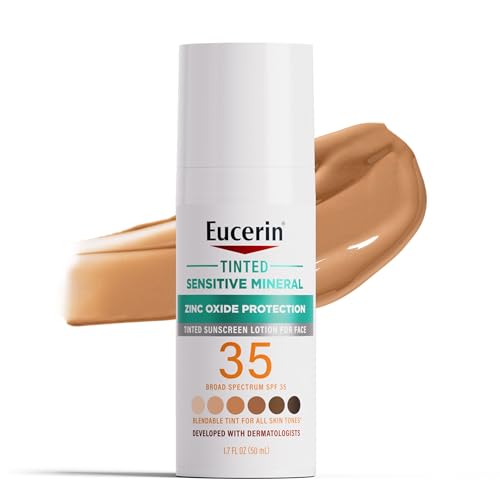 Featured pickTinted zinc face lotionabout $172 picks and tradeoffs
 Featured pickCombination zinc + octinoxate face lotionabout $461 pick and tradeoffs
Save & share
Flip to the Drug Facts panel. The active ingredient line tells you whether it is mineral or chemical; the inactive list tells you about fragrance. If the actives are mineral and there is no added fragrance, you are most of the way there.
The science, briefly
Mineral sunscreens sit on top of the skin. Their active ingredient — usually zinc oxide, sometimes titanium dioxide — reflects and scatters UV light, and they start working as soon as you apply them. Chemical sunscreens absorb into the top layer of skin and convert UV into a small amount of heat; their filters have names like avobenzone, octinoxate and oxybenzone. Both types sold in the United States are regulated by the FDA for safety and effectiveness. This is not a safe-versus-dangerous choice.
When the FDA reviewed sunscreen active ingredients, it proposed that zinc oxide and titanium dioxide be recognized as safe and effective — the strongest classification available. For the remaining filters, including oxybenzone, avobenzone, octinoxate and homosalate, the agency said it did not have enough data to classify them, and asked manufacturers for more.
That gets misreported in both directions. "Insufficient data" is not a finding of harm — it means those ingredients were grandfathered in decades ago under standards that would not be accepted for a new drug today, and the full modern safety record FDA asked for has not yet been completed. Equally, it is not nothing: the mineral filters cleared the bar, and the chemical ones have not yet been shown to meet it.
The picture has moved since 2019. In June 2026 FDA added bemotrizinol, a chemical-type filter, to the permitted list, saying it considers it generally recognized as safe and effective for adults and children 6 months and older. In September 2026 it finalized an order removing PABA and trolamine salicylate. So the line is not "mineral good, chemical bad": it is a question of how much evidence exists for each filter, and who it was reviewed for.
Common mistakes
Quantity is the variable that actually moves protection. The AAP notes that most people use too little, which lowers the protection the SPF number promises. The working rule is about a shot glass for a body and a teaspoon for a face and neck.
They do not. "Fragrance-free" means no fragrance was added. "Unscented" can mean a masking fragrance was added to cover a base smell. Only one of those is what you are looking for.
Shade and clothing do work a bottle cannot. FDA and AAP both list clothing, hats and limiting midday sun alongside sunscreen, and for babies under six months they come first. A wide-brim hat and a tightly woven shirt cover what sunscreen misses, and they do not need reapplying.
Start here
Our at-a-glance buying list — top picks and the labels to skip.
See picksEveryday mineral picks for the whole family.
See picksGentle, high-coverage options for fair, burn-prone skin.
See picksMineral facial SPF that wears well under the day.
See picksLotion, stick, spray, face and chemical filters side by side.
See picksWhat we'd buy
Ingredient panel checked · source
Ingredient panel checked · source
Go deeper
Popular picks where we’d choose something else, and exactly why. Every reason below is a checkable fact with its source attached — and every one comes with an alternative.
Worth rethinking
Coppertone
Historical recall: FDA records show that travel-size Coppertone Sport Sunscreen Spray SPF 50, lot TN00BU3, was recalled beginning September 30, 2021 because of the presence of benzene.
The identified lot had an expiration date of May 31, 2024 (Recall Number D-0014-2022). This flag does not state that current-production products are affected.
U.S. Food and Drug Administration (FDA), 2021 · checked 2026-08-07
What we’d get instead
Alternative product with a zinc-oxide-only active ingredient list and no benzene recall history: Thinksport Mineral Sunscreen SPF 50+.

Worth rethinking
Coppertone
Contains Oxybenzone (6%), per the manufacturer's drug-facts label as hosted on FDA's DailyMed, current as of January 2, 2026 (accessed 2026-08-07).
Coppertone's own marketing states its Sport Mineral and Sport Face SPF 60+ lines are oxybenzone-free; this flag is specific to the SPF 100 lotion/spray formulation.
Beiersdorf Inc. (via NIH DailyMed), 2026 · checked 2026-08-07
What we’d get instead
Alternative product with a zinc-oxide-only active ingredient list and no oxybenzone: Thinkbaby Sunscreen SPF 50+.

Worth rethinking
Generic
Contains Oxybenzone (6.0%), per the manufacturer's drug-facts label as hosted on FDA's DailyMed (accessed 2026-08-07).
Walmart Stores Inc. (via NIH DailyMed), 2024 · checked 2026-08-07
What we’d get instead
Alternative product with a zinc-oxide-only active ingredient list and no oxybenzone: Thinkbaby Sunscreen SPF 50+.
Worth rethinking
Neutrogena
Historical recall: on July 14, 2021, Johnson & Johnson Consumer Inc. voluntarily recalled specified Neutrogena Beach Defense aerosol sunscreen products (SPF 50 and SPF 60+) after benzene was detected in some samples.
This recall applied to the identified 2021 aerosol lots (Recall Numbers D-0844-2021 and D-0845-2021) and does not describe the current SPF 30 formulation shown on this page — FDA/J&J's own recall notice states the detected benzene levels were not expected to cause adverse health consequences under the exposure modeling used.
U.S. Food and Drug Administration (FDA), 2021 · checked 2026-08-07
Contains Oxybenzone (5%), per the manufacturer's drug-facts label as hosted on FDA's DailyMed (accessed 2026-08-07).
Kenvue Brands LLC (via NIH DailyMed), 2025 · checked 2026-08-07
What we’d get instead
Alternative product with a zinc-oxide-only active ingredient list and no benzene recall history, in a body-sized lotion rather than an aerosol: Blue Lizard Sensitive Mineral SPF 50 Sunscreen Lotion.

We couldn't confirm a live listing for this exact product — this opens a filtered search of merchants for the same model.
Worth rethinking
COPPERTONE
Historical recall: FDA records show that specified lots of Coppertone Pure & Simple Kids SPF 50 and Baby SPF 50 Sunscreen Sprays were recalled beginning September 30, 2021 because of the presence of benzene.
This flag applies only to the identified recalled lots (Recall Numbers D-0011-2022 and D-0012-2022) and does not state that current-production products are affected.
U.S. Food and Drug Administration (FDA), 2021 · checked 2026-08-07
What we’d get instead
Alternative product in a non-aerosol lotion format with no recall history — the flagged product's actives are also zinc oxide, so the difference here is delivery format, not ingredient chemistry: Blue Lizard Sensitive Mineral SPF 50 Sunscreen Lotion.

Worth rethinking
Coppertone
Historical recall: FDA records show that Coppertone Sport Mineral SPF 50 Sunscreen Spray, lots TN008KU and TN008KV, were recalled beginning September 30, 2021 because of the presence of benzene.
This flag applies only to those recalled lots (Recall Number D-0013-2022) and does not describe the current formulation.
U.S. Food and Drug Administration (FDA), 2021 · checked 2026-08-07
What we’d get instead
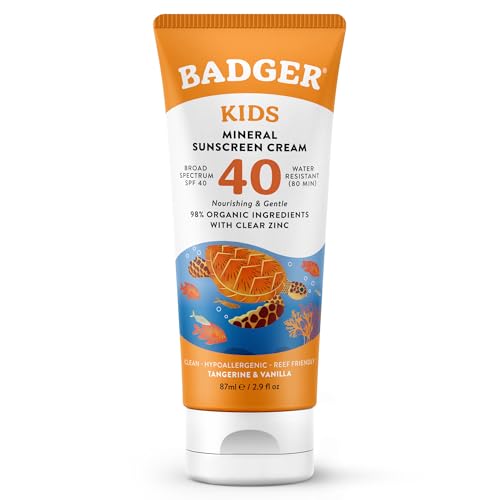
Alternative product in a non-aerosol cream format with no recall history — the flagged product's actives are also zinc oxide, so the difference here is delivery format, not ingredient chemistry: Badger Mineral Sunscreen Cream SPF 30 (reef-safe is the manufacturer's marketing claim, not independently verified).

Perhaps the biggest misconception is that 'natural and fresh' means safe, while 'synthetic and shelf stable' means harmful.
— Perry Romanowski told Fashionista that ...
Is 'Freshly Made' Skin Care 'Clean' Beauty's Next Phase? — Fashionista (2026-04-14)
Marketers use the term 'chemical-free' to mean a wide variety of things, such as paraben-free, sulfate-free or petrochemical-free. But all products are made up of chemicals. It's a disingenuous, misleading claim.
— Perry Romanowski told Fashionista that ...
8 Common Fear-Mongering Natural Beauty Marketing Claims, Fact-Checked — Fashionista (2019-04-10)
The main reason is that essential oils come from plants. Plants have evolved defense mechanisms to either attract pollinating insects or kill off organisms that might harm it. There are lots of chemicals that plants have created that are terrible for our skin.
— Perry Romanowski told Fashionista that ...
8 Common Fear-Mongering Natural Beauty Marketing Claims, Fact-Checked — Fashionista (2019-04-10)