
Natural mineral sunscreen, explained
"Natural" is not a regulated word on a sunscreen bottle. Here is what it usually means, what to actually look for, and how to tell a genuinely simple formula from a marketing one.
On a sunscreen, "natural" almost always means mineral — a formula built around zinc oxide rather than chemical UV filters. That is a reasonable thing to want. Just know the word itself is not regulated, so it is the ingredient panel, not the adjective, that tells you what you are buying.
The short version
A natural mineral sunscreen uses zinc oxide (and sometimes titanium dioxide) as its UV filter instead of chemical filters. 'Natural' has no legal definition, so the ingredient panel matters more than the front label.
At a glance
- SafeMama view
- A natural mineral sunscreen uses zinc oxide (and sometimes titanium dioxide) as its UV filter instead of chemical filters. 'Natural' has no legal definition, so the ingredient panel matters more than the front label.
- Easy swap
- Non-nano zinc oxide
Marketing to read past
- "Chemical-free" — Everything is a chemical, including zinc oxide. The meaningful distinction is mineral vs chemical UV filters.
- "Reef-safe" with no detail — It is an unregulated claim. Look for the actual formula: mineral actives, no oxybenzone or octinoxate.
- Long, fragranced ingredient lists — A truly simple formula is short and usually fragrance-free.
What "natural" actually signals
On a sunscreen, "natural" almost always means mineral — a formula built around zinc oxide rather than chemical UV filters. That is a reasonable thing to want. Just know that the word itself is not regulated, so it is the ingredient panel, not the adjective, that tells you what you are buying.
The one ingredient that matters most
Zinc oxide. It is broad spectrum on its own, meaning it covers both UVA and UVB, and it is gentle enough for most sensitive and pediatric skin. If zinc oxide is the active ingredient and it is broad spectrum, SPF 15 or higher (FDA's floor; the AAD recommends 30 or higher), you have the core of a good mineral sunscreen.
Nano vs non-nano
You will see "non-nano zinc" marketed as safer. Both nano and non-nano zinc oxide are permitted by the FDA. Non-nano particles are larger and can leave a heavier white cast; some families prefer them anyway. This is a preference, not a safety cliff.
The one place it is worth a second thought is spray formulations, where the concern is inhalation rather than skin. That applies to sprays generally, mineral or not — spray into your hands and apply from there, and never on a face.
What "natural" does not mean
Three things the word is regularly assumed to cover, and does not:
It does not mean fragrance-free. Plenty of "natural" mineral sunscreens are scented, often with essential oils. Those are still fragrance, and fragrance is a common cause of skin reactions. Check the inactives.
It does not mean no preservatives. Any product containing water needs a preservative system, and that is a feature — an unpreserved sunscreen in a warm bathroom is a microbiology problem, not a purer product.
It does not mean gentler by default. Botanical extracts are common in this category and are a frequent source of reactions on sensitive skin. A short, boring ingredient list beats a long botanical one if irritation is your concern.
A simple label test
Read three lines: the active ingredient (want: zinc oxide), the SPF (want: broad spectrum, SPF 15 or higher; the AAD recommends 30 or higher), and whether fragrance appears in the inactives (prefer: it does not). A formula that passes all three is a genuinely simple mineral sunscreen, whatever the front of the bottle says.
That test takes about fifteen seconds in an aisle and outperforms every marketing claim on the front label — including, for what it is worth, the word this page is named after.
For the picks themselves, the cheat sheet is the shortlist by format, and mineral vs chemical for kids covers where the two categories actually stand with regulators.
Four labels to compare it against
These four are examples of how the label reads when the formula is genuinely simple: one active (zinc oxide), a short inactive list, and the brand's own statements about what it leaves out. Notice that "short" is not the same as "fragrance-free": a formula scented with citrus oil is still scented. We have not tested these; the notes use the Drug Facts panels we checked.
Where to go next
If the question is mineral versus chemical, or lotion versus stick versus spray, see mineral vs chemical sunscreen for kids. For the one-bottle answer, see best natural sunscreen, the cheat sheet and the sunscreen hub. For the reef claim, the FDA and AAP pages we read do not use the term "reef safe", and our oxybenzone explainer covers the filter people usually mean.
Safer alternatives
- Non-nano zinc oxide — Some families prefer non-nano particles; both nano and non-nano zinc are FDA-permitted.
- Fragrance-free formulas — Fewer irritants for sensitive and young skin.
Vetted picks
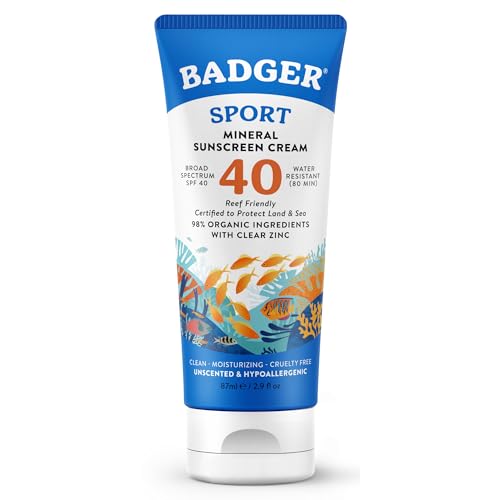
Ingredient panel checked · source
Four-ingredient panel
Verified panel: non-nano, uncoated zinc oxide 22.5% as the only active, in organic sunflower oil, beeswax and vitamin E. A good example of what a genuinely short list looks like. With no water in the base, expect a thick, balm-like texture.
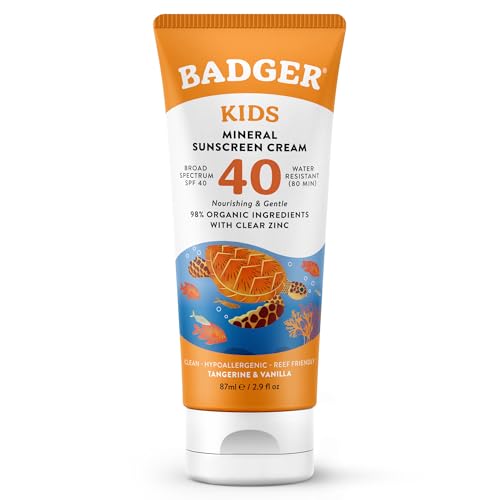
Short list with citrus oils
Verified panel: uncoated zinc oxide 22.5% as the only active, in an eight-ingredient organic base. It includes orange and tangerine oils, a reminder that a short, natural list is not the same as fragrance-free.

Non-nano zinc 20%
Verified panel: non-nano zinc oxide 20% as the only active. The brand states it contains no oxybenzone, avobenzone, PABA, parabens or phthalates. The marketplace title says Thinkkids; the brand's current name for this formula is THINKSPORT Kids.

Ingredient panel checked · source
Fragrance-free, longer water resistance
Verified panel: zinc oxide 20% as the only active, 80-minute water resistance. The brand states it is free of fragrance, silicones and parabens and uses non-nano mineral filters.
Common questions
The cheat sheet for this
Part of the Sunscreen & Sun Safety hub— the rest of our coverage in this category.
Every sunscreenproduct we've reviewed— what we'd buy, what we'd skip, and where each one stands.