
Non-toxic perfume: what the labels mean, and the picks we would give
One winner for each way people buy perfume: what the labels mean, and the picks we would give.
No perfume is non-toxic by any legal definition, and the word on the bottle is marketing. Here is what "fragrance", phthalates and "natural" really tell you, what is and is not known about perfume in pregnancy, and the fully disclosed, dab-on and fragrance-free picks we would give.
How we scoreHow we earnChecked November 15, 2026
Our winner for each way people buy
How we scoreHow we earnChecked November 15, 2026
Every ingredient named

Henry Rose
Perfumes for Women & MenJake's House eau de parfum: all 33 fragrance ingredients named on Henry Rose's own page, and listed as EWG Verified on EWG's own register (a disclosure program brands pay to join, not a lab test). The list includes linalool, citronellol and geraniol, so full disclosure is not the same as allergen-free.
Meets our published criteria, as of Nov 15, 2026
$120ViewRollerball or solid perfume

Skylar
Salt Air Rollerball Clean Perfume for WomenSalt Air, a fresh scent in a 10 ml rollerball. Skylar's own page names all 30 fragrance ingredients, some by trade name rather than chemical name.
Meets our published criteria, as of Nov 15, 2026
$33ViewFragrance-free gift
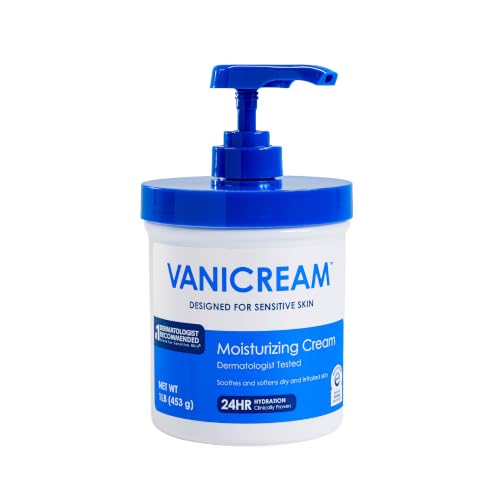
Vanicream
Moisturizing CreamVanicream Moisturizing Cream: ten ingredients, no fragrance and no essential oils, per Vanicream's own list. For someone who is avoiding scent, in pregnancy or because her skin reacts.
Meets our published criteria, as of Nov 15, 2026
$13.56View
What to avoid
- "Fragrance" or "parfum" and nothing else — legal, but you cannot see a phthalate or an allergen in it
- "Non-toxic", "clean" or "safe" on the bottle — no legal definition for any of them on a perfume
- "Hypoallergenic" or "for sensitive skin" — FDA says it means whatever a company wants it to mean
- "Essential oils only" as a safety claim — essential oils contain listed fragrance allergens too
What to look for
- Every fragrance ingredient named, on the maker's own site — the one disclosure that lets you check for what you react to
- "Phthalate-free" from a maker that also names its ingredients — a claim you can check against the list
- A rollerball or solid balm — a dab on skin instead of a cloud in the room
- "Fragrance-free" plus an ingredient list with no essential oils — FDA says an "unscented" product may still contain fragrance
- 1Skip: "Fragrance" or "parfum" with nothing named behind itBuy instead: Henry Rose Why
- 2Skip: A cloud of spray, especially around a babyBuy instead: Skylar Why
- 3Skip: "Natural", "essential oils only" or "hypoallergenic" as a safety claimBuy instead: River Organics Why
- 4Skip: Any scent, if she has told you she is avoiding itBuy instead: Vanicream Why
What the label card means
What to skip, and why
"Fragrance" or "parfum" and nothing else
Legal, but you cannot see a phthalate or an allergen in it.
Know the risks: Fragrance not fully itemized"Non-toxic", "clean" or "safe" on the bottle
No legal definition for any of them on a perfume.
"Hypoallergenic" or "for sensitive skin"
FDA says it means whatever a company wants it to mean.
"Essential oils only" as a safety claim
Essential oils contain listed fragrance allergens too.
The full guide: how we chose
"Non-toxic" has no legal definition on a perfume, and FDA says "hypoallergenic" means whatever a company wants it to mean. The real gap is that US law lets a label say "fragrance" for a whole mixture you cannot see. The most common documented problem with perfume is skin allergy, and plant oils cause it too. Phthalates are the worry most people have: diethyl phthalate (DEP) is still used in fragrance, women who had used perfume in the past day had about three times as much of its breakdown product in their urine, and studies in pregnancy show associations, not proof. FDA's phthalates page, last updated in 2022, says that based on the information it has, it does not have safety concerns about DEP as currently used. So choose a scent whose maker names every ingredient, dab it on rather than spray it, and if she is avoiding scent, a fragrance-free gift is the easy choice.
The 30-second version
No US rule defines "non-toxic" on a cosmetic, and there is no test a perfume has to pass to print it. The claim only has to avoid being deceptive.
What you can do is choose one where you can see what you are wearing. A handful of makers name every fragrance ingredient on their own sites. Most labels just say "fragrance", which US law allows.
The most common documented problem with perfume is an itchy skin allergy, and plant oils cause it too. The worry most parents bring is phthalates. The phthalate used in fragrance, DEP, is real and measurable in people who wear perfume, and the pregnancy studies show associations rather than proof. FDA's phthalates page, last updated in 2022, says that based on the information it has, it does not have safety concerns about DEP as currently used.
So: a maker that names every ingredient, a rollerball or solid balm instead of a spray, on the wrists rather than a cloud, and a fragrance-free gift for anyone avoiding scent.
What "fragrance" on a label does and does not tell you
FDA requires a cosmetic to list its ingredients, but a scent blend gets an exception. Because fragrance formulas are treated as trade secrets, the whole blend can be listed as the single word "fragrance" or "parfum". Our fragrance explainer covers where that rule comes from.
That gap is legal and nearly universal, and on its own it is not evidence that anything harmful is inside. What it hides is the two things a parent might want to check: whether there is a phthalate in the blend, and whether there is the one ingredient your skin reacts to.
So the most useful thing a perfume can do is name everything. Two of our picks do. Henry Rose's page for Jake's House lists 33 fragrance ingredients, each with its scent role. Skylar's Salt Air page lists 30, and its Vanilla Sky page lists every ingredient by chemical name. That is not proof of safety. It is what lets you, or your dermatologist, check.
Phthalates: what is actually known
What they are doing in perfume. FDA says diethyl phthalate (DEP) is the phthalate commonly used in fragrance, where it works as a solvent and fixative. Our phthalate explainer covers DEP on its own, and how it differs from the phthalates used to soften vinyl.
Perfume is linked to higher exposure. In a 2013 study of 337 women, those who had used perfume in the previous 24 hours had about 2.9 times as much monoethyl phthalate (MEP), DEP's breakdown product, in their urine as the women who had not. It was one urine sample per woman, the women were 3 to 36 months after giving birth rather than pregnant, and MEP also rose with hair spray, nail polish and deodorant. Diet and house dust are sources of phthalates too. But it points to perfume as one real source of DEP in the body.
What the pregnancy research shows. Some phthalates have been linked in observational studies to outcomes such as preterm birth. A large 2022 pooled study of 16 cohorts and more than 6,000 pregnancies found small increases (roughly 12 to 16 percent for each interquartile-range rise) in the odds of preterm birth for four phthalate metabolites, one of them borderline. The authors concluded that phthalate exposure "may be a preventable risk factor for preterm delivery", meaning exposure from every source, including diet and dust, not perfume in particular. The study measured MEP, the breakdown product of the perfume phthalate, but the four metabolites its summary reports are from other phthalates. A study like this shows an association, not cause.
What FDA says. FDA's phthalates page, last updated in 2022, says that based on the information it has, it does not have safety concerns about DEP as currently used in cosmetics and fragrances.
So the honest answer is an open question rather than a proven harm. If you would rather not carry it through a pregnancy, the fix is cheap: a maker that names its ingredients and says it uses no phthalates, less of it, or nothing for nine months. Nobody needs to panic about the perfume they wore before they knew.
Natural is not the same as safe
The well-documented problem with fragrance is allergy. The American Academy of Dermatology names fragrance, with nickel, among the more common causes of allergic contact dermatitis: an itchy, red rash where the product touched.
Plant oils are not exempt. In a 2012 opinion, the EU's scientific committee on consumer safety counted 82 established contact allergens in fragrance, 28 of them natural extracts such as essential oils. It also found that linalool, a main component of lavender oil, oxidizes in air into compounds that are stronger allergens. Our River Organics pick is a good example of the trade-off: every ingredient is printed, there is no alcohol and no "fragrance", and its scent is still two essential oils that some people will react to.
Europe makes companies name allergens; the US does not yet. The EU has long required a list of 26 fragrance allergens to be named on a label above 0.001% in leave-on products such as perfume, and a 2023 regulation adds 56 more, required on new products since 31 July 2026 and on everything still on shelves by 31 July 2028. Congress told FDA to write a rule requiring US labels to name fragrance allergens, in the Modernization of Cosmetics Regulation Act of 2022, and left FDA to decide which ones count. FDA's proposed rule was due in June 2024. As of 15 November 2026 we could not find it in the Federal Register.
So on a US perfume, the allergen you react to may be hidden inside "fragrance". On a fully disclosed one, you can look for it: linalool, citronellol and geraniol, for example, are all on Henry Rose's Jake's House list.
What the labels on the bottle mean
- Non-toxic and clean. No US rule defines either on a cosmetic. The FTC's Green Guides treat a "non-toxic" claim as deceptive if it overstates, say it can imply no risk to people or the environment, and expect it to be qualified and backed by evidence. No test exists that a perfume has to pass.
- Natural. FDA has not defined "natural" for cosmetics.
- Hypoallergenic. FDA's own words: there are no federal standards or definitions for it, and the term "means whatever a particular company wants it to mean." Henry Rose's own page uses it, and so do the Amazon titles for both Skylar rollerballs; Amazon titles are the seller's words. We did not count it for or against any of them.
- Phthalate-free. Worth having, and only checkable when the maker names the fragrance ingredients. Henry Rose and River Organics say on their own pages that their products contain no phthalates. We did not test that, and Skylar's pages do not say either way.
- Unscented. FDA says even some products labeled unscented may contain fragrance ingredients, added to mask the smell of the others.
- Fragrance-free. Usually means no fragrance was added, though no US rule defines it. Read the list anyway for essential oils or plant extracts.
Which disclosures actually mean something
- Full ingredient disclosure on the maker's site. The most useful one, because you can check it yourself. Look for a list that names fragrance ingredients individually, not "natural fragrance" or "essential oil blend".
- EWG Verified. EWG's criteria require a company to disclose every ingredient to EWG, including those inside the fragrance, and to list fragrance ingredients above 100 parts per million on its website. It is a nonprofit's disclosure and ingredient standard, not a lab test and not a government approval, and it is a program brands apply and pay to join, so read it as a company choosing to submit and pass. Check it on EWG's own register, as we did for Henry Rose. Of our picks, only Henry Rose's Jake's House is listed as EWG Verified.
- MADE SAFE. MADE SAFE screens products against a list of more than 15,000 banned or restricted substances and requires disclosure of each intentionally added substance. None of our picks' maker pages claims MADE SAFE certification.
- IFRA compliance. The International Fragrance Association sets limits and bans on some fragrance materials, and its members must follow them. IFRA itself calls its standards a self-regulating voluntary system of the industry. It is the industry's own rulebook, not an independent check.
Pregnancy, a new baby, and a teen
If she is pregnant. Nothing we found says perfume harms a pregnancy. Many pregnant women go off scent anyway, because of nausea. A fragrance-free gift, or a fully disclosed rollerball she can use sparingly, is the considerate choice.
With a newborn. We found no pediatric guidance about a parent's perfume, so this is our judgment, not medical guidance. The simplest rule is to skip scent while you are holding a newborn, or put it on clothing you will not be holding the baby against, and to use a dab rather than a spray. The American Academy of Pediatrics advises fragrance-free lotions and wipes for children, and notes that phthalates are often part of "fragrance".
For a teen. Body mists are the big seller, and they spray a lot of fragrance over a wide area. A rollerball of a scent she likes gets the same effect with much less. Patch test anything new.
Store it high. Most perfume is alcohol-based; alcohol is the first ingredient on both Skylar labels here. Keep bottles out of a toddler's reach.
Our picks
Every pick names its ingredients on the maker's own site. We read those pages on 15 November 2026.
We made no "non-toxic" claim for any of them, because no perfume is. Henry Rose and Skylar both name every fragrance ingredient. Henry Rose's Jake's House and Skylar's Vanilla Sky lists both include linalool, a common fragrance allergen. River Organics is alcohol-free and scented only with two named essential oils. Vanicream and the Honest Fragrance-Free lotion have no fragrance at all.
For a scent-free home more broadly, our non-toxic candles guide covers what a burning candle and its fragrance put into the air, and our baby skin care guide covers fragrance-free basics for the baby.
The swaps, in full
"Fragrance" or "parfum" with nothing named behind it
US law lets a cosmetic label list a whole scent blend as the single word "fragrance", because the formula is treated as a trade secret. That is legal and almost universal, and it is not evidence that anything harmful is inside. It does mean you cannot see whether the blend contains a phthalate, or the allergen your skin reacts to. A few makers now name every fragrance ingredient on their own sites, which is the most useful thing a perfume label can do.
Hides in: The ingredient list on the box: "Alcohol Denat., Parfum (Fragrance), Aqua" and nothing else
Henry Rose names all 33 fragrance ingredients in Jake's House on its own site, and EWG's own register lists the fragrance as EWG Verified (a disclosure program brands pay to join, not a lab test). The list includes linalool, citronellol and geraniol, which are common fragrance allergens.
A cloud of spray, especially around a baby
A spray puts fragrance into the air of the room and onto whatever is nearby, including a baby on your shoulder. A rollerball or a solid balm puts a small amount on a pulse point and keeps it there. That means less fragrance in the air for everyone near you. Nobody has studied a parent's perfume and a baby, so this is our practical judgment, not medical guidance.
Hides in: Atomizers, body mists and hair mists, especially the large ones
Skylar's own page names all 30 fragrance ingredients in Salt Air, some by trade name. A 10 ml rollerball goes on in dabs, not a cloud.
"Natural", "essential oils only" or "hypoallergenic" as a safety claim
Essential oils are mixtures of plant chemicals, and some of those chemicals are on the European Union's list of fragrance allergens whether they come from a lab or a plant. The EU's scientific committee names linalool as a main component of lavender oil, and says it becomes a stronger allergen once it oxidizes in air. In the US, FDA says "hypoallergenic" has no federal definition. A perfume that names its ingredients lets you check for the one you react to; a natural one does not answer the question.
Hides in: Front labels that say "natural", "botanical", "pure essential oils" or "for sensitive skin"
River Organics prints the whole ingredient list: plant butters and oils, candelilla wax, and vetiver and sandalwood essential oils. That is honest labeling, and the essential oils can still irritate skin, so patch test it.
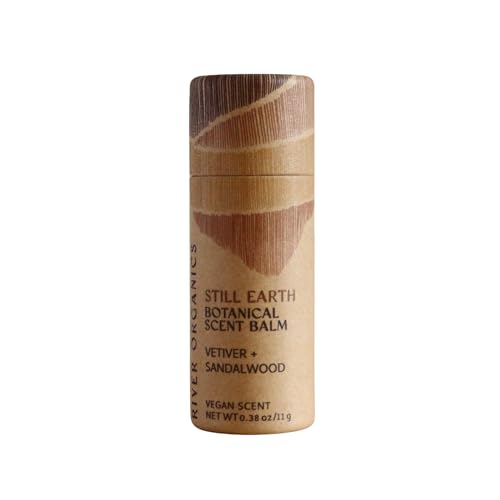
River Organics Botanical Scent Balm Solid Perfume: Vegan, Natural Scent Balm with Vetiver & Sandalwood Essential Oils
Manufacturer statement checked · source
Any scent, if she has told you she is avoiding it
Nothing we found shows that wearing perfume harms a pregnancy. But this is the one gift where the person may already be avoiding scent: because of nausea, because of the phthalate question, or because her own skin reacts. We found no guidance on perfume while nursing either. The American Academy of Pediatrics advises fragrance-free lotions for children. A good fragrance-free gift skips the whole question.
Hides in: Baby showers, a new mom's stocking, a pregnant friend or teacher
Ten ingredients, no fragrance and no essential oils, per Vanicream's own list. A big pump bottle for hands that get washed all day.
Do the free things first
Use less, and dab it
One dab on each wrist is less fragrance on you and in the air than three sprays. A rollerball is the easy switch.
Skip it while you hold a newborn
No one has studied a parent's perfume and a baby, so this is our judgment, not medical guidance. The simplest rule is to skip scent while holding a newborn, or put it on clothing you will not be holding the baby against.
Read the maker's site, not the box
Some brands that print only "parfum" on the bottle name every ingredient online. If a maker will not tell you, that is an answer too.
Claims that are not what they sound like
- "Non-toxic" or "clean" perfume — No US rule defines either word on a cosmetic. The FTC's Green Guides treat a "non-toxic" claim as deceptive if it overstates, say it can imply no risk to people or the environment, and expect it to be qualified and backed by evidence. There is no test a perfume has to pass to print it.
- "Phthalate-free" on its own — Useful if it is true, and you can only check it when the maker names the fragrance ingredients. On a list that just says "fragrance", it is a promise you cannot see behind.
- "Unscented" — FDA says even some products labeled unscented may contain fragrance ingredients, added to mask the smell of the others. Look for "fragrance-free" and then read the list anyway.
- "IFRA compliant" — IFRA calls its own standards "a self-regulating voluntary system of the industry". They set real limits on some ingredients, and members must follow them, but they are not an independent check.
How we choose
We read each maker's own product page in a browser on 15 November 2026 and recorded the ingredient list. We only picked scents whose makers name every fragrance ingredient, or whose whole ingredient list is plain plant butters, oils and named essential oils, and we checked certifications on the certifier's own register, not the box or the Amazon title. No perfume here is "non-toxic". These are the ones where you can see what you are wearing.
- Every fragrance ingredient named on the maker's own site, or no fragrance at all
- Certifications confirmed on the certifier's own register, or attributed to the brand
- A rollerball or solid format, so there is a dab-on option
- A fragrance-free option for anyone avoiding scent
- A named maker with product pages we could read
- In stock, checked against the live catalog
Every source we cite is checked against our criteria first — see how we check our sources.
What the research says
Fragranced products-including air fresheners, dryer sheets, and perfume-and sunscreens had the largest number of target chemicals and some of the highest concentrations.
— Robin Dodson, ScD of Silent Spring Institute explains that ...
Consumer Products Contain Potentially Harmful Chemicals Not Listed on Labels — Silent Spring Institute (2012-03-08) (how we check this source)
One way you avoid phthalates is to choose fragrance-free products.
— Robin Dodson, ScD told Consumer Reports that ...
5 Ingredients to Watch Out For in Beauty and Personal Care Products — Consumer Reports (2026-02-03) (how we check this source)
encourage application of a bland moisturizer titrated to symptomatic benefit (at least once, often multiple times, per day)
— According to Annals of Allergy, Asthma & Immunology guidance co-authored by Peter A. Lio, MD, ...
Atopic dermatitis (eczema) guidelines: 2023 AAAAI/ACAAI Joint Task Force on Practice Parameters — Annals of Allergy, Asthma & Immunology
Sources
- Fragrances in Cosmetics (content current as of February 28, 2022) — U.S. Food and Drug Administration (how we check this source)
- Phthalates in Cosmetics (content current as of May 19, 2022) — U.S. Food and Drug Administration (how we check this source)
- "Hypoallergenic" Cosmetics — U.S. Food and Drug Administration (how we check this source)
- Small Businesses and Homemade Cosmetics: Fact Sheet (on the term "natural") — U.S. Food and Drug Administration (how we check this source)
- 16 CFR 260.10: Non-toxic claims (FTC Green Guides) — Legal Information Institute, Cornell Law School
- Modernization of Cosmetics Regulation Act of 2022 (Public Law 117-328, Division FF), including fragrance allergen labeling, FD&C Act section 609(b) — U.S. Government Publishing Office
- Modernization of Cosmetics Regulation Act of 2022 (MoCRA) — U.S. Food and Drug Administration (how we check this source)
- Fragrance allergens labeling (Commission page) — European Commission
- Commission Regulation (EU) 2023/1545 on the labeling of fragrance allergens in cosmetic products — EUR-Lex
- Opinion on fragrance allergens in cosmetic products (SCCS/1459/11) — European Commission, Scientific Committee on Consumer Safety
- Understanding IFRA Standards — International Fragrance Association
- Parlett LE, Calafat AM, Swan SH. Women's exposure to phthalates in relation to use of personal care products. J Expo Sci Environ Epidemiol 2013;23(2):197-206 — Journal of Exposure Science and Environmental Epidemiology
- Welch BM et al. Associations between prenatal urinary biomarkers of phthalate exposure and preterm birth: a pooled study of 16 US cohorts. JAMA Pediatrics 2022;176(9):895-905 — JAMA Pediatrics
- Contact dermatitis: causes — American Academy of Dermatology
- How to Choose Safer Personal Care Products (last updated October 31, 2024) — American Academy of Pediatrics, via HealthyChildren.org (how we check this source)
- EWG Verified: Personal Care Products Criteria 2026 — Environmental Working Group
- Henry Rose Fragrance, Jake's House (EWG Verified listing) — Environmental Working Group, Skin Deep (how we check this source)
- MADE SAFE certification — MADE SAFE (MADEWORKS)
Common questions
Every skincare & bathproduct we've reviewed— what we'd buy, what we'd skip, and where each one stands.