
The Red Dye 3 cheat sheet
One winner for each way people buy red dye 3.
FDA has revoked its authorization for Red No. 3 in food and ingested drugs, with a compliance date of January 15, 2027 for food. This is the FDA's order, dated and linked, what it does and does not say, and the swaps for each aisle where FDA says the dye is found.
How we scoreHow we earnChecked October 21, 2026
Our winner for each way people buy
How we scoreHow we earnChecked October 21, 2026
Candy and gummies

YumEarth
Gummy Bears Snack Pack OrganicColored with a named concentrate blend of carrot, blackcurrant, apple, pumpkin, radish, lemon and paprika (assorted-flavor bears); contains gelatin, so not vegetarian.
Meets our published criteria, as of Oct 21, 2026
$6.99ViewRed velvet cake and cupcakes

Color Kitchen
Natural Red Velvet Food Coloring Powder for BakingRed color for a cake mix from vegetable juice and turmeric on maltodextrin, five 13-gram packets, each enough for about a pound of mix. The panel does not name which vegetable.
Meets our published criteria, as of Oct 21, 2026
$39.99ViewFrosting and icing color

Color Kitchen
Food Coloring Vibrant PacksPowder packets colored with spirulina extract, beet juice concentrate and turmeric, which the maker says to mix in directly or as a paste with a very small amount of water.
Meets our published criteria, as of Oct 21, 2026
$8.49ViewFrozen desserts

GoodPop
Organic Freezer PopsEvery flavor we read declares "fruit and vegetable juice (color)" as its only colorant.
Meets our published criteria, as of Oct 21, 2026
$34.99ViewCookies

Partake Foods
Gluten Free Partake Crunchy Chocolate Chip CookiesNo FD&C color on the panel; the chocolate and molasses supply the color. The maker says it is free of the top nine allergens; we do not verify allergen status.
Meets our published criteria, as of Oct 21, 2026
$18.99View
What to avoid
- "FD&C Red No. 3", "FD&C Red 3" or "Red 3" — our call to skip while it clears out of food, and a swap exists in each aisle
- Erythrosine — FDA lists it as another name for the dye and says Canada and Europe allow it under that name; we have not checked imported products, so scan for the word if you buy imports
- Any red, pink or cherry color with no source named — a bare "color added" is a reason to read further, because the panel is where the answer is
What to look for
- A named color source — beet, annatto, paprika, turmeric, spirulina or black carrot on the panel means the color comes from a food or plant
- The colors line itself — FDA says a certified color must be declared in the ingredient list as "FD&C Red No. 3", "FD&C Red 3" or "Red 3", so that line is where the answer is
- A USDA Organic seal — certified organic products may not use synthetic colors, which makes it a fast filter on candy and cake mixes
- 1Skip: Candy with a cherry-red colorBuy instead: YumEarth, Surf Sweets, Unreal Why
- 2Skip: Red velvet cake and cupcakesBuy instead: Color Kitchen Why
- 3Skip: Tinted frosting and icingBuy instead: Color Kitchen Why
- 4Skip: Frozen desserts with added colorBuy instead: Goodpop Why
- 5Skip: Cookies with colored fillings or coatingsBuy instead: Partake Foods Why
What the label card means
What to skip, and why
"FD&C Red No. 3", "FD&C Red 3" or "Red 3"
Our call to skip while it clears out of food, and a swap exists in each aisle.
Erythrosine
FDA lists it as another name for the dye and says Canada and Europe allow it under that name; we have not checked imported products, so scan for the word if you buy imports.
Any red, pink or cherry color with no source named
A bare "color added" is a reason to read further, because the panel is where the answer is.
The full guide: how we chose
FD&C Red No. 3 is leaving US food by order, not by request: FDA revoked its authorization, and food makers must comply by January 15, 2027 (ingested drugs by January 18, 2028). Boxes made before then can still carry it, so the colors line on the panel decides. FDA's own page says there is no evidence it causes cancer in humans. The revocation rests on a finding in male rats exposed to high levels, under a law that bars authorizing a color additive found to induce cancer in animals or humans.
What this sheet covers
This is the quick version for a parent who has seen the Red Dye 3 headline and wants to know what to do about the cart in front of them. It gives the agency's order, dated and linked, then the aisles where FDA says the dye is found, with a swap for each. For the longer explanation of why the order exists, read our guide to what the Red 3 revocation means. For the dye most snacks actually carry, see where Red 40 hides.
What the FDA ordered
These are the agency's statements, kept apart from ours. All of them are on FDA's FD&C Red No. 3 page, which listed its content as current as of October 5, 2026 when we read it on October 21, 2026.
- The order. FDA granted a petition and repealed the color additive regulations that permit Red 3 in food, including dietary supplements, and in ingested drugs. The final order is 90 FR 4628, published January 16, 2025.
- The dates. The order is effective January 15, 2027, except for the ingested-drug provision, which is effective January 18, 2028. FDA's page puts it this way: "Manufacturers who use FD&C Red No. 3 in food and ingested drugs will have until January 15, 2027 or January 18, 2028, respectively, to reformulate their products."
- The stay. Objections filed by February 18, 2025 administratively stayed the order. In 91 FR 50475, published August 5, 2026, FDA denied the hearing requests, lifted the stay and confirmed both dates.
- The reason. FDA relied on the Delaney Clause, which bars authorization of a color additive found to induce cancer in humans or animals. The agency says the data show it "causes cancer in male laboratory rats exposed to high levels of FD&C Red No. 3 because of a hormonal mechanism that occurs in male rats." It also says "studies in other animals or in humans did not show the same effect and there is no evidence showing FD&C Red No. 3 causes cancer in humans."
- The shelf. FDA says consumers could see Red 3 in a product on the market past the effective date if it was manufactured before that date.
What we would avoid
This part is ours, not FDA's. We list Red 3 under what to avoid because it is leaving food by order and a swap exists in every aisle below. We are not saying FDA found harm to people, because FDA says it did not. If you have already decided to cut synthetic color, Red 3 is one of several dyes to read for. If you have not, the practical effect of the order is that it will thin out of the aisles on its own.
The swaps, by aisle
FDA names candy, cakes and cupcakes, cookies, frozen desserts and frostings and icings. The board on this page has one pick for each, checked against our published criteria as of October 21, 2026. We do not test products. We read the maker's own ingredient panel and date it.
Candy is the aisle where the swap is a different candy, and candy without Red Dye 40 sorts the options by format. For baking, natural food coloring explains which plant gives which color and why a red is harder than a yellow. For a longer snack list, see snacks without Red Dye 40.
How to read the label
Turn the box over. FDA's page says a certified color must be declared in the statement of ingredients as "FD&C Red No. 3", "FD&C Red 3" or "Red 3". Look for those. FDA lists "erythrosine" as another name for the dye and says Canada and Europe allow it under that name; we have not checked imported products, so scan for that word too if you buy imports. The colors line settles it, so a front-of-box claim about flavor or about a different dye does not settle it.
When this sheet updates
When FDA or HHS acts again on Red 3 or on another color additive we cover, we refresh the matching sheet and link the agency's text with its date. The food dyes hub lists the sheets and guides in this group.
The swaps, in full
Candy with a cherry-red color
FDA lists certain candy first among the foods where Red 3 is found. Candy is also the aisle where color is the product, so the swap is a different candy rather than a different label. Check the panel on the specific bag you are holding.
Hides in: The colors near the end of the ingredient list, on anything cherry-red, pink or red-and-white
Colored with a named concentrate blend (carrot, blackcurrant, apple, pumpkin, radish, lemon, paprika), so no numbered dye on the panel. Contains gelatin, so not vegetarian.
- No Red Dye 40
- Dye-Free
Addresses: Red Dye 40, Artificial Dyes, Yellow 5 & 6
Ingredient panel checked · source
Colored with organic carrot, blackcurrant, blueberry, annatto and turmeric extracts, named on the panel. Contains gelatin.
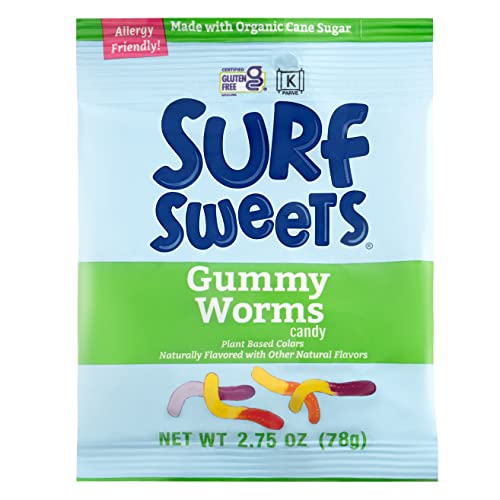
- No Red Dye 40
- Dye-Free
Addresses: Red Dye 40, Artificial Dyes, Yellow 5 & 6
Ingredient panel checked · source
The shell color is declared as turmeric, beet juice and spirulina extract. Contains milk. Chocolate melts in a bag, so this one is for home more than for a summer lunchbox.
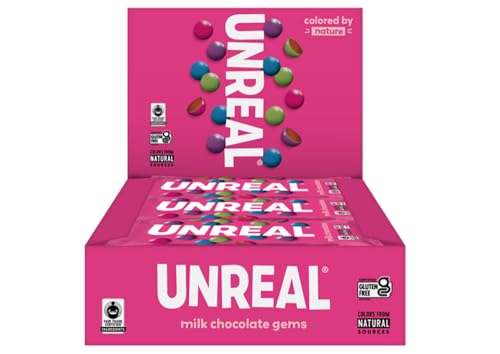
- No Red Dye 40
- Dye-Free
Addresses: Red Dye 40, Artificial Dyes, Yellow 5 & 6
Ingredient panel checked · source
Red velvet cake and cupcakes
Red velvet is the cake most closely tied to a red color, and FDA lists certain cakes and cupcakes among the foods where Red 3 is found. At home you control the color, which makes this the easiest aisle to swap. A boxed or bakery red velvet is the one to read.
Hides in: A bakery or boxed red velvet, and any pre-colored red cake or cupcake
Powder colored with vegetable juice and turmeric, carried on maltodextrin. The maker declares "vegetable juice" without saying which vegetable. The maker's page says one 13-gram packet colors a pound of cake mix or 18 cupcakes. Natural colors are heat-sensitive, and the maker's tip for the brightest red is to use baking powder rather than baking soda.
Tinted frosting and icing
FDA also lists certain frostings and icings. In a tub of pre-tinted frosting the color is the whole point, so it is worth reading the colors line.
Hides in: A tub of pre-tinted frosting, and bakery icing on a decorated cake
Powder packets colored with spirulina extract, beet juice concentrate and turmeric. There is no red packet: the maker's recipe for red is pink plus a pinch of yellow. For frosting, the maker says to mix the powder in directly or make a paste with a very small amount of water.
The six-color kit from the same maker, which includes a red packet. It costs more than the 3-pack; the 3-pack covers red if you mix pink with a pinch of yellow. Natural colors fade in the oven and hold best in frosting.
Frozen desserts with added color
Certain frozen desserts are on FDA's list too. A conventional freezer pop can carry more than one numbered dye, so the panel is worth reading flavor by flavor.
Hides in: The flavor you are holding, not the brand: one flavor of a pop can list a dye that its neighbor does not
Every flavor we read declares "fruit and vegetable juice (color)" as its only colorant. The maker does not say which juices.
- Dye-Free
- No Red Dye 40
Addresses: Red Dye 40, Artificial Dyes
Ingredient panel checked · source
Cookies with colored fillings or coatings
Certain cookies are on FDA's list as well. If a child asks for a cookie, a plain cookie is the simplest swap.
Hides in: Iced, filled or sandwich cookies, and anything with a colored coating or sprinkles baked in
No FD&C color on the panel we read. The maker says it is free of the top nine allergens; we do not verify allergen status, so check the pack against your school's rules.
- No Red Dye 40
- Dye-Free
Addresses: Red Dye 40, Artificial Dyes
Ingredient panel checked · source
Do the free things first
Read the colors line
The ingredient panel is where the answer is, and it costs nothing to read. Front-of-box claims say nothing about which colors are inside.
Let the deadline do some of the work
Food makers have until January 15, 2027. For a product you buy often, the panel on a fresh box can differ from the one in your pantry, so read it again each time.
Skip the color, or make it yourself
A naturally pale frosting reads as festive to a five-year-old; read the colors line on the sprinkles too. For a tint, reduced beet or blueberry purée colors a thin glaze.
Label traps that are not ingredients
- Reading "no Red 40" as "no Red 3" — They are different dyes under different rules. A claim about one says nothing about the other, so check each by name.
- Assuming it is already gone — The compliance date is January 15, 2027 for food. FDA's page says a product manufactured before the effective date can still be on the market after it.
- Reading the order as a finding of harm to people — FDA's page says the data show it "causes cancer in male laboratory rats exposed to high levels of FD&C Red No. 3 because of a hormonal mechanism that occurs in male rats," that "studies in other animals or in humans did not show the same effect," and that "there is no evidence showing FD&C Red No. 3 causes cancer in humans."
- Changing a child's medicine because of its color — Medicines are covered by a later date. A prescribed medicine is a question for the pharmacist or the pediatrician, not a swap to make at home.
How we choose
We do not test products. We check the ingredient panel against criteria we publish, and a pick meets those criteria as of the date shown on the board. The FDA's order and our own choices are kept apart on this page: the agency's statements are quoted and linked, and what we would avoid is labeled as ours.
- No FD&C synthetic color, including Lake variants, on the panel we read
- Any added color is declared as coming from food or plants, with the specific source named where the maker names it
- Replaces a specific product in an aisle FDA names
- Ingredient panel read against the manufacturer's own page and dated
Every source we cite is checked against our criteria first — see how we check our sources.
What the research says
Of roughly 10,000 chemicals allowed in food or in contact with food, more than 3,000 have never been substantively reviewed by the FDA. Under the self-affirmed or 'secret' GRAS pathway a company can conclude on its own that an ingredient is safe and begin using it without notifying the FDA, so the number of such determinations is unknowable.
— A Center for Science in the Public Interest report authored by Thomas Galligan, PhD found ...
How food companies sneak new ingredients past the FDA — Center for Science in the Public Interest
Pound for pound, children are breathing more air, eating more food, and drinking more water, so they have greater exposure.
— Leonardo Trasande, MD, MPP of NYU Langone Health explains that ...
Toys, Shampoo, Makeup - Dr. Leonardo Trasande Is Exposing the Dangerous Chemicals in Everyday Products — NYU Langone Health
A flexible 9-day road map for safely introducing top allergens
— Malina Malkani, MS, RDN, CDN told BenBella Books (distributed by Simon & Schuster), ISBN 9781637745359 that ...
Safe and Simple Food Allergy Prevention: A Baby-Led Feeding Guide to Starting Solids and Introducing Top Allergens — BenBella Books (distributed by Simon & Schuster), ISBN 9781637745359 (2024-11-12)
Sources
- FD&C Red No. 3 (FDA page, content current as of October 5, 2026; read October 21, 2026) — U.S. Food and Drug Administration (how we check this source)
- Color Additive Petition From Center for Science in the Public Interest, et al.; Request To Revoke Color Additive Listing for Use of FD&C Red No. 3 in Food and Ingested Drugs (final order, 90 FR 4628, January 16, 2025) — Federal Register
- Micro-Tracers, Inc.; Response to Objections and Requests for a Public Hearing (91 FR 50475, August 5, 2026): administrative stay lifted, effective dates confirmed — Federal Register
- HHS, FDA to phase out petroleum-based synthetic dyes in the nation's food supply (April 22, 2025) — U.S. Food and Drug Administration (how we check this source)
- Tracking food industry pledges to remove petroleum-based food dyes (content current as of October 16, 2026) — U.S. Food and Drug Administration (how we check this source)
- Organic certification prohibits synthetic color: the National List of allowed and prohibited substances — USDA Agricultural Marketing Service (how we check this source)
Common questions
Every dye-free snacksproduct we've reviewed— what we'd buy, what we'd skip, and where each one stands.