
Candy without Red Dye 40
The hardest shelf in the shop to go dye-free on, because on candy the color is the product. Here is what actually works as a substitute — by format, since a child who asked for a gummy worm did not ask for a gummy bear.
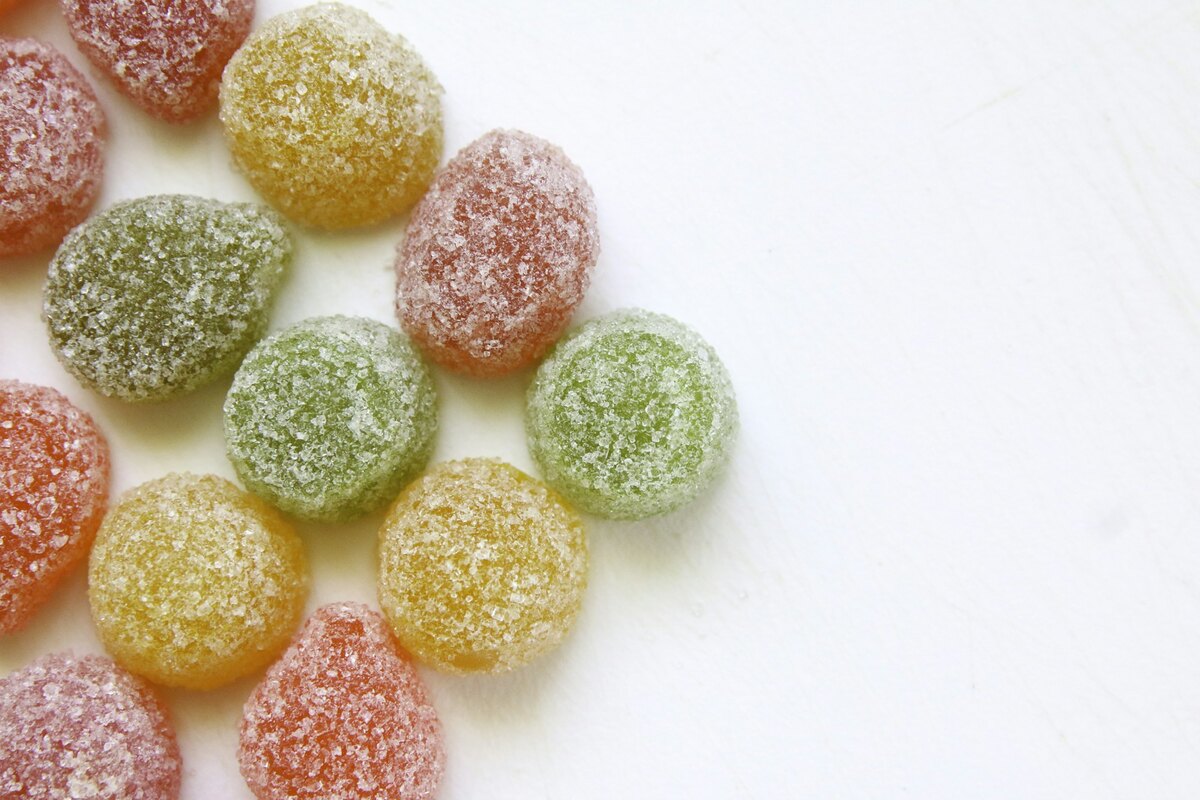
On most aisles the advice that works is read the ingredients, because a dyed product usually has an undyed sibling beside it. Candy is the exception: here the color is doing the work the product exists to do, so the mainstream options are dyed nearly across the board and label- reading alone will not get you there.
Brands in this guide
- YumEarth1 pick
- Surf Sweets1 pick · safety review
- UNREAL1 pick
- Torie & Howard1 pick · safety review
Our picks
Cheat-sheet winners
The winners from our cheat sheet, each chosen for one job.

Candy and gummies
YumEarth Gummy Bears Snack Pack Organic
Colored with a named concentrate blend of carrot, blackcurrant, apple, pumpkin, radish, lemon and paprika (assorted-flavor bears); contains gelatin, so not vegetarian.
- No Red Dye 40
- Dye-Free
Ingredient panel checked · source
$6.99View on Amazon
The shelf where reading the panel stops helping
On most aisles the advice that actually works is read the ingredients, because a dyed product usually has an undyed sibling sitting beside it — the plain crisps next to the flavored ones, the unfrosted cereal next to the frosted. Candy is the exception. Here the color is doing the work the product exists to do, so the mainstream options are dyed nearly across the board and reading the panel mostly confirms what you already suspected.
Which means this page is organized around substitution by format, not by brand. A child who asked for a sour worm has not asked for a gummy bear, and handing over the wrong shape is the same refusal as handing over an apple.
What Red 40 is doing in candy specifically
It is the red, obviously. But it is also a component of the purple, the orange and most of the browns in a mixed bag, which is why removing it is harder than removing any of the other five dyes in the voluntary phase-out. A manufacturer that drops Red 40 has to re-engineer most of the assortment, not one sweet — and that is the honest reason the candy aisle has moved slower than the crisp aisle since April 2025.
The plant sources that replace it — beet, black carrot, radish, paprika, annatto — behave differently. They are more sensitive to heat and light, they can shift shade over a long shelf life, and they cost more. When a dye-free sweet looks slightly duller than the one it replaced, that is what you are seeing, and it is worth saying plainly rather than pretending the swap is invisible.
Start with the format you are actually replacing
The four sections below are the four formats that cover most of what gets asked for. Each names what to check on that specific shelf, because the traps differ: on gummies it is the color count against the panel, on sours it is the coating, on shelled chocolate it is the word Lake.
If you want the wider picture first — where Red 40 shows up beyond the sweet aisle, and how the two regulatory tracks differ — start with what Red Dye 40 is found in. For the other snack categories, the full dye-free snack list covers fruit snacks, chips, cookies and cereal. Drinks are their own shelf, and the color is easy to miss in something you pour into a water bottle — the dye-free water flavors list covers enhancers and flavor drops.
Prices and availability on the cards below update from the live catalog, so what you see is current.
Our top pick
- No Red Dye 40
- Dye-Free
Addresses: Artificial Dyes, Red Dye 40, Yellow 5 & 6
Ingredient panel checked · source
Gummy bears and fruit gummies
Usually has itThe default request, and close to universally dyed. Red 40 does the red and contributes to the purple and orange, so it is usually the hardest single dye to remove from an assortment — which is why so many "natural" ranges quietly drop the red bear rather than reformulate it.
What to check on this shelf
- Count the colors in the bag against the color sources on the panel — a five-color assortment needs five plant sources, and short lists are a tell.
- "Made with real fruit juice" is about flavor and sweetness, not color.
- Organic certification rules out synthetic color by standard, which makes it the fastest filter on this shelf.
YumEarth, Gummy Bears Snack Pack Organic, 10 Count
Our overall top pick — see the card at the top of this page.
The direct substitute, and the one most likely to pass unnoticed in a party bag. Color comes from a concentrate blend — carrot, blackcurrant, apple, pumpkin, radish, lemon, paprika. Note YumEarth runs more than one coloring blend across its range; the panel we read is the assorted-flavor bears.
Sours and gummy worms
Usually has itA separate ask from bears, and worth treating separately — the shape and the sour coating are the point, and a bear will not settle it. The sour sanding sugar is an extra place color hides, on top of the gummy itself.
What to check on this shelf
- The coating is a second ingredient list in practice — check for color in the sour sugar, not just the gummy.
- Look for an explicit "colors added" line; a panel that names its color sources is doing more than one that stays silent.

- No Red Dye 40
- Dye-Free
Addresses: Artificial Dyes, Red Dye 40, Yellow 5 & 6
Ingredient panel checked · source
The worm shape, with color declared openly on the maker's current panel as carrot, blackcurrant, blueberry, annatto and turmeric extracts rather than buried behind "natural flavors". That transparency is the pattern worth rewarding on this shelf.
Candy-shelled chocolate
Usually has itShells are the classic home of Lake pigments — the aluminum-bound form of a dye that survives a coating process and keeps its color against fat and moisture. Anything with a hard candy shell should be assumed dyed until the panel says otherwise.
What to check on this shelf
- "Lake" in an ingredient name means a dye, not a different additive — Red 40 Lake is Red 40.
- A shell colored from plants is the hard case, so a brand that manages it usually says so on the front of the pack.

- No Red Dye 40
- Dye-Free
Addresses: Artificial Dyes, Red Dye 40, Yellow 5 & 6
Ingredient panel checked · source
The closest like-for-like swap for a candy-shelled chocolate, with the shell colored from turmeric, beet juice and spirulina extract. Getting that look without Lake pigments is the whole trick.
Hard candy and lollipops
Often has itLower risk than the gummy shelves, mostly because the organic and "natural" ranges here are long-established and easy to find. The mainstream brands are still dyed, but the substitutes are unusually good and often cheaper per sweet.
What to check on this shelf
- Organic certification is the fastest filter — the National Organic Program prohibits synthetic color additives.
- Boiled sweets keep almost indefinitely, so this is the shelf where buying a tin once is a real strategy.

- USDA Organic
- Dye-Free
Addresses: Artificial Dyes, Red Dye 40
Manufacturer statement checked · source
The tin-in-a-handbag format, and the one pick on this page recorded from its USDA Organic certification rather than a line-by-line panel read. The certification is the stronger claim of the two — it is audited — but it is a different kind of evidence, and the card says which.
The ones people ask about
Straight answers about the packets already in the cupboard. Formulations change and varieties differ, so the panel on your box is always the final word.
- Do Skittles have Red 40?Contains Red 40
- Yes — along with Yellow 5, Yellow 6 and Blue 1. The company announced a move away from artificial colors some years ago and then reversed it. On Skittles specifically there is no reformulated version to look for; substitution is the only route.
- Do Starburst have Red 40?Contains Red 40
- Yes, in the red and pink pieces, with Yellow 5 and Yellow 6 elsewhere in the assortment. The chew itself is the colored part, so there is no picking around it the way you can with a shelled sweet.
- Do Sour Patch Kids have Red 40?Contains Red 40
- Yes, plus Yellow 5, Yellow 6 and Blue 1. Worth knowing that the sour coating is a separate source of color from the sweet underneath, which is why "just avoid the red ones" does not work on sours.
- Is any mainstream candy going dye-free?Varies by flavor
- Some. The April 2025 voluntary phase-out request has produced real reformulations in snacks — Doritos and Cheetos now have dye-free lines — but candy has moved slowest, because color is more load-bearing there than anywhere else in the shop. Assume the mainstream candy aisle stays dyed for now.
The traps on this shelf
- "Made with real fruit juice" — A claim about flavor and sweetness. It is fully compatible with Red 40, and on candy it very often coexists with it.
- Anything with "Lake" in the ingredient name — A Lake is a dye — the aluminum-bound form used because it survives coatings. Red 40 Lake is Red 40.
- Assuming the sour coating is clean — The sanding sugar on a sour sweet is a second color source on top of the gummy. Both need checking.
- "No artificial flavors" on a candy pack — A different ingredient category from color, and one of the most common ways a dyed sweet reads as clean at a glance.
- Seasonal and character editions — Holiday and film tie-in versions of an otherwise clean sweet are routinely recolored for the occasion.
How we choose
We read the ingredient panel of every pick for FD&C colors and their Lake variants, and record the date we read it — it is on each card. On this shelf we also organize by format rather than by brand, because a child who asked for a sour worm has not asked for a gummy bear, and a swap that ignores that is a refusal wearing a substitute's clothes.
- No FD&C synthetic color, including Lake variants, on the panel we read
- Matches the FORMAT being replaced — shape and texture, not just flavor
- Color from named plant sources, declared on the panel
- Widely available rather than a specialist order
- No active recall on the pick
Every source we cite is checked against our criteria first — see how we check our sources.
What the research says
Of roughly 10,000 chemicals allowed in food or in contact with food, more than 3,000 have never been substantively reviewed by the FDA. Under the self-affirmed or 'secret' GRAS pathway a company can conclude on its own that an ingredient is safe and begin using it without notifying the FDA, so the number of such determinations is unknowable.
— A Center for Science in the Public Interest report authored by Thomas Galligan, PhD found ...
How food companies sneak new ingredients past the FDA — Center for Science in the Public Interest
Pound for pound, children are breathing more air, eating more food, and drinking more water, so they have greater exposure.
— Leonardo Trasande, MD, MPP of NYU Langone Health explains that ...
Toys, Shampoo, Makeup - Dr. Leonardo Trasande Is Exposing the Dangerous Chemicals in Everyday Products — NYU Langone Health
A flexible 9-day road map for safely introducing top allergens
— Malina Malkani, MS, RDN, CDN told BenBella Books (distributed by Simon & Schuster), ISBN 9781637745359 that ...
Safe and Simple Food Allergy Prevention: A Baby-Led Feeding Guide to Starting Solids and Introducing Top Allergens — BenBella Books (distributed by Simon & Schuster), ISBN 9781637745359 (2024-11-12)
Common questions
The cheat sheet for this
Part of the Food Dyes hub— the rest of our coverage in this category.
Every dye-free snacksproduct we've reviewed— what we'd buy, what we'd skip, and where each one stands.