
Non-toxic cleaning products: what we actually use
You need far fewer cleaning products than the aisle suggests — and buying fewer is the change that does most of the work. Here are the ones we keep, why fragrance is the thing to screen for first, and what the certifications on the label are actually worth.
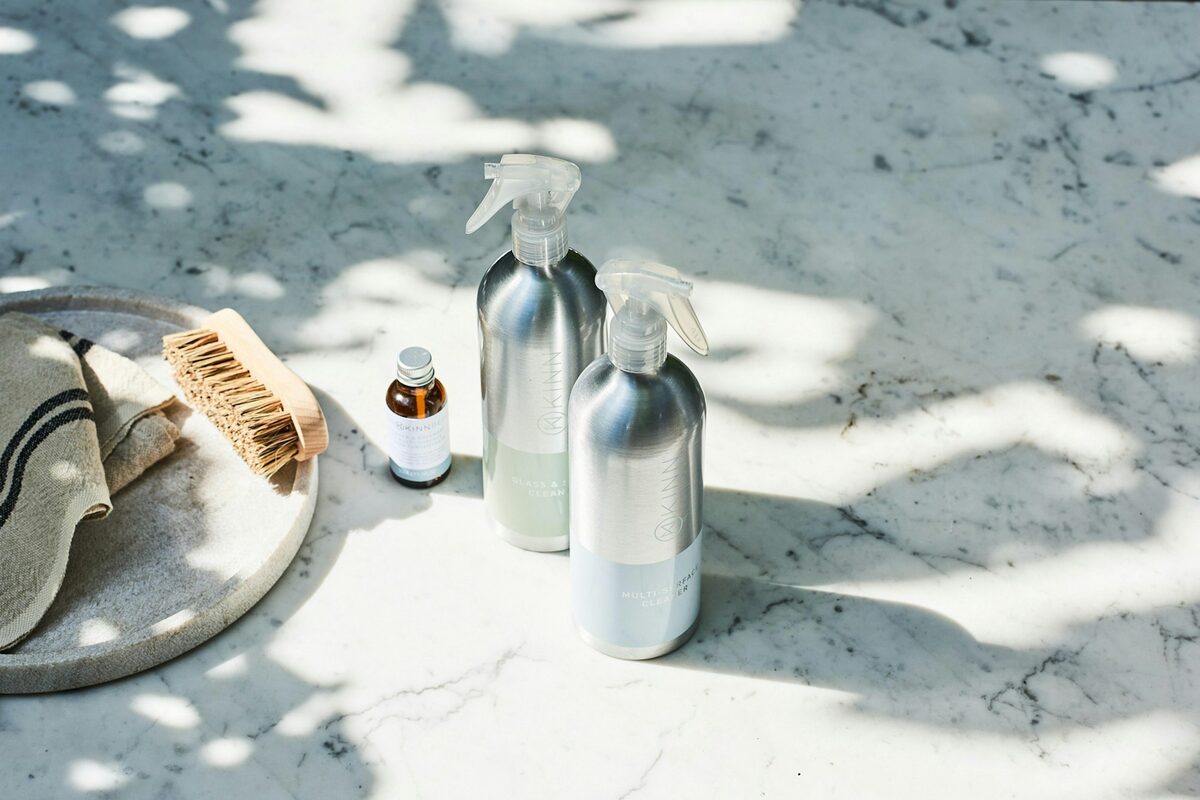
The single most effective change here is not switching brands — it is owning fewer products. A kitchen needs an all-purpose spray, a dish soap, a laundry detergent and something mildly abrasive. Fewer products means fewer ingredients in the house and fewer things to mix by accident.
Brands in this guide
- ATTITUDE1 pick
- Puracy1 pick
 BLUELAND1 pick · safety review
 Dr. Bronner's1 pick · safety review
 Branch Basics1 pick · safety review
Buy fewer things
The single most effective change in this category is not switching brands. It is owning fewer products.
A kitchen needs an all-purpose spray, a dish soap, a laundry detergent, and something mildly abrasive for the bathroom. That is close to the whole list. The rest of the aisle is largely the same chemistry, repackaged for a specific room and marketed as though the room required it.
Cutting your shelf in half halves the number of formulations in your home, and it does it before you have read a single ingredient list.
The one thing to screen for
If you change nothing else, screen for fragrance.
That single word — "fragrance" or "parfum" — can stand in for a large undisclosed mixture, and in cleaning products it has historically been the most common route by which phthalates enter a house. It is also the ingredient most likely to bother anyone with asthma or reactive skin.
After that: quaternary ammonium compounds ("quats" — benzalkonium chloride and relatives), which are common in disinfectant sprays and wipes and are respiratory irritants; and any product that will not tell you what is in it. Cleaning products are not required to disclose the way food and cosmetics are, so full disclosure is a deliberate choice by a brand. Treat it as your minimum bar.
And never mix cleaners. Bleach with ammonia, or bleach with vinegar or any acid, produces toxic gas. This is the genuinely dangerous thing in the cleaning cupboard, and it has nothing to do with whether the products were natural.
What we keep
ATTITUDE's all-purpose spray is the top pick because it is the easiest swap to actually make: inexpensive, widely available, fully disclosed, and it replaces the bottle most people reach for most often.
Puracy's concentrate is the better value if you are willing to dilute — you stop paying to ship water, and the cost per bottle drops a lot.
Blueland's tablet system answers the plastic problem as much as the chemical one: a refillable bottle and tablets you drop into water, rather than a new spray bottle every month.
Dr. Bronner's Baby Unscented castile soap is the base for most homemade recipes and a genuinely versatile product on its own. Get the unscented version — the scented ones are pleasant and defeat the point of screening for fragrance.
Branch Basics is the premium end. One concentrate dilutes into several different cleaners. Expensive up front, and the cost per use is low if you stick with it.
On the certifications
You will see EWG Verified on several of these, including our top pick, and it is worth understanding what it is.
It means a product met EWG's ingredient criteria and disclosed its full formulation — a genuinely useful signal. It is also a paid certification program: brands apply and pay to carry the mark. So it tells you a company chose to submit and passed. It does not tell you that unmarked products failed, because most never applied.
We flag this partly because we have written about our own reservations with EWG's cleaning database, where we found rated ingredient lists that did not match the labels on the products in front of us. EWG does important work and we use it. We just do not treat any single rating as the end of the question — and neither should you with ours.
EPA Safer Choice is the other mark worth knowing. It is a government program rather than a paid certification, and it evaluates every ingredient in a formulation against safety criteria. Where you see it, it is meaningful.
If you would rather make it
The honest version: vinegar and baking soda handle a lot, and they cost almost nothing.
Two things people get wrong. Mixed together, they neutralise each other — the dramatic fizzing is mostly the reaction consuming both, so use them separately rather than combining them into a paste and expecting more. And keep vinegar off natural stone, where the acid etches the surface.
One caution before building a routine around a classic recipe: EPA's own risk assessment for boron compounds, which includes borax, sets its reference dose based on decreased fetal weight in animal developmental-toxicity studies — a real enough concern that it rules out a lot of the homemade dishwasher detergent formulas in circulation.
Our rule here is the same as everywhere else on this page — less is more. A handful of things, used properly, will keep a house clean.
The one cleaning job most households hire out is carpet, and the questions there are different: what is in the solution, how long the carpet stays damp, and whether a fragrance lingers once it dries. Our carpet-cleaning review covers what to ask before you book, whichever company you use.
Our top pick

ATTITUDE all-purpose spray — the cheapest way to replace the one bottle you use most, and the ingredients are fully disclosed.
Also worth considering

Puracy all-purpose concentrate — you dilute it yourself, which drops the cost per bottle sharply and stops you shipping water.

Blueland multi-surface starter set — tablets plus a refillable bottle; the plastic answer as much as the chemical one.

Ingredient panel checked · source
Dr. Bronner's Baby Unscented castile soap — the base for most DIY recipes, and unscented matters more than the price.
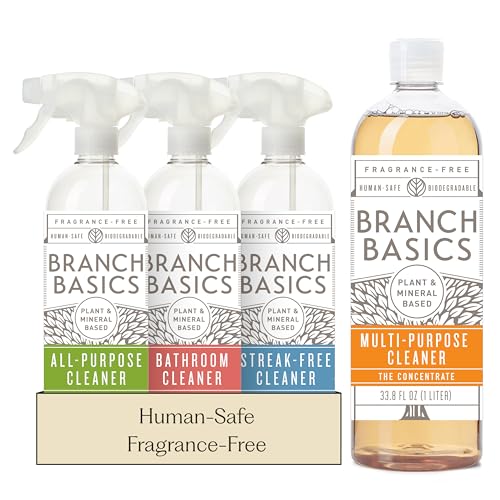
Branch Basics essentials kit — the premium end. One concentrate dilutes to several cleaners; expensive up front, cheap per use.
What to screen for on a cleaning label
- "Fragrance" or "parfum" — The single highest-value filter. One word can cover a large undisclosed mixture, and in cleaning products it is the most common route by which phthalates enter a home.
- Quaternary ammonium compounds ("quats") — Benzalkonium chloride and relatives, common in disinfectant sprays and wipes. Respiratory irritants and a recognized asthma trigger with heavy use.
- Undisclosed ingredient lists — Cleaning products are not required to declare every ingredient the way food and cosmetics are. A brand that discloses in full has made a deliberate choice — treat that as the baseline requirement.
- Antibacterial claims on everyday surfaces — For routine cleaning, soap and water plus friction does the job. Reserve disinfectants for genuine need — illness in the house, raw meat — rather than daily use.
- Mixing anything with bleach — The most dangerous thing in this whole category, and it is not an ingredient question. Bleach plus ammonia, or bleach plus vinegar or another acid, produces toxic gas. Never mix cleaners.
- Borax, if you are going the DIY route — It has a reputation as the wholesome option, but EPA's own risk assessment for boron compounds — which includes borax — sets its safety threshold based on decreased fetal weight seen in animal developmental-toxicity studies. Worth knowing before a homemade routine is built on it.
How we choose
We start from full ingredient disclosure — a brand that will not tell you what is in the bottle cannot be assessed. Then we screen out added fragrance, quats and antibacterial claims aimed at everyday surfaces. We favor concentrates and refills because they cut both cost and plastic, and we prefer a short shelf of products that genuinely work over a long one that scores well.
- Full ingredient disclosure
- Fragrance-free, or fragrance from named essential oils
- No quats or routine antibacterial claims
- Concentrate or refill format where available
- Actually cleans — tested in a real kitchen
Every source we cite is checked against our criteria first — see how we check our sources.
What the research says
Fragranced products-including air fresheners, dryer sheets, and perfume-and sunscreens had the largest number of target chemicals and some of the highest concentrations.
— Robin Dodson, ScD of Silent Spring Institute explains that ...
Consumer Products Contain Potentially Harmful Chemicals Not Listed on Labels — Silent Spring Institute (2012-03-08) (how we check this source)
Farmer co-led the HOMEChem experiment, in which roughly 60 scientists from 13 universities measured indoor chemistry during typical household activities in a test house. Cooking produced the largest concentrations of potentially toxic compounds, including benzene, formaldehyde, acrolein and isocyanic acid. Farmer's team reported that most emitted compounds occur in low quantities and can be cleared through ventilation.
— Delphine Farmer, PhD of Colorado State University College of Natural Sciences explains that ...
Indoor air quality experiments show exposure risks while cooking, cleaning — Colorado State University College of Natural Sciences (2022-09-21)
This paper is a key initial step towards providing actionable and practical information on how to protect yourself and clean your home.
— Delphine Farmer, PhD of Colorado State University College of Natural Sciences explains that ...
Wildfire smoke may linger in homes long after initial blaze — Colorado State University College of Natural Sciences (2023-10-13)
Sources
- EPA Safer Choice — standard and certified product list — U.S. Environmental Protection Agency (how we check this source)
- IRIS Chemical Assessment Summary: Boron and Compounds (CASRN 7440-42-8) — U.S. Environmental Protection Agency
Side by side
| Attribute | ATTITUDEAll Purpose Cleaner Spray | PuracyAll Purpose Cleaner Concentrate | BLUELANDMulti-surface Spray Cleaner | Dr. Bronner'sBaby Unscented Pure-Castile Liquid Soap | Branch BasicsSurface Cleaning Kit: 33.8 oz Concentrate |
|---|---|---|---|---|---|
| Why it's here | Our top pick | — | — | — | — |
| Price | $6.75 | $19.99 | $21.99 | $17.17 | $67 |
| Availability | In stock | In stock | In stock | In stock | In stock |
Common questions
Cheat sheets for this
Part of the Cleaning Products hub— the rest of our coverage in this category.
Every cleaning & laundryproduct we've reviewed— what we'd buy, what we'd skip, and where each one stands.