
Cheat Sheet: Safer diaper rash cream
One winner for each way people buy diaper rash cream.
Almost every diaper rash cream worth using is built around the same active ingredient — zinc oxide — at a different percentage, in a different base. The differences that actually matter are the concentration, whether it's fragranced, and how forthcoming the company is about the rest of the tube.
How we scoreHow we earnChecked September 9, 2026
Our winner for each way people buy
How we scoreHow we earnChecked September 9, 2026
Best overall

Badger
Baby Diaper Rash Cream10% zinc oxide in an organic sunflower oil and beeswax base with calendula. Badger has a full SafeMama brand review.
Meets our published criteria, as of Sep 9, 2026
$14.99ViewHeavier barrier (25%)

Babo Botanicals
Sensitive Baby Fragrance-Free Diaper Cream25% zinc oxide, on the higher end of the FDA's approved range, for a rash that needs a heavier barrier than a 10% to 14% cream. Save it for a rash that is not responding to a lower-concentration cream.
Meets our published criteria, as of Sep 9, 2026
$11.90ViewFragrance-free
Babo Botanicals
Sensitive Baby Fragrance-Free Diaper CreamFragrance-free base with shea and cocoa butter; fragrance is the most common avoidable irritant on skin that is already inflamed. At 25% zinc oxide it is a heavy paste, so see the heavier-barrier note above.
Meets our published criteria, as of Sep 9, 2026
$11.90ViewEveryday use, mild rash (12%)
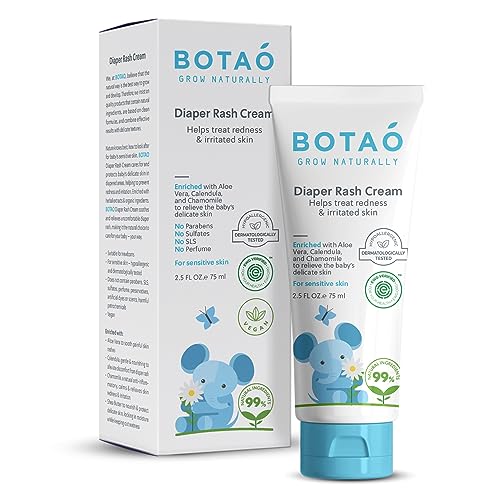
Botao
Baby's Natural Diaper Cream12% zinc oxide with aloe, a lower concentration than the 14% and 25% creams, for a mild or occasional rash. Its current FDA-filed label lists lavender oil and oregano extract, so it is not the pick if you are avoiding essential oils on a rash.
Meets our published criteria, as of Sep 9, 2026
$9.90View
What to avoid
- No stated zinc oxide percentage — makes it hard to judge how much of a barrier you're actually getting
- Added fragrance — the most common irritant in this category, on skin that's already inflamed
- Talc — largely phased out of this category, but still worth a label check — the concern is inhalation, particularly with powder formats
- "Natural" as a stand-in for a percentage — a real, verifiable claim about the carrier — it tells you nothing about how much zinc oxide is actually in the tube
What to look for
- A stated zinc oxide percentage — tells you where a cream sits in the FDA's approved range (roughly 1% to 40%)
- Fragrance-free labeling — the safer default once skin is already inflamed
- EWG Verified — a real bar — no ingredients on EWG's unacceptable or restricted lists, full formula disclosure — but a program brands apply and pay to join
- Brand recall history stated rather than implied away — a firm-initiated recall of specific lots, later closed, is the system working, not a red flag by itself
What the label card means
What to skip, and why
No stated zinc oxide percentage
Makes it hard to judge how much of a barrier you're actually getting.
Added fragrance
The most common irritant in this category, on skin that's already inflamed.
Know the risks: Fragrance not fully itemizedTalc
Largely phased out of this category, but still worth a label check — the concern is inhalation, particularly with powder formats.
Know the risks: Talc"Natural" as a stand-in for a percentage
A real, verifiable claim about the carrier — it tells you nothing about how much zinc oxide is actually in the tube.
Where to buy
- AmazonEvery pick here is an Amazon listing (checked 2026-10-16).
- VitacostCarries the Badger Baby Diaper Rash Cream (2.9 fl oz, 10% zinc oxide) and the Babo Botanicals Sensitive Baby Fragrance-Free diaper cream (25% zinc oxide); product pages read 2026-10-16.
- Grove CollaborativeCarries The Honest Company Diaper Rash Cream, 2.5 oz, 14% zinc oxide (checked 2026-10-16).
The full guide: how we chose
Zinc oxide is the FDA-recognized active ingredient for diaper rash — an approved skin protectant under the agency's OTC monograph, at concentrations from about 1% up to 40% in ointment form. Every pick on this page uses it. What separates them is the percentage (higher generally means a thicker, more protective barrier), whether the base is fragrance-free, and what else is disclosed. "Natural" and "organic" describe the carrier oils and butters around the zinc oxide, not a different active ingredient.
Why this list is short
Diaper rash cream is one of the more settled corners of baby skin care. There's a single FDA-recognized active ingredient doing almost all of the work — zinc oxide — covered under the agency's OTC monograph for skin protectants (M016, which lists zinc oxide at 1 to 25 percent, and above 25 up to 40 percent in an ointment dosage form). Every cream on this page uses it. Nothing here is a novel or unregulated active ingredient making an unusual claim.
What actually varies between tubes is: how much zinc oxide is in it, whether the rest of the formula carries added fragrance, and how forthcoming the company is about the rest of the label. That's a shorter, more answerable set of questions than most categories on this site, which is why this list is short rather than exhaustive.
Reading the label
The percentage is the headline number. A cream stating "10% zinc oxide" or "25% zinc oxide" is telling you where it sits in the FDA's approved range. Generally, more zinc oxide means a thicker, more occlusive paste — better as a barrier for a stubborn rash, harder to spread and clean off for routine use. A mild, occasional rash doesn't need the same concentration as a persistent one that hasn't responded to a lighter cream.
Fragrance-free is the safer default, and more than a preference once skin is already broken down. Added fragrance is the most common avoidable irritant in this category, and it does nothing for the rash itself.
"Natural" and "organic" describe the carrier, not the active ingredient. Sunflower oil, beeswax, shea butter, calendula — these are real, checkable claims about what surrounds the zinc oxide, and they're worth something for skin feel and for avoiding synthetic preservatives. They tell you nothing about how much zinc oxide is actually in the tube, which is the ingredient doing the protective work. If it's the calendula specifically you're after — for general dry, chapped, or wind-burned skin outside the diaper area — our calendula cream cheat sheet covers calendula-forward balms and lotions built for that instead.
What EWG Verified actually checks
Two of the four picks below show the EWG Verified mark on EWG's site, though one of those listings (BOTAO's) dates from 2022 and may not match the current tube. It's worth being precise about what that means rather than treating it as a general safety stamp. It's a specific program: to earn it, a product can't contain anything on EWG's "unacceptable" or "restricted" ingredient lists, has to score green in EWG's Skin Deep database, and the manufacturer has to disclose full ingredients — fragrance included — and follow standard manufacturing practices.
That's a real bar, and it goes further than most personal-care labeling requires. It's also, like any certification, a program a brand applies and pays to participate in — which is why we name it as one useful signal among several rather than the whole verdict on a product.
Our picks
Badger Baby Diaper Rash Cream is the top pick. It's 10% zinc oxide in an organic sunflower oil and beeswax base with calendula, and it comes from a company we've already done independent work on: W.S. Badger Co is family-owned and has been a certified B Corporation since 2011. See our full Badger review for how we checked that.
On recalls, we want to correct something this page used to say. It previously told you we found no CPSC recall history for Badger. That is true and it is also the wrong register to have checked — a zinc oxide diaper cream is an FDA-regulated over-the-counter drug, and FDA's enforcement reports are not blank for this company. Searched on 2026-09-09, they list three W.S. Badger recalls, all closed and none involving this cream:
- September 24, 2013 — two Class II recalls of specific lots of Badger Baby and Badger Kids SPF 30 sunscreen lotion, for microbial contamination (D-324-2014, D-325-2014). Firm-initiated; terminated April 3, 2014.
- January 17, 2025 — a Class III recall of one lot of Badger Adventure Sport sunscreen, because the finished tins were potentially missing the drug-facts label (D-0209-2025). Firm-initiated; terminated July 7, 2025.
A company that finds a contaminated lot and pulls it is the system working. We would still rather you saw the record than a claim of "recall-free brand," which is a phrase we have now stopped using here.
Babo Botanicals Sensitive Fragrance-Free carries the highest zinc oxide concentration here, at 25%, in a fragrance-free base with shea and cocoa butter — a reasonable pick for a rash that needs a heavier barrier than a 10%–14% cream provides. It's also EWG Verified.
BOTAO Baby's Natural Diaper Cream is 12% zinc oxide with aloe in a plant-oil base, and the least expensive of the four per ounce — a solid everyday option at a lower concentration. Two sources disagree about what else is in the tube. EWG's Verified listing, last updated October 2022, shows calendula and no essential oils. The label BOTAO's maker filed with the FDA, which is the current one, lists lavender oil and oregano leaf extract and leaves calendula out of its Drug Facts. If you are avoiding essential oils on an inflamed rash, read the tube before you buy.
The Honest Company Diaper Rash Cream runs 14% zinc oxide and is labeled hypoallergenic and cruelty-free. It's also the easiest of the four to find on a store shelf rather than only online, which matters when a rash shows up and you need something today.
What we didn't include
Creams that don't disclose a zinc oxide percentage on the label or in FDA drug-facts filings, anything built around a different or unproven active ingredient, and anything with an open recall. We'd rather list four verified options than pad this out with picks we can't back up the same way.
Related reading
This page is about the cream, not the diaper. For chlorine bleaching, absorbent gel, fragrance and what cloth-diaper certifications like OEKO-TEX and GOTS actually cover, see our safer diapering cheat sheet.
The swaps, in full
No stated zinc oxide percentage
The FDA's OTC skin protectant monograph covers zinc oxide at roughly 1% to 40%. A cream that doesn't disclose where it falls in that range makes it hard to judge how much of a barrier you're actually getting.
Hides in: the front label or the FDA drug-facts panel — an OTC drug listing has to carry one
Badger Baby Diaper Rash Cream — 10% zinc oxide, organic sunflower oil and beeswax base, NSF/ANSI 305 certified organic, from a brand we've already independently verified. No recall has ever touched this cream; Badger's wider FDA record is not blank, and we say what is on it below.
Babo Botanicals Sensitive Fragrance-Free — 25% zinc oxide, on the higher end of the FDA's approved range, for a rash that needs a heavier barrier.
Ingredient panel checked · source
BOTAO Baby's Natural Diaper Cream — 12% zinc oxide, EWG Verified on a 2022 listing, and the lowest cost per ounce of the four. Its current FDA-filed label lists lavender oil and oregano extract.
The Honest Company Diaper Rash Cream — 14% zinc oxide, hypoallergenic and cruelty-free, widely stocked in stores as well as online.

The Honest Company Diaper Rash Cream, Hypoallergenic, Cruelty-Free, 2.5 oz | Diaper Rash Cream, 2.5 Oz. Zinc Oxide, Hypoallergenic, Cruelty-Free. Moisturizing & Calming Relief For Diaper Rash.
Added fragrance
This is the most common irritant in the category, on skin that's already inflamed. Fragrance-free is the safer default for an active rash, not just a nice-to-have.
Hides in: the ingredient list, usually toward the end
Babo Botanicals Sensitive Fragrance-Free — 25% zinc oxide in a fragrance-free base with shea and cocoa butter.
Ingredient panel checked · source
What to check on a diaper rash cream label
- No stated zinc oxide percentage — The FDA's OTC skin protectant monograph covers zinc oxide at roughly 1% to 40%. A cream that doesn't disclose where it falls in that range makes it hard to judge how much of a barrier you're actually getting.
- Added fragrance — This is the most common irritant in the category, on skin that's already inflamed. Fragrance-free is the safer default for an active rash, not just a nice-to-have.
- Talc — Largely phased out of this category, but still worth a label check — inhalation risk is the concern, particularly with powder formats.
- "Natural" as a stand-in for a percentage — Natural and organic carrier oils are a real, verifiable claim about the base. They tell you nothing about how much zinc oxide is in the tube, which is the part doing the protective work.
How we choose
Every pick here uses zinc oxide as its FDA-recognized active ingredient, and we say what percentage where the manufacturer discloses it. We treat fragrance-free as the safer default for inflamed skin, and we're specific about what a third-party mark like EWG Verified actually checks rather than let it stand in as a general safety score.
- Zinc oxide as the stated active ingredient, at a disclosed percentage
- Fragrance-free, or fragrance clearly disclosed
- No talc
- Company will name what's independently certified, and what isn't
- No open recall on the product itself, and any brand recall history stated rather than implied away
Every source we cite is checked against our criteria first — see how we check our sources.
What the research says
Child passenger safety technicians across the country report identifying one to two unregulated or counterfeit seats each month during routine safety checks.
— In 2026-02-07 testimony, Ben Hoffman, MD, CPST-I cited ...
Public testimony on counterfeit car seats, Oregon House Committee on Commerce and Consumer Protection — Oregon Legislative Information System (2026-02-07)
At just 30 miles per hour-a speed consistent with many urban and residential crashes-the counterfeit seat completely disintegrated
— In 2026-02-07 testimony, Ben Hoffman, MD, CPST-I cited ...
Public testimony on counterfeit car seats, Oregon House Committee on Commerce and Consumer Protection — Oregon Legislative Information System (2026-02-07)
The 2022 AAP policy statement (Moon et al.) states that sitting devices - car seats, strollers, swings, infant carriers, and infant slings - are not recommended for routine sleep at home or in the hospital, particularly for infants under 4 months of age.
— According to Pediatrics 150(1), American Academy of Pediatrics guidance co-authored by Rachel Y. Moon, MD, ...
Sleep-Related Infant Deaths: Updated 2022 Recommendations for Reducing Infant Deaths in the Sleep Environment — Pediatrics 150(1), American Academy of Pediatrics
Sources
- OTC Monograph M016: Skin Protectant Drug Products for Over-the-Counter Human Use (zinc oxide 1–25%, and above 25 to 40% in an ointment dosage form) — U.S. Food and Drug Administration
- Drug enforcement reports for recalling firm "Badger" (checked 2026-09-09) — U.S. Food and Drug Administration (openFDA)
- Recalls database (checked for W.S. Badger, 2026-09-09) — U.S. Consumer Product Safety Commission (how we check this source)
Common questions
Every baby gear & diapersproduct we've reviewed— what we'd buy, what we'd skip, and where each one stands.