
Cheat sheet: safer hand sanitizers
One winner for each way people buy hand sanitizers.
The instinct is to reach for 'alcohol-free' as the gentler choice. It's backwards — alcohol is what makes a hand sanitizer work, and the FDA's own contamination warnings have targeted imported and off-brand product, not the alcohol itself. Here's what actually makes a hand sanitizer both effective and worth trusting.
How we scoreHow we earnChecked August 31, 2026
Our winner for each way people buy
How we scoreHow we earnChecked August 31, 2026
Best overall

The Honest Company
Hand Sanitizer Spray62% ethyl alcohol, with no fragrance or colorant on a five-item inactive list (aloe, calendula and chamomile extracts, glycerin, water).
Meets our published criteria, as of Aug 31, 2026
$3.99ViewFragrance-free gel, travel size

EO
Hand SanitizerEthanol 62% per the maker's page, and no fragrance ingredient on its inactive list. Sold as six 2 fl oz bottles, which suits a diaper bag, a car and a school bag.
Meets our published criteria, as of Aug 31, 2026
$29.94ViewScented, every scent ingredient named

Everyone for Every Body
Everyone Hand Sanitizer Spray62% ethanol, scented with lemon peel oil and an organic coconut flavor extract. The label names the extract's components (vanillin, heliotropine and two lactones) instead of an undisclosed "Fragrance".
Meets our published criteria, as of Aug 31, 2026
$23.49ViewScented, with an added "Fragrance"
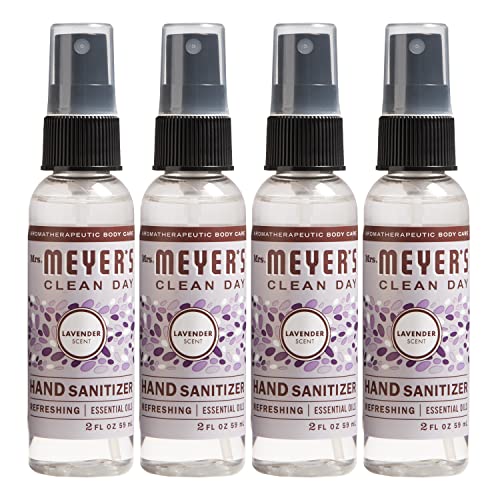
Mrs. Meyer's Clean Day
Hand Sanitizer Spray62% ethyl alcohol, scented mainly with lavender and orange peel oil. Its label also lists a small added "Fragrance", so it is not a clean exception to this page's fragrance advice.
Meets our published criteria, as of Aug 31, 2026
$18.83ViewPump bottle for home

EO
Hand SanitizerEthanol 62% per the maker's page, scented with lavender essential oils. Sold as two 8 fl oz bottles for a sink or entryway.
Meets our published criteria, as of Aug 31, 2026
$23.98View
What to avoid
- No stated alcohol percentage — you can't confirm it clears the 60% threshold CDC and FDA both cite as the floor for effectiveness
- "Alcohol-free" marketed as gentler — almost always benzalkonium chloride (BZK) based, which the FDA hasn't found as effective as alcohol
- No manufacturer name or US address — the 2020-2021 contaminated products were almost entirely small-batch and imported, frequently with no verifiable manufacturer
- Methanol or 1-propanol on the ingredient list — neither belongs in hand sanitizer; methanol is toxic through skin absorption and can be life-threatening if ingested
- Synthetic fragrance where you don't need it — not a safety issue on the level of the above, just an easy filter once alcohol content and sourcing are settled
What to look for
- Alcohol percentage of at least 60% — the number that actually determines whether the bottle does its job
- Recognizable US brand with a traceable supply chain — the real defense against the 2020-2021 methanol-contaminated imports
- No methanol, 1-propanol, or BZK as the primary active — none of those match alcohol's effectiveness and safety profile
- Fragrance-free or essential-oil scented — one less thing for sensitive skin to react to, once alcohol content and sourcing check out
What the label card means
What to skip, and why
No stated alcohol percentage
You can't confirm it clears the 60% threshold CDC and FDA both cite as the floor for effectiveness.
"Alcohol-free" marketed as gentler
Almost always benzalkonium chloride (BZK) based, which the FDA hasn't found as effective as alcohol.
No manufacturer name or US address
The 2020-2021 contaminated products were almost entirely small-batch and imported, frequently with no verifiable manufacturer.
Methanol or 1-propanol on the ingredient list
Neither belongs in hand sanitizer; methanol is toxic through skin absorption and can be life-threatening if ingested.
Synthetic fragrance where you don't need it
Not a safety issue on the level of the above, just an easy filter once alcohol content and sourcing are settled.
Know the risks: Fragrance not fully itemized
Where to buy
The full guide: how we chose
The safer choice here is not the one with less alcohol — it's the one with enough of it, from a brand you can verify. Hand sanitizer needs at least 60% alcohol to work against most germs; the FDA's real hand-sanitizer scandal was methanol-contaminated imports, not ethanol itself. Check the label for the alcohol percentage, skip anything that doesn't state one, and treat sanitizer as a backup to soap and water, not a replacement for it.
The instinct that gets this backwards
The pattern shows up constantly in this category: a parent scanning a hand sanitizer label looks for "alcohol-free" the same way they'd look for "fragrance-free" or "paraben-free" — as the gentler, safer option. On sanitizer specifically, that instinct is wrong.
Alcohol is what makes a hand sanitizer work. CDC and FDA guidance is consistent on this: a sanitizer needs at least 60% alcohol — ethanol or isopropyl — to be effective against most of the germs it's meant for. Formulas marketed as alcohol-free are almost always built on benzalkonium chloride (BZK) instead, and the FDA has not found BZK to match alcohol's effectiveness across that range of germs. BZK carries its own irritant and antimicrobial-resistance questions on top of that. There isn't a version of this category where skipping the alcohol is the careful choice.
What the FDA recalls were actually about
The real hand-sanitizer safety story of the past several years wasn't about ethanol. Starting in 2020 and running through 2021, the FDA found that a large share of hand sanitizer imported from Mexico — along with product from a handful of other countries and a few US manufacturers — was contaminated with methanol or 1-propanol, neither of which belongs in a hand sanitizer. Methanol is toxic through skin absorption and can be life-threatening if ingested, which matters directly for a product that ends up on kids' hands right before those hands end up near their mouths.
The FDA placed a countrywide import alert on Mexican-made hand sanitizer and kept an updated do-not-use list running to more than 200 products. It was a real and serious problem — and it was almost entirely confined to small-batch or unverified imports, not the recognizable US brands most households already had in the cabinet. The lesson isn't "avoid alcohol." It's "buy from a brand you can actually trace."
Why the FDA still lists alcohol as "not yet determined"
You'll sometimes see this cited as if it were a warning sign: the FDA's 2019 final rule on over-the-counter antiseptic rubs formally found 28 of 31 proposed active ingredients not generally recognized as safe and effective, and banned them. Ethyl alcohol, isopropyl alcohol, and benzalkonium chloride were deferred rather than ruled on, pending more data. That's an unfinished piece of a decades-old OTC drug review, not a new finding about pandemic-era hand sanitizer, and it isn't evidence against alcohol specifically — it's the FDA declining to close the file until it has more to go on.
Our picks
Every pick on this page states its alcohol content plainly, and all of them clear the 60% threshold with room to spare.
The Honest Company Hand Sanitizer Spray, Fragrance-Free is the top pick: 62% ethyl alcohol, no fragrance and no colorant on its inactive list, from a recognizable US brand. Fragrance-free is the same filter we favor everywhere else in this category — it's one less thing for sensitive skin to react to, and it does nothing to change how well the alcohol itself works.
Mrs. Meyer's Clean Day Hand Sanitizer Spray, Lavender matches it at 62% ethyl alcohol, scented primarily with lavender and orange peel oil. Its ingredient list also names an added "Fragrance" on top of those two essential oils, so it isn't fully free of the undisclosed-fragrance question this page raises above — a reasonable pick if fragrance-free isn't a strict requirement in your house, but not a clean exception to the "check for 'Fragrance' on the label" advice.
Everyone Hand Sanitizer Spray, Coconut Lemon is also 62% alcohol (ethanol) and formulated without benzalkonium chloride. Its scent is lemon peel oil plus an organic coconut flavor extract, and the label names that extract's components (vanillin, heliotropine, gamma-nonalactone and gamma-octalactone) rather than hiding them behind "Fragrance". That is not the same as fragrance-free, and those aroma compounds are not essential oils. A solid third option if you want variety across a diaper bag, car, and kitchen without stepping down on alcohol content anywhere.
We don't have ratings data for these picks yet, so treat the alcohol percentage and label transparency as the main signal — that's the part that actually determines whether the bottle does its job.
Reading a hand sanitizer label yourself
Look for a stated alcohol percentage of 60% or higher — ethyl alcohol, ethanol, and isopropyl alcohol are all fine, as long as the number is there. A real manufacturer name and US address on the bottle matters more here than in most personal-care categories, given what the 2020-2021 recalls actually targeted. Skip anything listing methanol or 1-propanol outright — neither should appear on a hand sanitizer label at all. Beyond that, fragrance-free or essential-oil-scented is a nice-to-have, not a safety filter, once the alcohol content and sourcing check out.
One thing worth remembering
Hand sanitizer is a backup, not a replacement for soap and water. CDC and FDA guidance both say the same thing: wash hands when soap and water are available, and reach for sanitizer when they aren't. A travel-size bottle in the diaper bag is exactly what this category is for.
The swaps, in full
"Alcohol-free" hand sanitizer, marketed as the gentler choice
It's a common assumption, and it runs backwards. Alcohol-free formulas are almost always built on benzalkonium chloride (BZK), which the FDA has not found to be as effective as alcohol against the range of germs sanitizer is meant to handle, and which carries its own irritant and antimicrobial-resistance concerns.
Hides in: Front-of-bottle marketing claims, versus the Active ingredient line that states the actual alcohol percentage
The Honest Company Hand Sanitizer Spray, Fragrance-Free — 62% ethyl alcohol, with no fragrance or colorant on its five-item inactive list, from a recognizable US brand.
Mrs. Meyer's Clean Day Hand Sanitizer Spray, Lavender — same 62% ethyl alcohol, scented primarily with lavender and orange peel oil, though its label also lists a small added "Fragrance" alongside them.
No stated alcohol percentage on the label
If a bottle doesn't print an actual number, you can't confirm it clears the 60% threshold CDC and FDA both cite as the floor for effectiveness against most germs. Skip anything that only says "kills 99.9% of germs" without backing it up with a percentage.
Everyone Hand Sanitizer Spray, Coconut Lemon — 62% ethanol, scented with lemon peel oil and an organic coconut flavor extract whose components the label names, formulated without benzalkonium chloride.
Everyone Hand Sanitizer Spray, 2 Ounce (Pack of 6), Coconut and Lemon, Made with Sugarcane Derived Alcohol with Essential Oils, 99% Effective Against Germs and TSA friendly
Ingredient panel checked · source
What to check on the label
- No stated alcohol percentage — If a bottle doesn't print an actual number, you can't confirm it clears the 60% threshold CDC and FDA both cite as the floor for effectiveness against most germs. Skip anything that only says 'kills 99.9% of germs' without backing it up with a percentage.
- 'Alcohol-free' marketed as the gentler option — It's a common assumption, and it runs backwards. Alcohol-free formulas are almost always built on benzalkonium chloride (BZK), which the FDA has not found to be as effective as alcohol against the range of germs sanitizer is meant to handle, and which carries its own irritant and antimicrobial-resistance concerns.
- No manufacturer name or US address on the label — This is the actual lesson from the 2020-2021 FDA recalls: the contaminated products were almost entirely small-batch and imported, frequently with no verifiable manufacturer. A recognizable US brand with a real address is a meaningfully different risk profile than an unlabeled bottle from a gas station rack.
- Methanol or 1-propanol on the ingredient list — Neither belongs in hand sanitizer. Both showed up as contaminants or substitutes in dozens of 2020-2021 recalls — methanol is toxic through skin absorption and can be life-threatening if ingested, which matters directly for a product kids will get on their hands and then put in their mouths.
- Synthetic fragrance where you don't need it — Not a safety issue on the level of the above, just an easy filter once alcohol content and sourcing are settled — 'fragrance' can cover an undisclosed mixture, and it isn't doing anything for the product's germ-killing job.
How we choose
We start with the number that actually matters: does the label state an alcohol percentage at or above 60%? All five picks here do, at 62%. From there we favor recognizable US brands with a traceable supply chain (the real defense against the 2020-2021 methanol imports), and fragrance-free formulas, or scents whose every ingredient is named on the label, over an undisclosed "Fragrance".
- States an alcohol percentage of at least 60%
- Recognizable US brand, not an unlabeled or generic import
- No methanol, 1-propanol, or benzalkonium chloride as the primary active ingredient
- Fragrance-free, or every scent ingredient named on the label rather than an undisclosed "Fragrance"
- No active recall on the pick
Every source we cite is checked against our criteria first — see how we check our sources.
What the research says
Fragranced products-including air fresheners, dryer sheets, and perfume-and sunscreens had the largest number of target chemicals and some of the highest concentrations.
— Robin Dodson, ScD of Silent Spring Institute explains that ...
Consumer Products Contain Potentially Harmful Chemicals Not Listed on Labels — Silent Spring Institute (2012-03-08) (how we check this source)
One way you avoid phthalates is to choose fragrance-free products.
— Robin Dodson, ScD told Consumer Reports that ...
5 Ingredients to Watch Out For in Beauty and Personal Care Products — Consumer Reports (2026-02-03) (how we check this source)
encourage application of a bland moisturizer titrated to symptomatic benefit (at least once, often multiple times, per day)
— According to Annals of Allergy, Asthma & Immunology guidance co-authored by Peter A. Lio, MD, ...
Atopic dermatitis (eczema) guidelines: 2023 AAAAI/ACAAI Joint Task Force on Practice Parameters — Annals of Allergy, Asthma & Immunology
Sources
- Safely Using Hand Sanitizer — U.S. Food and Drug Administration (how we check this source)
- FDA updates on hand sanitizers consumers should not use — U.S. Food and Drug Administration (how we check this source)
- Safety and Effectiveness of Consumer Antiseptic Rubs; Topical Antimicrobial Drug Products for Over-the-Counter Human Use — Federal Register
- Hand Hygiene Frequently Asked Questions — Centers for Disease Control and Prevention (how we check this source)
Common questions
Every skincare & bathproduct we've reviewed— what we'd buy, what we'd skip, and where each one stands.