
Cheat Sheet: BPA-Free Baby Food Storage Containers
One winner for each way people buy BPA-Free baby food storage containers.
The easiest way to sidestep the BPA-in-plastic question for homemade baby food isn't a better plastic — it's not using plastic. Glass storage jars settle the question by material rather than by label, and they're inexpensive enough that there's no real tradeoff for choosing them.
How we scoreHow we earnChecked August 31, 2026
Our winner for each way people buy
How we scoreHow we earnChecked August 31, 2026
Best overall

WeeSprout
Glass Baby Food Storage Jars with Silicone Lids4 oz glass jars with silicone lids WeeSprout describes as food-grade, the standard batch-freezing size for purees. WeeSprout states the materials are BPA-, PVC- and phthalate-free. Warm with the lid off; WeeSprout says not to microwave the lids.
Meets our published criteria, as of Aug 31, 2026
$29.98ViewLeak-proof lid seal
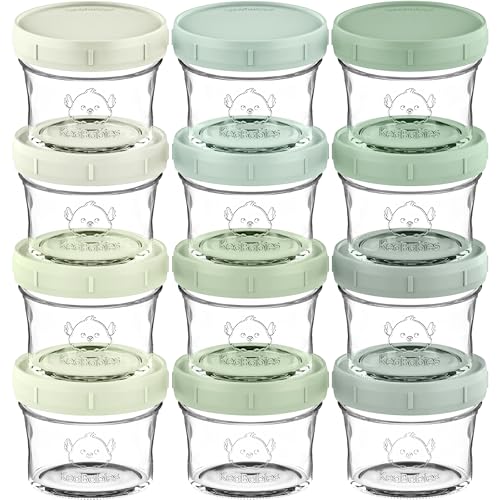
KeaBabies
12pk 4oz Glass Baby Food Containers with Lids4 oz glass, 12 to a set, sold as leak-proof, with a silicone O-ring that comes out of each lid for washing. KeaBabies states the set is free of BPA, lead, phthalates and PVC, but does not say what the lid itself is made of. Warm with the lid off.
Meets our published criteria, as of Aug 31, 2026
$27.96ViewBigger batches and leftovers (8 oz)

Béaba
Glass Baby Food Jars8 oz tempered glass with a clip-on silicone lid, for a larger batch or family leftovers; the 4 oz jars above still cover toddler portions. Béaba states it is made without BPA, lead or phthalates. Microwave with the lid off.
Meets our published criteria, as of Aug 31, 2026
$39.99ViewFreezing purees in cubes (silicone, not glass)
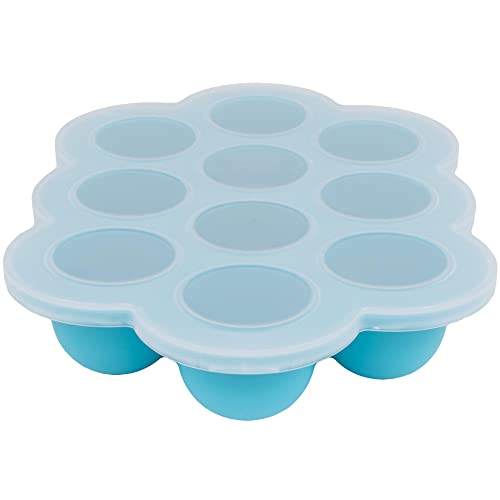
WeeSprout
Silicone Baby Food Freezer TrayThe one non-glass pick, for the freezer only: a tray WeeSprout describes as food-grade silicone, ten 1.5 oz sections, with a clip-on plastic lid. Freeze portions here, pop the cubes into the glass jars above, and warm them in glass, not in the tray. WeeSprout states the materials are BPA-, PVC- and phthalate-free.
Meets our published criteria, as of Aug 31, 2026
$14.98View
What to avoid
- "BPA-free" plastic, treated as equivalent to glass — can still use other, less-studied plasticizers or stabilizers
- Reheating baby food in any plastic — heat is what drives migration out of plastic, BPA-free or not
- A silicone lid with no food-grade claim — hasn't confirmed it meets the FDA standard for food-contact rubber
- Assuming small jars are only for purees — 4oz jars work for finger foods and toddler portions too — no need to rebuy as a baby grows
What to look for
- Glass body, not plastic marketed as BPA-free — no polymer structure to migrate anything into food, at any temperature
- Stated food-grade or food-safe silicone lid — confirms the lid meets the FDA standard for repeated food contact
- Leak-proof or spill-resistant seal — these jars move between freezer, fridge and microwave repeatedly
- Sized for baby-food portions (roughly 4oz) — works across purees, finger foods and toddler snacks — buy once for the whole span
What the label card means
What to skip, and why
"BPA-free" plastic, treated as equivalent to glass
Can still use other, less-studied plasticizers or stabilizers.
Know the risks: BPA & plastic substitutesReheating baby food in any plastic
Heat is what drives migration out of plastic, BPA-free or not.
A silicone lid with no food-grade claim
Hasn't confirmed it meets the FDA standard for food-contact rubber.
Assuming small jars are only for purees
4oz jars work for finger foods and toddler portions too — no need to rebuy as a baby grows.
Where to buy
- AmazonEvery winner here is an Amazon listing (checked 2026-10-21).
- WalmartCarries the WeeSprout 4 oz glass jars with silicone lids, 12-pack (product page read 2026-10-21). Walmart also lists a plastic-lid version under a near-identical name; check that the title says Silicone Lids.
- Grove CollaborativeLists the Béaba 8 oz glass baby food jars in 4- and 6-packs (product page read 2026-10-21).
The full guide: how we chose
Glass doesn't need to be reformulated to be BPA-free the way some plastics do — it has no polymer structure to migrate anything into food in the first place, at any temperature. That's a different and stronger claim than "BPA-free" on a plastic container, which only rules out one chemical among several a plastic could still be leaching. For baby food specifically, made in batches and reheated repeatedly, that difference is worth the small extra cost of glass.
The easiest version of this swap
Homemade baby food gets made in batches, frozen, thawed, and reheated — more handling than almost any other food in the house. That makes the storage container a bigger question than it would be for, say, leftovers eaten the same night. The good news is that this is one of the simplest swaps on the whole site: glass jars solve it by material, not by a label you have to double-check.
Why "BPA-free" plastic isn't the same claim as glass
BPA — bisphenol A — is a building block of polycarbonate plastic and some epoxy resins. A container labeled BPA-free has typically been reformulated to remove it, often by substituting a structurally similar bisphenol (BPS is the common one) or a different plasticizer. Those substitutes are newer to the market and less studied than BPA itself — the same pattern we flag on canned-food linings, where the common BPA replacement is oleoresin, also less studied than what it replaced.
Glass never has to answer that question. It's chemically inert: no polymer structure to break down, no plasticizer built into the material that could migrate into food, at any temperature. Heat is what typically drives migration out of plastic, and baby food is reheated constantly, which is exactly the use case where that distinction matters most.
Where the FDA's BPA rules actually apply — and don't
It's easy to assume BPA is a solved problem in the baby aisle generally. It isn't, quite. The FDA removed authorization for BPA-based polycarbonate specifically in baby bottles and sippy cups (2012), and for BPA-based epoxy resin coatings specifically in infant formula packaging (2013). Both actions were framed around the use having already been abandoned by industry, not a new safety finding. Neither one covers general food storage containers — the tubs and jars used for homemade purees were never part of either rule. That's the same gap our BPA-free canned food cheat sheet covers on the grocery-aisle side: bottles and formula got the regulatory attention; everything else didn't.
What to check on the one non-glass part: the lid
Glass jars for baby food almost always pair the glass body with a silicone or plastic lid, since glass-on-glass doesn't seal well for a container that goes in and out of a freezer daily. The lid is the part worth reading the listing for:
- Food-grade or food-safe silicone, which in the U.S. generally means formulated to meet FDA's 21 CFR 177.2600, the standard covering rubber intended for repeated food contact. We go into this in more depth on our safer ice pop molds guide, which covers the same claim on a different product category.
- A stated BPA-free claim, if the lid is plastic rather than silicone.
- A leak-proof or spill-resistant seal — a practical requirement given how often these jars move between freezer, fridge, and microwave.
The picks, and an honest note on the third one
WeeSprout's 4oz glass jars with silicone lids are the top pick here mainly because WeeSprout is an established baby-gear brand with a track record beyond this single listing — the 12-pack is the standard size for batch-freezing purees a week or two at a time. KeaBabies' 12-pack is a close second, another established baby brand, worth comparing mainly on lid style and price if the WeeSprout set is out of stock.
RowinsyDD's 5-pack is the budget option, and we're not going to pretend otherwise: it's a generic listing with no comparable brand history, not a smaller version of the same trust the first two picks carry. If the goal is simply testing whether glass storage works for your routine before buying a full set, it's a reasonable, inexpensive way to do that. If you're stocking a freezer for months of baby food, the two established brands are worth the modest price difference.
What doesn't change, regardless of which jars you buy
Glass answers the BPA and plasticizer question by material. It doesn't make food last longer in the freezer, and it doesn't replace normal food-safety practice — cool food before sealing, label with dates, and don't reheat the same portion more than once. See the food storage and dishware hub for how glass compares to silicone and stainless across the rest of the kitchen, and the BPA and canned food hub for the grocery-aisle side of the same question.
The swaps, in full
"BPA-free" plastic storage containers
A BPA-free plastic container has been reformulated to remove one specific chemical. It can still be made from a polymer that uses other, less-studied plasticizers or stabilizers — glass never raises the question because it isn't a polymer at all. Heat is what drives migration out of plastic, and baby food gets reheated more than most food — batch-cooked, frozen, then warmed daily. Glass has no migration pathway to worry about regardless of temperature.
Hides in: The front-of-package "BPA-free" claim on a plastic tub or jar
WeeSprout 4oz glass jars with silicone lids, 12-pack — an established baby-gear brand, and the standard batch-freezing size for purees.
KeaBabies 4oz glass containers, 12-pack, leak-proof lids — another established baby brand, worth comparing on lid style.
RowinsyDD 4oz glass jars, 5-pack — the budget option if you just want to try glass storage before committing to a full set. Generic brand, no track record to speak of; the glass itself does the same job.

RowinsyDD 5 Pack Baby Food Containers, 4 oz Glass Baby Food Jars with Lids | Baby Food Storage Containers Small Baby Food Jars Glass with Lids Baby Food Containers for Freezer Microwave Safe BPA Free
A silicone lid with no food-grade or food-safe claim
The lid is usually the one non-glass part of the container. Silicone that isn't labeled food-grade or food-safe hasn't confirmed it meets the FDA standard for food-contact rubber.
Hides in: The material description in the product listing for the lid, not the jar
No pick sourced yet for this swap.
What "BPA-free" doesn't tell you on a plastic container
- "BPA-free" plastic, treated as equivalent to glass — A BPA-free plastic container has been reformulated to remove one specific chemical. It can still be made from a polymer that uses other, less-studied plasticizers or stabilizers — glass never raises the question because it isn't a polymer at all.
- Reheating baby food in any plastic, BPA-free or not — Heat is what drives migration out of plastic, and baby food gets reheated more than most food — batch-cooked, frozen, then warmed daily. Glass has no migration pathway to worry about regardless of temperature.
- A silicone lid with no food-grade claim — The lid is usually the one non-glass part of the container. Silicone that isn't labeled food-grade or food-safe hasn't confirmed it meets the FDA standard for food-contact rubber — see our ice pop mold guide for the full explanation of that claim.
- Assuming small jars are only for purees — 4oz glass jars work for finger foods, snacks, and toddler portions well past the puree stage — buying once for the whole span of first foods is more efficient than replacing containers as a baby grows.
How we choose
A jar earns a place here by being actual glass with a lid stated to be food-grade silicone or BPA-free, not by brand reputation alone. WeeSprout and KeaBabies are established baby-gear brands with a track record beyond this one product; RowinsyDD is a generic listing with no comparable history, and we say so rather than implying otherwise. The winners board stretches two of these criteria on purpose, an 8 oz size for family batches and silicone freezer trays for the freezer only, and each pick says so.
- Container body is glass, not plastic marketed as BPA-free (one exception: freezer trays the maker describes as food-grade silicone, which we recommend for freezing only; warm the cubes in glass)
- Lid is stated food-grade or food-safe silicone, or a BPA-free plastic
- Leak-proof or spill-resistant seal, given repeated freezer-to-fridge-to-microwave use (for the freezer trays, a clip-on lid against freezer burn)
- Sized for baby-food portions (roughly 4oz, or 8oz for batches and leftovers), not repurposed general storage
Every source we cite is checked against our criteria first — see how we check our sources.
What the research says
A flexible 9-day road map for safely introducing top allergens
— Malina Malkani, MS, RDN, CDN told BenBella Books (distributed by Simon & Schuster), ISBN 9781637745359 that ...
Safe and Simple Food Allergy Prevention: A Baby-Led Feeding Guide to Starting Solids and Introducing Top Allergens — BenBella Books (distributed by Simon & Schuster), ISBN 9781637745359 (2024-11-12)
the tactile investigation of food is part of development - it's necessary, productive and speeds up the learning curve.
— Jill Castle, MS, RDN told The Washington Post that ...
Let picky eaters play with their food, and don't force 'thank you' tastes — The Washington Post (2018-11-01)
When a child's appetite is ignored, he or she may lose the ability to regulate his or her own internal hunger and fullness cues
— Jill Castle, MS, RDN told CNN that ...
Of the four parental 'feeding styles,' only one is good for kids' health, experts say — CNN (2018-10-04)
Common questions
Every bpa-free canned foodproduct we've reviewed— what we'd buy, what we'd skip, and where each one stands.