
Cheat Sheet: BPA-free canned food
One winner for each way people buy BPA-free canned food.
Readers keep asking for a list of canned foods that contain BPA. Until the mid-2010s that list was almost every can on the shelf, which is why this one runs the other way: the brands that moved off BPA linings early, when the rest of the industry followed, and where BPA is still likely to be.
How we scoreHow we earnChecked October 23, 2026
Our winner for each way people buy
How we scoreHow we earnChecked October 23, 2026
Best overall: beans

Eden Organic
Pinto BeansEden Organic beans — the BPA-free can change this list was built on, and it covers beans specifically.
Meets our published criteria, as of Oct 23, 2026
$3.99ViewBest for weeknight black beans

Eden Organic
Black BeansEden Organic black beans — the same three-ingredient panel and lining position as the pinto, in the can most weeknight meals reach for.
Meets our published criteria, as of Oct 23, 2026
$3.49ViewCanned tomatoes

Jovial
Tomatoes Diced OrganicJovial organic diced tomatoes in an 18.3 oz glass jar — the tomatoes touch glass, not a can lining. Jovial's page says "BPA-free lids" and does not name the lid material, so the lid is the one part of this package we cannot characterize. Our tomatoes page compares every brand.
Meets our published criteria, as of Oct 23, 2026
$4.25ViewCanned soup

Amy's
Vegan Lentil Vegetable SoupAmy's organic lentil vegetable soup, 12 cans of 14.5 oz — the brand's FAQ says the can body is lined with acrylic and the lid with polyester, with no BPA, BPS or BPF.
Meets our published criteria, as of Oct 23, 2026
$56.73ViewCoconut milk (pantry staple)
Native Forest
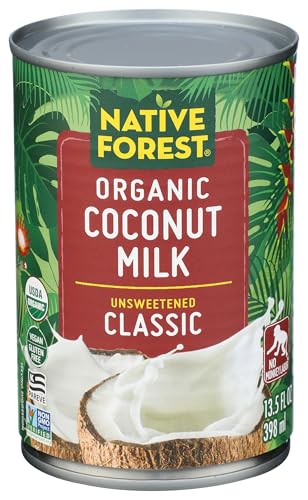
Coconut Milk Classic OrganicNative Forest organic Classic coconut milk — here for what Edward & Sons says about its cans ("BPA Non-Intent", a term it defines itself, with third-party lining tests as of 2011). A February 2026 California Proposition 65 notice (AG 2026-00794) alleged lead, sold without a warning, in Native Forest Organic Unsweetened Coconut Milk; its example is the Simple can, not this one, but it calls the example representative of the whole class, so we cannot tell you this can is outside the notice. The notice is an allegation, not a contamination finding. The register shows a private settlement dated October 14, 2026, $20,000 in total, and Edward & Sons denies the allegations. If lead is your concern, our coconut milk page explains the settlement's 0.5 microgram-per-serving warning trigger and how to ask the maker for a certificate of analysis for your lot.
Meets our published criteria, as of Oct 23, 2026
$3.39ViewBest lower-mercury tuna

Safe Catch
Canned Tuna FishSafe Catch Elite skipjack tuna — the brand says its tuna and salmon cans have "linings that are made without BPA and do not have the intentional addition of BPA", that it tests finished product through accredited third-party labs, and that it has "not found any detectable levels of BPA in any of our products" to date. Our salmon and tuna page picks this over Wild Planet.
Meets our published criteria, as of Oct 23, 2026
$24ViewCanned sardines

Wild Planet
Wild Sardines in Extra Virgin Olive OilWild Planet wild sardines in extra virgin olive oil, 12 cans of 4.4 oz — Wild Planet says all current products "are packed in cans that do not have the intentional addition of BPA in the can lining formulation", a written position about no intentional addition, not an absolute "BPA-free". Its page lists "aqueous natural smoke" among the ingredients, which Wild Planet describes as "a lightly smoked flavor". California's Attorney General register lists 24 Proposition 65 notices naming Wild Planet or Sustainable Seas sardines, filed between May 2020 and October 2025; seven of them supplement or amend an earlier notice, so they cover 17 separate allegations. A notice alleges a missing warning label, not that the fish was unsafe.
Meets our published criteria, as of Oct 23, 2026
Shop by type
Each type has its own page with every pick, what each maker says about its can, and the brands we checked.
Beans
Pinto, black and other canned beans, and what each maker says about the can.
See all BPA-free canned beansOur pick
Eden Organic Pinto Beans
$3.99
Tomatoes
Cans, glass jars and cartons, and what each maker says about the lining.
See all BPA-free canned tomatoesOur pick
Jovial Tomatoes Diced Organic
$4.25
Coconut milk
What each coconut milk maker says about its can, and two surveys of the cans themselves.
See all BPA-free canned coconut milkOur pick
Native Forest Coconut Milk Classic Organic
$3.39
Salmon and tuna
Canned salmon and tuna by lining statement and by species.
See all BPA-free canned salmon and tunaOur pick
Safe Catch Canned Tuna Fish
$24
Sardines
Canned sardines, and what each brand has put in writing about its cans.
See all BPA-free canned sardinesOur pick
Wild Planet Wild Sardines in Extra Virgin Olive Oil
$35.30
What to avoid
- "Organic" — covers what is in the food, not what lines the can — through the mid-2010s almost all canned food, organic included, used a BPA epoxy lining
- "BPA-free" claimed for the brand, not the product — several companies moved only part of their range; Eden's original change covered beans, not every product they make
- Assuming a replacement lining is fully characterized — acrylic, polyester, vinyl, non-BPA epoxies and oleoresin are newer and less studied than the epoxy they replaced, and the exact formulations are trade secrets
- Imported cans, treated like domestic ones — CMI's own 2020 survey found BPA linings in only 2 of 234 cans, and both were imports
- Focusing on bottles while ignoring cans — canned food has consistently been the larger dietary exposure route
What to look for
- A manufacturer's own can-lining position, in its own words — the difference between a brand's real statement and a retail listing repeating a claim
- A claim whose scope is clear — which products, not just which brand
- Still in production and available — a claim about a discontinued can is not useful
- No active recall on the pick — part of the basic screen for every pick on this list
- 1Skip: BPA epoxy can liningsSee all BPA-free canned beans Why
- 2Skip: Tomato cans that say only "non-BPA" about the lining, or nothingSee all BPA-free canned tomatoes Why
- 3Skip: Canned soup that says "BPA-free" without naming the liningBuy instead: Amy's Why
- 4Skip: Canned coconut milk with no lining statement from the makerSee all BPA-free canned coconut milk Why
- 5Skip: Tuna and salmon cans with no lining statement from the makerSee all BPA-free canned salmon and tuna Why
- 6Skip: Sardine cans with no lining statement from the makerSee all BPA-free canned sardines Why
What the label card means
What to skip, and why
"Organic"
Covers what is in the food, not what lines the can — through the mid-2010s almost all canned food, organic included, used a BPA epoxy lining.
"BPA-free" claimed for the brand, not the product
Several companies moved only part of their range; Eden's original change covered beans, not every product they make.
Know the risks: BPA & plastic substitutesAssuming a replacement lining is fully characterized
Acrylic, polyester, vinyl, non-BPA epoxies and oleoresin are newer and less studied than the epoxy they replaced, and the exact formulations are trade secrets.
Imported cans, treated like domestic ones
CMI's own 2020 survey found BPA linings in only 2 of 234 cans, and both were imports.
Focusing on bottles while ignoring cans
Canned food has consistently been the larger dietary exposure route.
Where to buy
The full guide: how we chose
BPA epoxy was the standard can lining from the 1960s to the mid-2010s, organic included, so a list of cans containing it would once have been close to the whole shelf. This list runs the other way — the brands that moved first. Since then most of the industry has followed: the Can Manufacturers Institute says 98 percent of US food-can production has switched, and its own 2020 market survey found BPA linings in 2 of 234 cans, both imported. Beverage cans are the part that did not move.
Why this list runs backwards
A few readers asked for a list of canned goods that contain BPA so they would know what to avoid. For most of this page's life that list was easier to write the other way around, because almost all canned food — even the organic stuff — used BPA in the can's lining. It was there as an epoxy, to keep the metal and the food from touching.
A handful of brands moved off it early, and those are the ones listed below. Most of the rest of the US food-can industry has since followed, which changes what this page is for and is worth dating precisely. This is still a working list: if you know of a canned brand that belongs on it, tell us and we will add it.
When "almost every can" stopped being true
BPA has been used in food packaging since the 1960s and is "a component in metal can coatings," per the FDA's page on BPA in food-contact applications. Coca-Cola put it more plainly in a 2011 filing with the SEC, calling BPA "the industry standard for the lining of aluminum/steel food and beverage containers." That is the world this page was written into.
Then it moved. The timeline, with names on it:
- July 2015. Individual brands started finishing. Conagra announced on July 30, 2015 that "all of the company's facilities in the U.S. and Canada have completed the transition to cans without Bisphenol A (BPA) liners" — Hunt's, Rotel, Van Camp's, Chef Boyardee and the rest of the portfolio.
- 2016. The industry as a whole had not. Independent testing published by the Ecology Center and five partner organizations (Buyer Beware) found BPA-based epoxy in the body or lid of 129 of 192 cans bought across 19 US states and one Canadian province — 67 percent.
- 2018–2019. Then it did. The Can Manufacturers Institute — the can industry's own trade association, so read it as an interested party — told Chemical & Engineering News in March 2019 that 90 percent of US food-can production had switched to alternative materials by early 2018, and now says that "nearly all (98%)" of it has.
- 2020. CMI re-shopped Buyer Beware's own list in Seattle and Yakima in late February and early March 2020 and tested 234 cans. Two had BPA linings, and "both of those were imported products: coconut milk from Thailand and peaches from Australia."
That last survey was filed with a Washington State rulemaking by the industry being regulated, so it is not a neutral referee. But its direction matches everything else, and its specific finding is the useful part: what BPA is left in US food cans sits disproportionately in imported cans. Conagra's own 2015 release said the same about itself — it was still importing "a small quantity of canned products with BPA liners."
So the honest version of this page's premise is: BPA epoxy was the standard food-can lining from the 1960s to the mid-2010s, and for cans made in the US it largely stopped being standard between 2017 and 2019. Two questions did not get resolved by that, and they are what the rest of this page is about — beverage cans, and what the epoxy was replaced with.
The part that gets missed
When BPA was in the news, the conversation was almost entirely about bottles and sippy cups. Meanwhile the Environmental Working Group had been pointing at canned food for years, and with better reason — diet is the dominant exposure route, and canned foods are a large part of that. Canned pasta and soups have tested highest; beverages tend to be lower.
The practical upshot at the time was uncomfortable: parents were queuing to return polycarbonate bottles while the canned formula and canned soup in the same kitchen went unexamined.
Since then, BPA has been removed from the baby-specific categories — the FDA abandoned authorization for its use in baby bottles, sippy cups and infant formula packaging. General groceries were never part of that, which is exactly the gap this page covers.
What actually reduces exposure
Four changes, in rough order of how much they do:
Choose glass over canned where you reasonably can. Jar lids can carry some coating residue, but the difference against a lined can is substantial.
Choose fresh or frozen. Vegetables are often flash-frozen shortly after harvest, so you are usually trading up nutritionally as well.
Choose powdered formula if you are formula feeding.
Buy from the brands below for the cans you keep.
The list
Brands with a published BPA can-lining position: Eden Foods (beans), Oregon's Choice albacore tuna, Trader Joe's (its product FAQ lists all canned beans, fruits and vegetables, all canned coconut milk and coconut cream, and most canned fish and chicken as having no intentionally added BPA in the interior lining; it names no lining material and no specific item), Vital Choice (salmon, albacore tuna, mackerel, sardines), Wild Planet (5oz skipjack and albacore tuna; its own wording is "no intentional addition of BPA in the can lining formulation," not "BPA-free"), Edward & Sons, Bionaturae (canned tomatoes, labeled BPA-free), and Natural Value (all organic tomatoes, all tuna, all cat food).
Two notes on that list, because it has been carried forward for a long time. First, the scopes in brackets are the scopes each brand claimed when it was added, and at least one has since widened: Wild Planet's current FAQ covers all of its products, not only the two 5oz tuna cans listed above, and Vital Choice's covers everything it sells except its canned smoked mussels. Second, we have re-read the brand's own current wording for Wild Planet, Vital Choice and Muir Glen, on 16 October 2026 for Amy's, and on 23 October 2026 for Trader Joe's; the rest are carried from the original list and have not been re-checked against what each company says today. Where we have not re-checked, we would rather say so than imply a verification we did not do.
Wild Planet appears among our picks, and there is a public record to read next to them. California's Attorney General publishes every Proposition 65 60-day notice, and on 23 October 2026 the register listed 24 notices naming Wild Planet or its Sustainable Seas label for sardines (seven of them supplement or amend an earlier notice, so they cover 17 separate allegations) and five for tuna products. A notice alleges that a product was sold in California without the Proposition 65 warning label; it is not a finding that the fish was unsafe. The chemicals, dates and what we did not count are on the sardines page and the salmon and tuna page below.
One page per canned food. The brand wording, label details and every product we compared sit on its own page, and the link cards in the swaps send you there: BPA-free canned beans, BPA-free canned tomatoes, BPA-free canned sardines, BPA-free canned salmon and tuna and BPA-free canned coconut milk. This page stays the short version: what changed in the can, which brands said so first, and where to go next.
Finished since, and no longer "mid-transition": Muir Glen's own FAQ now answers the question directly — "all Muir Glen cans and jars are non-BPA because they are packaged using a can lining that is made without BPA," using "food-grade or food-safe vinyl liners." Note the substitute rather than only the absence: vinyl is a PVC-based lining, one of the five coating types Buyer Beware identified and one it raised its own questions about. Conagra (Hunt's, Rotel, Van Camp's) finished across its US and Canadian plants in July 2015. Both brands sat in a "working on it" row on this page for years after they had stopped working on it.
What Coca-Cola and PepsiCo actually said
An earlier version of this page said Coca-Cola and PepsiCo "have both stated they are not changing." We could not source that sentence for either company, so it is gone rather than reworded into a vaguer version of itself. Here is what is actually on the record.
Coca-Cola. In its 2011 proxy statement, filed with the SEC, the board recommended shareowners vote against a resolution asking the company to report on BPA. Its written statement called BPA "the industry standard for the lining of aluminum/steel food and beverage containers," said the company was "confident about the safety of our aluminum cans," and added that it was "working closely with several suppliers who are seeking alternatives to can liners containing BPA." Shareowners voted the resolution down that April, 332 million shares to 994 million. Eight years later C&EN reported that "Coca-Cola's website tells consumers that it uses BPA-based coatings in its beverage cans." We found no later statement from the company saying it has moved off them.
Declining to publish a report is not the same as refusing to change, and this page should not have written it that way.
PepsiCo. Nothing. A full-text search of PepsiCo's SEC filings returns no mention of BPA or bisphenol at all, and we could find no dated company statement to quote. So this page now says nothing about PepsiCo's can linings, because we cannot say anything about them honestly.
Underneath both sits the structural point. Beverage cans are aluminum rather than steel — a different manufacturing base — and C&EN reported in 2019 that the beverage industry "has not made equivalent progress removing BPA." That inverts the assumption most people start with: for cans made in the US, the food aisle has moved further than the drinks aisle.
Do not overcorrect on it, though. A lining that has not changed is not the same as a large exposure: the testing that made canned food an issue in the first place found the highest levels in canned pasta and soups and lower levels in beverages, and nothing here changes that ordering. It means the BPA question is no longer mostly a canned-food question, not that it has become a soda question.
BPA-free sardines, and what those three words are worth
"BPA-free sardines" is one of the commonest ways readers arrive here, and it deserves a straight answer rather than a brand list copied off a retail listing. Six brands that sell sardines publish a can-lining position in their own words on their own sites. The wording is not the same across the six, and the differences are the useful part.
Safe Catch is the only one we found that names sardines specifically and dates its answer. Its FAQ says it packs "tin-coated steel or aluminum cans (sardines) ... with linings that are made without BPA and do not have the intentional addition of BPA," that the sardine lining is "organosol resin that is not made with BPA," and that it "routinely test[s] finished products using accredited 3rd-party testing labs," having "not found any detectable levels of BPA in any of our products" to date. Both answers carry a January 2024 last-updated date. One thing worth knowing: the company's own marketing copy narrows the same claim to tuna and salmon. The sardine-specific commitment lives in the FAQ, not on the storefront.
King Oscar is the most careful about the language, and worth quoting because it says out loud what the others leave implied:
At King Oscar, we do not knowingly add bisphenols (including BPA, BPS, and BPF) or phthalates to our products or packaging. Since trace amounts of BPA are now considered ubiquitous in the environment, no company can legitimately claim to be "100% BPA-free." What we can say is that all of our cans are certified BPA-NI, meaning BPA is not intended in the formulation of their materials.
Two things there are unusual. It covers BPS and BPF as well as BPA — the substitute bisphenols a plain "BPA-free" claim says nothing about, and the ones the Can Manufacturers Institute has to address separately on its own page ("the industry does not intentionally add BPF, BPB and BPS substitute in can linings"). And it declines the phrase every other brand reaches for.
Wild Planet states that "all of Wild Planet's current products are packed in cans that do not have the intentional addition of BPA in the can lining formulation," and that it buys cans and lids only from manufacturers that do not use BPA in the lining formulation. All products — so that covers its sardines, not only the two tuna cans listed further up this page.
Vital Choice — already in the list above — does the thing we most want from a brand and almost never get: it names its own exception. "Apart from our canned smoked mussels, all of our products are packaged in BPA-NI containers or plastic film," because "due to the acidic nature of shellfish, the cans used for our smoked mussels are lined with BPA to protect the inside of the can from corroding." Sardines sit inside the BPA-NI part. A company willing to tell you which of its own cans still uses BPA, and why, is telling you something about the rest of its disclosures too.
Season Brand makes the most absolute-sounding claim of the six: it "takes careful consideration to make sure that our suppliers provide us with cans that do not contain BPA in the can lining." Read next to King Oscar's answer, that tension is instructive. One brand says a categorical claim cannot honestly be made; another makes one. We are not calling Season wrong — we are pointing out that the same shelf carries both framings, and that "do not contain BPA in the can lining" and "BPA is not intended in the formulation" are different sentences with different warranties behind them.
Crown Prince is the useful counter-example, and it explains something shoppers notice on the shelf. It took the "BPA free" icon off its packaging, and says why: "Some product packaging distributed by Crown Prince may have traces of BPA, although most of our products are packaged in cans that no longer use BPA in the can lining. Since BPA is ubiquitous in the environment, traces may be detected in items that were labeled BPA Free." A missing BPA-free badge is not automatically a step backwards. Sometimes it is a company deciding it can no longer prove the badge.
What the six add up to. Only Safe Catch says it tests finished product, and only Safe Catch puts a date on its answer. Every other claim here is about the formulation the cans were built to, not about what is measurably in the can you are holding. That is not a reason to distrust the category — it is the accurate description of what "BPA-free sardines" can currently mean, and King Oscar is the only one of the six that says so in its own words. A "BPA-free" claim that appears only on a retail listing is not a brand position at all: that is the first item in the "what does not tell you a can is BPA-free" list above, and the reason this section is six brands long rather than twenty.
The other reason to buy sardines. Mercury, not lining. The FDA and EPA's joint advice on eating fish, last revised October 2021, puts sardines on its "Best Choices" list, and names them again in the shorter set of Best Choices species that are "even lower in mercury" — the ones it says children should be fed from when they are eating the larger amounts the Dietary Guidelines suggest. For canned fish the species usually matters more than the can: our BPA-free canned salmon and tuna page works through the brand wording in more detail, and the mercury in fish explainer covers where that exposure actually comes from.
A caveat worth keeping
This page was written hoping to become useless — for every company to phase BPA out and for the list to stop being necessary. For US-made food cans that has largely happened, which is a real win and worth saying out loud rather than quietly leaving a 2011 page up.
What it did not do is settle the question underneath. "BPA-free" names what is absent, not what is present, and the replacements are several different materials rather than one. Between them the two surveys above found five in use: acrylic, polyester, vinyl (PVC-based), non-BPA epoxies and oleoresin — oleoresin being a natural mixture of oil and resin extracted from plants. None of them is BPA. All of them are newer and less studied than the epoxy they replaced, the exact formulations are trade secrets, and Buyer Beware was written largely to make the point that a substitute is not automatically an improvement. Muir Glen's vinyl liners are a fair example: a real answer to the BPA question, and a different question of its own.
Which is the long way of saying what we said at the top: fewer cans is still the most robust answer, and it is neither difficult nor expensive.
The swaps, in full
BPA epoxy can linings
BPA epoxy was the standard food-can lining from the 1960s to the mid-2010s, organic included. Since then most of the US industry has moved off it — the Can Manufacturers Institute says 98 percent of production has switched, and its own 2020 market survey found BPA linings in 2 of 234 cans, both imported.
Hides in: Not stated on the front of the can — brands that address it publish their own can-lining position, in their own words
Top pick: Eden
Tomato cans that say only "non-BPA" about the lining, or nothing
Tomatoes are acidic, which rules out some can linings. Glass jars and cartons skip the can lining, but the jar lid is the part makers rarely describe. Among cans, four makers name what they use instead of BPA epoxy: polyester (Red Gold), polyester or acrylic (Conagra, for Hunt's), and vinyl (Muir Glen and Del Monte). Vinyl is PVC-based; see the caveat at the end of this page. Everyone else says only "non-BPA" or nothing.
Hides in: A can or jar that says "BPA-free" or "non-BPA" on its own, or an "organic" or "imported from Italy" label read as covering the package
Top pick: Jovial
Canned soup that says "BPA-free" without naming the lining
Canned pasta and soups tested highest in the testing that made canned food an issue, and a replacement lining is a different question from BPA. A soup brand that publishes what lines its cans, in its own words, tells you more than a front-of-can claim.
Hides in: A soup label or retail listing repeating "BPA-free" with no link to the manufacturer's own statement
Amy's organic lentil vegetable soup, 12 cans of 14.5 oz — water, organic vegetables and green lentils, olive oil and sea salt. The brand's FAQ says the can body is lined with acrylic and the lid with polyester, and that the coating does not contain BPA, BPS or BPF. It is a brand-wide statement; the soup's own page does not mention the lining.
Ingredient panel checked · source
Canned coconut milk with no lining statement from the maker
Of the two cans the Can Manufacturers Institute found with a BPA lining in its 2020 survey, one was a coconut milk from Thailand. Coconut milk makers that address the lining do it in their own words, and those words are narrower than "BPA-free".
Hides in: A retail listing repeating "BPA-free" for a coconut milk whose maker has not said it
Top pick: Native Forest
Tuna and salmon cans with no lining statement from the maker
Safe Catch and Wild Planet have moved off BPA can linings and say so in writing, and neither uses the word "BPA-free". For canned fish the species matters as much as the lining: salmon runs lower in mercury than tuna, and skipjack runs lower than albacore.
Hides in: A "BPA-free" claim that only a retail listing makes, not the maker
Top pick: Safe Catch
Sardine cans with no lining statement from the maker
Almost no sardine brand writes "BPA-free" about its own cans. The ones that put anything in writing mostly say "no intentional addition", and more than half of the brands we checked say nothing at all.
Hides in: A "BPA-free" claim that only a store or marketplace listing makes, not the maker
Top pick: Wild Planet
On your shelf: what the mainstream brands say about the can
The cans most shoppers already own, and what each maker has published about its can lining. Each row is the one on our category page for that food (Trader Joe's rows summarize its product FAQ), with the source and the date we read it. "No statement found" means we read the brand's FAQ and product pages and found no sentence about the lining; we did not contact the companies, so it is an absence in what is published, not a finding about the can.
- Bush's Best canned beansNo statement found, or mixed
- Bush Brothers & Company's FAQ on bushbeans.com has no question about cans or linings, and we found no BPA or lining statement elsewhere on its site. The 2020 Can Manufacturers Institute survey recorded a polyester body and end on one Bush's black bean can bought at a Seattle Target (best-by December 2021). To ask Bush's directly, its FAQ lists Consumer Relations at 1-800-590-3797. Source (checked )
- Van Camp's and Rosarita (Conagra)Written no-BPA lining position
- Conagra's FAQ says: "All food made in Conagra Brands' facilities in the U.S. and Canada after July 30, 2015 is in non-BPA lined packaging." The same FAQ says the packaging is not labeled as non-BPA, and lists exceptions: a small quantity of imported BPA-lined cans, some contract-manufactured products, and newly acquired brands. A July 30, 2015 release (read in an archived copy; the live page returns an error) names polyester or acrylic coatings and lists Van Camp's beans; it does not name Rosarita. This is a company-wide statement; we found no lining statement on a Van Camp's or Rosarita product page, and we found no lining statement on any Van Camp's or Rosarita SmartLabel page we could read (Conagra's SmartLabel home says "Coming Soon"). Source (checked )
- Hunt's canned tomatoesWritten no-BPA lining position
- The SmartLabel page for Hunt's Diced Tomatoes 28 oz carries a "Non-BPA Liner" heading with no text under it. A 2015 Conagra release says its US and Canadian canned foods moved to "coating systems using polyester or acrylic materials that do not contain BPA" and names Hunt's tomatoes. That release is eleven years old; we found no newer Conagra statement. The 2020 Can Manufacturers Institute survey recorded an acrylic body and polyester end on a Hunt's diced can. Source (checked )
- Muir Glen canned tomatoesWritten no-BPA lining position
- Muir Glen's FAQ says "all Muir Glen cans and jars are non-BPA" and says its cans "are packaged using a can lining that is made without BPA. We use food-grade or food-safe vinyl liners in our cans." It also sells tomatoes in glass jars and gives no detail on the jar lid. The FAQ says the brand was purchased by Violet Foods in 2026. Source (checked )
- Del Monte canned tomatoesWritten no-BPA lining position
- Del Monte's site says that in 2016 it converted 100% of its branded tomato products to non-BPA linings, and that "the alternative used for our tomato cans is a vinyl lining." Fresh Del Monte Produce announced on March 19, 2026 that it had completed its acquisition of select Del Monte Foods assets, which its release says include the Del Monte and Contadina packaged tomato brands. This lining statement is from Del Monte's site and we do not know whether it predates the sale. Source (checked )
- Bumble Bee canned tunaNo statement found, or mixed
- We found no sentence about can linings on bumblebee.com's FAQ or on its tuna product pages. The only BPA text we found is a standard California Proposition 65 warning on a tuna-salad-and-crackers kit page, which says many cans "have linings containing bisphenol A" without saying whether that kit's can does. Labels: Solid White Albacore in Water, 5 oz, lists "White Tuna, Water, Vegetable Broth, Sea Salt" and 320 mg sodium per can drained (113 g); Chunk Light in Water, 5 oz, lists 360 mg. Source (checked )
- StarKist canned tuna and salmonNo statement found, or mixed
- StarKist's FAQ says its cans are 100% recyclable steel; it has no sentence about the lining, and it directs any unanswered question to its Consumer Care line. Labels: Chunk Light Tuna in Water, 5 oz, 360 mg sodium per can drained (113 g); Solid White Albacore in Water, 5 oz, 320 mg; Jumbo Lump Wild Pink Salmon, 5 oz, 270 mg per 85 g. The product pages do not print an ingredient list. Source (checked )
- Chicken of the Sea canned tuna and salmonNo statement found, or mixed
- No lining statement on its FAQ or product pages. Chunk Light Tuna in Water, 5 oz, lists "Chunk Light Tuna, Water, Vegetable Broth (Contains Soy), Salt" and 360 mg sodium per can drained (113 g). Alaskan Pink Salmon, 14.75 oz, lists "Pink Salmon, Salt" and 260 mg per 3 oz serving. Source (checked )
- Thai Kitchen coconut milkNo statement found, or mixed
- McCormick owns Thai Kitchen. Its page for Thai Kitchen Unsweetened Coconut Cream (a 6-pack of cans) says "Non BPA lining." We did not find that line on McCormick's pages for the coconut milk cans. The 2016 Buyer Beware report found BPA epoxy on the body and lid of three Thai Kitchen coconut milk cans, bought in Canada, Washington and California with best-by dates in 2016 and 2017; the same report says McCormick had told it of plans to move out of BPA by 2016 or 2017. The 2020 industry survey found polyester linings on one Thai Kitchen coconut milk can and two coconut cream cans. Those are different cans four years apart, and neither survey says what is on the shelf now. Hannaford's page for the exact can lists coconut, water and guar gum and says "Product of Thailand." Source (checked )
- Trader Joe's canned beans and coconut milkWritten no-BPA lining position
- Trader Joe's product FAQ (read in a browser, October 23, 2026) lists "ALL Canned Beans, Fruits & Vegetables" and "ALL Canned Coconut Milk & Coconut Cream" under "Packages with No Intentionally Added BPA to Interior Linings." That is "no intentionally added," not "BPA-free," and the FAQ names no lining material and shows no date. It also says the metal lids of its glass jars carry a BPA coating with another coating on top, and that test results from multiple suppliers show no BPA detected from metal lids. Source (checked )
- Trader Joe's canned fishNo statement found, or mixed
- Trader Joe's product FAQ (read in a browser, October 23, 2026) lists "MOST Canned Fish & Chicken" among the packages with "no intentionally added BPA to interior linings." It does not say which canned fish, or what the lining is made of, and it shows no date. We have no statement from Trader Joe's about any specific canned fish. Source (checked )
What does not tell you a can is BPA-free
- "Organic" — Organic certification covers what is in the food, not what lines the can. Through the mid-2010s almost all canned food — organic included — used a BPA epoxy lining.
- "BPA-free" on a brand, not a product — Several companies moved only part of their range. Eden's original change covered beans, not every product they make.
- Assuming a replacement lining is fully characterized — Acrylic, polyester, vinyl, non-BPA epoxies and oleoresin are the substitutes now in US cans. They avoid BPA, but each is less studied than the thing it replaced, and the exact formulations are trade secrets. Fewer cans is still the most reliable answer.
- Assuming an imported can is like a domestic one — The Can Manufacturers Institute's own 2020 survey of 234 cans found only two BPA linings, and both were imports — coconut milk from Thailand and peaches from Australia. Conagra's 2015 transition announcement carried the same caveat about its own imports.
- Focusing on bottles while ignoring cans — Bottles and sippy cups got the media attention. Canned food has consistently been the larger dietary exposure route.
How we choose
This is a working list. A brand earns a place when it has published its own position on what lines its cans, and we quote that wording rather than upgrading it to 'BPA-free' on the company's behalf. Where a brand moved only part of its range, we say which part. Where we have not re-read a brand's current wording, we say that too.
- Manufacturer publishes its own can-lining position, in its own words
- Scope of the claim is clear (which products, not just which brand)
- Still in production and available
- No active recall on the pick
Every source we cite is checked against our criteria first — see how we check our sources.
What the research says
A flexible 9-day road map for safely introducing top allergens
— Malina Malkani, MS, RDN, CDN told BenBella Books (distributed by Simon & Schuster), ISBN 9781637745359 that ...
Safe and Simple Food Allergy Prevention: A Baby-Led Feeding Guide to Starting Solids and Introducing Top Allergens — BenBella Books (distributed by Simon & Schuster), ISBN 9781637745359 (2024-11-12)
the tactile investigation of food is part of development - it's necessary, productive and speeds up the learning curve.
— Jill Castle, MS, RDN told The Washington Post that ...
Let picky eaters play with their food, and don't force 'thank you' tastes — The Washington Post (2018-11-01)
When a child's appetite is ignored, he or she may lose the ability to regulate his or her own internal hunger and fullness cues
— Jill Castle, MS, RDN told CNN that ...
Of the four parental 'feeding styles,' only one is good for kids' health, experts say — CNN (2018-10-04)
Sources
- Bisphenol A (BPA): Use in Food Contact Application — U.S. Food and Drug Administration (how we check this source)
- Buyer Beware: BPA and regrettable substitutes in the linings of canned food — executive summary (2016) — Ecology Center and five partner organizations (how we check this source)
- Innovations in Food Cans — can linings — Can Manufacturers Institute
- CMI Washington State Canned Food Market Basket Survey (sampled February–March 2020) — Can Manufacturers Institute
- How a new epoxy could boot BPA from cans (March 5, 2019) — Chemical & Engineering News
- 2011 proxy statement — statement against the shareowner proposal on bisphenol-A — The Coca-Cola Company (SEC DEF 14A, filed March 10, 2011)
- Form 8-K reporting the April 27, 2011 shareowner vote on the bisphenol-A proposal — The Coca-Cola Company (SEC 8-K, filed April 29, 2011)
- ConAgra Foods removes BPA from cans across portfolio (July 30, 2015) — ConAgra Foods company statement
- Muir Glen FAQ — "Are your cans and jars BPA-free? And if so, what do you use instead?" — Muir Glen
- FAQ — "What are your sardine tins made out of?" (last updated January 8, 2024) — Safe Catch
- FAQ — "Do your cans or pouches contain BPA?" (last updated January 22, 2024) — Safe Catch
- Tinned Fish FAQs — "Why do King Oscar cans say BPA-NI...?" — King Oscar
- FAQ — "Is Vital Choice packaging BPA-free?" — Vital Choice
- BPA and Label Warnings — "What happened to the BPA free icon?" — Crown Prince
- FAQs — "Does Wild Planet use packaging containing BPA?" — Wild Planet Foods
- FAQs — "What does 'NO BPA in can lining' mean?" — Season Brand
- California Attorney General — Proposition 65 60-day notice register (searched 2026-10-23 for Wild Planet and Sustainable Seas) — California Department of Justice
- California Attorney General — Proposition 65 notice 2026-00794 (Native Forest; settlement dated 2026-10-14) — California Department of Justice
- Product Information FAQ — "Packages with No Intentionally Added BPA to Interior Linings" — Trader Joe's
- Advice About Eating Fish (advice revised October 2021) — U.S. Food and Drug Administration and U.S. Environmental Protection Agency (how we check this source)
Common questions
Every bpa-free canned food product we've reviewed— what we'd buy, what we'd skip, and where each one stands.