
The non-toxic sunscreen cheat sheet
One winner for each way people buy sunscreen.
The at-a-glance version: what makes a sunscreen safer, the seven ingredients we skip and why, what the words on the bottle legally mean, and our mineral picks by format. Bookmark it for the season.
How we scoreHow we earnChecked November 11, 2026
Our winner for each way people buy
How we scoreHow we earnChecked November 11, 2026
Best overall

Blue Lizard
Mineral SPF 50 Kids Sunscreen LotionTitanium dioxide 8% and zinc oxide 10%, fragrance-free, and a faint cast that doubles as a coverage check on the ears and nose.
Meets our published criteria, as of Nov 11, 2026
Best for babies 6 months and up

Earth Mama Organics
Baby Mineral Sunscreen Lotion SPF 40-3 ozZinc oxide 25%, pressed oils and butters, 40-minute water resistance. A December 2025 Proposition 65 notice names it for lead: an allegation of a missing warning label, not a contamination finding, with no case or settlement on the state's register as of October 2026.
Meets our published criteria, as of Nov 11, 2026
Best for reactive skin

Thinkbaby
Thinkkids Kids Sunscreen SPF 50+Zinc oxide 20% as the only active; the brand states no oxybenzone, avobenzone, PABA, parabens or phthalates.
Meets our published criteria, as of Nov 11, 2026
$9.39ViewBest for grown-up faces

Vanicream
Facial Moisturizer SPF 30 Zinc Oxide Mineral SunscreenZinc oxide 19.5% as the only active, and a label that says free of fragrance and of masking fragrance. A daily face moisturizer; its label makes no water-resistance claim. For a body, the Best overall lotion works on adults too.
Meets our published criteria, as of Nov 11, 2026
Best stick for faces and ears

Blue Lizard
Kids Mineral SPF 50 Sunscreen StickZinc oxide 20%, no drips and no sticky hands, and the format most likely to be in a bag rather than in the car.
Meets our published criteria, as of Nov 11, 2026
$8.77ViewFewest ingredients
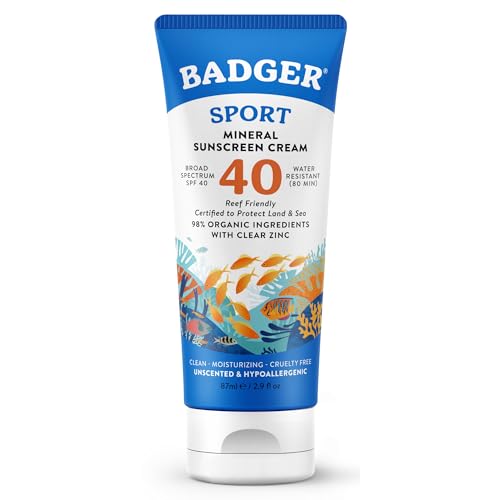
Badger
Sport Mineral Sunscreen SPF 40Four ingredients in total: non-nano uncoated zinc oxide 22.5%, organic sunflower oil, organic beeswax and sunflower vitamin E.
Meets our published criteria, as of Nov 11, 2026
Least white cast

Babo Botanicals
Sheer Mineral Sunscreen Lotion SPF 50 with 100%…Zinc oxide 20%, fragrance-free, 80-minute water resistance, and no PEG, silicone or paraben anywhere in the inactive list.
Meets our published criteria, as of Nov 11, 2026
What to avoid
- Oxybenzone — the filter the FDA has been asking for more data on since 2019, and the one that shows up most in absorption testing
- Octinoxate — the other ingredient Hawaii's sunscreen law names by name
- Avobenzone, octocrylene, homosalate, octisalate — the rest of the chemical filters in the FDA's still-open "insufficient data" group
- Retinyl palmitate (vitamin A palmitate) — does nothing for sun protection and carries an unresolved animal finding
- Fragrance / "parfum" — one word may legally stand in for dozens of components you never see
- Parabens — the EU caps two of them and bans both from leave-on products for the diaper area under age three
What to look for
- Zinc oxide on the Active ingredients line — one of the two filters the FDA proposed as safe and effective, and it works the moment it is on
- "Broad spectrum" — without it the label must carry a warning saying the product only prevents sunburn
- SPF 30 to 50 — enough, if you apply enough — and past this the returns flatten fast
- "Water Resistant (40 minutes)" or "(80 minutes)" — the only two legal versions of that claim; silence means the label makes no claim, so treat it as not water resistant
- "Fragrance-free" — a different claim from "unscented", which can mean a masking scent was added
- A short inactive list — fewer things to react to, and fewer things to look up
- 1Skip: Oxybenzone and the other chemical UV filtersBuy instead: Blue Lizard, Think, Earth Mama Why
- 2Skip: Added fragrance, listed as "fragrance" or "parfum"Buy instead: Vanicream Why
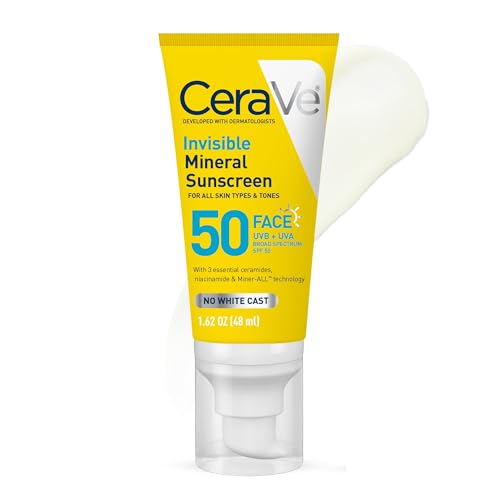
- 3Skip: Reaching for a spray because it is fasterBuy instead: Blue Lizard, CeraVe Why
- 4Skip: "Waterproof", "sweatproof", and SPF as the headline numberBuy instead: Badger, Babo Botanicals Why
What the label card means
What to skip, and why
Oxybenzone
The filter the FDA has been asking for more data on since 2019, and the one that shows up most in absorption testing.
Know the risks: Chemical UV filtersOctinoxate
The other ingredient Hawaii's sunscreen law names by name.
Know the risks: Chemical UV filtersAvobenzone, octocrylene, homosalate, octisalate
The rest of the chemical filters in the FDA's still-open "insufficient data" group.
Know the risks: Chemical UV filtersRetinyl palmitate (vitamin A palmitate)
Does nothing for sun protection and carries an unresolved animal finding.
Fragrance / "parfum"
One word may legally stand in for dozens of components you never see.
Know the risks: Fragrance not fully itemizedParabens
The EU caps two of them and bans both from leave-on products for the diaper area under age three.
Brands in this guide
We keep a full safety review for each of these — company facts, recalls, and our verdict.
Where to buy
- TargetCarries two Blue Lizard winners: the Kids lotion (Target lists it as "Kids' Mineral-Based", SPF 50, 5 fl oz) and the Kids Mineral stick (SPF 50, 0.5 oz). Product pages and Drug Facts checked 2026-10-21.
- iHerbCarries the Badger Sport Mineral cream (SPF 40, 2.9 fl oz, zinc oxide 22.5%). Product page and Drug Facts checked 2026-10-21.
- AmazonEvery pick on this sheet is an Amazon listing.
The full guide: how we chose
The short answer to "what is the safest sunscreen" is a zinc oxide mineral formula, broad spectrum, SPF 30 to 50, with no added fragrance — and then enough of it. Sunscreen is tested at a thickness most people never actually apply, so the bottle you use generously beats the bottle you chose carefully. Shade, a brimmed hat and a UPF shirt still outrank all of it.
The 30-second version
A safer sunscreen usually means a zinc oxide active, broad spectrum SPF 30 to 50, and a short inactive-ingredient list with no added fragrance. That is most of the decision, and it takes ten seconds on the back of a bottle.
The rest is technique, and technique decides more than brand does. Sunscreen is tested at a specific thickness: the FDA's own method applies 2 milligrams per square centimeter of skin, and the label directions that same rule writes say to apply it "liberally" and "15 minutes before sun exposure." The agency's plain-English version is one ounce for an adult or a child, "about the amount it takes to fill a shot glass", reapplied at least every two hours and more often after swimming or sweating. Most people use a good deal less than that, which quietly turns a high SPF number into a lower one.
How to read the bottle in thirty seconds
Turn the bottle over and read the Drug Facts panel. In the United States a sunscreen is an over-the-counter drug, not a cosmetic, so that panel is regulated in a way the front of the bottle is not. Four lines tell you almost everything.
The Active ingredients line. Zinc oxide and titanium dioxide are the mineral filters. Avobenzone, oxybenzone, octinoxate, octisalate, octocrylene and homosalate are the chemical ones. This is the only place the answer is stated plainly — "mineral" on the front is marketing, and several products that read as mineral turn out to be a blend.
The words "broad spectrum." A sunscreen that has not passed the FDA's broad-spectrum test, or that is below SPF 15, is required to carry a specific warning: "Skin Cancer/Skin Aging Alert: Spending time in the sun increases your risk of skin cancer and early skin aging. This product has been shown only to help prevent sunburn, not skin cancer or early skin aging." If you see that box, the bottle is telling you it only stops burning.
The water-resistance minutes. There are exactly two legal versions of that claim — "Water Resistant (40 minutes)" and "Water Resistant (80 minutes)." A bottle that says nothing about water resistance has made no water-resistance claim, so treat it as not water resistant, whatever the picture on the front is doing.
The inactive ingredients, for the word "fragrance." "Fragrance-free" means none was added. "Unscented" can mean a masking fragrance was added to cover a base smell. They are not the same claim.
One more, because it is the fastest tell there is: "sunblock," "sweatproof" and "waterproof" are not allowed on a US sunscreen label at all. The regulation names all three as claims that would be false or misleading and says a product carrying one is misbranded. A bottle still using one is telling you about the seller rather than the sunscreen.
The seven ingredients we skip — and the two we note but do not disqualify
This is the part of this page that got cut, and it is the part readers came for. It is back, with the reasoning attached, and with two changes from the version that ran here for years.
Where the evidence is genuinely unsettled, this page now says so rather than picking a side. Sunscreen is the easiest place on this site to overstate a case, because almost every ingredient below has a real research question attached to it and a decade of internet copy that rounds that question up into a verdict. We would rather lose the drama than borrow it.
And three of these are noted, not disqualifying — a product can carry one and still make our list. We say which of our own picks do. A criterion a page will not apply to its own recommendations is not a criterion.
1. Oxybenzone, and the chemical filters beside it — a hard no
In 2019 the FDA proposed a rule sorting sunscreen filters into three groups. Zinc oxide and titanium dioxide went into Category I, generally recognized as safe and effective, at concentrations up to 25%. Twelve others — oxybenzone, octinoxate, avobenzone, octocrylene, homosalate, octisalate and six more — went into a category the agency's own fact sheet describes as "insufficient data," meaning FDA "needs additional data to determine that sunscreens with these ingredients would be GRASE." Two FDA maximal-use trials then found several of those filters, oxybenzone most of all, reaching the bloodstream above the concentration that triggers further safety testing. That proposal has never been finalized, and all sixteen filters remain legal to sell.
What we are not saying. That absorption is harm. The FDA has been unusually direct on this point: its own statement on the second trial was that the fact an ingredient is absorbed through the skin does not mean it is unsafe, and the study authors wrote that their results "do not indicate that individuals should refrain from the use of sunscreen." Nobody has shown oxybenzone harms people at the amounts a sunscreen delivers. The honest description is an open question the FDA has not closed in seven years, on an ingredient with a settled alternative sitting beside it on the same shelf. That is enough for us. It is a different sentence from "this is dangerous."
The reef laws are also not a health finding. Hawaii's Act 104 makes it unlawful to sell a sunscreen containing oxybenzone or octinoxate in the state without a prescription, and Palau's law goes further — but both are grounded in coral and marine harm, and their own findings sections say so. Quoting a reef statute as evidence about a child's skin is a category error, and a common one.
2. Retinyl palmitate (vitamin A palmitate) — a hard no, on an unsettled question
In a one-year study run for the National Toxicology Program at the FDA's own research center, hairless mice were treated with creams containing retinyl palmitate and exposed to simulated sunlight. The report concluded that including retinyl palmitate in the cream "increased the number of tumors and decreased the time to appearance of tumors compared to animals given just the carrier cream."
What we are not saying. That this settles anything. The same report found the plain carrier cream — with no vitamin A in it at all — also increased tumor incidence versus no cream, with and without light. That is a strange result, and it makes the vitamin A effect harder to isolate rather than easier. The Cosmetic Ingredient Review panel looked at this study and did not reopen its "safe as used" conclusion. The FDA has not restricted the ingredient. Mouse skin is not human skin.
So: a real finding, in one species, that nobody has resolved in more than a decade, attached to an ingredient that does nothing for sun protection and is trivial to avoid. We avoid it. We are not telling you it causes cancer, because that is not what the study shows.
3. Added fragrance, listed as "fragrance" or "parfum" — a hard no
This is the one we are most confident about, and the reason has nothing to do with toxicity. Under 21 CFR 701.3, ingredients must be declared in descending order of predominance "except that fragrance or flavor may be listed as fragrance or flavor." One word can therefore stand in for a mixture of dozens of components, none of which you get to see. Congress told the FDA to require disclosure of fragrance allergens in the 2022 cosmetics-modernization law; the deadline for proposing that rule was June 2024, and the agency's own regulatory agenda now targets late 2026. Until then, the label stays one word.
You cannot make a judgment about something you are not allowed to read. And in practice, added fragrance is the most common thing behind a rash that gets blamed on "mineral sunscreen" — which is why every pick on this page is fragrance-free.
4. Phthalates — a hard no, and the reason is the entry above
Phthalates are used in cosmetics partly as fragrance solvents and fixatives, which means the realistic route into a sunscreen is inside that one-word "fragrance" line. They are not usually declared by name, and will not be until the rule above lands.
What we are not saying. That the FDA has found them unsafe. Its position is the opposite: "At the present time, the FDA does not have evidence that phthalates as used in cosmetics pose a safety risk." Phthalates are here because they are the clearest illustration of why the fragrance rule matters — not because we can point at a finding. Choosing fragrance-free is what actually addresses this, and it is one decision rather than two.
5. Parabens — a hard no, cheaply
Honestly, because it costs nothing. The FDA's page says plainly: "At this time, we do not have information showing that parabens as they are used in cosmetics have an effect on human health." The EU took a more precautionary line — Commission Regulation (EU) No 1004/2014 capped propylparaben and butylparaben at 0.14% combined and banned both from leave-on products for the diaper area of children under three, which must carry the warning "Do not use on the nappy area."
What we are not saying. That parabens cause cancer, or that they are banned in Europe. Five specific parabens are banned there; those two are capped; the rest are permitted at set limits. This is a preference, not a finding — and since the mineral sunscreens worth buying use other preservatives anyway, it is a preference that costs you nothing to hold.
6. PEGs and other ethoxylates — noted, not disqualifying
The PEG itself is not the concern. Ethoxylated ingredients — the ones carrying "PEG," "-eth-" or "-oxynol-" in the name, sodium laureth sulfate included — are made using ethylene oxide and can carry 1,4-dioxane as a manufacturing byproduct. Ethylene oxide is classified as a known human carcinogen; 1,4-dioxane sits in the weaker "reasonably anticipated to be" category. Those are not the same weight of evidence, and treating them as one is how this ingredient gets oversold.
Why it does not disqualify a product here. The FDA has been surveying cosmetics for 1,4-dioxane for decades, has recommended a purification step called vacuum stripping since the 1980s, and its own numbers show the levels falling: an average of 50 ppm in 1981, 19 ppm by 1997, and in the 2008 survey "80% of products had no detectable 1,4-dioxane." A trace contaminant that is usually absent, in a leave-on product used a few months a year, is not a reason to reject an otherwise excellent formula.
Which of the products named on this page carry one. Blue Lizard Kids Mineral SPF 50 lists PEG-7 Hydrogenated Castor Oil and Cetyl PEG/PPG-10/1 Dimethicone. The CeraVe face lotion lists Steareth-20, Steareth-2 and Polysorbate 20, and the Vanicream face moisturizer lists PEG-100 stearate. Two of our runners-up do too: Neutrogena Sheer Zinc Kids lists Cetyl PEG/PPG-10/1 Dimethicone, and Eucerin Sensitive Mineral Tinted lists it along with a PEG-12 dimethicone. We read the Neutrogena and Eucerin lists on the makers' own pages on October 26, 2026. All of them stay on the page, and we would rather tell you than quietly drop the criterion.
One correction to the version of this page that ran for years: sodium lauryl sulfate is not really a sunscreen problem. It is a rinse-off detergent — it is what dermatology researchers use as their reference irritant when they need to provoke a controlled reaction in a patch test — and it is rare in leave-on sun care. Screening a sunscreen label for it is looking in the wrong aisle.
7. Propylene glycol — noted, not disqualifying
The American Contact Dermatitis Society named propylene glycol its Allergen of the Year for 2018 (Dermatitis 29(1):3–5, PMID 29059092) — a designation that flags a clinically important contact allergen and irritant, and one the accompanying review notes acts as both, which is what makes weak patch tests hard to read.
What we are not saying. That it is toxic. This is a skin-reaction question, not a systemic-safety one. It matters if your child reacts to things and not much otherwise. If a sunscreen has caused a rash and you cannot work out why, this is worth looking for on the panel. None of our top picks lists it; one runner-up, Eucerin Sensitive Mineral Tinted, does, and its card says so. Note that propanediol, which two of our top picks list, is a different compound.
Nano, micronized, and what "non-nano" actually means
This section used to end with a recommendation to avoid nano zinc and titanium. We are retracting that, because the evidence does not support it, and because two of the arguments this page used to make were about the wrong exposure route entirely.
What the term means. In the US, essentially nothing enforceable. The FDA's own guidance states that it "has not established regulatory definitions of 'nanotechnology,' 'nanomaterial,' 'nanoscale,' or other related terms." There is no test a US bottle has to pass to print "non-nano" on itself. The EU does define a nanomaterial — insoluble or biopersistent, intentionally manufactured, with dimensions between 1 and 100 nanometres — but a US product is not measured against it. "Non-nano" is a signal about a brand's posture, not a specification.
What regulators actually concluded about skin. The EU's Scientific Committee on Consumer Safety reviewed both minerals. On zinc oxide, its opinion is that nanoparticle zinc oxide up to 25% as a UV filter in sunscreen "can be considered not to pose a risk of adverse effects in humans after dermal application." On titanium dioxide, the parallel opinion concluded the same at the same concentration "after application on healthy, intact or sunburnt skin," and rested that on what it called the apparent lack of penetration of the particles through skin. These are not industry statements. They are the reviews the EU commissioned before allowing the ingredients.
The distinction that the old version of this page missed: lungs, not skin. Both opinions carve out exactly one thing, in almost identical language. Zinc oxide: the conclusion "does not apply to other applications that might lead to inhalation exposure to ZnO nanoparticles (such as sprayable products)," and elsewhere, flatly, that "the use of ZnO nanoparticles in spray products cannot be considered safe." Titanium dioxide: the conclusion "does not apply to applications that might lead to inhalation exposure to TiO2 nanoparticles (such as powders or sprayable products)."
That is the same line the older cancer classification sits on. When you see titanium dioxide described as "possibly carcinogenic," that is IARC's Group 2B classification, and it concerns inhaled titanium dioxide dust in industrial settings — not lotion on skin. Every source we could find that examined the dermal route concluded the opposite of the inhalation route. A sunscreen you rub on is a different exposure from a powder or an aerosol you breathe, and it is the single most-conflated point on this subject. It is also the practical reason this page recommends lotions and sticks and does not recommend a spray.
The other conflation: the European food ban. The EU did remove titanium dioxide from its permitted food additives. EFSA concluded in 2021 that E171 "can no longer be considered as safe when used as a food additive" because a genotoxicity concern could not be ruled out, and Commission Regulation (EU) 2022/63 removed the authorization. But EFSA said in the same announcement that its evaluation "is related to the risks of TiO2 used as a food additive, not to other uses." Titanium dioxide remains a permitted sunscreen filter in the EU at up to 25%. Eating something and putting it on an arm are different questions, and that regulation answered only one of them.
Where a real caution survives. Photoreactivity is not imaginary: mineral particles can generate reactive oxygen species under UV, which is why coatings exist. The SCCS treats this as a manufacturing control rather than a finished-product hazard — it recommends against using titanium dioxide "with substantially high photocatalytic activity" in sunscreen formulations at all, and the compliance dossiers it has reviewed set a ceiling on that activity alongside required coatings. That is a real constraint on formulators. It is not a reason for a parent to avoid a finished, compliant mineral sunscreen.
So what do we do? We still lean toward zinc oxide, and several of our picks state non-nano because their manufacturers choose to. But we no longer tell anyone that a nano mineral sunscreen is unsafe on skin, because the regulators who looked hardest at it concluded it is not. We do tell you not to spray one at a face, which is the caution that the evidence actually supports.
The rules that change by age
Under six months. The FDA is explicit: sunscreen "is not recommended for infants under six months old," and it advises keeping infants out of the sun between 10 a.m. and 2 p.m. and using protective clothing if they have to be out. Every US sunscreen label carries the same line in its Directions — "children under 6 months of age: Ask a doctor." Shade, a canopy, long sleeves and a brimmed hat are the whole toolkit at this age. If a small area is genuinely unavoidable, that is a question for your pediatrician, not for a cheat sheet.
Six months and up. Mineral SPF 30 to 50, broad spectrum, on all exposed skin, fifteen minutes before you go out. This is where the picks below start applying.
Every age. Reapply at least every two hours, and after swimming, sweating or toweling off, whatever the bottle claims. A cheap sunscreen reapplied on schedule beats an expensive one applied once, and it is not close.
How much, and where it goes wrong
Quantity is where good sunscreen quietly becomes bad sunscreen. The shot-glass rule sounds like a lot because it is a lot compared with what most people squeeze out. Roughly half a teaspoon covers a face, ears and neck; a whole body needs something closer to the ounce.
Six things worth more than upgrading your bottle:
- Apply indoors, before shoes go on. Fifteen minutes before sun exposure is what the label says, and a still child is far easier to cover than one already at the beach.
- Use a stick on faces. It stays out of eyes, off hands, and out of mouths, and it is the format most likely to be in a bag rather than in the car.
- Do the classic misses. Tops of the ears, the nose, the back of the neck, the part in the hair, the tops of the feet, and the gap where a sock ends.
- Set a timer. Two hours is a number, not a feeling.
- Patch test a new bottle. A dab on the inner forearm the day before tells you whether you are about to ruin a holiday.
- Check the date. Sunscreen degrades, and a bottle that spent last August in a hot car has aged faster than its printed date assumes.
And the free things genuinely outrank the paid ones. A brimmed hat and a UPF shirt cover the exact territory sunscreen keeps failing on, because they never need reapplying and nobody has to be persuaded to sit still for them.
Our picks, by format and skin type
The most common mistake is buying one bottle for every situation. The sunscreen that actually gets reapplied is the one that suits the moment, so we pick across formats and skin types rather than crowning a single winner.
Every top pick above is fragrance-free, uses mineral actives only, and had its ingredient panel read against the manufacturer's own page before it went on this list. The panel we read, and the date we read it, is on each product's own page.
Two things worth knowing that only came out of reading the panels side by side:
We no longer recommend a Hello Bello bottle. In September 2026 we read the Drug Facts panel of Hello Bello's Kids Mineral Sunscreen SPF 50 as printed on an Amazon listing (titanium dioxide 8%, zinc oxide 10%) and it matched Blue Lizard's. That listing is no longer available to buy, and Hello Bello's own site now sells its Kids Mineral Sunscreen Lotion SPF 50 as a different formula: 23% non-nano zinc oxide as the only active, with orange peel oil on the inactive list, which we would have to check against this page's fragrance test. Nothing from Hello Bello is on this list. Read the Active ingredients line on any bottle you buy.
The shortest ingredient list on this page has four things in it. Badger's Sport Mineral SPF 40 is non-nano uncoated zinc oxide 22.5%, organic sunflower oil, organic beeswax and sunflower vitamin E, and that is the entire formula. It goes on white and stays faintly visible, which we count in its favor: you can see the patches you missed before they turn into a sunburn shaped like your own handprint. More on the brand at our Badger profile, and on Earth Mama at Earth Mama Organics.
There is no spray on this list, on purpose. Sprays are the hardest format to apply at the thickness SPF is tested at, and the nano opinions above are specifically unwilling to clear inhalable formats. If you want the convenience, use one over a first coat of lotion, into your hands, and never at a face.
What we did not include, and why
A page recommending products should be willing to name what it rejected. But a rejection is a claim about a named company, so it has to survive being checked today — not on the day it was written.
Both brand rejections this page used to carry were re-checked in September 2026. One of them did not survive.
Babyganics — retracted. For years this page said flatly that it would not include Babyganics because the sunscreen used chemical filters. That is no longer true, and we are withdrawing it. Every Babyganics sunscreen currently listed on the brand's own site — seven products, checked on 9 September 2026 — is mineral-only: zinc oxide, or zinc oxide with titanium dioxide, with no oxybenzone, octinoxate, avobenzone, homosalate, octisalate or octocrylene anywhere in the line. The old sentence described a formulation that has since changed. It should have come off this page when the formula changed, and it did not. That is our error, not the brand's.
What is still accurate, and much narrower: the three classic lotions in that range — Mineral Sunscreen Lotion SPF 50+ in 6 oz and 8 oz, and Kids Mineral Sunscreen Lotion SPF 50+ — list phenoxyethanol as a preservative. That is why they are not among our top picks, and it is a smaller statement than the one it replaces. The stick, the spray and the Sheer Blend lotions do not contain it.
Two recalls belong in this record too. As of October 2026, FDA's enforcement database still lists as ongoing two 2025 recalls of specific Babyganics sunscreen lots: Sheer Blend SPF 50, after the ingredients separated in stability testing, and Kids Totally Tropical SPF 50, recorded as chemical contamination. Health Canada, which ran a parallel recall of Totally Tropical sunscreens over a solvent impurity, said in September 2025 that further testing showed the recalled lots did not contain it.
A brand we deliberately left alone. The older version of this page also flagged a second mineral sunscreen for containing phenoxyethanol while calling it "fine in a pinch." We could not verify a current ingredient panel for it: the brand's own website has not served its product catalog for months, and the most recent formulation we could actually read dates from 2023. Publishing a three-year-old ingredient list as though it described today's bottle is the exact failure this section exists to prevent, so the claim is not on this page. If the catalog comes back, we will re-check it.
And one product we dropped from our own list this month. Banana Boat's Mineral Kids SPF 50 was a pick here until we read its panel against the criteria above: it lists phenoxyethanol, three separate PEG ingredients and dimethicone. It is not a dangerous product and we are not saying so. But keeping Babyganics' lotions out of our top picks for phenoxyethanol while making another product that contains it a top pick would mean the criterion was decoration. So it came off. Two of our runners-up, Sun Bum Baby Bum and Neutrogena Sheer Zinc Kids, do list phenoxyethanol, and their cards say so.
The rest of the summer bag
Sunscreen's partner is repellent, and the two go on separately. Our bug repellent cheat sheet covers picaridin, DEET and the plant-based options, and what each suits by age. The fragrance-free rule this page applies to sunscreen runs through our baby wipes cheat sheet too, and for a child whose skin flares, start with our eczema skincare guide.
Prices and availability on the cards above update from the live catalog, so what you see is current. Formulations change without notice, and the panel on the bottle in your hand is always the final word.
The swaps, in full
Oxybenzone and the other chemical UV filters
In 2019 the FDA proposed zinc oxide and titanium dioxide as generally recognized as safe and effective, and put twelve other filters — oxybenzone, octinoxate, avobenzone, octocrylene, homosalate and octisalate among them — into an "insufficient data" category it still has not closed. Absorption is not the same as harm, and the FDA says so itself. But when one option is settled and the other is an open question, we take the settled one.
Hides in: The Active ingredients line, not the front of the bottle — plenty of products that read as "mineral" turn out to be a blend
Titanium dioxide 8% and zinc oxide 10%, fragrance-free, and a faint cast that doubles as a coverage check on the ears and nose.
Zinc oxide 20% as the only active; the brand states no oxybenzone, avobenzone, PABA, parabens or phthalates.
Zinc oxide 25%, an ingredient list of pressed oils and butters, and 40-minute water resistance. One thing to know: a December 2025 California Proposition 65 notice names this sunscreen for lead — an allegation that it was sold without a warning label, not a contamination finding, and the state's register showed no case or settlement on it as of October 2026.
Added fragrance, listed as "fragrance" or "parfum"
US labeling rules let a whole mixture be declared as one word, so "fragrance" is the one line on the panel you cannot actually read. It is also the most common cause of a rash that gets blamed on mineral sunscreen. Note that "unscented" is a different claim — it can mean a masking scent was added to cover a base smell.
Hides in: The inactive ingredients, usually near the end. Anything sold as "baby fresh", "tropical" or "coconut"
Zinc oxide 19.5% as the only active, and a label that says free of fragrance and of masking fragrance, which closes the gap "unscented" leaves open. A daily face moisturizer whose label makes no water-resistance claim and says to use a water-resistant sunscreen for swimming or sweating, so it is not the bottle for the pool.
Reaching for a spray because it is faster
A spray is the easiest format to under-apply, and sunscreen only delivers its stated SPF at a thickness most people miss even with a lotion. There is also a specific reason not to spray a mineral sunscreen at a face: European regulators cleared nano zinc and titanium for use on skin but explicitly excluded products that can be breathed in. If you use a spray, spray into your hands and rub it in, never at a face, and treat it as a top-up over a first coat rather than the first coat itself.
Hides in: Continuous-spray cans, including the mineral ones
Zinc oxide 20%, no drips and no sticky hands — the format most likely to be in a bag rather than in the car.
A genuinely good daily face option, flagged because it has by far the longest inactive list of anything here and includes three ethoxylates. Fine by our reading; you should know it before you buy rather than after.
"Waterproof", "sweatproof", and SPF as the headline number
The first two are not allowed on a US sunscreen label at all — the regulation names them as claims that would be false or misleading. And a bigger SPF number buys much less than reapplying does. What you actually want on the label is "broad spectrum" and a stated water-resistance time.
Hides in: The front of the pack, which is the part that is not the regulated panel
Four ingredients in total — non-nano uncoated zinc oxide 22.5%, organic sunflower oil, organic beeswax and sunflower vitamin E — with 80-minute water resistance.
Ingredient panel checked · source
Zinc oxide 20%, fragrance-free, 80-minute water resistance, and no PEG, silicone or paraben anywhere in the inactive list.
Ingredient panel checked · source
Do the free things first
Shade between 10 and 2
The FDA's own advice for infants is to keep them out of the sun in exactly those hours. It is the cheapest protection there is, and it never needs reapplying.
A brimmed hat and a UPF layer
Fabric covers the territory sunscreen keeps failing on — the part in the hair, the tops of the ears, the back of the neck — and nobody has to sit still to have it put on.
A two-hour timer
Reapplication is the variable that decides how much protection you actually get. Two hours is a number, not a feeling, and a phone is better at numbers than a parent at a beach.
On your shelf: what four big-name sunscreen brands list as active ingredients
Four well-known brands, read on 2026-10-26. Where the maker's own page prints the active ingredients as text (Sun Bum, Neutrogena) we read that; where it does not (Coppertone, Banana Boat) we read the FDA-filed label on DailyMed, which the maker publishes under its own name. Formulas change, so check the bottle in your hand. All four sell both a mineral and a chemical-filter sunscreen, so each badge says "Depends on the product" and the text names one of each. Here a chemical UV filter means any active ingredient other than zinc oxide or titanium dioxide. We quote the label and do not rate any of these products; SPF and "broad spectrum" are FDA label terms and we do not restate them. Where FDA's enforcement database lists a benzene recall of a brand's aerosol sprays, we give the products, the date and the status. A list is not a hazard rating, and we did not contact the companies.
- Does Sun Bum list a chemical UV filter?Depends on the product
- Depends on the product. Sun Bum Original SPF 50 Sunscreen Lotion lists Avobenzone 3%, Homosalate 10%, Octisalate 5% and Octocrylene 10% as actives, and "fragrance" among its inactive ingredients. Baby Bum Mineral Sunscreen Lotion SPF 50, Fragrance Free lists Zinc Oxide (20%) first and no chemical filter, on sunbum.com (Baby Bum is sold on Sun Bum's site; its page title reads "Baby Bum | Sun Bum"). We searched FDA's drug enforcement database on 2026-10-26 for "Sun Bum" as recalling firm and in product descriptions and found no entry; that database covers FDA-classified drug recalls only, not other kinds of legal action. Source (checked )
- Does Coppertone list a chemical UV filter?Depends on the product
- Depends on the product. Coppertone's product pages show no Drug Facts as readable text (the panel appears only in a back-of-pack photo), so we read the FDA-filed labels on DailyMed (packager Beiersdorf Inc, updated 2025-12-31). Pure and Simple Kids SPF 50 lotion lists Zinc Oxide 24.08% and no other active. Kids Tear Free Mineral SPF 50 lotion lists Zinc Oxide 14.5% with Octinoxate 7.5% and Octisalate 5%. Sport SPF 60+ lotion lists Avobenzone 3%, Homosalate 15%, Octisalate 5% and Octocrylene 10%. Recall: FDA's enforcement database lists eight Coppertone aerosol sprays under one voluntary recall initiated 2021-09-30 (five as Class I for benzene, including the Pure & Simple Kids 50 spray; three as Class II for cGMP deviations) with status Terminated on 2023-04-13. The lotions above are not among those entries. Source (checked )
- Does Neutrogena list a chemical UV filter?Depends on the product
- Depends on the product. Neutrogena Ultra Sheer Dry-Touch Sunscreen Lotion SPF 55 lists Avobenzone (3%), Homosalate (10%), Octisalate (5%) and Octocrylene (10%) as actives and "Fragrance" among the inactive ingredients. Neutrogena Sheer Zinc Kids Mineral Sunscreen Lotion SPF 50+ lists Zinc Oxide 21.6% as its only active and no fragrance. Recall: on 2021-07-14 Johnson & Johnson Consumer Inc. recalled all lots of five aerosol lines, Neutrogena Beach Defense, Cool Dry Sport, Invisible Daily and Ultra Sheer (body mist) and Aveeno Protect + Refresh, after testing found benzene in some samples (the company's notice on FDA's site). FDA's enforcement database lists 20 entries for it: two Class I (Beach Defense, benzene) and 18 Class II, which FDA lists as cGMP deviations. All 20 show status Ongoing as of 2026-10-26, meaning FDA has not recorded the recall as closed. The lotions above are not among them. Source (checked )
- Does Banana Boat list a chemical UV filter?Depends on the product
- Depends on the product. Banana Boat's site shows no Drug Facts, so we read the FDA-filed labels on DailyMed (packager Edgewell Personal Care Brands LLC). Banana Boat Kids Mineral Protection SPF 50 lotion (label updated 2024-10-27) lists Titanium Dioxide 4.5% and Zinc Oxide 6.5%. Banana Boat Baby Mineral Enriched SPF 50+ lotion (updated 2025-11-17) lists Homosalate 9.0%, Octisalate 3.0%, Octocrylene 6.0% and Zinc Oxide 7.3%, so a "mineral" name does not mean zinc only. Protection Plus Vitamins SPF 50 lotion (updated 2023-10-30) lists Avobenzone 2.7%, Homosalate 9.0%, Octisalate 4.0% and Octocrylene 5.0%. Recall: FDA's enforcement database lists one Class I entry, the Hair & Scalp Defense Clear Sunscreen Spray SPF 30 (four lots, benzene), initiated 2022-07-29 and Terminated on 2024-02-09. The lotions above are not among the lots. Source (checked )
Label traps that are not ingredients
- "Sunblock", "sweatproof" or "waterproof" on the pack — All three are named in the regulation as claims that would be false or misleading, and a product carrying one is misbranded. Seeing one tells you something about the seller.
- Reading "unscented" as "fragrance-free" — They are different claims. "Unscented" can mean a masking fragrance was added to cover a base smell; only "fragrance-free" means none was added.
- SPF as the number you shop on — Broad-spectrum coverage and reapplying decide far more than the gap between SPF 50 and SPF 100. A high number mostly persuades people to reapply less often.
- A spray as the only product — Sprays are the hardest format to apply at the thickness SPF is tested at, and they do not belong near a face. Useful as a top-up over a first coat of lotion, not instead of one.
- Last summer's half-empty bottle — Sunscreens carry an expiry date, and one that spent August in a hot car has had a harder life than that date assumes.
How we choose
We read the full Drug Facts panel on the manufacturer's own page, not the front of the bottle, and we record what it said and on what date. We favor zinc oxide actives, broad spectrum SPF 30 to 50, and fragrance-free formulas — and we pick across formats and skin types, because the sunscreen that gets reapplied is the one that suits the moment. Where a pick contains something on our own watch list, we say so on this page rather than quietly dropping the criterion.
- Mineral actives only — zinc oxide, or zinc oxide with titanium dioxide
- Broad spectrum, SPF 30 to 50
- Fragrance-free — no added fragrance in the inactive list
- No oxybenzone, octinoxate or other chemical UV filters
- Ingredient panel read against the manufacturer's own page, and dated
- In stock and in production, checked against the live catalog
Every source we cite is checked against our criteria first — see how we check our sources.
What the research says
Perhaps the biggest misconception is that 'natural and fresh' means safe, while 'synthetic and shelf stable' means harmful.
— Perry Romanowski told Fashionista that ...
Is 'Freshly Made' Skin Care 'Clean' Beauty's Next Phase? — Fashionista (2026-04-14)
Marketers use the term 'chemical-free' to mean a wide variety of things, such as paraben-free, sulfate-free or petrochemical-free. But all products are made up of chemicals. It's a disingenuous, misleading claim.
— Perry Romanowski told Fashionista that ...
8 Common Fear-Mongering Natural Beauty Marketing Claims, Fact-Checked — Fashionista (2019-04-10)
The main reason is that essential oils come from plants. Plants have evolved defense mechanisms to either attract pollinating insects or kill off organisms that might harm it. There are lots of chemicals that plants have created that are terrible for our skin.
— Perry Romanowski told Fashionista that ...
8 Common Fear-Mongering Natural Beauty Marketing Claims, Fact-Checked — Fashionista (2019-04-10)
Sources
- Sunscreen: How to Help Protect Your Skin from the Sun (updated 9 June 2026) — U.S. Food and Drug Administration (how we check this source)
- 21 CFR 201.327 — Over-the-counter sunscreen drug products; required labeling based on effectiveness testing — Electronic Code of Federal Regulations
- FDA Fact Sheet: Proposed Rule on Nonprescription Sunscreen Drug Products (21 February 2019) — U.S. Food and Drug Administration (how we check this source)
- Sunscreen Drug Products for Over-the-Counter Human Use, proposed rule, 84 Fed. Reg. 6204 (26 February 2019) — U.S. Federal Register
- NTP Technical Report 568: Photococarcinogenesis Study of Retinoic Acid and Retinyl Palmitate in SKH-1 Mice (August 2012) — National Toxicology Program (how we check this source)
- 21 CFR 701.3 — Designation of ingredients (the provision allowing fragrance to be declared as a single word) — Electronic Code of Federal Regulations
- Disclosure of Fragrance Allergens in Cosmetic Labeling — rulemaking status, RIN 0910-AI90 — Office of Information and Regulatory Affairs
- Phthalates in Cosmetics (updated 19 May 2022) — U.S. Food and Drug Administration (how we check this source)
- Parabens in Cosmetics (updated 18 November 2025) — U.S. Food and Drug Administration (how we check this source)
- Commission Regulation (EU) No 1004/2014 amending Annex V to Regulation (EC) No 1223/2009 (paraben limits) — European Commission
- 1,4-Dioxane in Cosmetics: A Manufacturing Byproduct (updated 3 March 2022) — U.S. Food and Drug Administration (how we check this source)
- Jacob SE, Scheman A, McGowan MA. Propylene Glycol. Dermatitis 2018;29(1):3-5 — Allergen of the Year — American Contact Dermatitis Society, via PubMed
- Act 104, Session Laws of Hawaii 2018 (sale of sunscreens containing oxybenzone or octinoxate) — Hawaii State Legislature
- SCCS Opinion on Zinc Oxide (nano form), SCCS/1489/12, revision of 11 December 2012 — EU Scientific Committee on Consumer Safety
- SCCS Opinion on Titanium Dioxide (nano form), SCCS/1516/13, revision of 22 April 2014 — EU Scientific Committee on Consumer Safety
- Guidance for Industry: Safety of Nanomaterials in Cosmetic Products (June 2014) — U.S. Food and Drug Administration (how we check this source)
- Titanium dioxide: E171 no longer considered safe when used as a food additive (6 May 2021) — European Food Safety Authority
- Commission Regulation (EU) 2022/63 of 14 January 2022 (removal of E171 from permitted food additives) — European Commission
- IARC Monographs Volume 93: Carbon Black, Titanium Dioxide, and Talc (2010) — International Agency for Research on Cancer, via NCBI Bookshelf
- Hypoallergenic Cosmetics — U.S. Food and Drug Administration (how we check this source)
Common questions
Every sunscreenproduct we've reviewed— what we'd buy, what we'd skip, and where each one stands.